13 Dining Room Table Decor Ideas That Guests Will Copy Immediately
Your dining table is basically the stage where meals, memories, and the occasional dramatic centerpiece happen. Want yours to look polished every day—not just when your in-laws come over?
These ideas will help you style a table that works for weeknight pasta and Saturday night parties. Let’s make it chic without being try-hard, yes?
1. Layer Textures Like a Pro
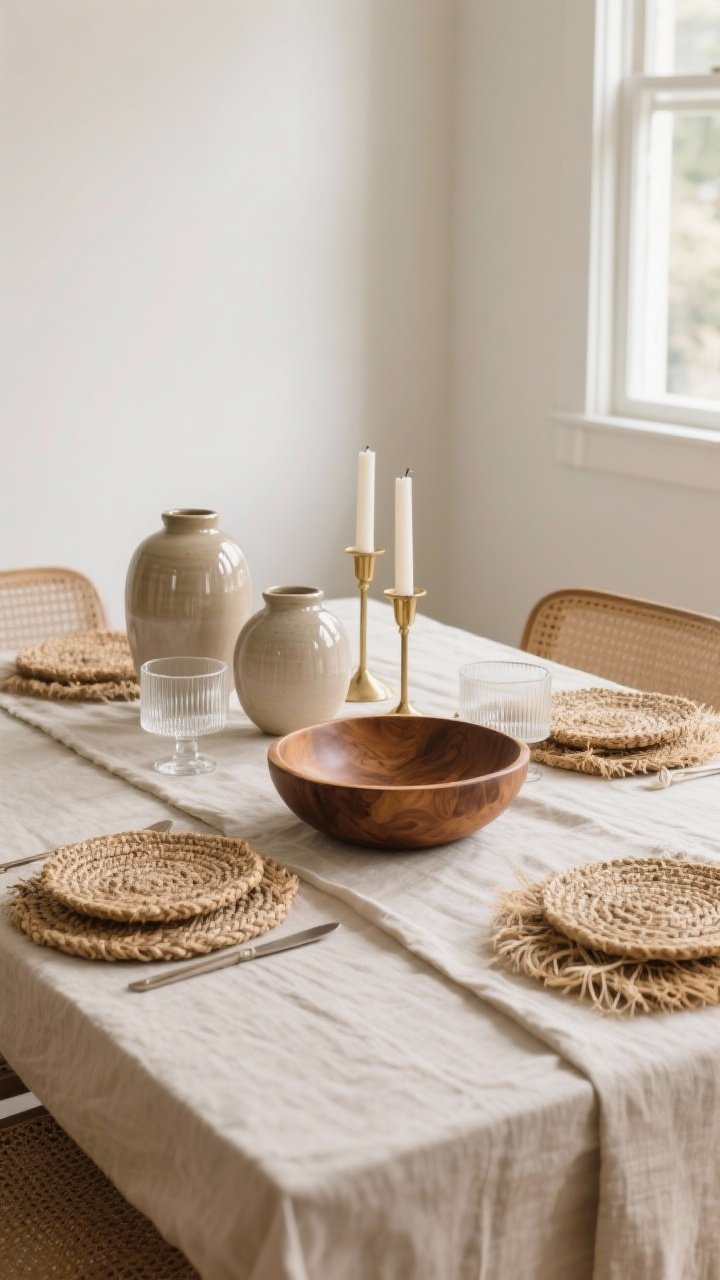
Texture is your secret sauce. When your table looks flat, it’s usually because everything’s too smooth or too matchy. Mix woven, ceramic, linen, metallic—your eyes will do a happy dance.
How to Layer Without Overthinking
- Start with a soft base: a linen runner or placemats.
- Add natural texture: rattan chargers, seagrass coasters, or a wood bowl.
- Top with something glossy: ceramic vases, glass hurricanes, or brass candlesticks.
FYI: Opposites attract. Rough + polished, matte + shine—this contrast makes your table look styled, not staged.
2. Go Asymmetrical (Because Perfect Is Boring)
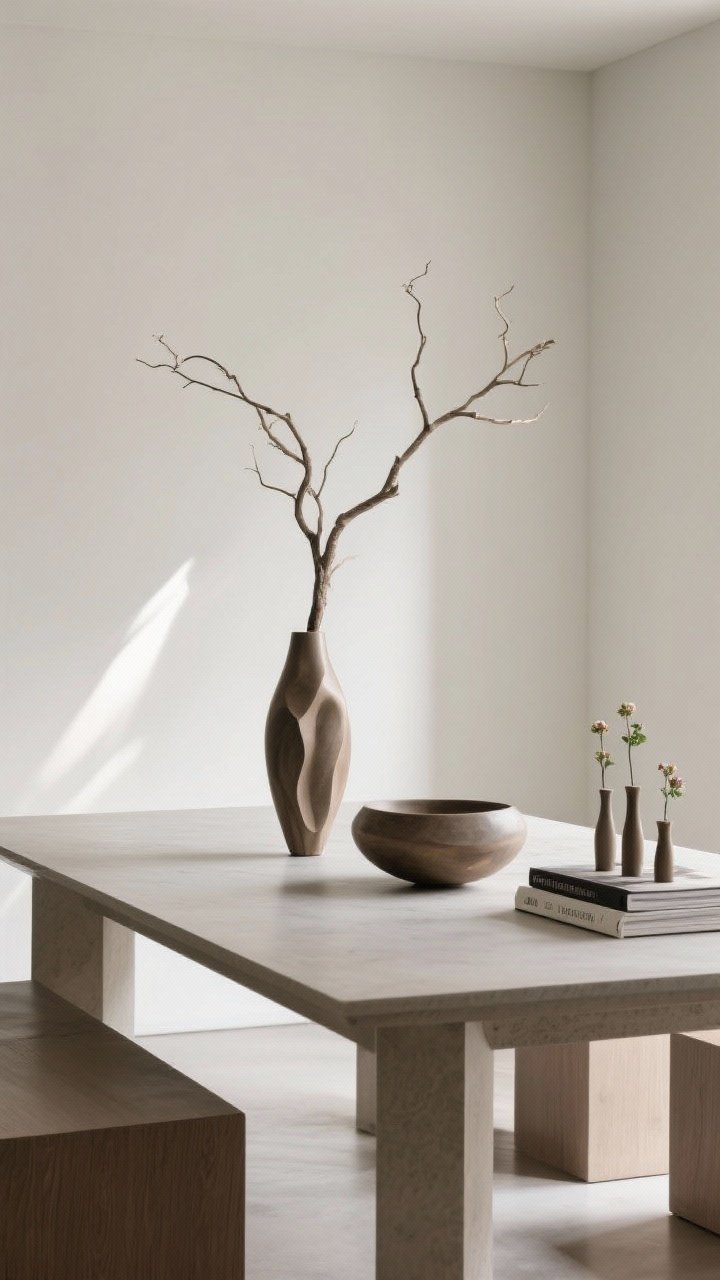
Symmetry is safe. Asymmetry is cool. Shift your centerpiece off-center and let the eye travel.
Try This Layout
- Place a single statement vase slightly off-center.
- Balance the other side with a stack of books or a sculptural bowl.
- Scatter two or three small bud vases along the empty space.
The trick is balance, not mirroring. If one element is tall, balance with wider, lower pieces nearby.
3. Flowers, But Make It Low
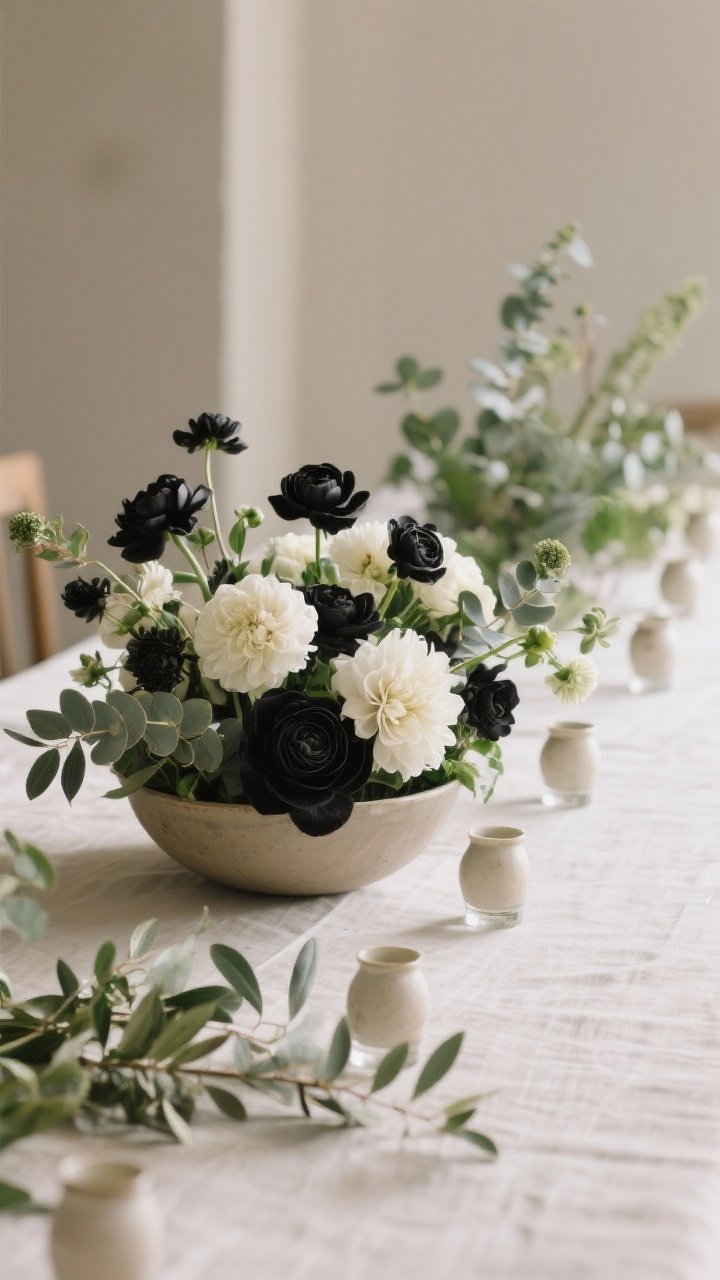
Gorgeous blooms that block your dinner guest’s face? Hard pass. Keep arrangements low, loose, and a little wild so conversation flows.
Florals That Work Every Time
- Low bowl arrangements with peonies, ranunculus, or dahlias.
- Bud vases lined down the runner—easy, airy, and budget-friendly.
- Greenery only: eucalyptus, olive branches, or fern clippings for a fresh, minimal vibe.
Pro move: Stick to one color family for a cohesive look. Monochrome bouquets are surprisingly luxe.
4. Candles: Mix Heights, Keep Scents Subtle
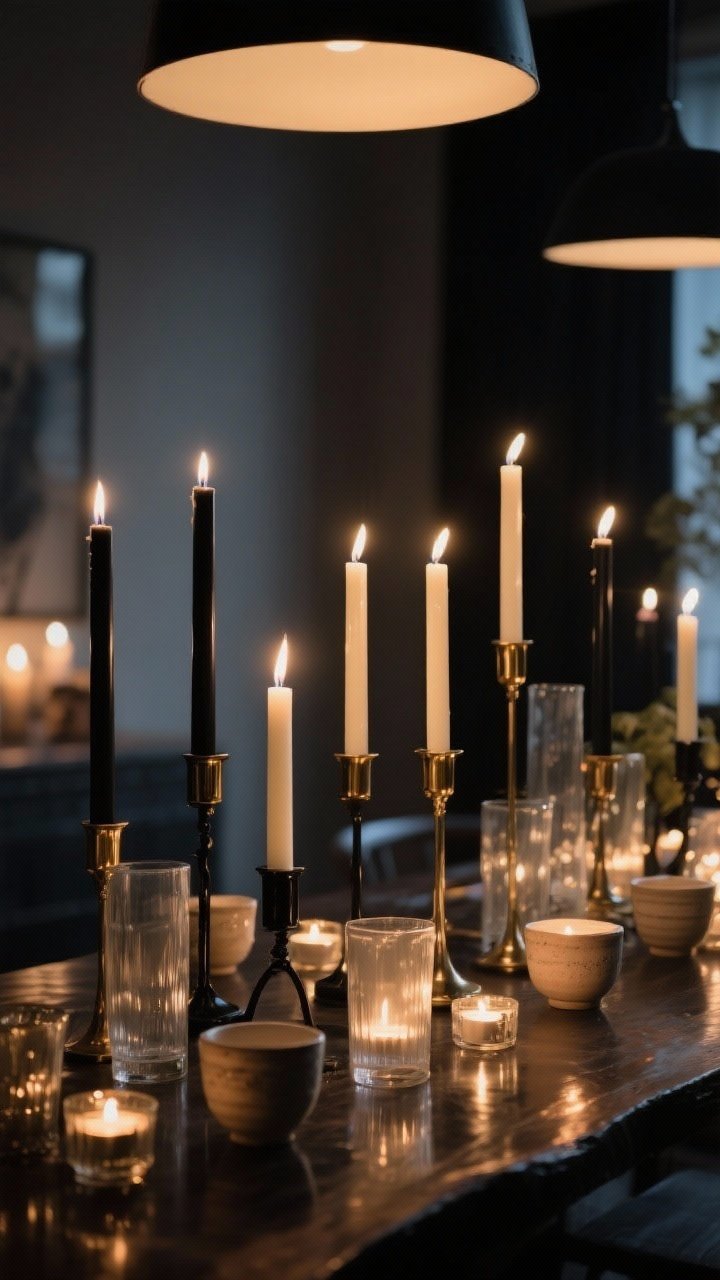
Candles add instant mood. Mix taper candles, pillars, and tea lights for soft, cozy glow that flatters everyone (bless).
Candle Rules of Thumb
- Unscented for meals—don’t fight the food.
- Mix materials: glass, metal, and ceramic holders.
- Vary heights but leave sightlines clear.
Bonus chic move: Repeat the same candle color for a clean, editorial look. Black or cream tapers read very high-end.
5. Embrace the Runner (Tablecloth Optional)
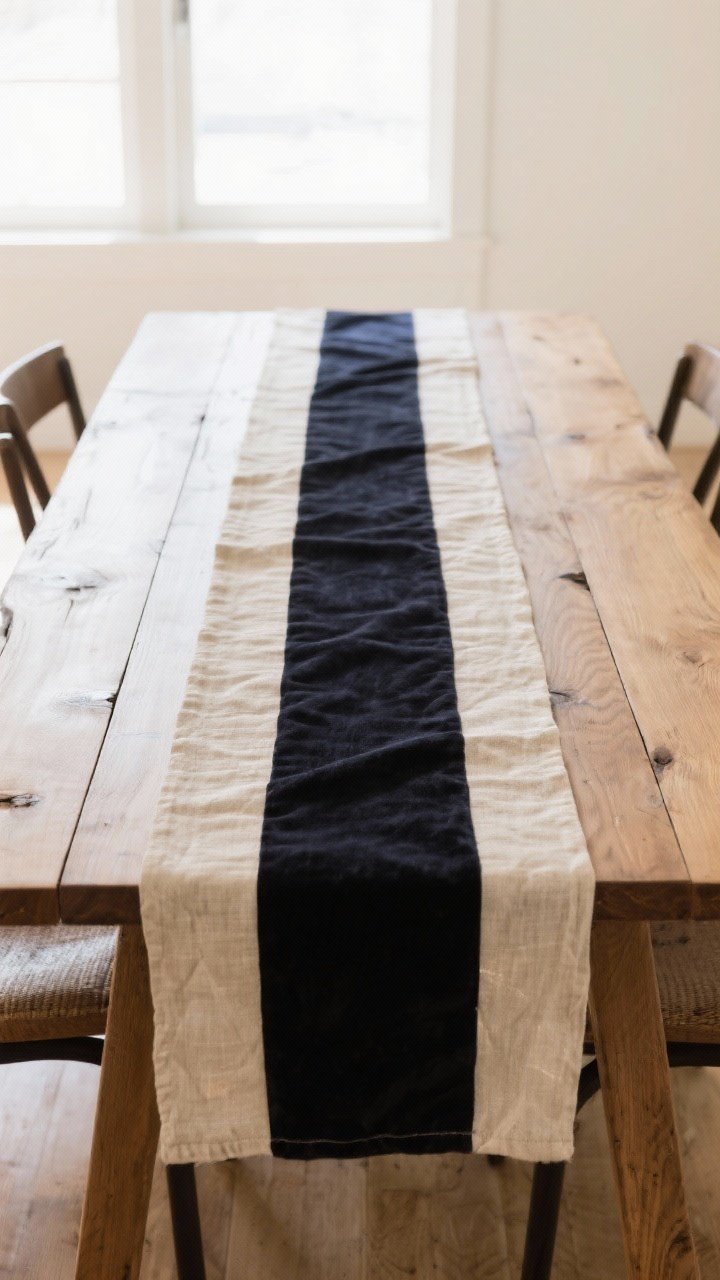
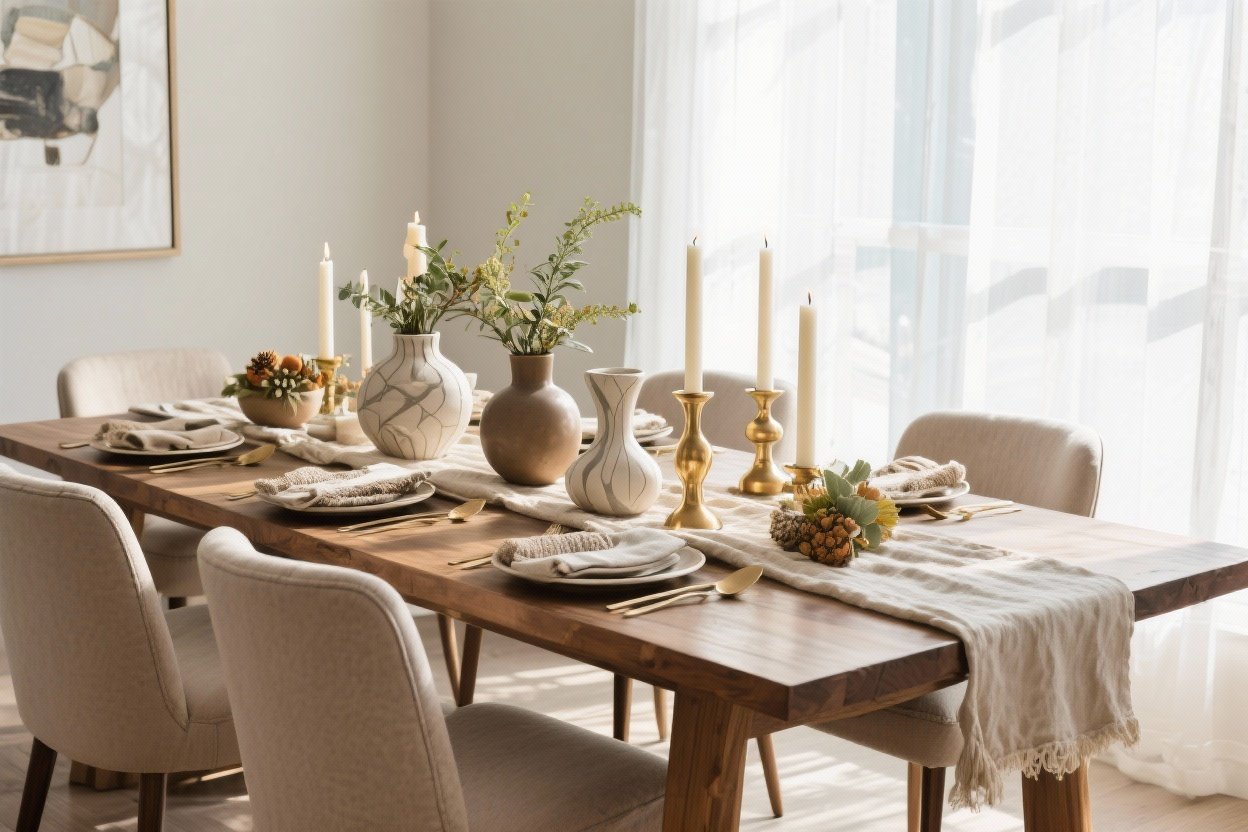
A runner is the dining room MVP. It draws the eye and anchors your decor without hiding your pretty tabletop.
Runner Styling Tips
- Choose linen or cotton for a relaxed look; velvet or silk for drama.
- Go longer than the table by 6–12 inches on each end for polish.
- Layer two narrow runners crisscrossed for visual interest.
If your table is small, a runner keeps things streamlined so you still have room for plates and actual dining (imagine that).
6. Play With Color Stories
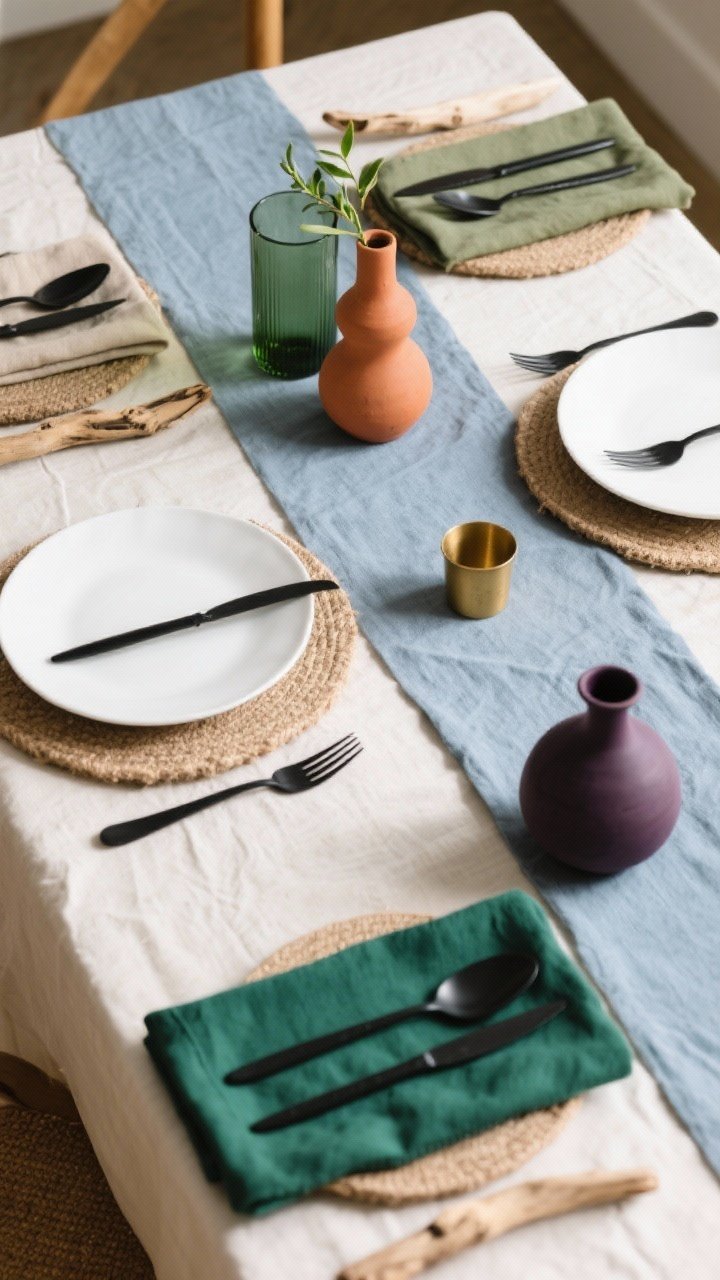
Color can unify your table in seconds. Pick a palette and repeat it in linens, flowers, and small accents.
Palette Ideas
- Earthy neutrals: sand, terracotta, olive, black.
- Soft coastal: white, fog blue, driftwood, sage.
- Moody jewel tones: emerald, aubergine, brass, charcoal.
Don’t go rainbow unless that’s the point. Two main colors + one accent is the sweet spot, IMO.
7. Set It Every Day (Casual, Not Extra)
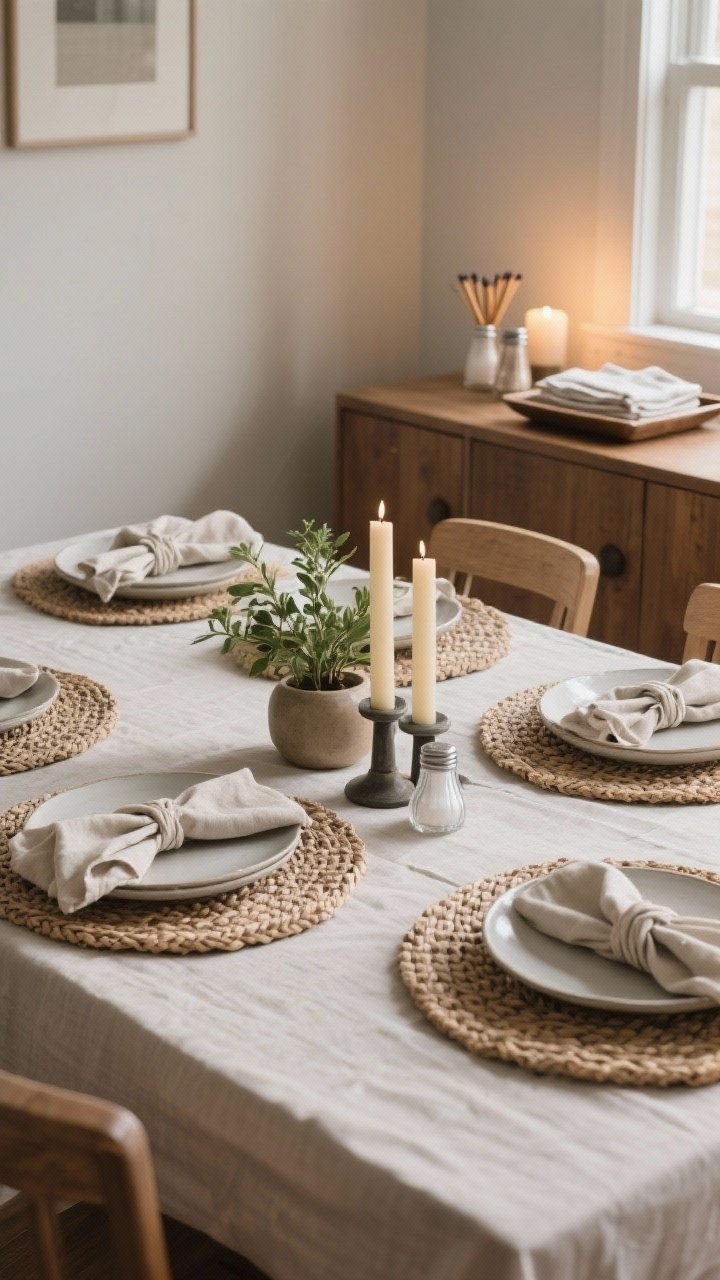
You don’t need a full dinner service on Tuesday night, but a “light set” makes the room feel finished. Think minimal but intentional.
Everyday Essentials
- Placemats or chargers under each setting.
- Cloth napkins casually folded or knotted.
- One focal piece in the middle: a bowl, plant, or candle trio.
Keep a tray nearby with napkins, salt/pepper, and matches so you can transition from work to dinner in 30 seconds flat.
8. Sculptural Bowls and Statement Vessels

If you only buy one “decor object,” make it a bowl or vase with presence. It’s functional and fabulous.
What Works Best
- Oversized wood or stone bowl for fruit or bread.
- Curvy ceramic vase that looks good empty or filled.
- Wavy-edge or footed pieces for that gallery feel.
Keep scale in mind. On a long table, go big. On a small one, choose a medium size and keep the surface clean around it.
9. Seasonal Swaps Without a Full Redo
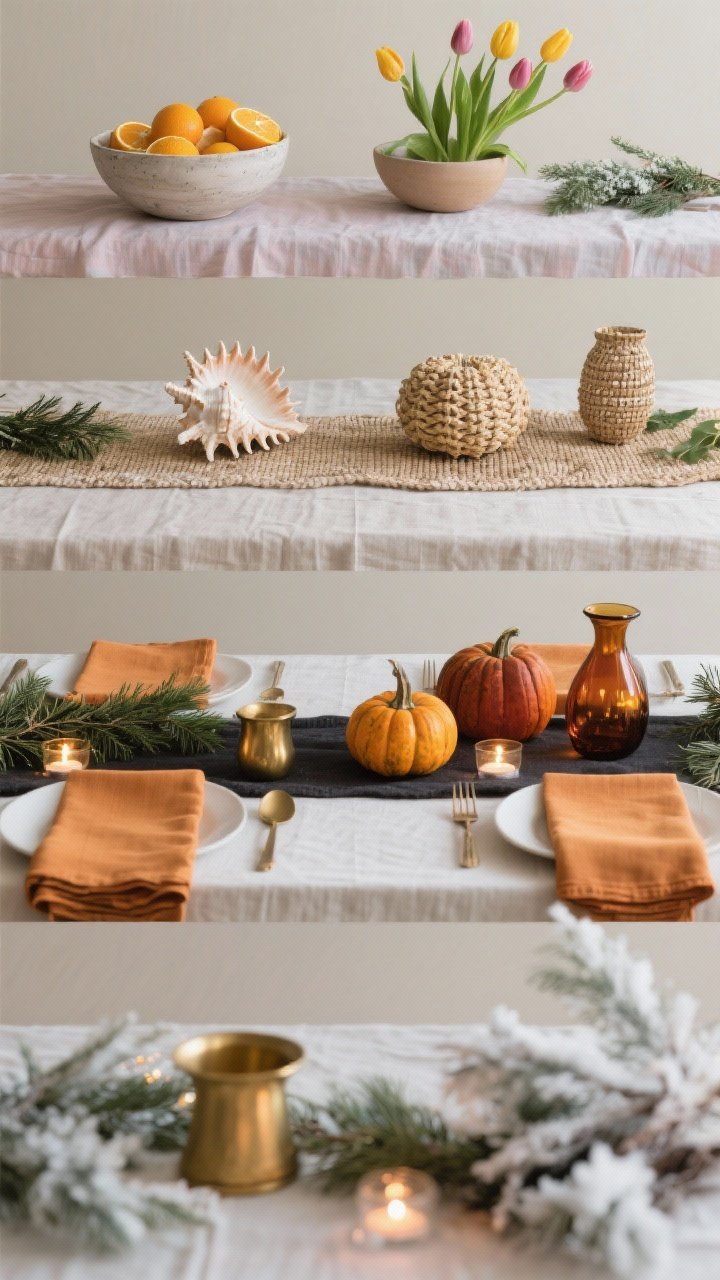
Seasonal decor doesn’t have to scream theme. Subtle swaps keep things fresh and stylish.
Easy Seasonal Updates
- Spring: tulips, pastel linens, citrus in a bowl.
- Summer: woven textures, shells or coral-inspired shapes, bright napkins.
- Fall: mini pumpkins, amber glass, rust or ochre napkins.
- Winter: evergreen clippings, brass accents, charcoal runner, twinkly tea lights.
Store small items in a labeled bin so you can swap in five minutes. Your future self will thank you.
10. Embrace Negative Space
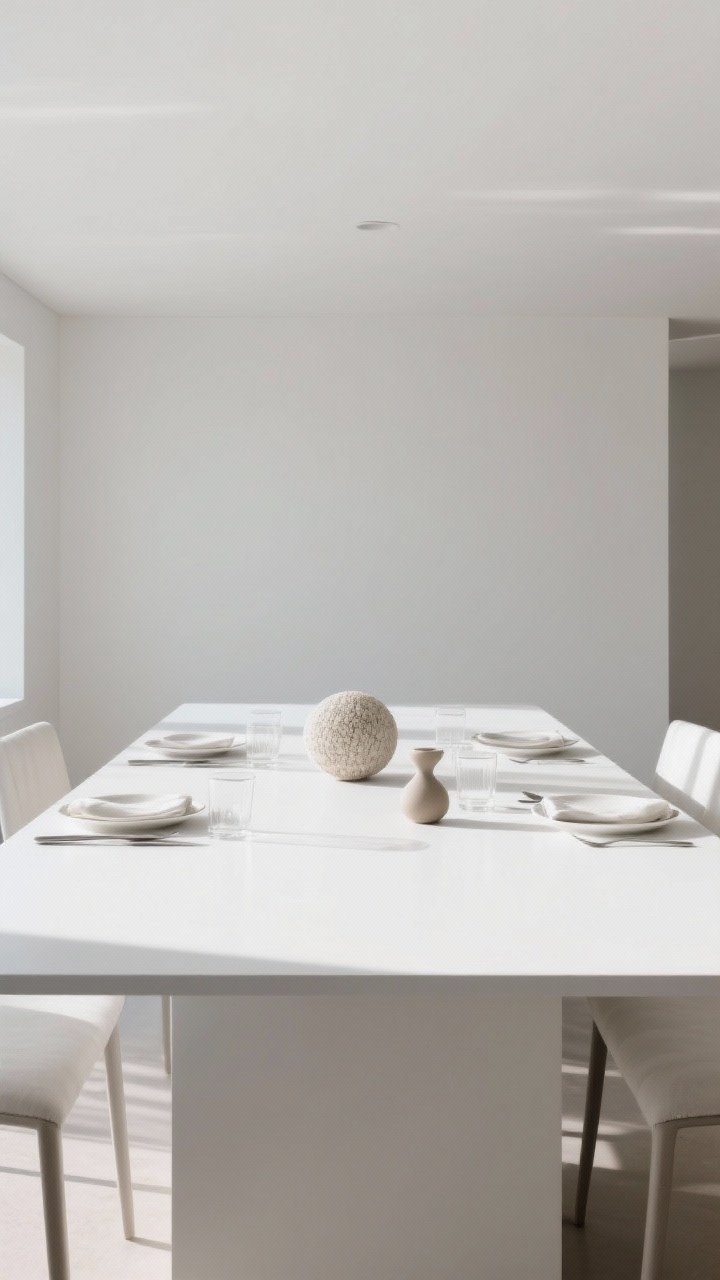
Clutter kills the vibe. Leave breathing room so each piece stands out and guests can, you know, set their water down.
Editing Checklist
- One main focal point + two supportive accents max.
- Keep the center third for decor; leave settings clear.
- Remove anything that doesn’t serve beauty or function.
When in doubt, take one thing away. Then take one more. Clean lines = instant sophistication.
11. Personalize With Place Cards and Layers
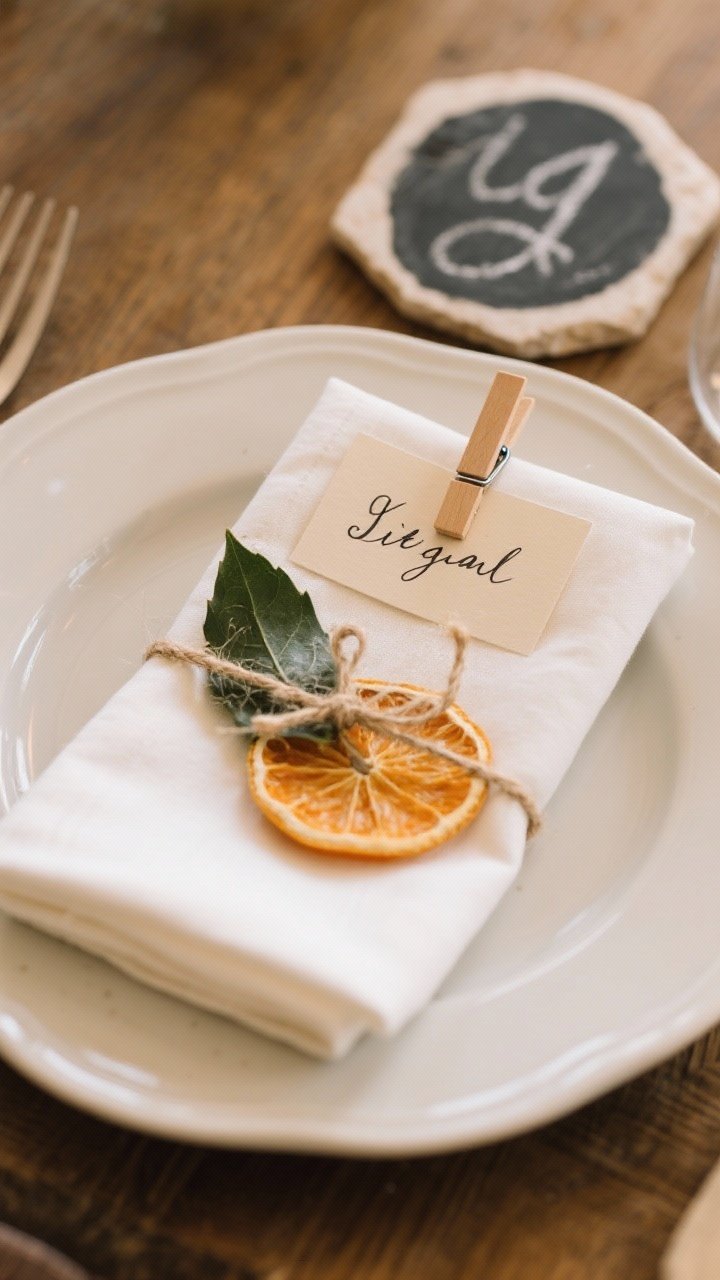
Place cards aren’t just for weddings. They make casual dinners feel thoughtful and can double as decor.
Fun, Low-Effort Ideas
- Mini clips on napkins with handwritten names.
- Leaves, sprigs, or dried orange slices with a name tied on string.
- Tile or stone coasters lettered with chalk pen—use again later.
Layer a napkin over the plate with a tiny detail on top. It’s an inexpensive way to add personality fast.
12. Add a Center Tray or Lazy Susan
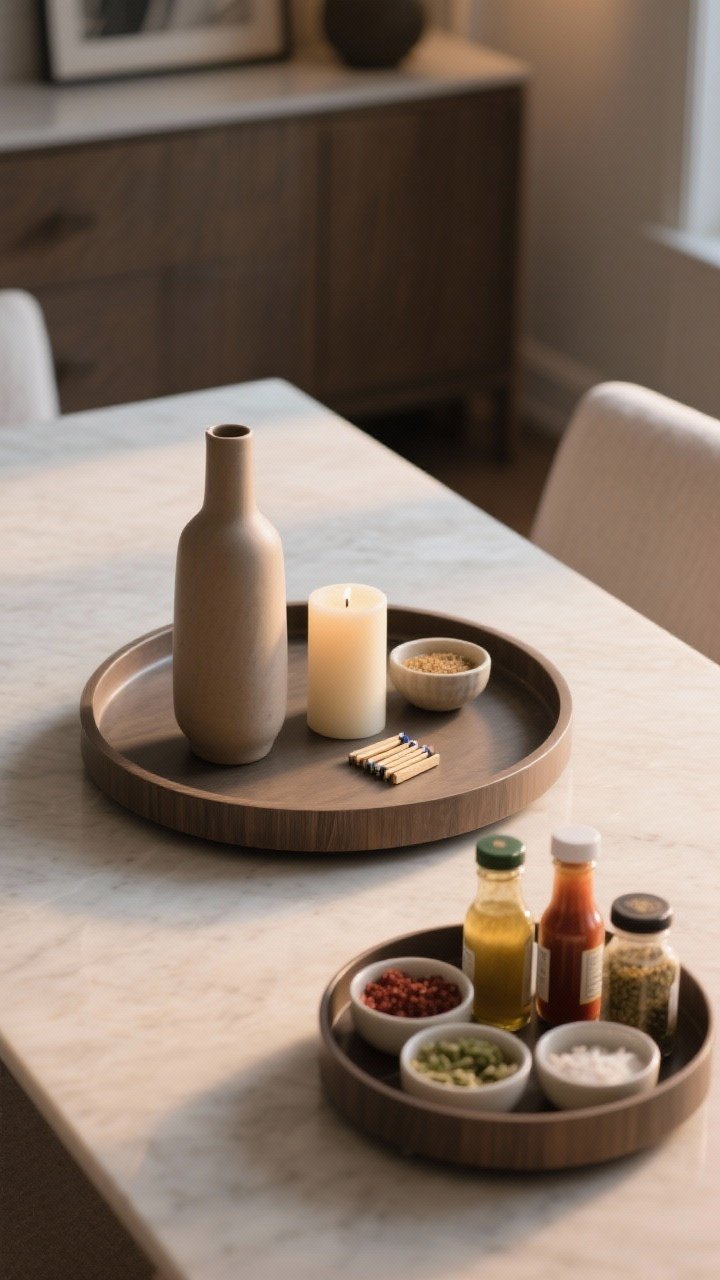
Trays are the unsung heroes of table styling. They corral clutter and make everything look intentional.
How to Style a Tray
- Choose a round or oval tray for rectangle tables; square for round tables.
- Anchor with one tall item (vase), add one medium (candle), and one small (match striker or tiny bowl).
- For family dinners, swap decor for condiments and toppings on a rotating lazy Susan.
It’s decor that works hard—my favorite kind.
13. Mix Metals and Materials (With Intention)
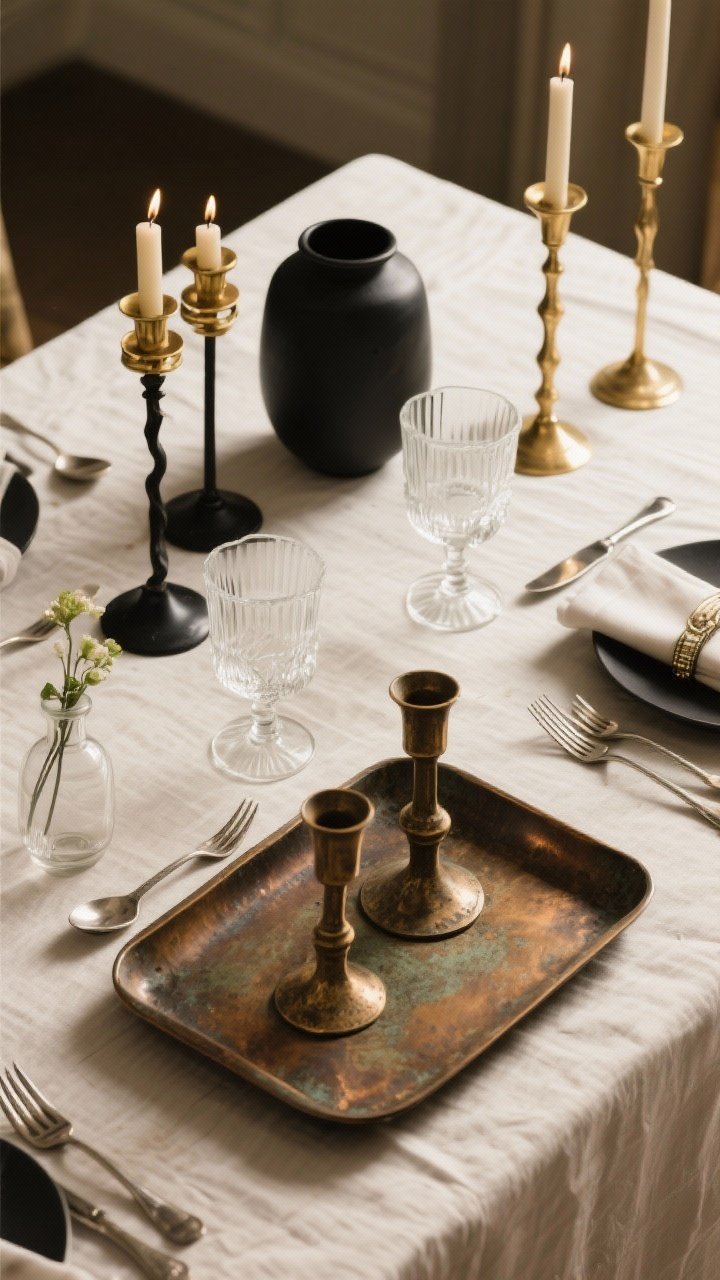
Metal mixing looks curated when you repeat each finish at least twice. One-off metals feel random; pairs feel purposeful.
Foolproof Combos
- Brass + black iron: warm and modern.
- Polished nickel + glass: clean and classic.
- Antique brass + patinated bronze: moody and old-world.
Echo each finish in something small—flatware, candleholders, napkin rings, or picture frames nearby—so the whole dining area ties together.
Quick Styling Formulas You Can Steal
- Minimalist: Linen runner + three bud vases + two taper candles.
- Warm rustic: Woven placemats + wood bowl of fruit + stoneware pitcher with greenery.
- Modern glam: Velvet runner + brass candlesticks + black ceramic vase + monochrome florals.
- Organic coastal: Striped runner + glass hurricanes + shell-inspired bowl + sage napkins.
Practical Extras (Because Real Life Happens)
- Scale matters: Bigger table = bigger centerpiece. Tiny table = one medium piece, done.
- Keep it low for meals: Move tall decor to a sideboard when you sit.
- Use washable textiles: Linen blends and cotton beat pure silk unless you enjoy spot-cleaning.
- Lighting sets the tone: Dim the overhead, add candlelight. Instant ambiance, zero renovation.
There you go—thirteen ways to style your dining table so it looks good on a random Wednesday and even better on a Saturday night. Start with one or two ideas, edit as you go, and let your table evolve. You’ll nail that “effortless but elevated” look in no time.