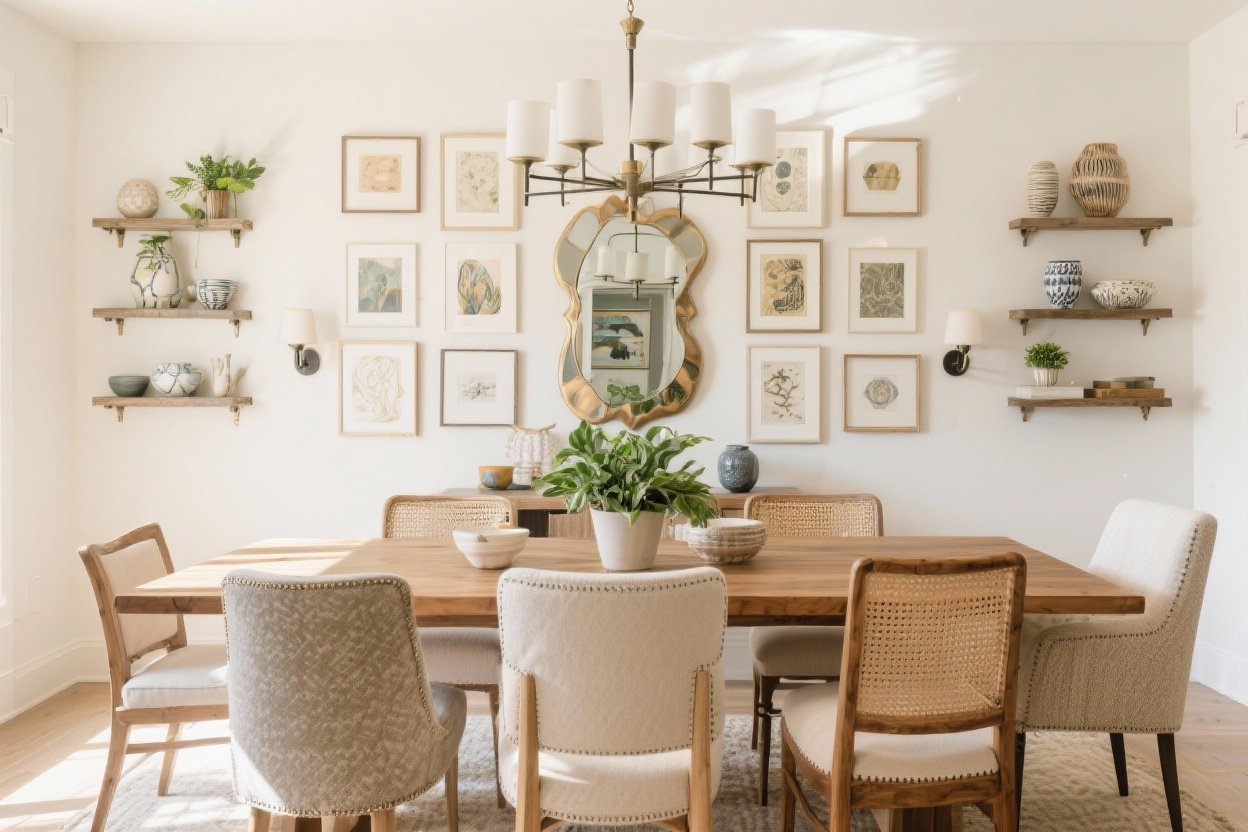
12 Dining Room Wall Decor Ideas That Guests Won’t Stop Talking About
You know that awkward blank wall staring at you during dinner? Let’s fix that. These 12 dining room wall decor ideas will make your space feel thoughtful, textured, and seriously inviting—without looking like a Pinterest clone.
We’re talking art, texture, color, and a few cleverly sneaky tricks to make your dining room feel designer-level, fast.
1. Build a Gallery Wall That Actually Feels Curated
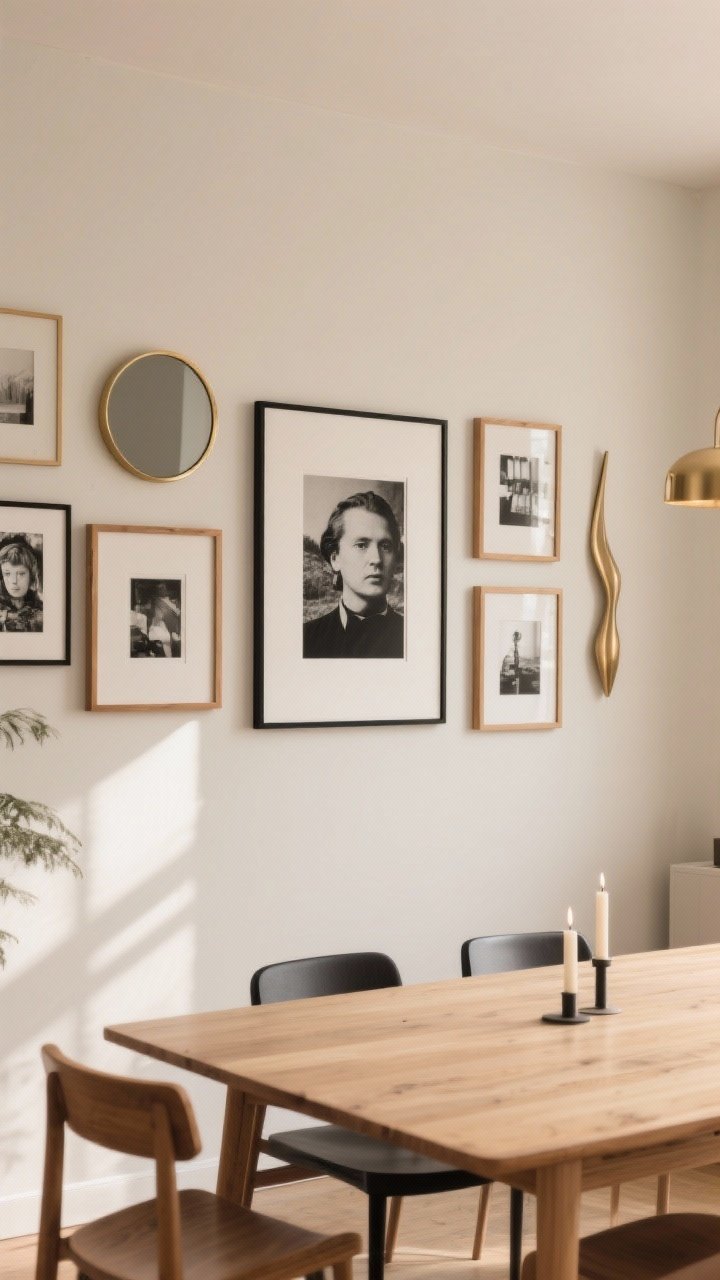
Gallery walls can look chaotic fast—unless you give them a little structure. Mix frames (thin black, warm wood, brass) but keep a unifying thread like black-and-white photography or a limited color palette. Hang everything at eye level so guests aren’t craning their necks mid-bite.
How to Nail the Layout
- Start with a hero piece in the center and build out.
- Use butcher paper templates to test the arrangement before drilling.
- Vary sizes: one large, two medium, several small for balance.
- Pro tip: Keep 2–3 inches between frames so it reads as a single composition.
For content, think travel photos, recipes from family, vintage menu art—things that spark stories at the table. Bonus points for tossing in a small mirror or sculptural object for dimension.
2. Go Oversized With a Statement Mirror
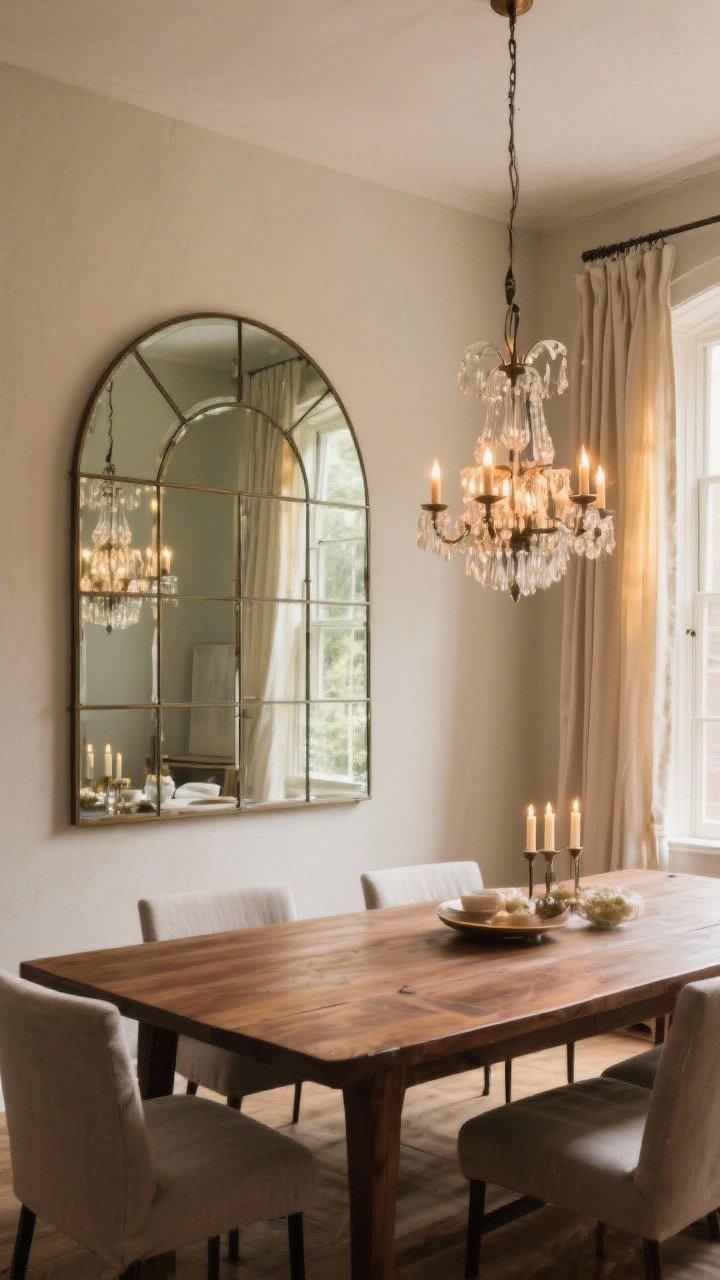
Nothing opens up a dining room like a giant mirror. It bounces light, doubles your candle glow, and makes even a tight space feel generous. If your table sits parallel to a window, a large mirror on the opposite wall is chef’s kiss.
Choosing the Right Mirror
- Arched or pill-shaped mirrors soften rectangular rooms.
- Antiqued glass adds character and hides fingerprints (you’re welcome).
- Go big—the mirror should be at least two-thirds the length of your table.
FYI: If you’ve got a stunning light fixture or art on another wall, place the mirror to reflect it and multiply the drama.
3. Add Texture With Wall Paneling or Molding
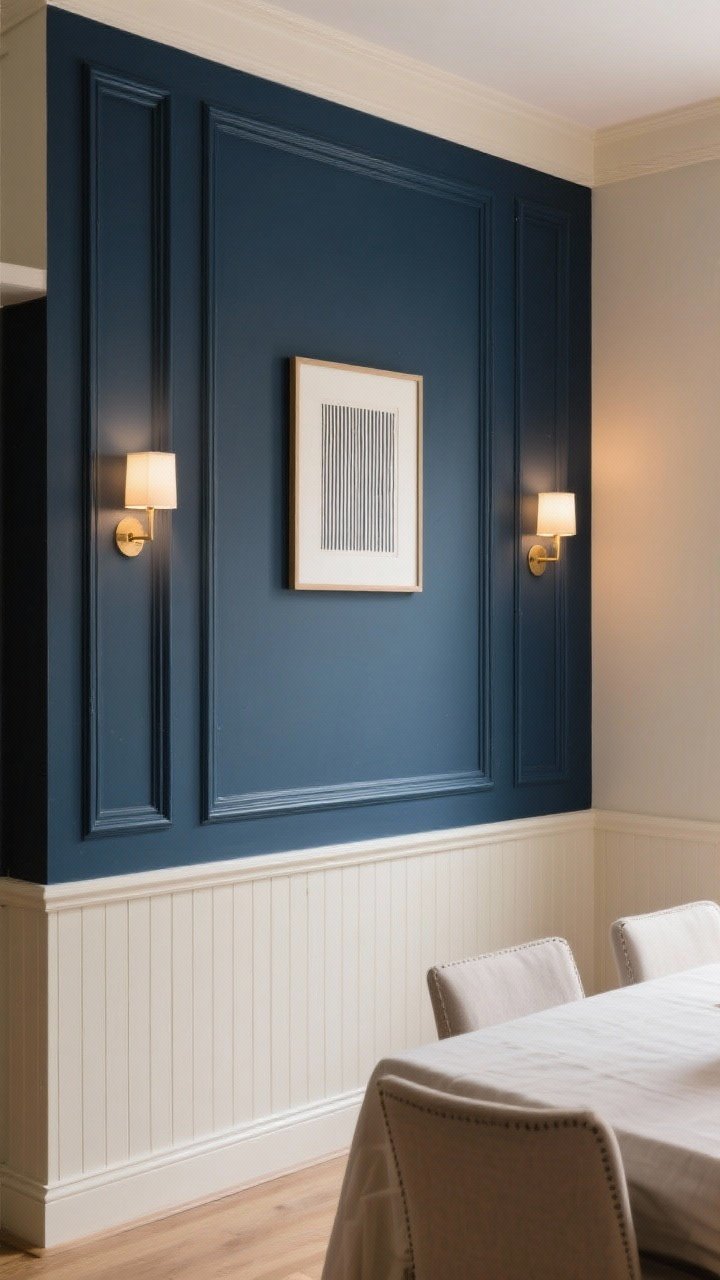
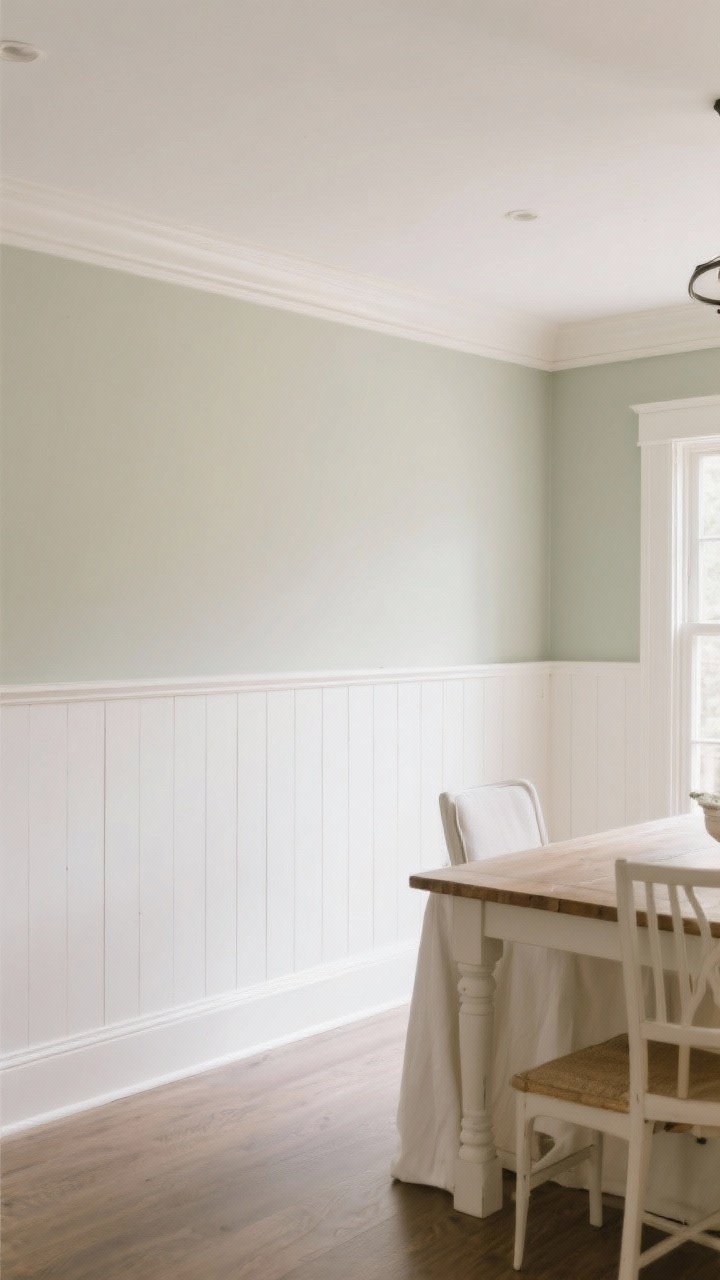
Flat walls are fine. Paneled walls are fabulous. A little architectural detail—like wainscoting, board-and-batten, or picture-frame molding—instantly elevates the room and makes simple art look intentional.
Low-Lift Paneling Ideas
- Picture-frame molding painted the same color as the wall for subtle depth.
- Half-height wainscoting to ground bold wallpaper or art above.
- Vertical slat paneling to add height in low-ceiling rooms.
Keep it tonal for a modern look, or contrast your trim and wall color for extra definition. Think rich navy paneling with creamy walls—so good.
4. Push Color With a High-Impact Paint or Color Block
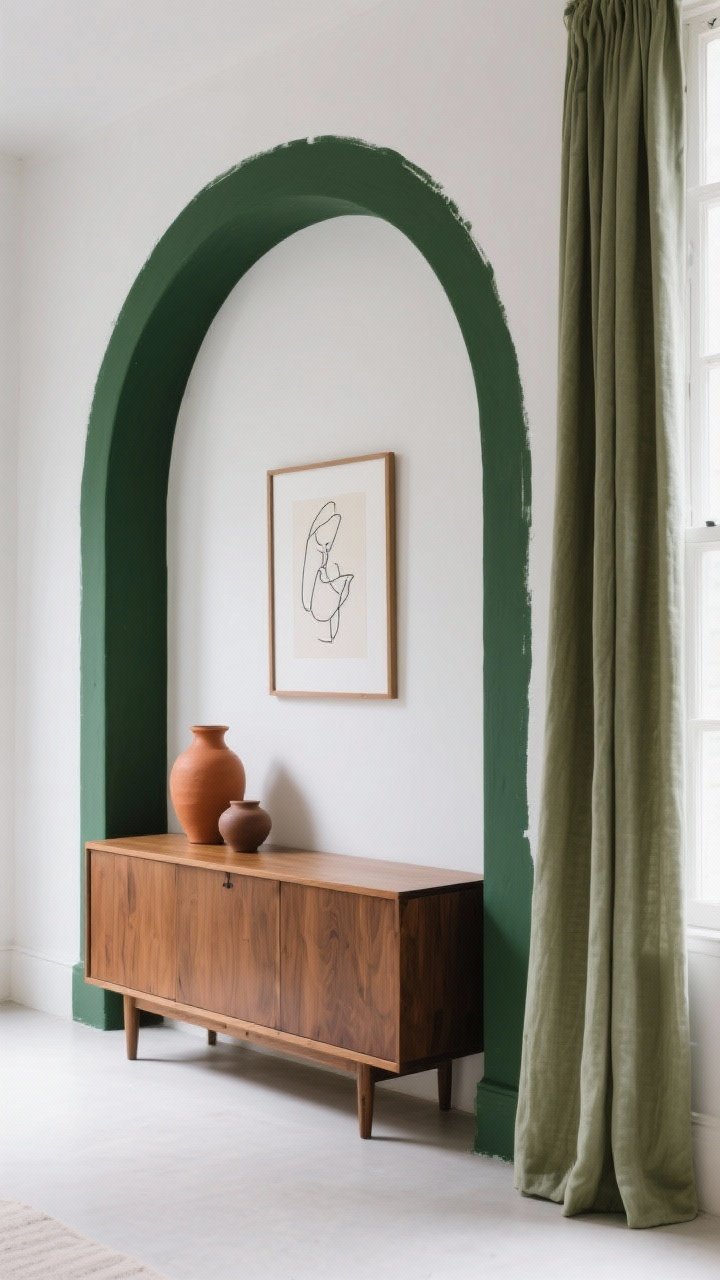
Paint is the fastest way to give your dining room personality. Instead of painting the whole room one color, try a dramatic color block or a painted arch over your credenza. It frames your decor like a mini gallery.
Color Ideas That Wow
- Deep olive or charcoal for moody dinner vibes.
- Terracotta or cinnamon to warm up neutral furniture.
- Soft sage or dusty blue for a calm, fresh feel.
For clean edges, use painter’s tape and a level. And keep art simple on bold colors—let the paint do the heavy lifting.
5. Install Floating Shelves for an Ever-Changing Display

Floating shelves turn your wall into a rotating exhibit—no commitment issues here. Style them with a mix of art, serving pieces, cookbooks, and a few plants. It’s functional and pretty, especially near a sideboard or bar cart.
Styling Tips
- Anchor with larger items on the ends: platters, framed art, tall vases.
- Layer items—lean artwork behind smaller objects for depth.
- Repeat materials: wood, ceramic, glass to keep it cohesive.
Keep shelf heights tall enough for your favorite pitchers and carafes. You’ll be shocked how fast these become your most-used storage.
6. Bring Life With a Living Wall or Vertical Greenery
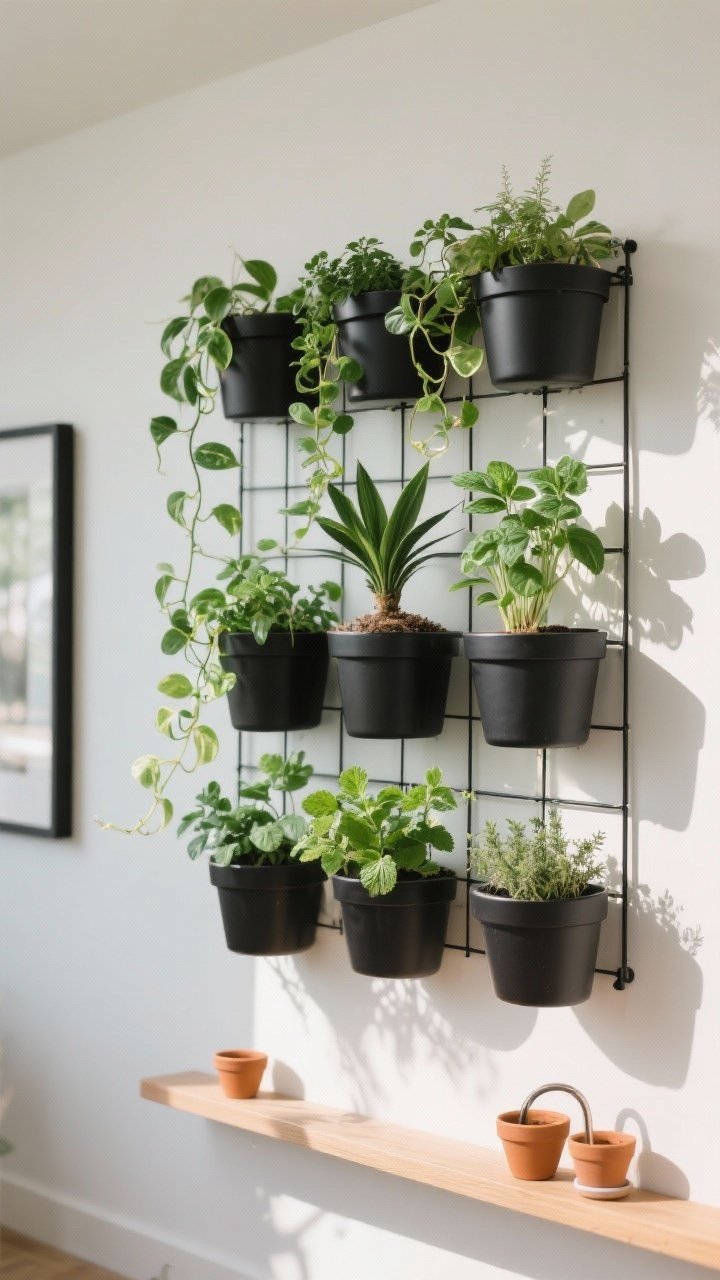
Plants in the dining room? Absolutely. A small vertical garden or grid of wall-mounted planters adds freshness and makes your space feel alive—literally. Just pick species that won’t drop leaves in your soup.
Low-Maintenance Plant Picks
- Pothos for trailing drama.
- ZZ plants for low light and low effort.
- Herbs if you’ve got good light—basil, mint, thyme for tabletop garnishes.
Use matching planters for a polished look, or mix terracotta and matte black for texture. Pro tip: Install a narrow picture ledge to corral small pots and keep watering easy.
7. Create a Moment With a Large-Scale Tapestry or Textile
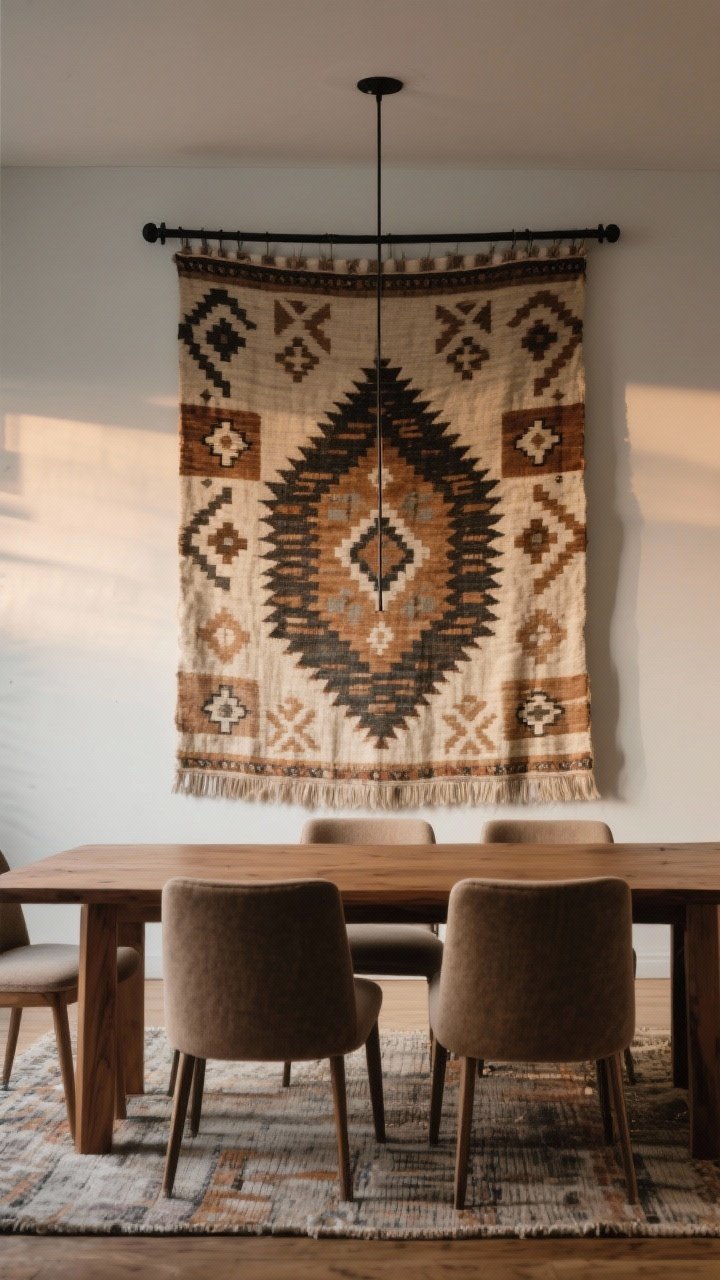
If your dining room echoes (hi, hardwood), a textile on the wall helps absorb sound and adds warmth. A vintage rug hung like art? Not weird—actually stunning. Bonus: textiles feel rich without needing tons of other decor.
What Works Best
- Flatwoven textiles like kilims or mud cloth—lightweight and graphic.
- Minimal tapestry rods so the fabric is the star.
- One big piece instead of a bunch of small items to calm the room.
Stick to colors that play nicely with your dining chairs and rug. Or go neutral and let texture do the talking.
8. Light It Right With Sconces and Picture Lights
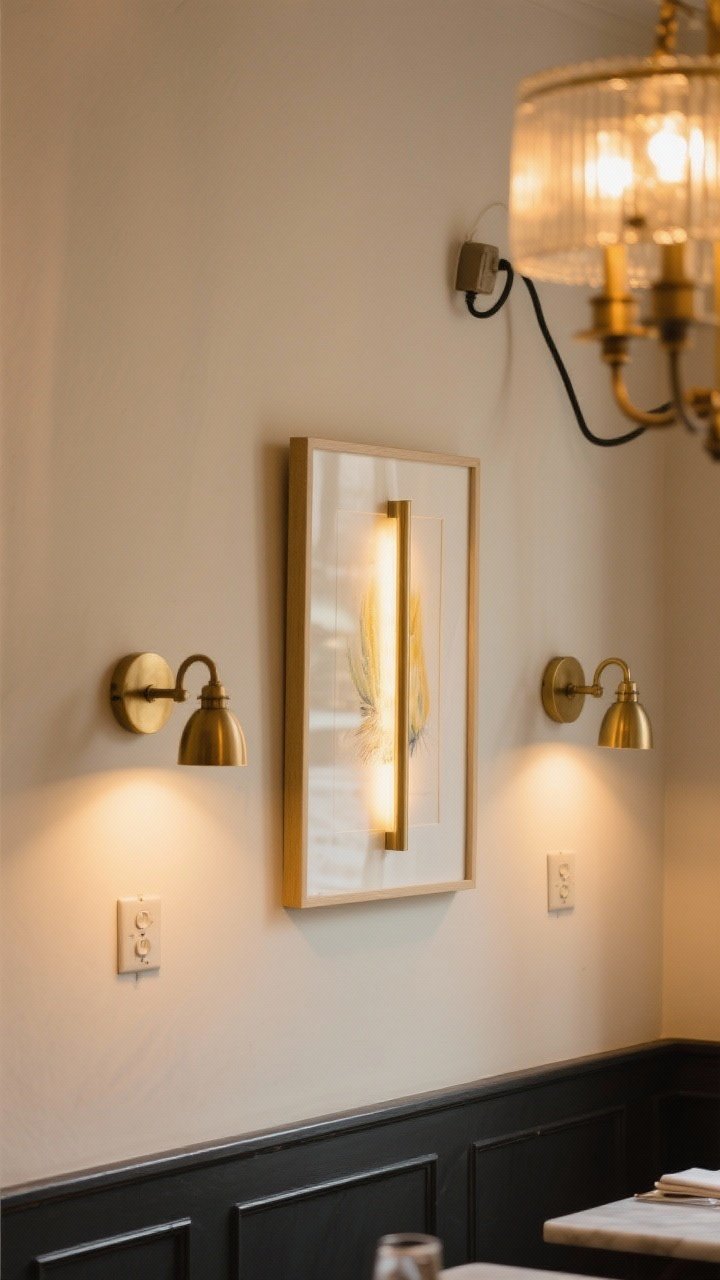
Lighting sets the mood fast. Add swing-arm sconces or slim picture lights over art to create a restaurant-level glow (minus the markup). Layering lighting makes your space feel intentional—even if dinner is takeout.
Smart Lighting Moves
- Use dimmers—non-negotiable for evening ambiance.
- Match metal finishes to your chandelier or hardware for cohesion.
- Plug-in sconces are renter-friendly and look surprisingly custom.
Place sconces so they flank a mirror or anchor a sideboard. Soft, warm bulbs only—no interrogation-room lighting, please.
9. Add Character With Vintage Finds and Architectural Salvage
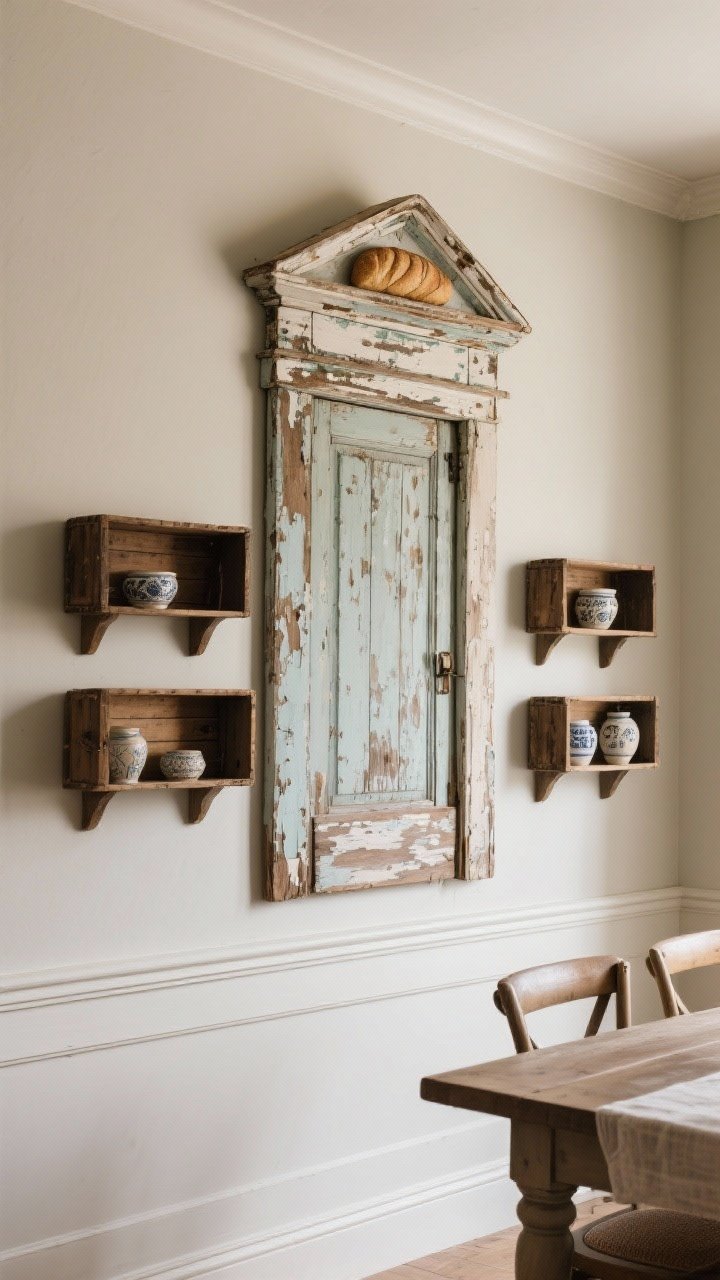
Your dining room wall is the perfect place for a one-of-a-kind piece: a salvaged doorway pediment, an antique breadboard, or old wine crates turned into shallow shelving. It’s instant history—and a great conversation starter.
Where to Hunt
- Flea markets, estate sales, salvage yards for real patina.
- Online marketplaces for oversized pieces you can’t DIY.
- Family attics—grandma’s recipe boards are decor gold.
Mix one or two substantial vintage pieces with modern elements so it feels curated, not themed. IMO, that’s the sweet spot.
10. Make It Personal With a Statement Chalkboard or Menu Board
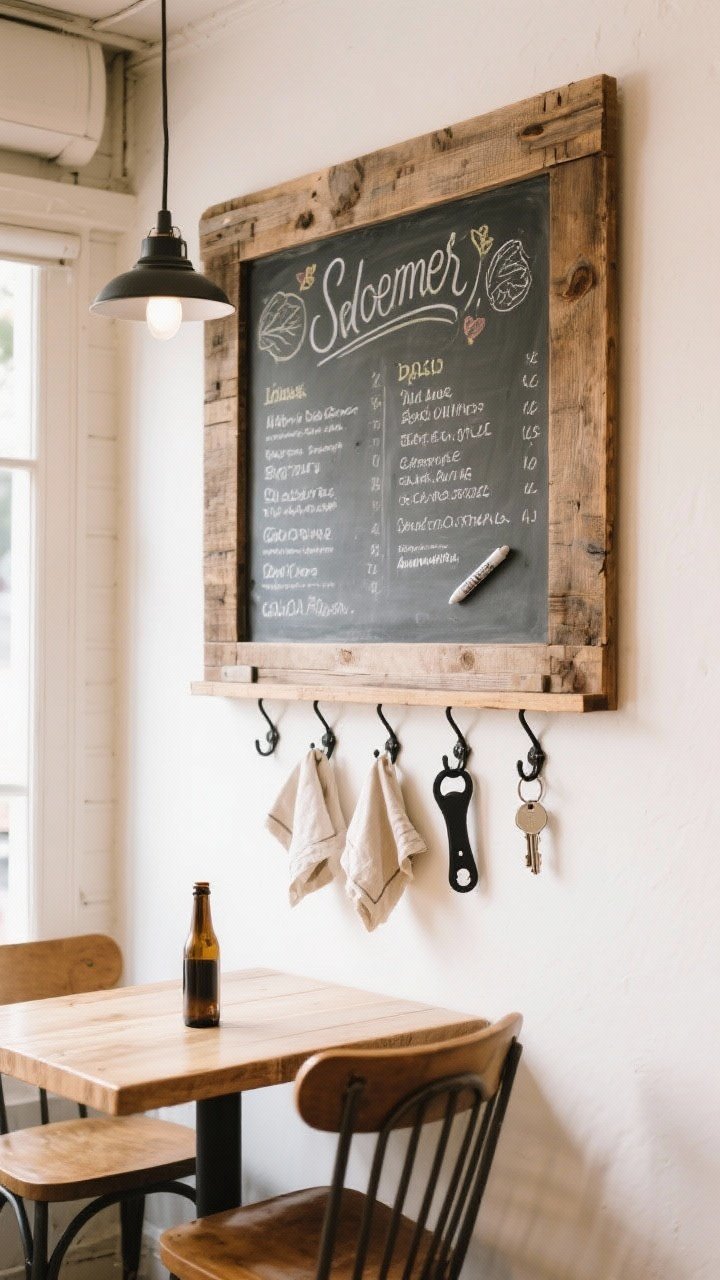
Bring a little bistro energy home with a giant chalkboard or magnetic board. Use it to write weekly menus, favorite quotes, or party seating charts. It’s playful without feeling childish.
Designing Your Board
- Frame it in reclaimed wood or sleek metal to match your style.
- Go custom size to fill an awkward wall perfectly.
- Pair with small hooks below for napkins, keys, or bottle openers.
Chalk markers are your friend: cleaner lines, less dust, and easy to wipe. Swap content seasonally to keep things fresh.
11. Try Wallpaper (But Make It Sophisticated)
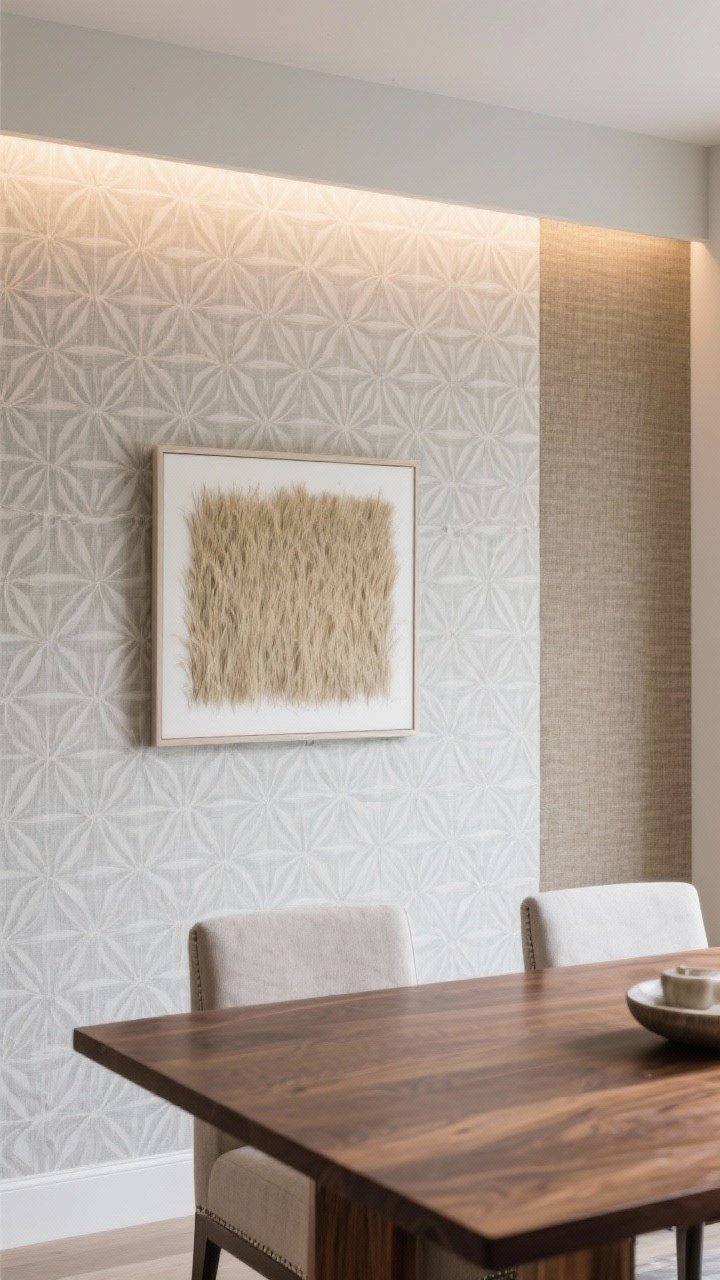
Wallpaper in a dining room adds instant polish. Even one accent wall behind the table can define the zone and make the whole space feel designed. Just pick a pattern that ages well—no regrets in two months, please.
Patterns That Play Nice
- Subtle geometrics for modern spaces.
- Botanicals or chinoiserie for classic elegance.
- Grasscloth for texture and warmth (and acoustic help).
Keep your art simple on top of pattern—think one oversized piece or a pair of aligned frames. If you’re nervous, removable wallpaper is a solid starter move, FYI.
12. Elevate With Art-Led Symmetry Over a Sideboard
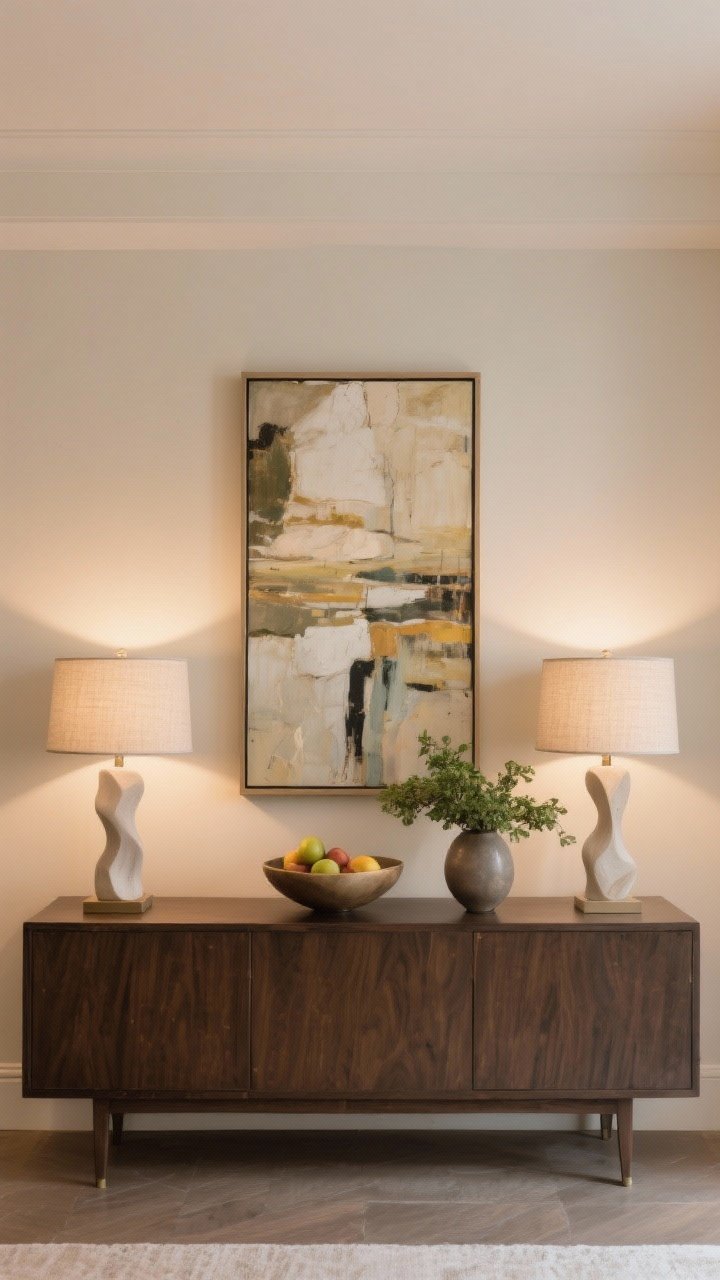
Want a guaranteed designer move? Style a sideboard wall with symmetry: a large artwork centered above, matching lamps or sconces on either side, and a sculptural object in the middle. It’s calm, confident, and looks expensive—even if it wasn’t.
The Formula
- Art size: 60–75% the width of your sideboard.
- Bottom of frame hung 6–10 inches above the surface.
- Balance heights with lamp shades or sconces aligning near the top edge of the frame.
Use a bowl for fruit, a low vase of greenery, or a stack of serving books to finish the look. Easy. Elegant. Done.
Quick Tips to Pull It All Together
- Think layers: color, texture, light, art—mix at least three.
- Mind the sightlines: hang pieces so they’re visible from seats, not just when you stand.
- Repeat materials: echo your table wood, chair metal, or rug tones in your wall decor.
- Edit often: swap a piece each season to keep the room feeling alive.
Your dining room is where stories get told and seconds get served. Give those walls some love, and the whole space levels up. Pick one idea to start, pour something good, and enjoy the view—you built it, and it looks amazing.