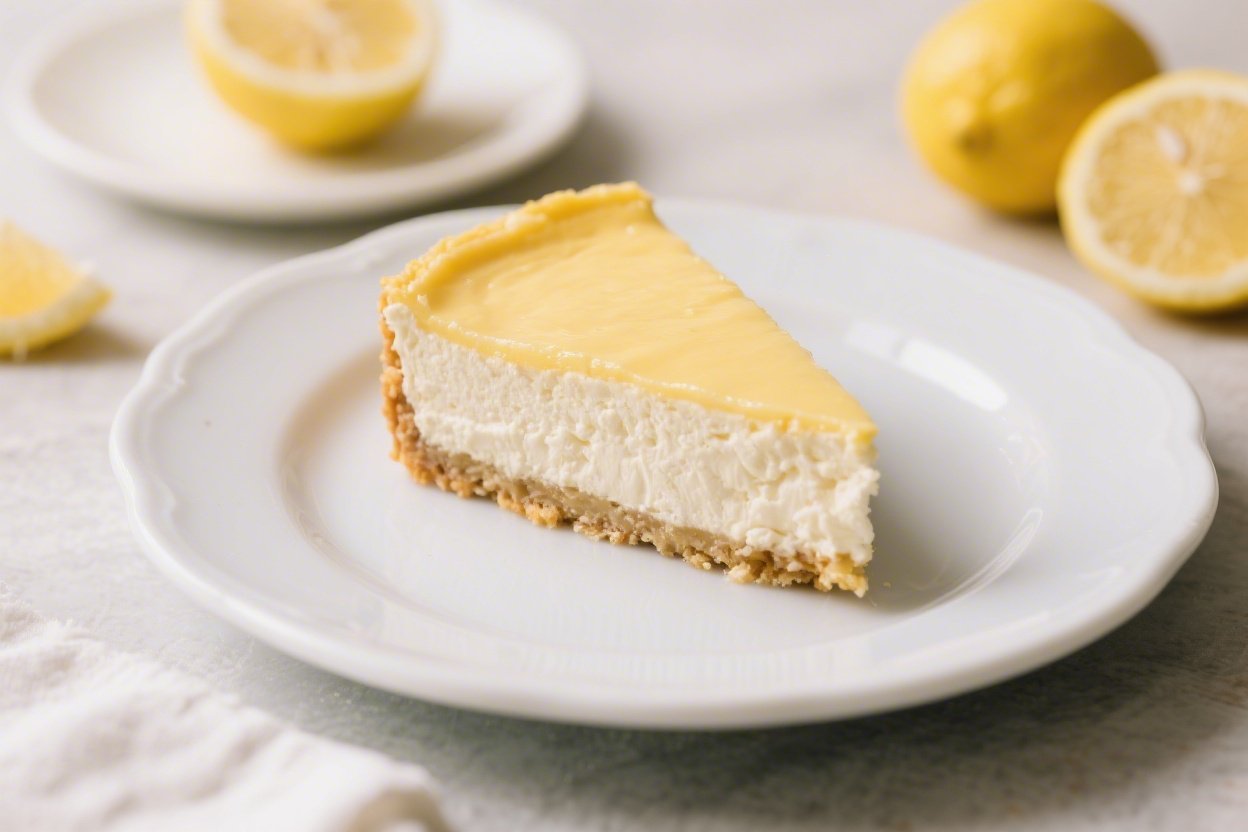
Prep the pan: Heat the oven to 325°F (163°C). Line the bottom of a 9-inch springform pan with parchment.
Lightly grease the sides.
Make the crust: Stir graham crumbs, sugar, melted butter, and a pinch of salt until the mixture looks like damp sand. Press firmly into the bottom of the pan. Use a flat-bottomed glass for an even layer.
Par-bake the crust: Bake for 8–10 minutes until set and lightly golden.
Cool while you make the filling.
Drain the ricotta: If your ricotta seems wet, place it in a fine mesh strainer or cheesecloth and let it drain for 20–30 minutes. This step helps the cheesecake set properly.
Beat the cheeses: In a large bowl, beat softened cream cheese until smooth, about 1–2 minutes. Add the drained ricotta and beat until silky with no lumps.
Scrape the bowl well.
Add sugar and flavor: Mix in granulated sugar, lemon zest, lemon juice, vanilla, and a pinch of salt. Blend until combined, but don’t whip too much air into the batter.
Stabilize and enrich: Beat in the cornstarch (or flour), then mix in the heavy cream or sour cream until smooth.
Add the eggs: Beat in the eggs one at a time on low speed, just until each is incorporated. Overmixing here can add air and cause cracks.
Fill and smooth: Pour the filling over the crust.
Tap the pan gently on the counter a few times to release any bubbles. Smooth the top with an offset spatula.
Bake low and slow: Bake at 325°F (163°C) for 45–60 minutes. The edges should be set, and the center should have a slight wobble, like set Jell-O.
If it browns too quickly, tent loosely with foil.
Cool gradually: Turn off the oven and crack the door. Let the cheesecake sit inside for 45 minutes. Then move it to a wire rack to cool to room temperature.
Chill to set: Cover and refrigerate at least 6 hours, ideally overnight.
This improves the texture and flavor.
Serve: Loosen the edge with a thin knife, release the springform ring, and transfer to a serving plate. Dust with powdered sugar and top with berries or lemon slices, if you like.