Vietnamese Healthy Spring Rolls – Fresh, Light, and Full of Flavor
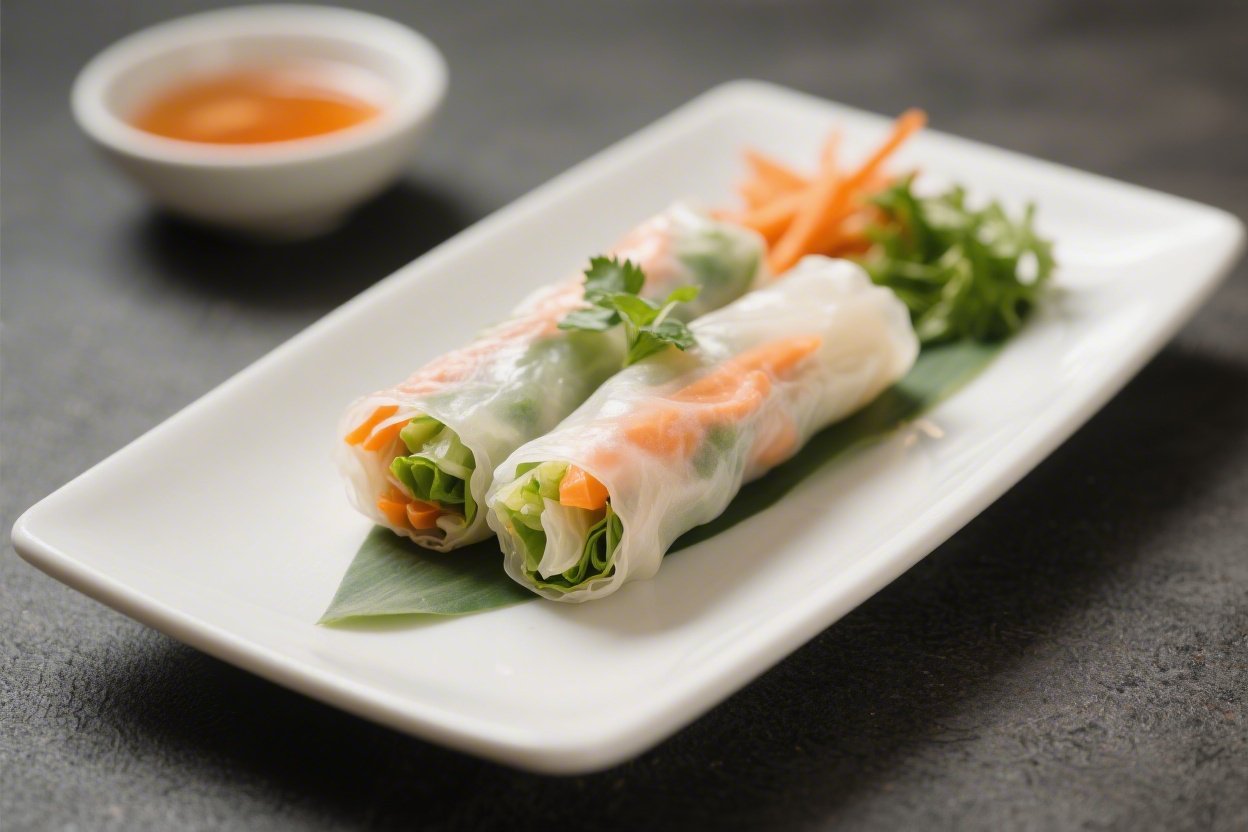
Vietnamese Healthy Spring Rolls are the kind of meal that feels as good as it tastes. They’re crisp, colorful, and loaded with herbs and fresh veggies. Best of all, they’re customizable, easy to assemble, and perfect for lunch, dinner, or a light snack.
With a simple dipping sauce on the side, every bite is bright and satisfying. If you want something clean and flavorful without turning on the stove for long, this recipe is your friend.
Vietnamese Healthy Spring Rolls - Fresh, Light, and Full of Flavor
Ingredients
Method
- Prep the fillings: Julienne the carrots and cucumber, slice the bell pepper, and wash and dry the herbs and lettuce. Cook the rice noodles according to package directions, then rinse in cold water and drain well.
- Cook your protein: Poach shrimp until pink and opaque, then halve lengthwise.For tofu, press to remove excess moisture, slice into planks, and pan-sear with a pinch of salt until golden. Let everything cool.
- Make the dipping sauce: For peanut sauce, whisk peanut butter, lime juice, soy sauce, sweetener, and warm water until smooth. Add chili-garlic sauce to taste.For nuoc cham, stir fish sauce, lime juice, water, sugar, garlic, and chili until the sugar dissolves.
- Set up your rolling station: Fill a large shallow dish with warm water. Place a clean, slightly damp towel or board next to it. Arrange all fillings within arm’s reach.
- Soften the rice paper: Dip one rice paper in warm water for 5–8 seconds.It should still feel slightly firm; it will continue softening on the towel.
- Layer the fillings: Lay the softened rice paper on the towel. Place a piece of lettuce near the bottom third, add a small handful of noodles, then carrots, cucumber, bell pepper, and herbs. Add avocado slices and your protein.Keep the pile modest to make wrapping easier.
- Roll it up: Fold the bottom edge up over the filling, tuck in the sides like a burrito, then roll tightly to seal. If using shrimp, place the halved shrimp near the top so they show through the wrapper for a classic look.
- Repeat: Continue until you’ve used up the fillings. If the wrappers get sticky, slightly wet your hands or towel.
- Serve: Arrange on a platter and serve immediately with peanut sauce, nuoc cham, or both.Garnish with extra herbs if you like.
What Makes This Recipe So Good
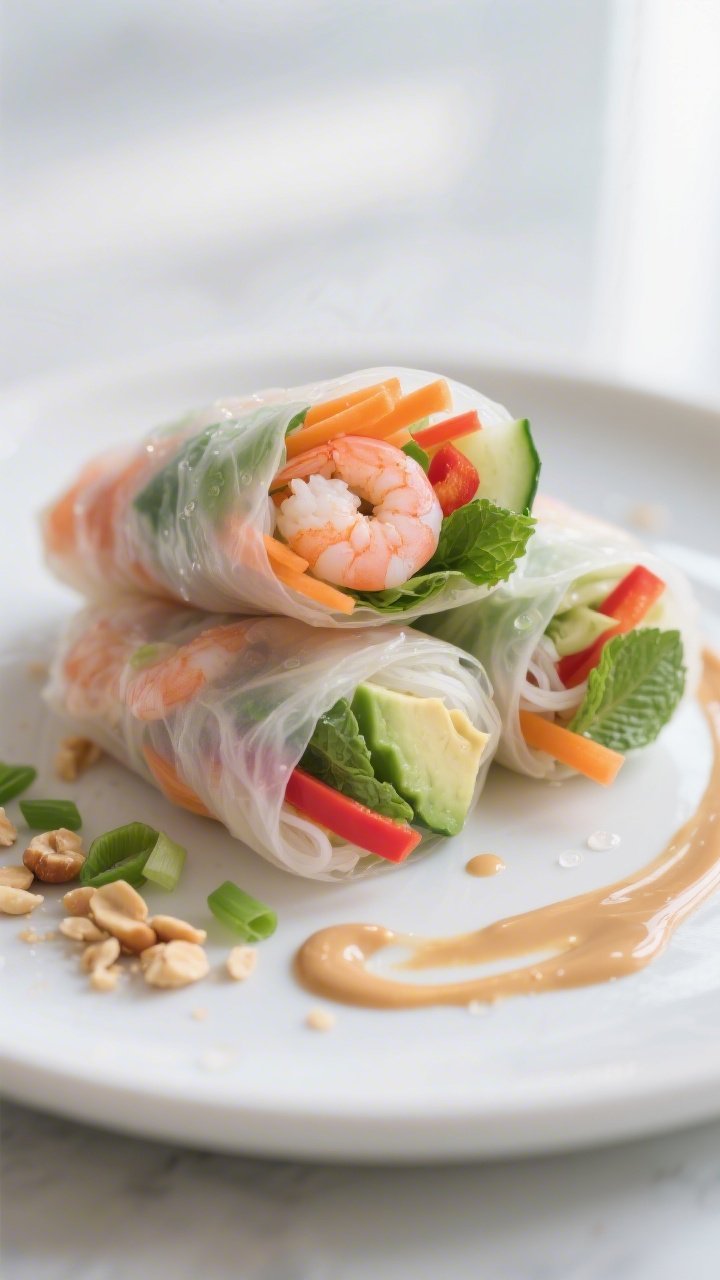
- Fresh and light: Rice paper wraps keep things airy, while crunchy vegetables add texture and brightness.
- Customizable: Make them vegan, add shrimp or chicken, or mix up the herbs and sauces to fit your taste.
- Balanced flavors: The combination of herbs, tender noodles, and a savory-sweet dipping sauce hits all the right notes.
- Meal-prep friendly: You can chop and prep the fillings in advance to roll quickly during the week.
- Nutrient-dense: Packed with fiber, lean protein (if using), and plenty of vitamins from fresh produce.
What You’ll Need
- Rice paper wrappers (8–10-inch round sheets)
- Rice vermicelli noodles (thin rice noodles), cooked and cooled
- Protein of choice:
- Shrimp (poached and halved lengthwise)
- Tofu (firm, pressed, and pan-seared)
- Cooked chicken breast (thinly sliced), optional
- Crunchy vegetables: Carrots (julienned), cucumber (seeded and julienned), bell pepper (thinly sliced)
- Leafy greens: Butter lettuce or romaine leaves
- Fresh herbs: Mint, cilantro, and Thai basil (use what you like)
- Avocado (optional, sliced for creaminess)
- Green onions (thinly sliced), optional
- Dipping sauce options:
- Peanut sauce: peanut butter, lime juice, soy sauce or tamari, honey or maple syrup, warm water, chili-garlic sauce
- Nuoc cham: fish sauce, lime juice, water, sugar, minced garlic, sliced chili
- Other essentials: Large shallow bowl of warm water, clean kitchen towel or cutting board for rolling
Step-by-Step Instructions
- Prep the fillings: Julienne the carrots and cucumber, slice the bell pepper, and wash and dry the herbs and lettuce. Cook the rice noodles according to package directions, then rinse in cold water and drain well.
- Cook your protein: Poach shrimp until pink and opaque, then halve lengthwise.For tofu, press to remove excess moisture, slice into planks, and pan-sear with a pinch of salt until golden. Let everything cool.
- Make the dipping sauce: For peanut sauce, whisk peanut butter, lime juice, soy sauce, sweetener, and warm water until smooth. Add chili-garlic sauce to taste.For nuoc cham, stir fish sauce, lime juice, water, sugar, garlic, and chili until the sugar dissolves.
- Set up your rolling station: Fill a large shallow dish with warm water. Place a clean, slightly damp towel or board next to it. Arrange all fillings within arm’s reach.
- Soften the rice paper: Dip one rice paper in warm water for 5–8 seconds.It should still feel slightly firm; it will continue softening on the towel.
- Layer the fillings: Lay the softened rice paper on the towel. Place a piece of lettuce near the bottom third, add a small handful of noodles, then carrots, cucumber, bell pepper, and herbs. Add avocado slices and your protein.Keep the pile modest to make wrapping easier.
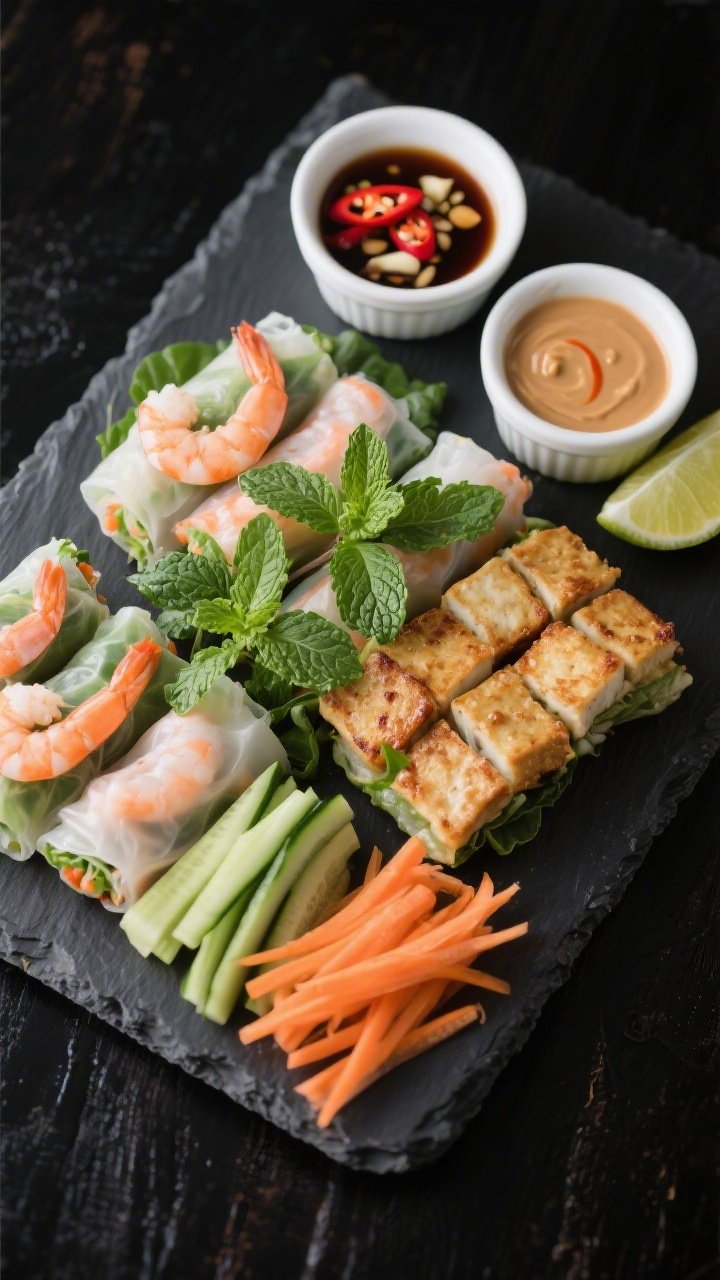
- Roll it up: Fold the bottom edge up over the filling, tuck in the sides like a burrito, then roll tightly to seal. If using shrimp, place the halved shrimp near the top so they show through the wrapper for a classic look.
- Repeat: Continue until you’ve used up the fillings. If the wrappers get sticky, slightly wet your hands or towel.
- Serve: Arrange on a platter and serve immediately with peanut sauce, nuoc cham, or both.Garnish with extra herbs if you like.
Keeping It Fresh
Spring rolls are best the day they’re made, but you can keep them fresh with a few tricks. Place the rolls in a single layer on a plate, not touching, and cover tightly with plastic wrap. For storage up to 24 hours, wrap each roll in a slightly damp paper towel before sealing in an airtight container.
Keep sauces separate until serving.
If the wrappers feel dry after chilling, you can lightly mist with water or wrap briefly in a damp towel to soften. Avoid stacking rolls in the fridge, as they tend to stick and tear.
Benefits of This Recipe
- High in veggies: You’ll get fiber, vitamins, and antioxidants from a rainbow of produce.
- Lean protein options: Shrimp, tofu, or chicken add staying power without weighing you down.
- Gluten-free friendly: Use tamari in sauces and check rice paper and noodles for certified gluten-free if needed.
- Light yet filling: The combination of noodles, greens, and herbs makes these satisfying without heaviness.
- Great for gatherings: Set out a roll-your-own bar and let everyone customize their fillings.
Pitfalls to Watch Out For
- Over-soaking rice paper: If it gets too soft in the water, it becomes sticky and tears. Dip briefly and let it soften on the towel.
- Overfilling: Too much filling makes rolling tough and leads to splits.Use smaller amounts and roll tightly.
- Wet noodles: Excess water can make the wrappers slippery. Drain and pat the noodles dry if needed.
- Sticking together: Finished rolls like to cling. Keep them in a single layer or separate with parchment.
- Bland sauce: Taste and adjust.Add more lime for brightness, more sweetener to balance salt, or extra chili for heat.
Recipe Variations
- Vegan: Use pan-seared tofu or marinated tempeh and serve with peanut sauce or a soy-lime dip.
- All-herb and veggie: Skip protein and let herbs like mint and Thai basil shine with crunchy veg and avocado.
- Mango shrimp: Add ripe mango slices for a sweet contrast with shrimp and mint.
- Spicy sesame:</-strong> Toss noodles with a little sesame oil and chili crisp before rolling for a kick.
- Chicken and cabbage: Use thinly sliced cabbage and leftover grilled chicken with cilantro and lime.
- Extra crunch: Add thin slices of jicama or shredded purple cabbage for more texture and color.
- Low-carb tweak: Skip or reduce the noodles and add more greens and cucumber.
FAQ
Can I make these ahead of time?
Yes, up to 24 hours in advance. Wrap each roll in a slightly damp paper towel, place in an airtight container, and refrigerate. Keep sauces separate and bring rolls to room temperature for 10–15 minutes before serving.
What’s the best protein for spring rolls?
Shrimp is classic and quick to cook.
Tofu is great for a plant-based option and holds up well. Thinly sliced chicken breast or even leftover rotisserie chicken also works. Choose what fits your diet and flavor preferences.
How do I keep rice paper from tearing?
Don’t over-soak.
Dip briefly, then let it soften on the towel. Roll gently but firmly, and avoid sharp or hard-edged fillings. If you’re new to rolling, double-wrap by using two sheets for extra durability.
What if I can’t find Thai basil?
Use regular sweet basil or add more mint and cilantro.
The flavor will still be bright and refreshing, just a little less peppery.
Is there a peanut-free dipping sauce?
Absolutely. Try nuoc cham, a Vietnamese fish sauce-based dip. Or make a sunflower seed butter sauce with lime, tamari, and a touch of maple syrup for a nut-free, creamy option.
Can I serve these warm?
They’re traditionally served at room temperature or slightly cool.
If you add warm proteins or noodles, let them cool a bit before rolling so the wrappers don’t get too soft.
How many rolls per person?
Plan on 2–3 rolls per person as a light meal with a side or 1–2 as an appetizer. It depends on the fillings and what else you’re serving.
In Conclusion
Vietnamese Healthy Spring Rolls are fresh, flexible, and surprisingly simple once you get the hang of rolling. With crisp vegetables, vibrant herbs, and a balanced dipping sauce, they make eating well feel effortless.
Set up a small assembly line, keep the flavors bright, and don’t stress about perfection—each roll will taste great. Make a batch today and enjoy a clean, satisfying meal that never gets boring.