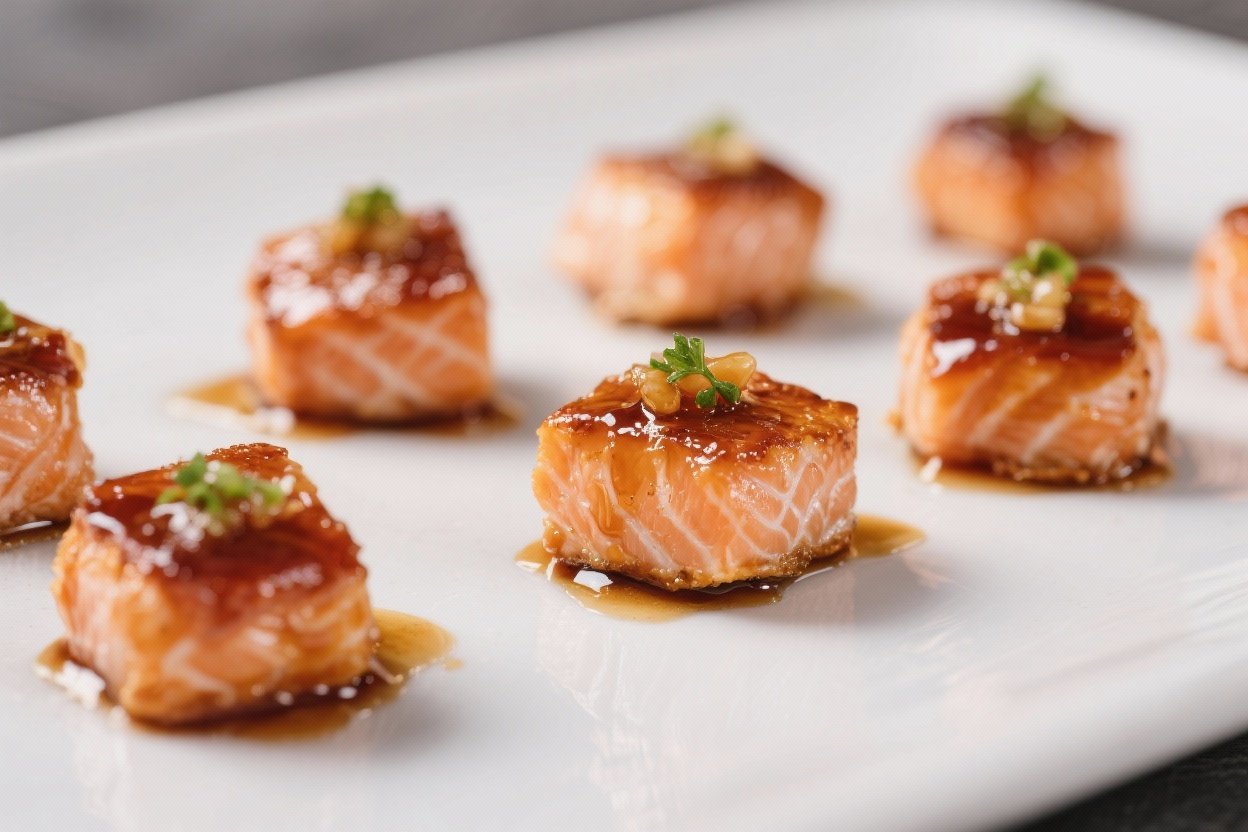
Sticky Honey Glazed Salmon Bites – Sweet, Savory, and Ready Fast
These sticky honey glazed salmon bites are quick to make, deeply flavorful, and perfect for weeknights or casual entertaining. The sweet-savory glaze clings to golden seared cubes of salmon, creating a caramelized finish that tastes like something you’d get at a good restaurant. You don’t need special tools or fancy ingredients—just a skillet, a few pantry staples, and about 20 minutes.
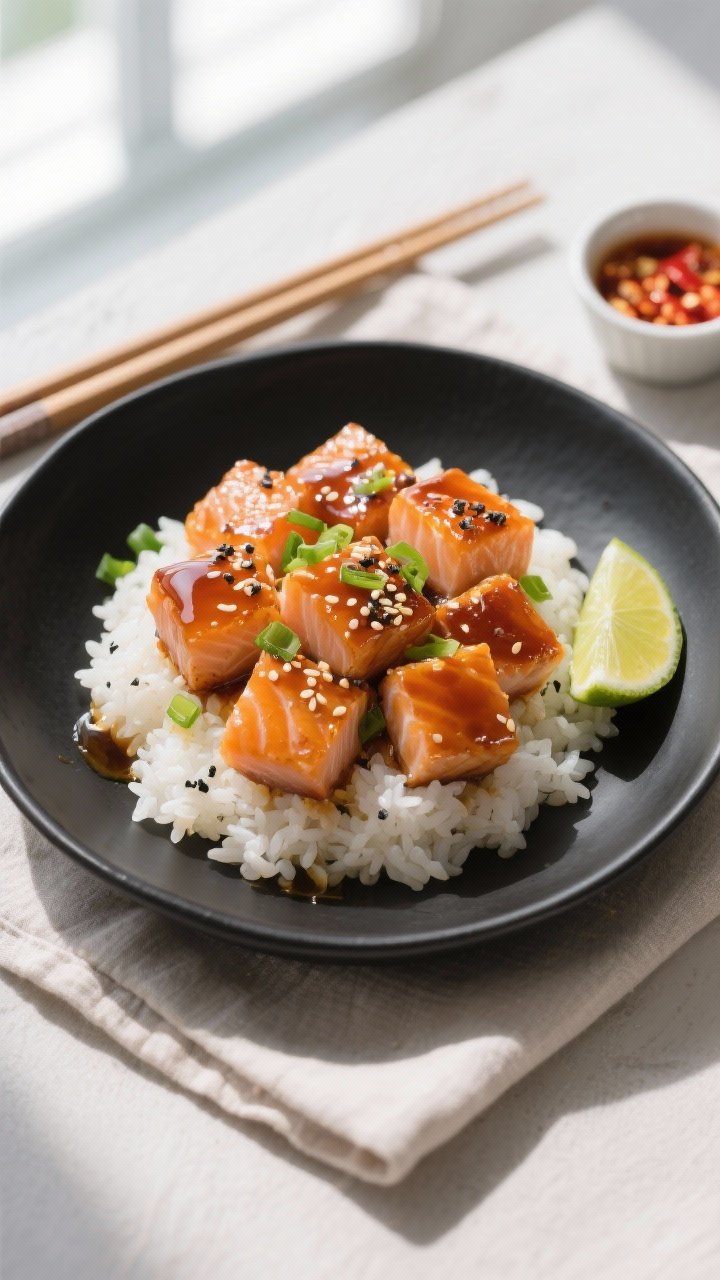
Serve them over rice, tucked into lettuce cups, or as a snack with toothpicks.
Sticky Honey Glazed Salmon Bites - Sweet, Savory, and Ready Fast
Ingredients
Method
- Prep the salmon. Pat the salmon dry with paper towels. Cut into even 1-inch cubes.Toss with a light sprinkle of salt, pepper, and the cornstarch until the cubes are just coated.
- Stir the glaze. In a small bowl, whisk together honey, soy sauce, rice vinegar, sesame oil, garlic, ginger, and sriracha (if using). Set it near the stove.
- Heat the pan. Place a large nonstick skillet over medium-high heat and add the oil. When it shimmers, it’s ready.
- Sear the salmon. Add the salmon in a single layer without crowding.Let it sear undisturbed for 1–2 minutes to develop color. Flip and cook another 1–2 minutes until mostly cooked but still a bit translucent in the center.
- Glaze and reduce. Pour the glaze over the salmon. Toss gently to coat.Lower heat to medium and simmer for 1–2 minutes, stirring, until the sauce thickens and turns glossy.
- Finish. Remove from heat when the salmon is just cooked through and the glaze clings. Sprinkle sesame seeds and scallions if you like. Serve right away.
Why This Recipe Works
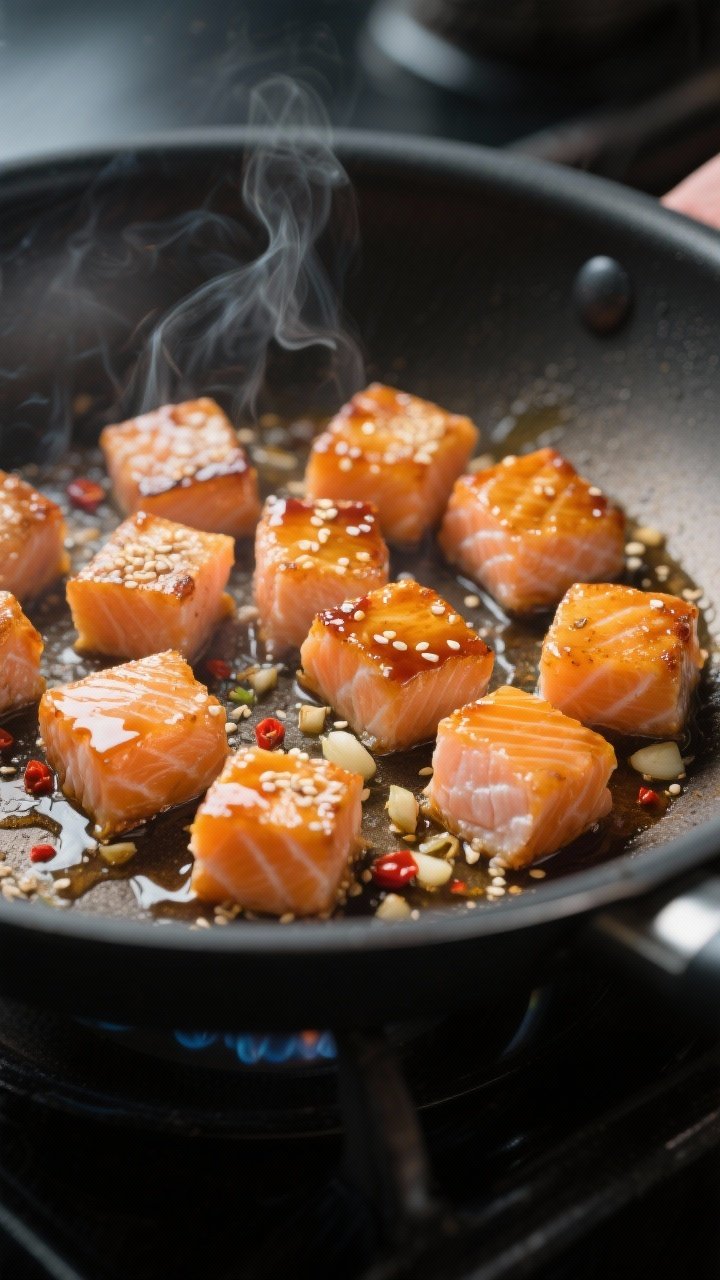
It’s all about balance and technique. The sauce blends honey, soy, garlic, and a splash of acid for a glaze that’s sweet, salty, and bright. A quick cornstarch dusting gives the salmon a light crust and helps the glaze cling, so every bite is coated.
High heat creates caramelization without drying the fish. And cutting the salmon into bite-sized pieces means it cooks fast and evenly.
Ingredients
- 1.25–1.5 lbs skinless salmon fillet, cut into 1-inch cubes
- 1 tablespoon cornstarch (for light coating)
- 1 tablespoon neutral oil (avocado, canola, or light olive oil)
- Salt and black pepper, to taste
- Sesame seeds and sliced scallions, for garnish (optional)
For the Honey Glaze:
- 3 tablespoons honey
- 2 tablespoons soy sauce (use low sodium if preferred)
- 1 tablespoon rice vinegar (or lemon juice)
- 1 teaspoon toasted sesame oil
- 2–3 garlic cloves, finely minced
- 1 teaspoon fresh ginger, grated (optional but recommended)
- 1–2 teaspoons sriracha or chili flakes, to taste (optional for heat)
How to Make It
- Prep the salmon. Pat the salmon dry with paper towels. Cut into even 1-inch cubes.Toss with a light sprinkle of salt, pepper, and the cornstarch until the cubes are just coated.
- Stir the glaze. In a small bowl, whisk together honey, soy sauce, rice vinegar, sesame oil, garlic, ginger, and sriracha (if using). Set it near the stove.
- Heat the pan. Place a large nonstick skillet over medium-high heat and add the oil. When it shimmers, it’s ready.
- Sear the salmon. Add the salmon in a single layer without crowding.Let it sear undisturbed for 1–2 minutes to develop color. Flip and cook another 1–2 minutes until mostly cooked but still a bit translucent in the center.
- Glaze and reduce. Pour the glaze over the salmon. Toss gently to coat.Lower heat to medium and simmer for 1–2 minutes, stirring, until the sauce thickens and turns glossy.
- Finish. Remove from heat when the salmon is just cooked through and the glaze clings. Sprinkle sesame seeds and scallions if you like. Serve right away.
How to Store
- Refrigerate: Cool completely, then store in an airtight container for up to 2 days.
- Reheat: Warm gently in a nonstick pan over low heat with a splash of water to loosen the glaze.Avoid the microwave if possible to prevent overcooking.
- Freeze: Not ideal. The texture of salmon suffers after freezing once cooked, and the glaze can separate.
Benefits of This Recipe
- Fast and flexible: From start to finish in about 20 minutes, and easy to scale.
- Balanced flavor: Sweet, salty, garlicky, and a touch tangy—crowd-pleasing and kid-friendly (skip the heat if needed).
- Good nutrition: Salmon provides omega-3s and protein, while the sauce uses simple ingredients you likely have on hand.
- Works with many sides: Rice, noodles, salad, roasted veggies, or lettuce wraps.
Common Mistakes to Avoid
- Overcrowding the pan: If the pan is packed, the salmon steams and won’t brown. Cook in batches if needed.
- Too much cornstarch: A heavy coating turns gummy.Use just enough to lightly dust the pieces.
- Overcooking: Salmon cooks fast. Pull it once it’s opaque at the edges and slightly translucent in the center; it will finish with carryover heat.
- Adding glaze too early: If the salmon isn’t seared first, the glaze won’t reduce properly and can burn before the fish cooks.
- Skipping the dry pat: Wet salmon won’t sear well. Pat it dry for a better crust.
Alternatives
- Protein swaps: Use steelhead trout, cod chunks, chicken thigh bites (increase cook time), or extra-firm tofu (press well, then cube).
- Gluten-free: Replace soy sauce with tamari or coconut aminos.Note that coconut aminos are sweeter, so reduce the honey slightly.
- No honey: Use maple syrup or brown sugar. Maple gives a softer flavor; brown sugar adds deeper caramel notes.
- Citrus twist: Swap rice vinegar with lime juice and add lime zest. Great with cilantro and a pinch of chili powder.
- Air fryer method: Toss salmon with oil, salt, pepper, and cornstarch.Air fry at 400°F (200°C) for 6–8 minutes, shaking once. Meanwhile, simmer the glaze in a pan until thick, then toss with cooked salmon.
- Vegetable add-ins: Quickly sauté snap peas, bell peppers, or broccoli before adding the glaze, or serve on a bed of cabbage slaw.
FAQ
How do I know when the salmon is done?
Look for opaque edges, a slightly translucent center, and easy flaking with a fork. A thermometer should read around 125–130°F for moist, medium doneness.
It will keep cooking a bit off the heat.
Can I use frozen salmon?
Yes, thaw it completely in the fridge, then pat very dry. Frozen salmon often releases more moisture, so the dry pat is extra important for a good sear.
What pan works best?
A large nonstick or well-seasoned cast iron skillet is ideal. Stainless steel can work, but you’ll need to ensure the pan is very hot and lightly oiled to prevent sticking.
Is the cornstarch necessary?
It’s optional, but it helps the salmon brown and gives the glaze something to cling to.
If you skip it, reduce the glaze a touch longer so it thickens enough to coat.
How can I make it spicier?
Add more sriracha, a pinch of chili flakes, or a drizzle of chili crisp at the end. For a smoky kick, a touch of gochujang or chipotle powder works well.
What should I serve with these salmon bites?
Steamed rice, coconut rice, sesame noodles, quinoa, or crunchy lettuce cups are all great. Add a quick cucumber salad or pickled veggies for contrast.
Can I make the glaze ahead of time?
Yes.
Mix the glaze up to 3 days in advance and store it covered in the fridge. Give it a stir before using and adjust thickness as it reduces in the pan.
How do I avoid a too-sweet glaze?
Balance the honey with enough acid and salt. Taste the glaze before it goes in the pan; add a splash more vinegar or soy if it leans sweet, or a squeeze of lemon at the end.
Final Thoughts
Sticky honey glazed salmon bites bring big flavor with minimal effort.
With a quick sear and a pantry-friendly glaze, you get glossy, tender bites that feel special any night of the week. Keep the heat high, the pieces small, and the glaze balanced, and you’ll have a reliable recipe you’ll make again and again. Serve them however you like—just be ready for them to disappear fast.