15 Narrow Flower Bed Ideas That Wow
Love a slender strip of earth but want it to wow? These ideas prove constraint can spark creativity. Short on width, not on charm.
Now let’s dive into ideas that fit narrow spaces and still deliver big garden personality.
1. Vertical Pick: Tall, Narrow Plantings for Narrow Beds
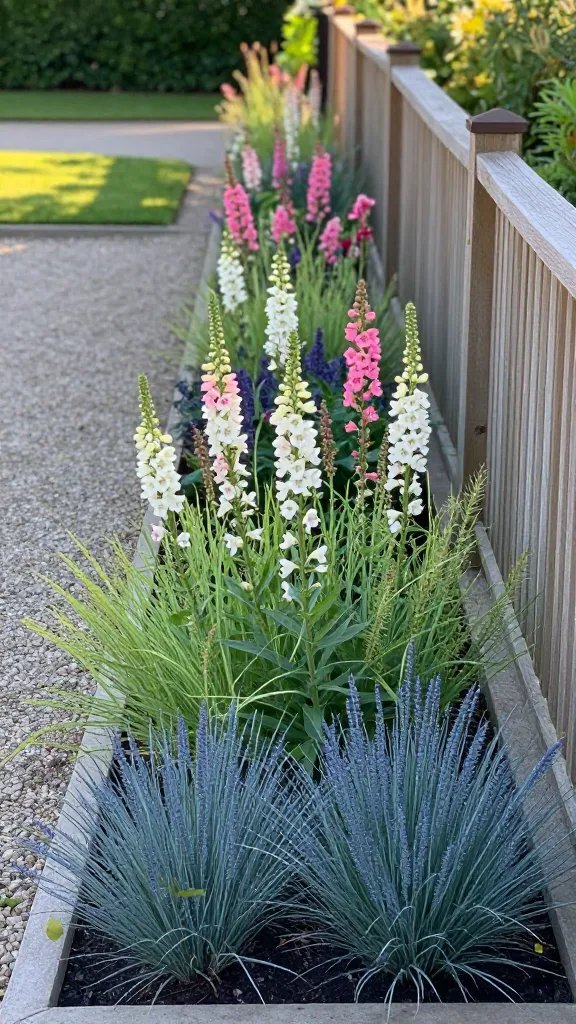
Think height without crowding the footprint. A vertical column of interest adds drama along a fence or driveway edge. Choose a staggered mix of slender perennials and grasses to create texture from top to bottom.
What to plant
- Penstemon digitalis for spikes of white or pink, reaches 2–3 feet tall.
- Gaura lindheimeri with airy wand-like blooms that float above foliage.
- Blue fescue for a crisp, architectural touch at the base.
Why it works: vertical interest draws the eye along the length, making the bed feel longer. Best for sunny, well-drained spots. Perfect for a border along a walkway where you can admire the movement from both sides.
Design tip: plant in a rising-triangle pattern so the tallest elements are toward the center and recede at the ends for a balanced look.
Perfect for: readers who crave height without crowding their space.
2. Shadow-Lill Silk: Low-Growth Groundcover with a Pop
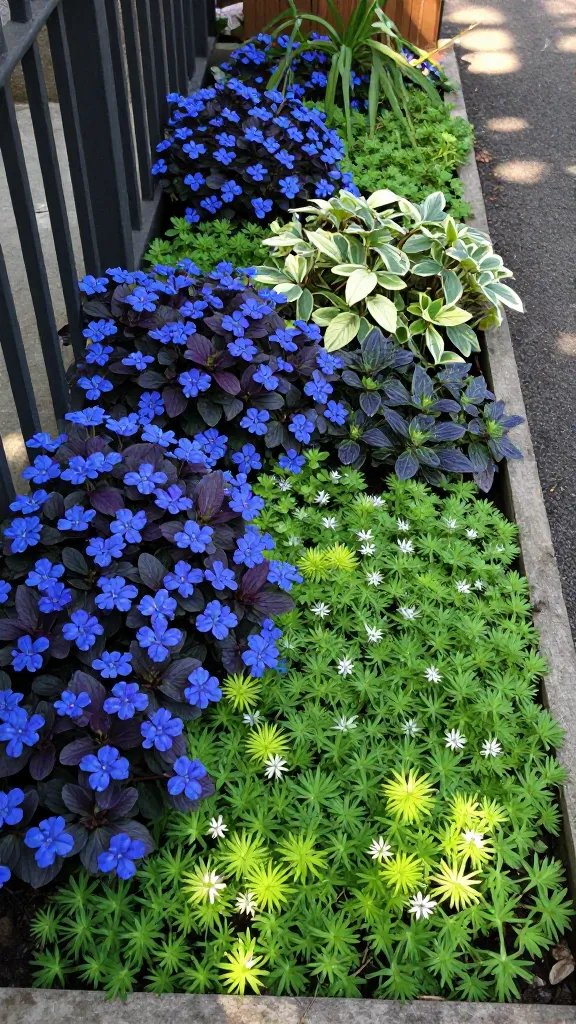
Narrow beds can vanish in shade. This idea uses a low, carpet-like groundcover that breathes color and texture into a dim corner. It’s forgiving and easy to maintain.
What to plant
- Ajuga reptans in deep blues or purples; spreads gently with a glossy leaf.
- Sedum spurium for evergreen mats and tiny star-shaped flowers.
- Lamium maculatum for variegated foliage and subtle blooms in spring.
Why it works: reduces weed growth and brightens shade with a cohesive, cohesive look. Best tucked along a fence or under a tree canopy.
Design tip: pair mounding leaves with a few lighter-colored blossoms to keep the bed from looking flat.
Perfect for: shade-loving spots that need a little move-and-shine.
3. Nook of Nectar: Narrow Bed for Pollinators
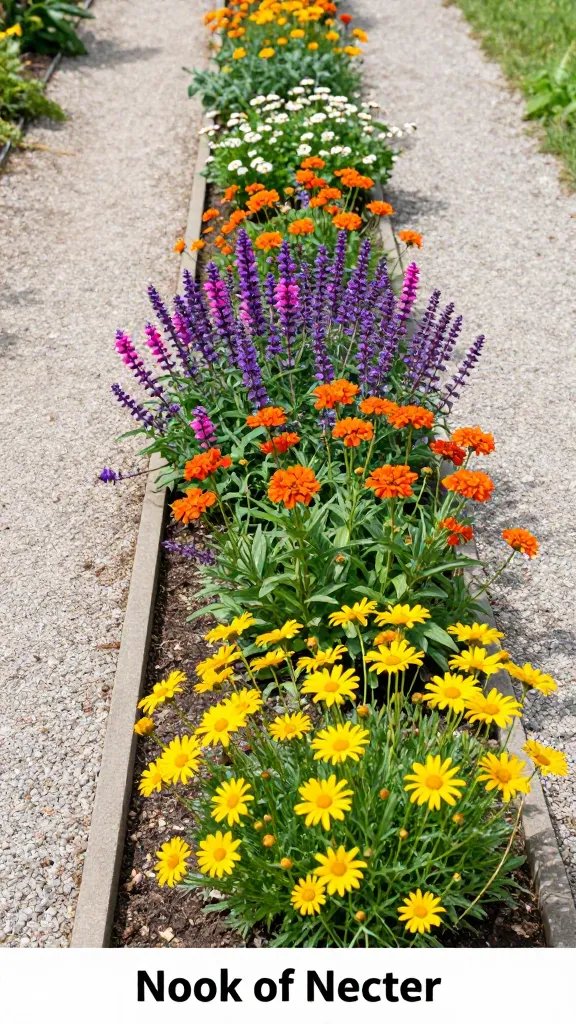
Turn a thin strip into a mini pollinator corridor. The idea centers around blooms that attract bees, butterflies, and hummingbirds in succession.
What to plant
- Salvia nemorosa for spikes of bright purple or pink mid-summer.
- Butterfly weed (Asclepias tuberosa) for sunny spots and orange blossoms.
- Coreopsis verticillata for long-lasting daisy-like flowers.
Why it works: color and bloom time stagger create consistent nectar sources. Best along a sunny border where pollinators regularly pass through.
Design tip: leave a narrow path of bare soil or mulch in front to highlight the plant silhouettes and invite butterflies to land.
Perfect for: neighbors who love bees and bright mornings in the garden.
4. Copper and Cream: Narrow Metal-Edged Edging with Perennial Color
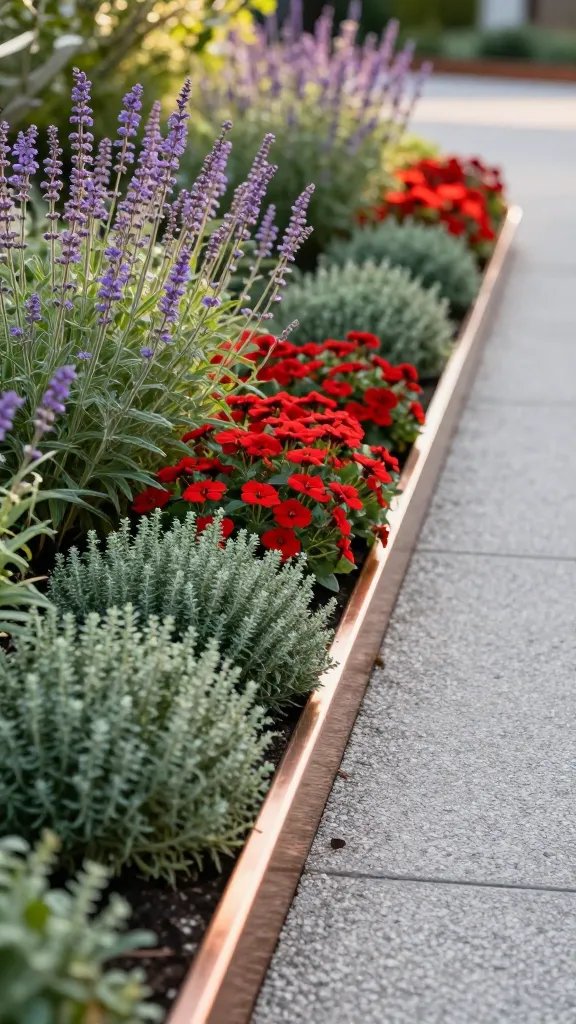
A refined, modern edge transforms narrow beds into a crisp, architectural feature. The metal edging gives a clean boundary, while plant choices soften the line.
What to plant
- Verbena bonariensis for tall, airy clusters above a low base.
- Lychnis chalcedonica for pops of scarlet, compact for the edge.
- Rosy thyme for subtle fragrance and evergreen texture at the front.
Why it works: a metallic edge helps define the space, while the mixture provides continuous color through seasons.
Design tip: align plant heights to the fence line for a tidy, continuous strip that looks deliberate from the street.
Perfect for: modern homes that crave clean lines with friendly color notes.
5. Native Narrow Border: Climate-Responsive and Low-Maintenance
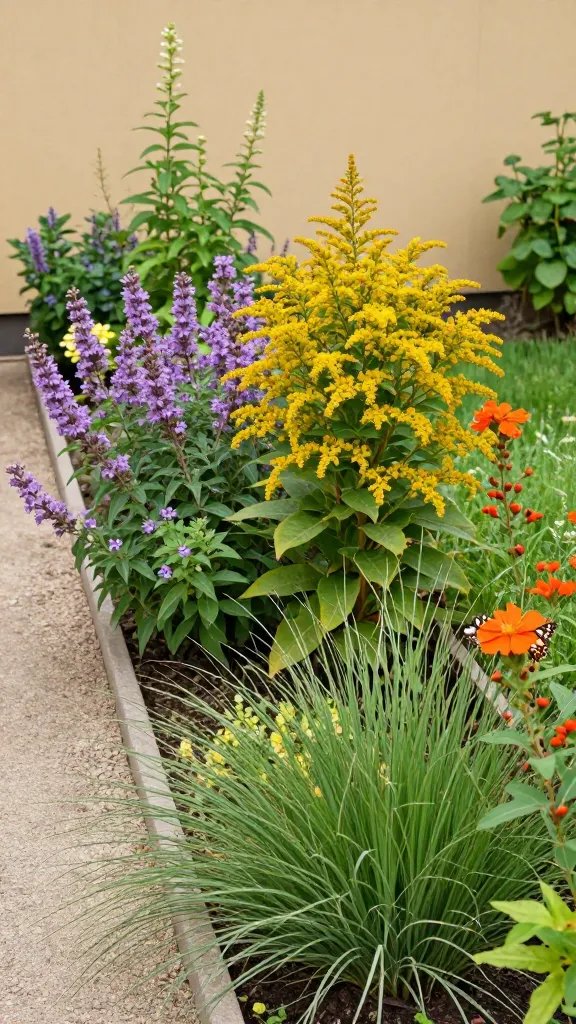
Choose local natives that thrive with minimal fuss. A narrow bed becomes a thriving, sustainable slice of the landscape that supports local wildlife.
What to plant
- Monarda fistulosa for bold lilac blooms and fragrant foliage.
- Solidago rigida (rigid goldenrod) for late-summer gold and sturdy stems.
- Asclepias tuberosa for heat-loving orange flowers and butterfly appeal.
Why it works: natives are adapted to local conditions, often requiring less water and maintenance. Great for a border along a property line or along a sunny fence.
Design tip: mix textures—fine grasses with bold daisy-like flowers—to keep the bed visually interesting across seasons.
Perfect for: gardeners who want a quintessential local vibe with minimal upkeep.
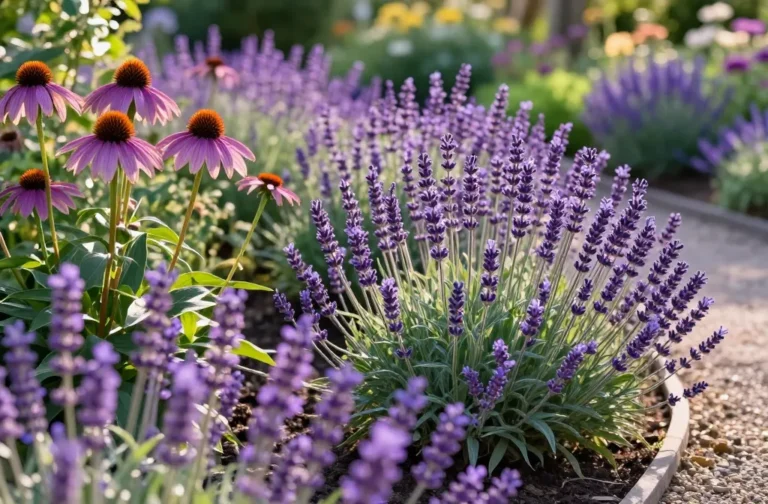
6. Fragrant Footpath: A Scent-Driven Narrow Corridor
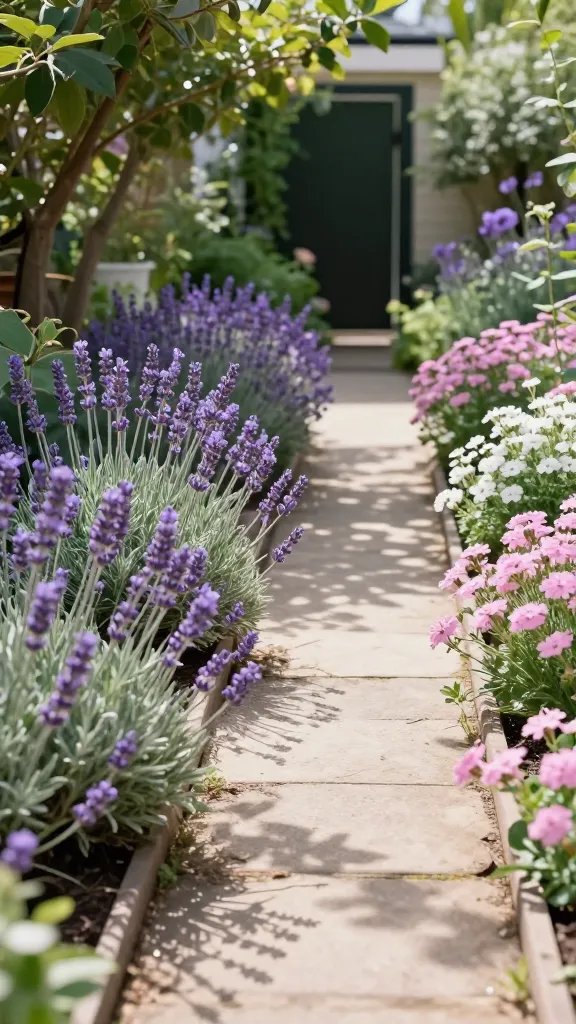
Create a sensory stroll along a narrow path with fragrant perennials that perfume the air as you walk. This is comfort gardening at its simplest and most inviting.
What to plant
- Lavandula angustifolia for lavender fragrance and silver-gray leaves.
- Lavandula intermedia for a stronger scent and longer bloom.
- Phlox subulata for carpet-of-color fragrance in spring.
Why it works: scent enhances the experience of small spaces, encouraging lingering and enjoyment. Best near a patio door or entry gate where you can savor the aroma up close.
Design tip: use drought-tolerant, sun-loving varieties to keep maintenance light and the scent prolific.
Perfect for: daily dose-of-joy moments during morning coffee or evening wind-downs.
7. Silver + Sage Line: Narrow Bed with Foliage Focus
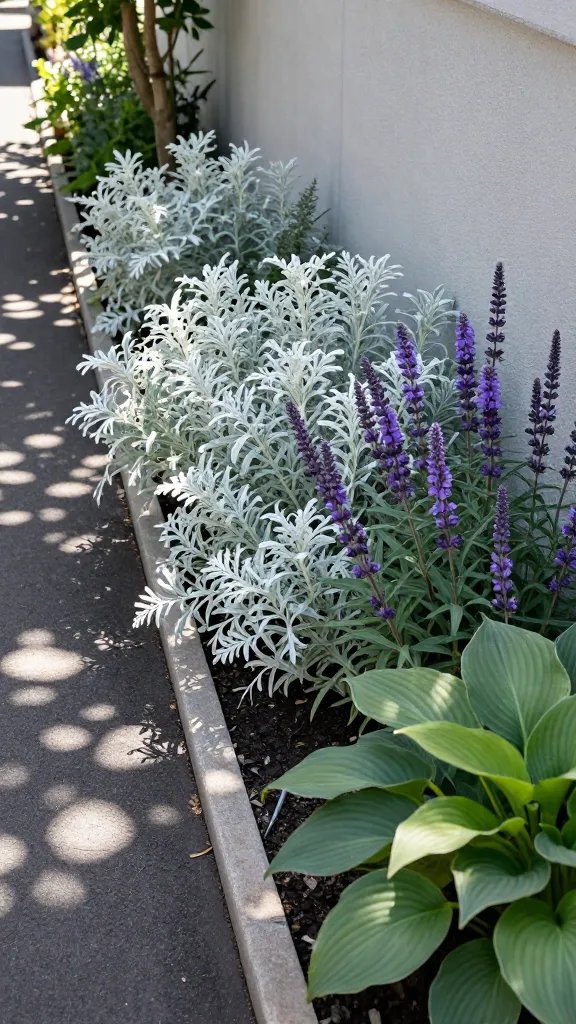
A foliage-forward concept that relies on texture, color, and contrast rather than heavy flowering. It stays chic year-round with minimal fuss.
What to plant
- Artemisia generator for silvery, feathery leaves and a cool vibe.
- Salvia nemorosa ‘Caradonna’ for dark stems and rich purple blooms.
- Hosta fortunei varieties for dependable shade texture.
Why it works: silver tones reflect light in tight spaces, making the bed feel brighter. Great along a northern exposure or under a tree canopy.
Design tip: keep a recurring palette of two or three leaf colors to create a cohesive stripe that reads as a single design.
Perfect for: gardeners who love sophisticated color drama with a calm, refined mood.
8. Narrow Water-Wise Border: Drought-Tolerant Edging with Flair
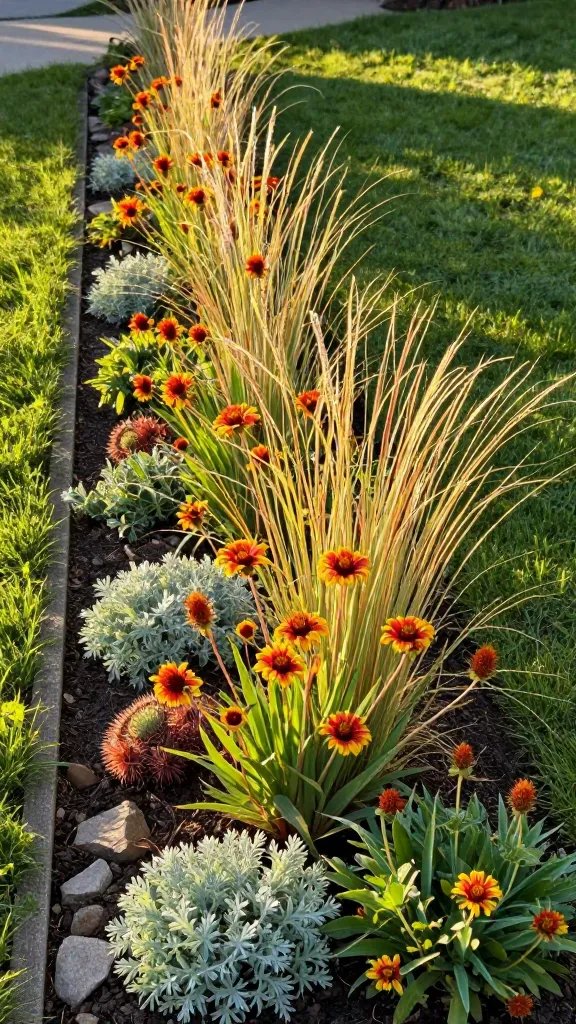
Conserving water doesn’t have to be dull. A narrow border that uses drought-tolerant perennials and ornamentals keeps color steady while sipping less H2O.
What to plant
- Gaillardia aristata for long-lasting red-and-gold blooms.
- Miscanthus sinensis ‘Gracillimus’ for a delicate, arching silhouette (taller but still slim if placed strategically).
- Hens and chicks (Sempervivum) for sculptural, low-growing interest.
Why it works: low water, high impact. Best along a sunlit edge where seasonal color remains reliable.
Design tip: combine clumping grasses with rosette-forming succulents to create a tapestry of shapes in a small space.
Perfect for: hot climates, rainless summers, and water-wise homeowners.
9. Twilight Silk: Focal Color with Evening-Glow Blooms
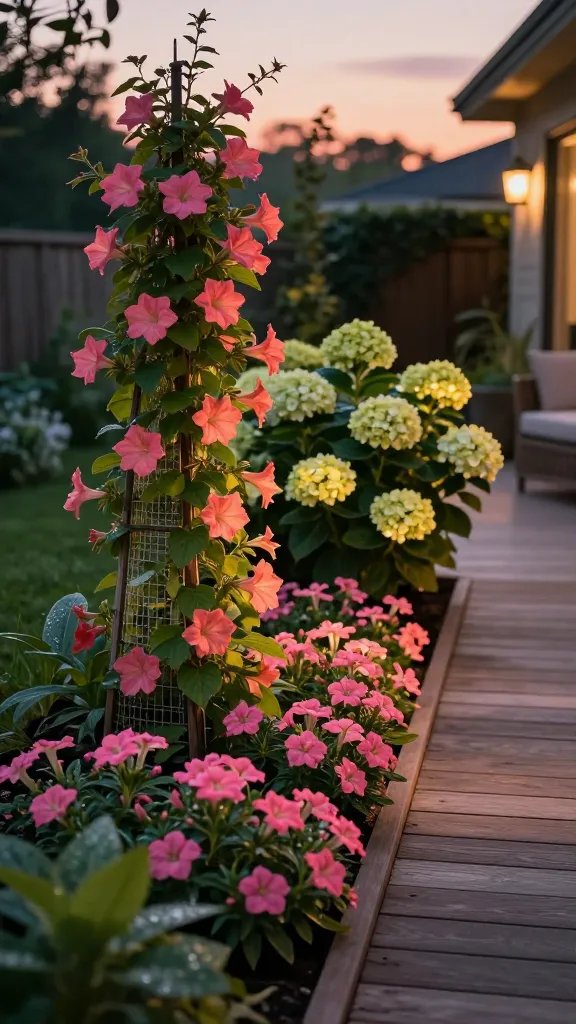
Twilight-friendly plants provide color late into the day. This idea uses cultivars that look magical under sunset or porch lighting, making a narrow bed feel magical after dark.
What to plant
- Ipomoea lobata for evening color in a trailing form (if you have a slender trellis).
- Calibrachoa for tiny, prolific blooms in continuous color waves.
- Hydrangea paniculata ‘Limelight’ for big, pale blossoms that glow at dusk if space allows.
Why it works: the right colors in the late-day glow create a soothing, movie-like moment in your yard. Best for beds adjacent to a seating area.
Design tip: select cultivars with extended bloom windows and pair with reflective stones or white edging to bounce light.
Perfect for: readers who adore a tranquil, late-evening garden experience.
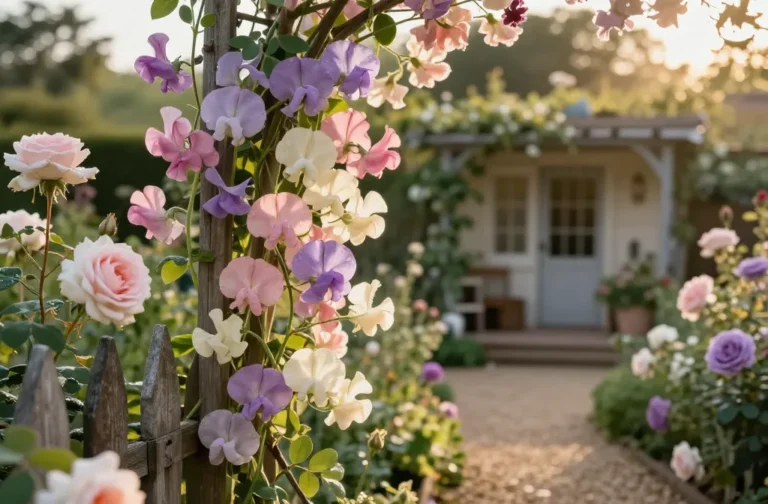
10. Framing with Fence Trellis: Narrow Bed + Vertical Garden
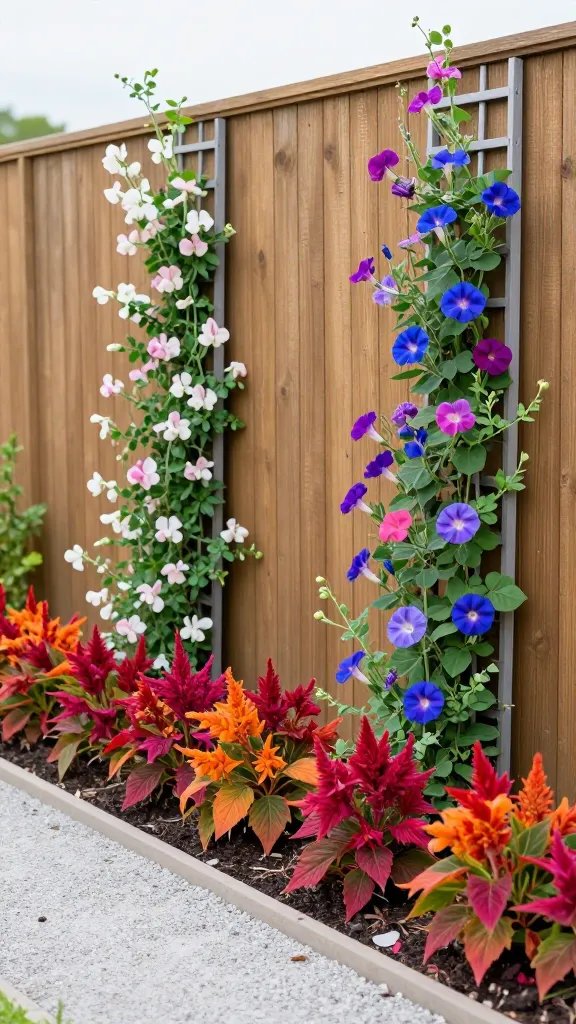
Make the most of a slim border by using a trellis as a vertical frame. It adds height, hiding unattractive fencing and creating a living mural.
What to plant
- Sweet pea for scent and romance climbing the trellis.
- Morning glory for quick coverage and bright blossoms (season permitting).
- Celosia cristata for bold color at the base to fill gaps.
Why it works: vertical elements pull the eye upward and make the narrow space feel intentional rather than cramped. Best for a border along a plain fence or wall.
Design tip: train climbers on a lightweight trellis and keep the base thick with low-lying annuals for a lush, framed look.
Perfect for: renters or homeowners who want a flexible, seasonal display.
11. Narrow Creeping Trail: Continuous Ground-Level Flow
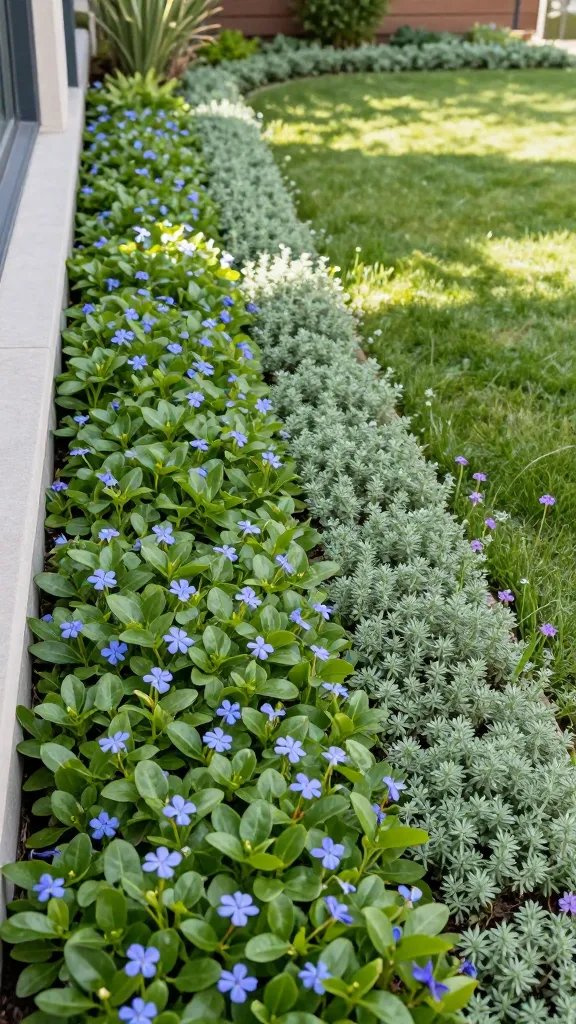
Let a creeping plant do the heavy lifting to create a soft, continuous edge that feels much wider than it is. This approach is forgiving and endlessly adaptable.
What to plant
- Vinca minor for evergreen trails of glossy leaves and blue flowers.
- Thymus praecox for a fragrant, low mat that blooms.
- Dichondra repens for an almost tropical green carpet in shade and sun alike.
Why it works: the carpet-like coverage hides soil and weeds, creating a seamless transition from lawn to bed. Best for very narrow strips along paths or driveways.
Design tip: keep width consistent and use a single texture to maximize cohesion while avoiding a patchy look.
Perfect for: small yards that need a soft, walking-friendly edge.
12. Metallic Edges, Soft Fill: Slim Border with Bold Edging
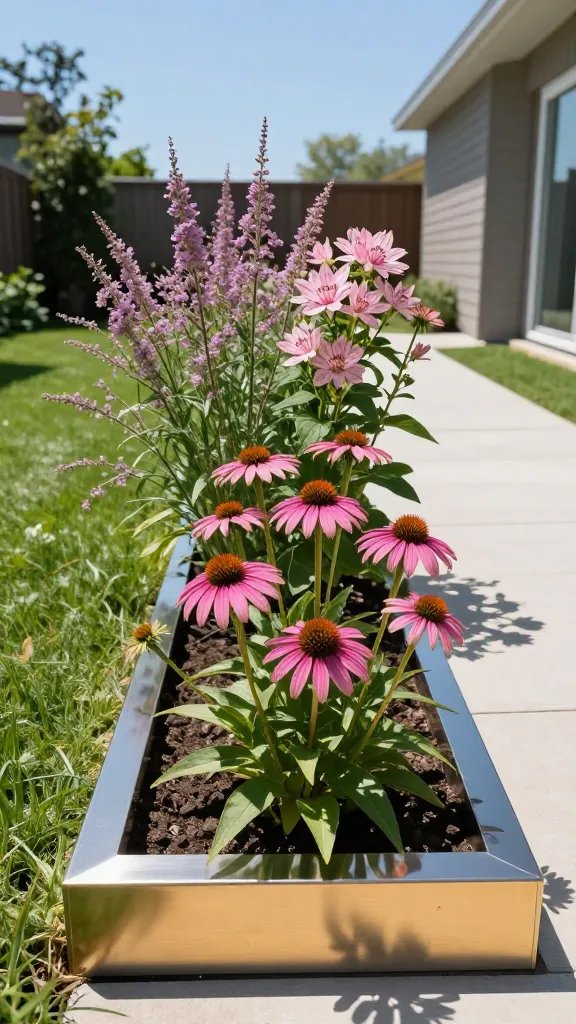
Combine a bold, metallic edging with a soft, blooming interior to create a modern, shop-window-perfect bed within a tiny footprint.
What to plant
- Echinacea purpurea for sturdy coneflowers at the front.
- Vernonia lettermannii for wispy, fine-textured foliage and late-season blooms.
- Astrantia major for architectural, bead-like petals that linger in the sun.
Why it works: the fence-line edge acts as a frame while the interior bursts with color. Works beautifully along walkways or sides of a shed.
Design tip: keep the inside layer tight and low, so the edging remains the visual hero.
Perfect for: design-forward spaces that crave a crisp, contemporary vibe.
13. The Tiny Canyon: Layered Color Through Narrow Terracing
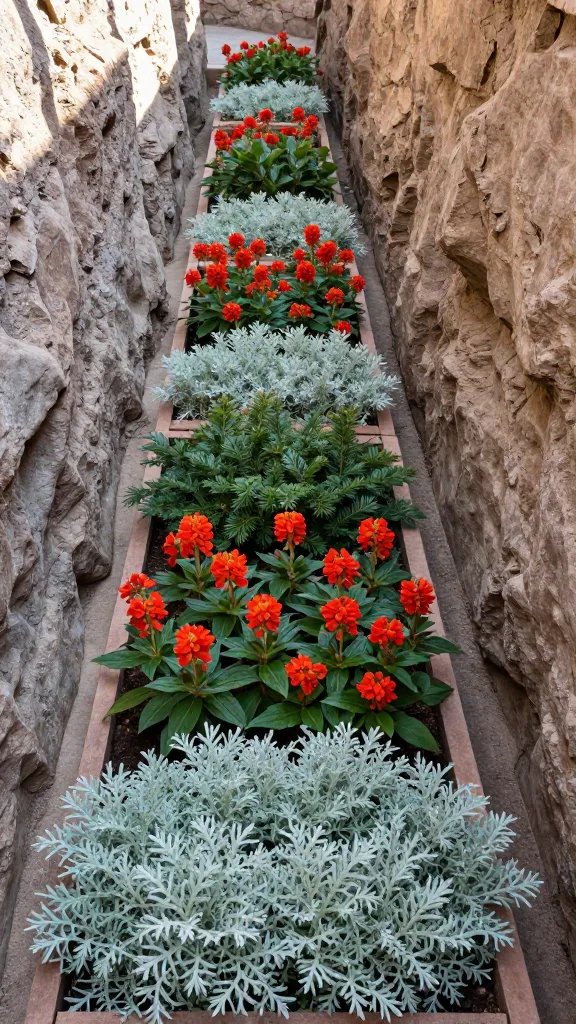
Create depth in a narrow bed by layering in a terraced fashion. This mimics a tiny canyon effect, giving the illusion of more space and complexity.
What to plant
- Lychnis chalcedonica for bold poppies of color on mid-levels.
- Helleborus for evergreen structure and late-winter to early-spring interest.
- Stachys byzantina for soft, fuzzy silver-green foliage at the base.
Why it works: terraces create visual tiers, drawing the eye from front to back and adding intrigue to a slender border. Best for sunny, well-drained spots with a solid foundation.
Design tip: alternate warm and cool tones between tiers to keep the bed lively across seasons.
Perfect for: lovers of landscape architecture who want a sculptural statement in a narrow space.
14. Echoing Edges: Repeating Palettes for Visual Rhythm
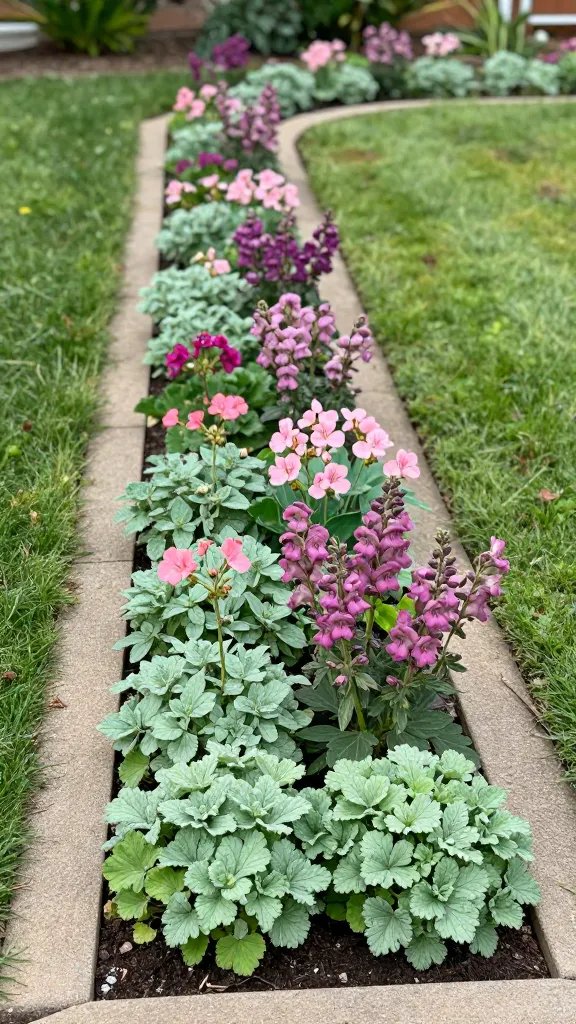
Use a repeating color and texture palette to create a harmonious rhythm along a slender border. It’s like a song you can walk past every day.
What to plant
- Radishina turra (a playful name for a compact ornamental radish that flowers early—just kidding; use Penstemon digitalis and Salvia nemorosa to repeat a color sequence).
- Geranium macrorrhizum for ground-hugging minty foliage and pink blooms.
- Erysimum ‘Bowles’s Mauve’ for a long bloom period and mauve tones.
Why it works: repetition makes a narrow bed feel deliberately designed rather than accidental. Ideal for borders that run the length of a walkway or fence line.
Design tip: choose two main colors plus a neutral foliage tone, and repeat them in every third plant for a cohesive rhythm.
Perfect for: anyone who loves a curated, gallery-like experience in a small space.
15. Coastal Glow: Narrow Bed with Salt-Tolerant Coastal Plants
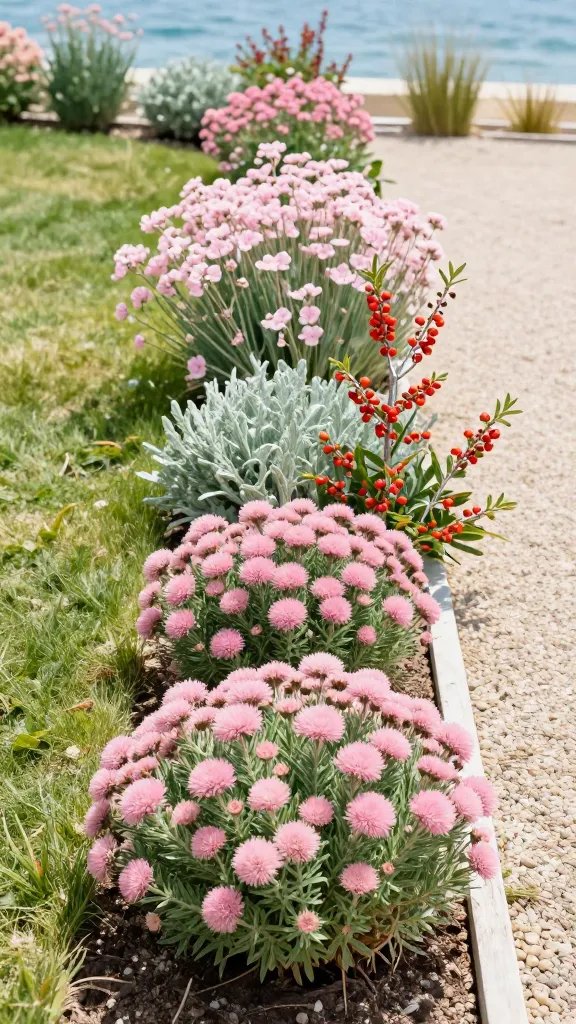
Bring a breezy, beachy vibe to a narrow border with salt-tolerant options that still perform beautifully inland.
What to plant
- Armeria maritima for colorful tufted blooms and tidy, evergreen clumps.
- Lavatera maritima for airy, butterfly-friendly flowers and silver-green foliage.
- Lycium barbarum (goji berry) for a vertical accent and edible interest in a pinch.
Why it works: coastal plants thrive in sun, often tolerate salt spray, and bring a light, sun-kissed look to slim borders. Best near a sunny corner or along a fence facing the sea breeze or even a windy street.
Design tip: pair with pale stones and white gravel to amplify the sun-drenched mood and keep maintenance minimal.
Perfect for: those who want a breezy look with practical, resilient plants.
Conclusion
Narrow flower beds offer big potential with the right ideas. Each concept above proves width isn’t a limit; it’s an invitation to get creative. Pick one that matches your sun, soil, and vibe, and run with it. Which idea will you try first?
If you’re feeling inspired, start with a simple plan sketch and a plant list. Even a tiny border can become a favorite focal point of your outdoor space. Trust me — the yard you have now will thank you later.