Prep the aromatics. Finely dice the onion, carrot, and celery so they soften quickly and melt into the sauce. Mince the garlic.
This small cut is key to a refined texture.
Heat the base. In a wide, heavy pot, warm olive oil (or butter) over medium heat. Add pancetta and cook until lightly crisp and the fat renders. If not using pancetta, use a bit more oil.
Sweat the vegetables. Add onion, carrot, and celery with a pinch of salt.
Cook 8–10 minutes, stirring, until soft and lightly golden. Add garlic and cook 30 seconds, just until fragrant.
Brown the meat. Crumble in the ground meat. Season with salt and pepper.
Cook over medium-high, breaking it up but not pulverizing it. Let it take on color; browning = flavor. Drain excess fat if needed.
Deglaze with wine. Pour in the white wine and scrape up any browned bits.
Simmer 3–5 minutes until the alcohol cooks off and the pot smells mellow and savory.
Add stock and herbs. Stir in 1 cup stock, thyme or rosemary, and the bay leaf. Lower the heat and simmer gently, uncovered, 25–35 minutes, stirring occasionally. Add more stock if it gets too dry; you want a loose but glossy ragù.
Finish with dairy. Reduce the heat to low.
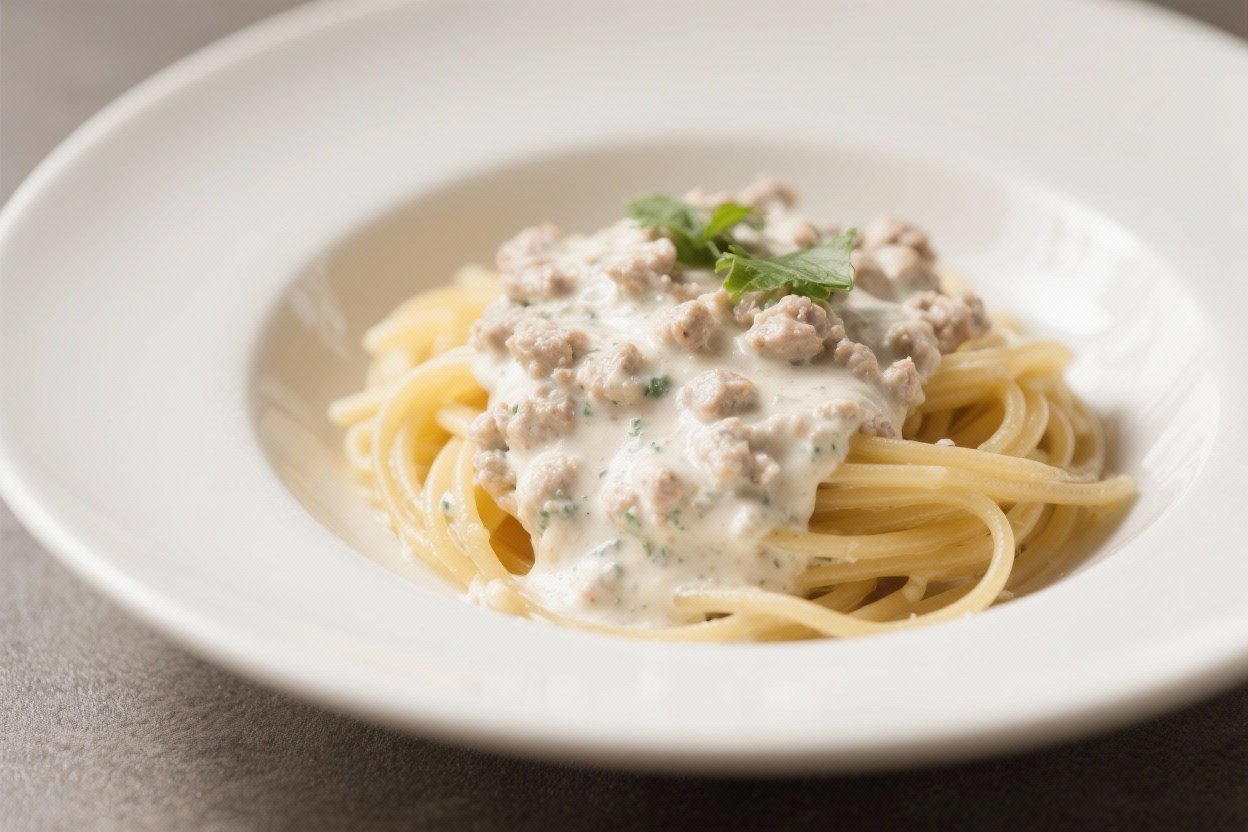
Stir in milk or cream. Grate in a little nutmeg. Simmer 5–8 minutes until the sauce is silky and cohesive.
Remove herb stems and bay leaf. Adjust salt and pepper.
Cook the pasta. Boil in well-salted water until just shy of al dente. Reserve 1 cup of pasta water before draining.
Bring it together. Add pasta to the sauce with a splash of pasta water.
Toss over low heat until the sauce coats every strand or shape. Add more pasta water as needed for shine and movement.
Finish and serve. Off the heat, fold in a handful of grated Parmesan and a whisper of lemon zest if you like. Taste once more for seasoning.
Serve with extra Parmesan and black pepper.