Bring a large pot of water to a boil. Salt it well—it should taste like the sea. This is your only chance to season the pasta from within.
Prep your ingredients. Finely grate the cheese and whisk it with the eggs and extra yolks in a bowl.
Add a generous pinch of black pepper. Set aside near the stove.
Cook the penne. Add the pasta to the boiling water and cook until just shy of al dente. You want it to have a firm bite, since it will finish in the pan. Reserve at least 1 cup of the starchy pasta water before draining.
Crisp the pork. While the pasta cooks, set a large skillet over medium heat.
Add the guanciale or pancetta. If it’s very lean, add a teaspoon of olive oil to get it started. Cook until the fat renders and the edges turn golden and crisp, about 5–8 minutes.
Control the heat. When the pork is crisp, turn the heat to low.
You want hot fat, but not scorching. If it seems too hot, take the pan off the burner for a minute.
Combine pasta and pork. Add the drained penne to the skillet with the pork and its fat. Toss for 30 seconds to coat.
Add a splash of reserved pasta water to loosen things up.
Temper the egg mixture. Remove the pan from the heat. Slowly pour the egg-and-cheese mixture over the pasta while tossing constantly. The residual heat cooks the eggs gently, forming a creamy sauce rather than scrambling.
Add more pasta water, a little at a time, until the sauce turns glossy and clings to the penne.
Season and adjust. Grind in more black pepper and taste for salt. Pecorino and pork are salty, so you may not need much. If the sauce thickens too much, stir in another splash of pasta water to revive the silkiness.
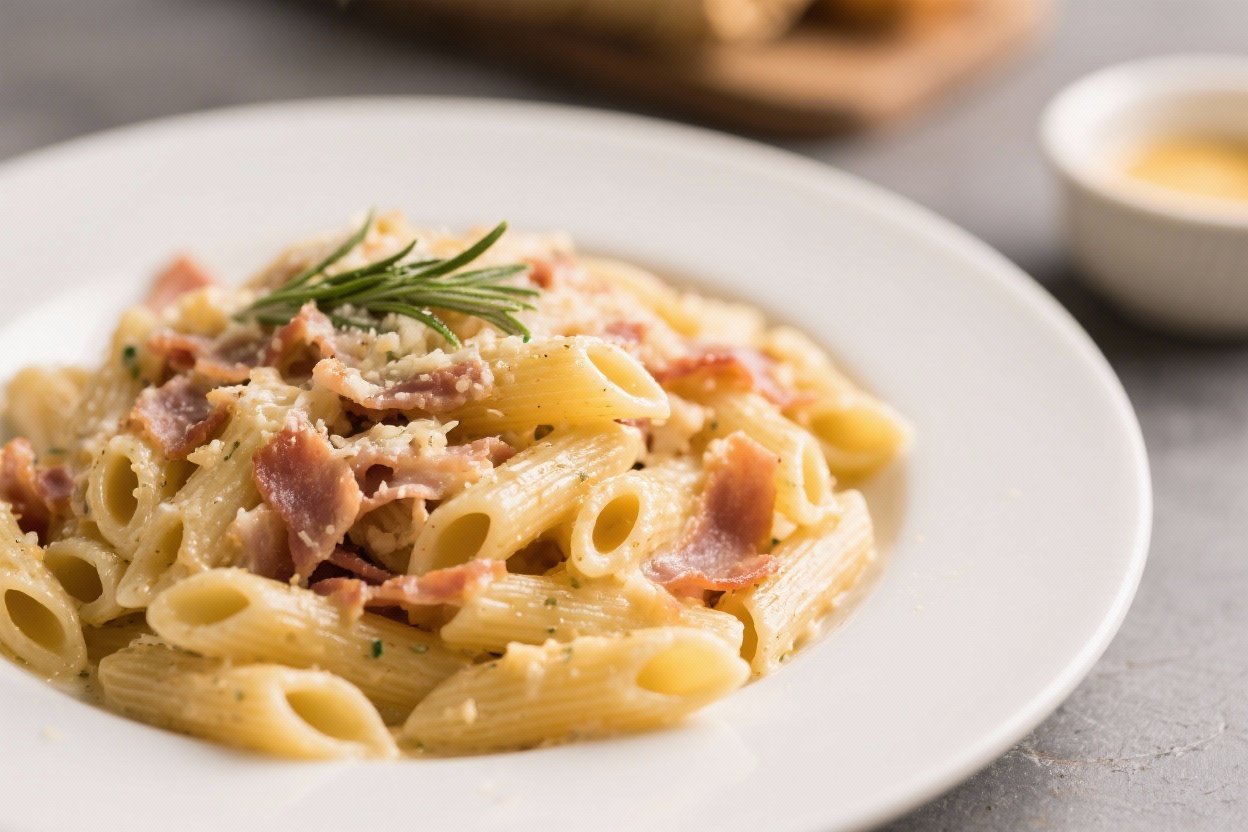
Serve immediately. Plate hot, and finish with extra grated cheese and pepper.
Carbonara waits for no one.