Shrimp Lo Mein With Veggies – A Fast, Flavor-Packed Weeknight Favorite
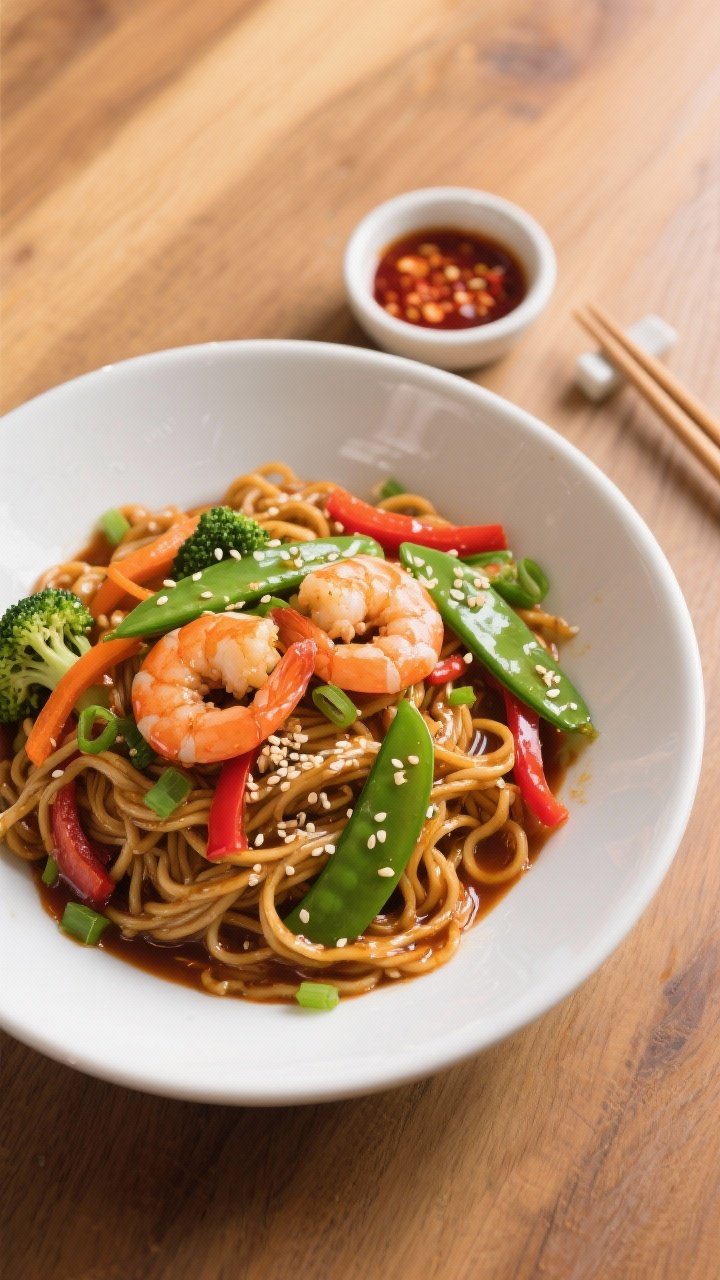
Shrimp lo mein with veggies is one of those meals that feels special but takes less time than you think. It’s full of fresh vegetables, tender noodles, and juicy shrimp tossed in a savory sauce that tastes like your favorite takeout. You can get everything on the table in under 30 minutes without sacrificing flavor.
It’s also an easy way to use up veggies in the fridge and still get a balanced, satisfying dinner. If you love big flavor with minimal fuss, this is your new go-to.
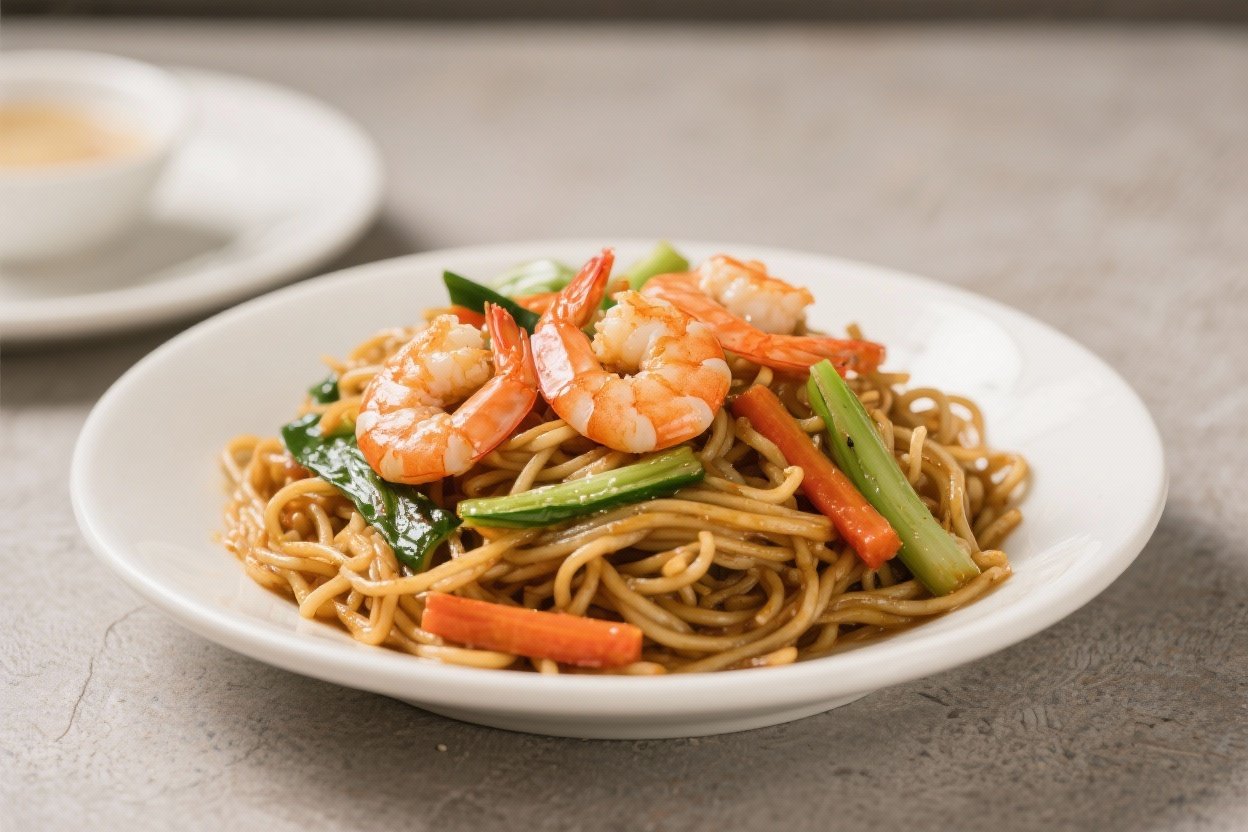
Shrimp Lo Mein With Veggies – A Fast, Flavor-Packed Weeknight Favorite
Ingredients
Method
- Cook the noodles: Bring a large pot of salted water to a boil.Cook noodles until just shy of tender (1–2 minutes less than package time). Drain, rinse briefly to stop cooking, and toss with a drizzle of oil to prevent sticking.
- Make the sauce: In a bowl, whisk soy sauce, oyster sauce, dark soy, hoisin, rice vinegar, brown sugar, broth mixed with cornstarch, pepper, and chili if using. Set aside.
- Prep the shrimp: Pat shrimp dry.Season lightly with salt and pepper. Dry shrimp sear better and stay juicy.
- Heat the pan: Set a large wok or skillet over medium-high heat. Add 1 tablespoon oil.
- Sear the shrimp: Add shrimp in a single layer.Cook 1–2 minutes per side until just pink and opaque. Remove to a plate. Do not overcook.
- Stir-fry the aromatics: Add 1 tablespoon oil.Add garlic and ginger. Stir 20–30 seconds until fragrant but not browned.
- Cook the veggies: Add carrots and broccoli. Stir-fry 2 minutes.Add bell pepper and snow peas. Cook another 2–3 minutes until crisp-tender.
- Add noodles and sauce: Return noodles to the pan. Pour in sauce.Toss with tongs for 1–2 minutes until the sauce thickens and coats everything.
- Finish with shrimp and onions: Add shrimp and green onions. Toss 30–60 seconds to warm through. Drizzle with sesame oil.
- Garnish and serve: Sprinkle sesame seeds if you like.Taste and adjust with a splash of soy, vinegar, or a pinch of sugar. Serve hot.
What Makes This Recipe So Good
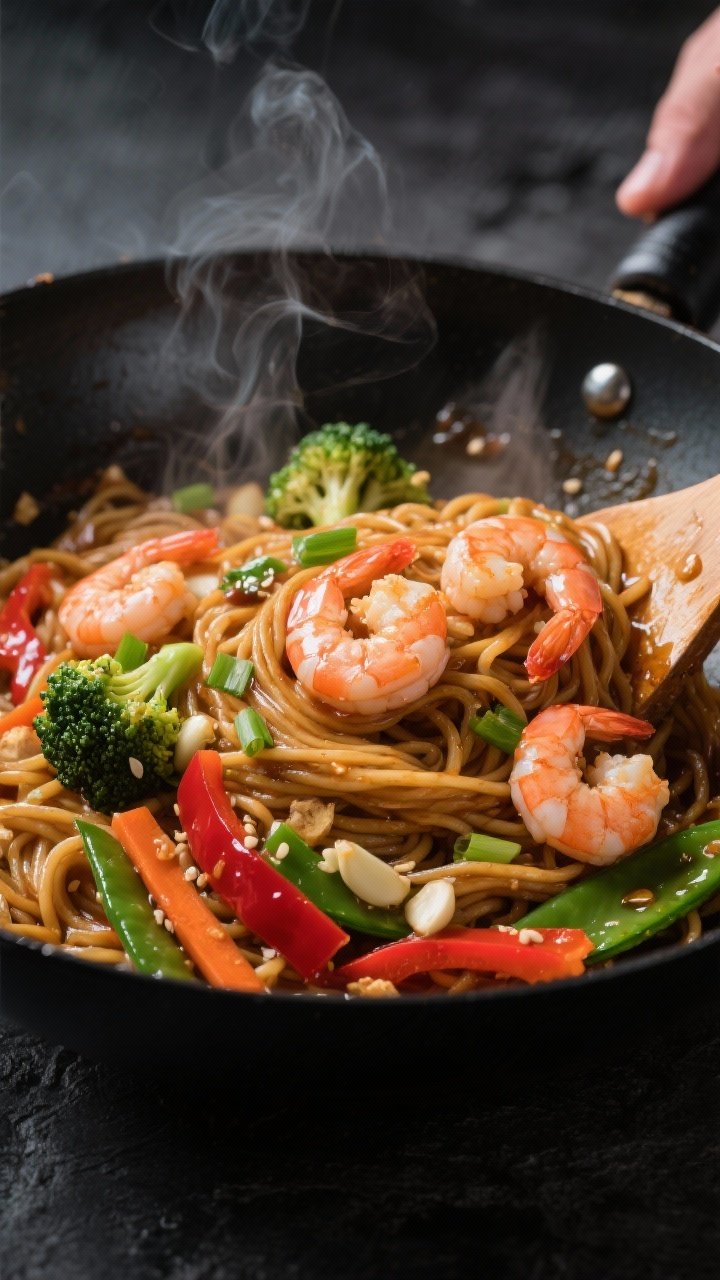
- Quick and simple: From prep to plate in about 25–30 minutes. Perfect for busy nights.
- Balanced and satisfying: Protein from shrimp, fiber-rich veggies, and comforting noodles make a complete meal.
- Better-than-takeout sauce: A glossy, umami-rich sauce clings to every strand for that classic lo mein taste.
- Easy to customize: Swap in your favorite vegetables or different proteins without changing the core recipe.
- Budget-friendly: Uses simple pantry staples and frozen shrimp if fresh isn’t available.
What You’ll Need
- Lo mein noodles (10–12 oz), or spaghetti if needed
- Shrimp (1 pound), peeled and deveined, medium or large
- Vegetable oil or neutral oil (2–3 tablespoons)
- Garlic (3 cloves), minced
- Fresh ginger (1 tablespoon), grated
- Carrots (1 cup), julienned or thinly sliced
- Bell pepper (1), thinly sliced
- Snow peas or snap peas (1 cup)
- Broccoli florets (1 cup), bite-sized
- Green onions (4), cut into 1-inch pieces
- Sesame oil (1–2 teaspoons), for finishing
- Sesame seeds (optional), for garnish
For the sauce:
- Low-sodium soy sauce (1/3 cup)
- Oyster sauce (2 tablespoons)
- Dark soy sauce (1 tablespoon), for color and depth (optional but great)
- Hoisin sauce (1 tablespoon)
- Rice vinegar (1 tablespoon)
- Brown sugar or honey (2 teaspoons)
- Chicken or vegetable broth (1/3 cup)
- Cornstarch (2 teaspoons), whisked into the broth
- White pepper (a pinch), or black pepper
- Red pepper flakes or chili-garlic sauce (optional), to taste
Instructions
- Cook the noodles: Bring a large pot of salted water to a boil.Cook noodles until just shy of tender (1–2 minutes less than package time). Drain, rinse briefly to stop cooking, and toss with a drizzle of oil to prevent sticking.
- Make the sauce: In a bowl, whisk soy sauce, oyster sauce, dark soy, hoisin, rice vinegar, brown sugar, broth mixed with cornstarch, pepper, and chili if using. Set aside.
- Prep the shrimp: Pat shrimp dry.Season lightly with salt and pepper. Dry shrimp sear better and stay juicy.
- Heat the pan: Set a large wok or skillet over medium-high heat. Add 1 tablespoon oil.
- Sear the shrimp: Add shrimp in a single layer.Cook 1–2 minutes per side until just pink and opaque. Remove to a plate. Do not overcook.
- Stir-fry the aromatics: Add 1 tablespoon oil.Add garlic and ginger. Stir 20–30 seconds until fragrant but not browned.
- Cook the veggies: Add carrots and broccoli. Stir-fry 2 minutes.Add bell pepper and snow peas. Cook another 2–3 minutes until crisp-tender.
- Add noodles and sauce: Return noodles to the pan. Pour in sauce.Toss with tongs for 1–2 minutes until the sauce thickens and coats everything.
- Finish with shrimp and onions: Add shrimp and green onions. Toss 30–60 seconds to warm through. Drizzle with sesame oil.
- Garnish and serve: Sprinkle sesame seeds if you like.Taste and adjust with a splash of soy, vinegar, or a pinch of sugar. Serve hot.
Keeping It Fresh
- Storage: Cool completely, then store in an airtight container up to 3 days in the fridge.
- Reheating: Reheat in a skillet with a splash of water or broth over medium heat until warmed through. Microwave works in a pinch, but cover to keep moisture in.
- Make-ahead tips: Mix the sauce up to 4 days ahead.Pre-chop veggies and refrigerate in containers. Thaw shrimp in the fridge overnight.
- Freezing: Not ideal for noodles and shrimp, as textures can suffer. If you must, freeze the sauce and prepped veggies, then cook fresh noodles and shrimp when ready.
Health Benefits
- Lean protein: Shrimp is high in protein and low in calories, supporting muscle health and satiety.
- Veggie power: Broccoli, peppers, carrots, and peas deliver vitamins A, C, and K, plus fiber for digestion.
- Balanced meal: Carbs, protein, and healthy fats (from sesame oil) keep energy steady and cravings in check.
- Lower sodium options: Use low-sodium soy sauce and adjust salt at the end to manage sodium intake.
Common Mistakes to Avoid
- Overcooking shrimp: They turn rubbery fast.Pull them as soon as they’re pink and opaque.
- Soggy noodles: Undercook slightly before stir-frying so they stay springy in the pan.
- Skipping high heat: A hot pan gives you that quick sear and caramelization without steaming the veggies.
- Overloading the pan: Too many ingredients at once can cool the pan. Stir-fry in batches if needed.
- Adding sauce too early: Cook veggies first; add the sauce with noodles so it thickens and coats evenly.
Alternatives
- Noodle swaps: Use udon, rice noodles, whole-wheat spaghetti, or even zucchini noodles for a lighter option.
- Protein options: Try chicken, beef, tofu, or tempeh. For tofu, press and pan-fry until crisp before tossing in.
- Vegetable variations: Mushrooms, baby bok choy, Napa cabbage, green beans, or spinach all work well.
- Gluten-free: Use tamari or coconut aminos and gluten-free noodles.Choose certified gluten-free oyster and hoisin sauces or use a simple soy-tamari blend with a touch of sugar.
- Low-carb: Swap half or all of the noodles with spiralized zucchini or cabbage shreds and reduce sauce slightly.
- Spice it up: Add chili-garlic paste, sriracha, or sliced fresh chilies for heat.
FAQ
Can I use frozen shrimp?
Yes. Thaw in the refrigerator overnight or place in a colander under cold running water for 10–15 minutes. Pat very dry before cooking so they sear instead of steaming.
What’s the best pan for lo mein?
A carbon steel wok is ideal, but a large nonstick or stainless skillet works too.
The key is medium-high to high heat and enough room to toss the noodles.
Do I have to use oyster sauce?
No. It adds depth, but you can replace it with more soy sauce plus a bit of sugar and a splash of fish sauce for umami, or use a vegetarian oyster-style sauce.
How do I keep noodles from clumping?
Rinse briefly after boiling and toss with a teaspoon of oil. When adding to the pan, loosen them with tongs and mix with sauce right away.
Can I double the recipe?
Yes, but stir-fry in batches so the pan stays hot.
Combine everything at the end with the sauce to finish.
Is dark soy sauce necessary?
It’s optional. Dark soy adds color and a hint of molasses-like depth. If you skip it, the dish will be lighter in color but still tasty.
What if my sauce is too salty?
Balance with a splash of water or unsalted broth and a pinch of sugar.
Adding more veggies or noodles also helps dilute the saltiness.
In Conclusion
Shrimp lo mein with veggies is quick, flexible, and loaded with flavor. With a handful of everyday ingredients and a reliable sauce, you can create a fresh, satisfying meal that beats takeout. Keep the heat high, don’t overcook the shrimp, and let the sauce do the heavy lifting.
Once you make it a couple of times, you’ll have it on the table in minutes, exactly the way you like it.