Roasted Tomato & Garlic Pasta Sauce – Simple, Bold, and Comforting
Tomato sauce doesn’t need to be complicated to taste incredible. With a hot oven and a handful of everyday ingredients, you can build big flavor in under an hour. This roasted tomato and garlic sauce is rich, slightly sweet, and full of mellow, caramelized notes.
It clings beautifully to pasta, but it’s also great on pizza, grilled chicken, or spooned over crusty bread. If you’ve only had sauce from a jar, this will feel like a small kitchen victory you’ll want to repeat.
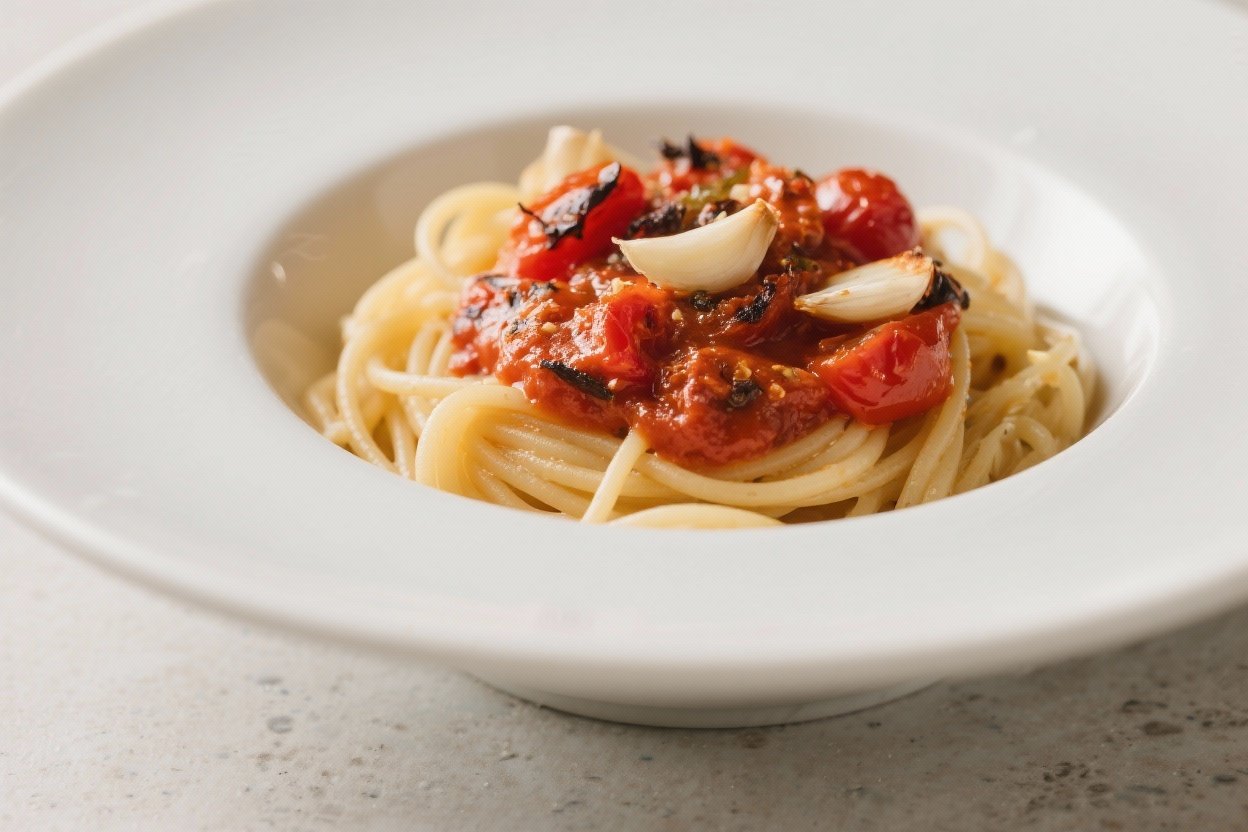
Roasted Tomato & Garlic Pasta Sauce - Simple, Bold, and Comforting
Ingredients
Method
- Preheat and prep: Heat your oven to 425°F (220°C).Line a large sheet pan with parchment for easy cleanup. Cut larger tomatoes in half; leave cherry tomatoes whole. Slice the onion.Keep the garlic cloves in their papery skins so they don’t burn.
- Toss with oil and seasoning: Spread tomatoes, onion, and garlic on the sheet pan. Drizzle with olive oil and season with salt, pepper, oregano, and red pepper flakes. Toss to coat and spread in an even layer.
- Roast until caramelized: Roast for 25–35 minutes, stirring once.You’re looking for blistered edges, collapsed tomatoes, and soft onions. The garlic should be tender when pressed.
- Squeeze the garlic: Let everything cool for a few minutes. Squeeze the roasted garlic from the skins into a bowl or directly into a pot.Discard the skins.
- Blend or crush: Transfer the roasted vegetables and released juices to a blender or food processor. Add the tomato paste if using. Blend until smooth for a classic sauce, or pulse a few times for a chunky texture.Alternatively, tip everything into a pot and use a potato masher for a rustic finish.
- Simmer and balance: Pour the sauce into a medium pot and bring to a gentle simmer. Add vinegar to brighten, then taste. Adjust salt and pepper.If your tomatoes are very acidic, add a tiny pinch of sugar. Simmer for 10–15 minutes to meld flavors.
- Finish with basil and oil: Stir in torn basil leaves and a drizzle of olive oil for sheen and flavor. Keep warm over low heat.
- Cook the pasta: Boil pasta in well-salted water until al dente.Reserve 1/2 cup pasta water.
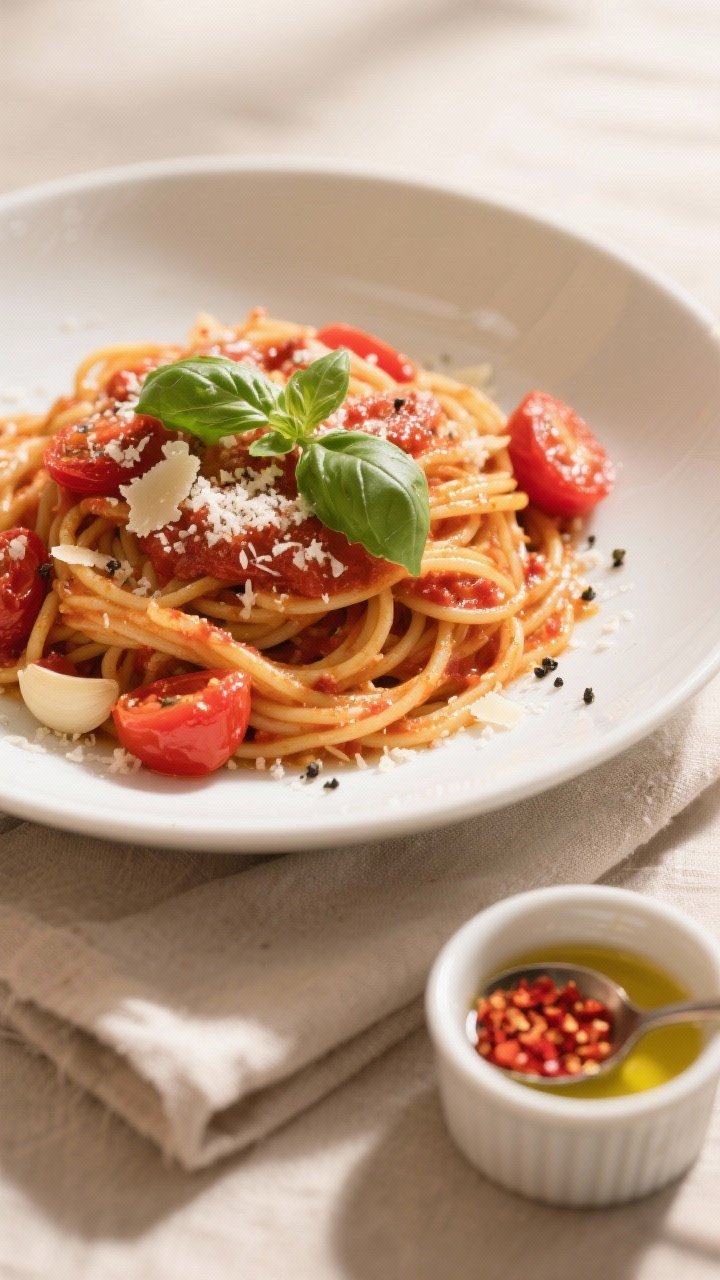
- Toss and serve: Add drained pasta to the sauce, loosening with splashes of pasta water as needed to help the sauce cling. Finish with grated Parmesan and more basil if you like. Serve hot.
Why This Recipe Works
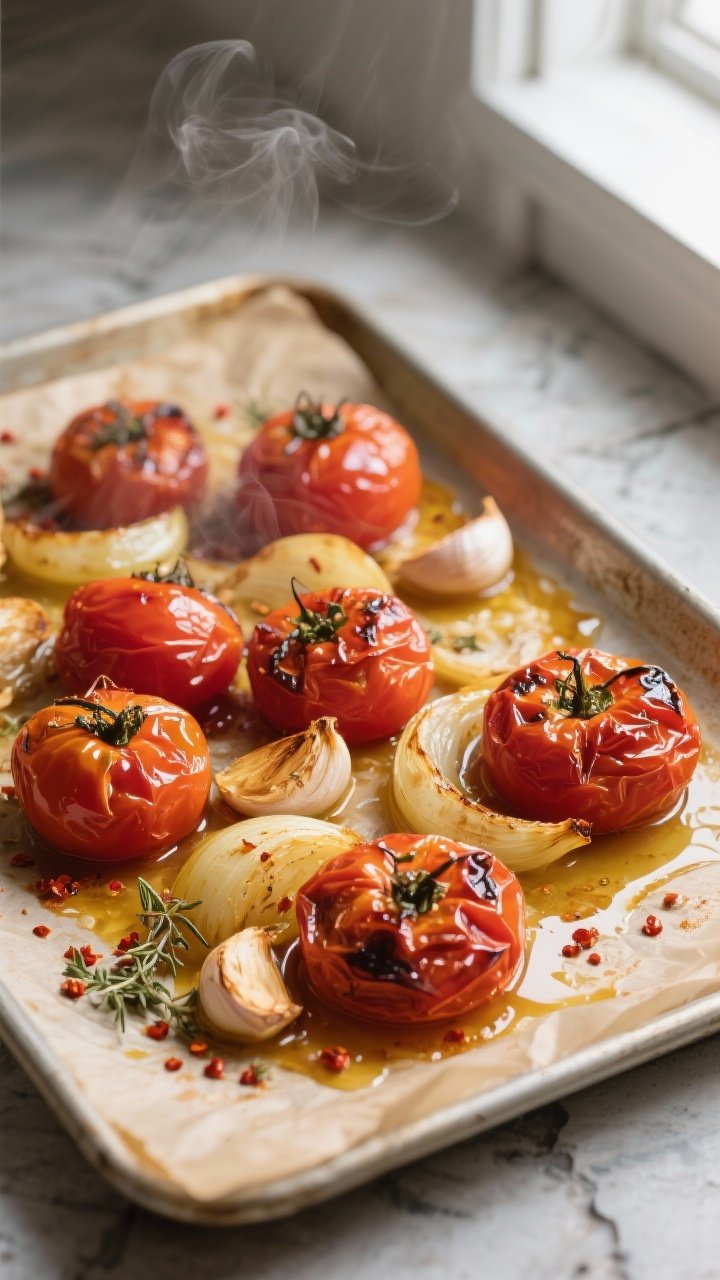
Roasting concentrates the natural sugars in tomatoes, giving the sauce a deep, robust flavor without added sweetness. Garlic and onions roast alongside the tomatoes, turning soft and jammy, which blends into a silky base.
A splash of balsamic or red wine vinegar adds brightness that balances the richness. Olive oil carries the flavors and helps the vegetables brown in the oven. Fresh basil and a pinch of red pepper flakes round it out with fresh, herby notes and gentle heat.
What You’ll Need
- Tomatoes: 3 pounds ripe Roma, plum, or cherry tomatoes
- Garlic: 1 large head, cloves kept in their skins
- Onion: 1 medium yellow or sweet onion, sliced
- Olive oil: 1/4 cup, plus more as needed
- Tomato paste: 1 tablespoon (optional, for extra depth)
- Red pepper flakes: 1/4 to 1/2 teaspoon
- Balsamic vinegar or red wine vinegar: 1 to 2 teaspoons
- Fresh basil: 1/2 cup loosely packed leaves
- Dried oregano: 1 teaspoon
- Salt and black pepper: to taste
- Sugar (optional): a pinch, only if needed
- Pasta of your choice: for serving (spaghetti, rigatoni, penne)
- Parmesan cheese: for finishing (optional)
How to Make It
- Preheat and prep: Heat your oven to 425°F (220°C).Line a large sheet pan with parchment for easy cleanup. Cut larger tomatoes in half; leave cherry tomatoes whole. Slice the onion.
Keep the garlic cloves in their papery skins so they don’t burn.
- Toss with oil and seasoning: Spread tomatoes, onion, and garlic on the sheet pan. Drizzle with olive oil and season with salt, pepper, oregano, and red pepper flakes. Toss to coat and spread in an even layer.
- Roast until caramelized: Roast for 25–35 minutes, stirring once.You’re looking for blistered edges, collapsed tomatoes, and soft onions. The garlic should be tender when pressed.
- Squeeze the garlic: Let everything cool for a few minutes. Squeeze the roasted garlic from the skins into a bowl or directly into a pot.Discard the skins.
- Blend or crush: Transfer the roasted vegetables and released juices to a blender or food processor. Add the tomato paste if using. Blend until smooth for a classic sauce, or pulse a few times for a chunky texture.Alternatively, tip everything into a pot and use a potato masher for a rustic finish.
- Simmer and balance: Pour the sauce into a medium pot and bring to a gentle simmer. Add vinegar to brighten, then taste. Adjust salt and pepper.If your tomatoes are very acidic, add a tiny pinch of sugar. Simmer for 10–15 minutes to meld flavors.
- Finish with basil and oil: Stir in torn basil leaves and a drizzle of olive oil for sheen and flavor. Keep warm over low heat.
- Cook the pasta: Boil pasta in well-salted water until al dente.Reserve 1/2 cup pasta water.
- Toss and serve: Add drained pasta to the sauce, loosening with splashes of pasta water as needed to help the sauce cling. Finish with grated Parmesan and more basil if you like. Serve hot.
Storage Instructions
- Refrigerator: Store in an airtight container for up to 5 days.Let it cool before sealing.
- Freezer: Freeze in portions for up to 3 months. Leave room in containers for expansion. Thaw overnight in the fridge.
- Reheat: Warm gently on the stove over low heat, adding a splash of water or broth if it’s too thick.Avoid boiling hard to preserve fresh basil flavor.
- Meal prep tip: Freeze the sauce in ice cube trays for quick single-serve portions to add to soups, grains, or rapid pasta lunches.
Health Benefits
- Lycopene-rich tomatoes: Cooking tomatoes boosts lycopene availability, an antioxidant linked to heart health.
- Heart-healthy fats: Olive oil adds monounsaturated fats and helps the body absorb fat-soluble nutrients.
- Low added sugar: Roasting draws out natural sweetness, so you don’t need extra sugar.
- Garlic’s perks: Garlic may support immune and cardiovascular health and adds big flavor without extra calories.
- Customizable sodium: You control the salt, keeping the sauce lighter than many store-bought options.
What Not to Do
- Don’t overcrowd the pan: Crowding traps steam and prevents browning. Use two pans if needed.
- Don’t skip the oil: A good drizzle helps caramelization and carries flavor. Dry roasting can lead to scorching.
- Don’t blend garlic skins: They turn papery and bitter if blended.Always squeeze out the soft cloves and discard the skins.
- Don’t boil after adding basil: High heat dulls fresh herbs. Stir basil in at the end.
- Don’t forget acidity: A splash of vinegar or a squeeze of lemon keeps the sauce lively rather than flat.
Variations You Can Try
- Smoky roasted: Add 1/2 teaspoon smoked paprika or a roasted red pepper to the blend.
- Herb-forward: Swap basil for a mix of parsley and thyme, or add a sprig of rosemary during the simmer.
- Spicy arrabbiata: Increase red pepper flakes to 1 teaspoon and add a minced Calabrian chili.
- Creamy twist: Stir in 1/4 cup heavy cream or a spoonful of mascarpone at the end for a blush sauce.
- Umami boost: Add 2 anchovy fillets to the pan before roasting, or stir in 1 teaspoon fish sauce while simmering. It won’t taste fishy—just deeper.
- Veg-loaded: Roast diced zucchini, bell pepper, or mushrooms alongside the tomatoes for extra body.
- Vegan parmesan finish: Top with toasted breadcrumbs mixed with nutritional yeast, lemon zest, and olive oil.
FAQ
Can I use canned tomatoes?
Yes.
Use two 28-ounce cans of whole peeled tomatoes, drained, plus the onion and garlic. Roast the drained tomatoes on a sheet pan as directed to concentrate flavor, then proceed with the recipe. You may need to simmer a bit longer to thicken.
Which tomatoes work best?
Roma or plum tomatoes are reliable because they’re meaty and less watery.
Cherry tomatoes are great when in season—they roast quickly and get extra sweet. Avoid out-of-season slicing tomatoes if they’re pale and bland.
Do I need tomato paste?
No, but a tablespoon adds savory depth and color. If you skip it, make sure to roast until the tomatoes are well caramelized to achieve similar richness.
How can I make it smoother?
Blend the sauce until completely silky, then pass it through a fine-mesh sieve.
Add a splash of pasta cooking water to get that glossy, restaurant-style finish.
Is this sauce good for pizza?
Absolutely. For pizza, simmer a few extra minutes to reduce moisture so the crust doesn’t get soggy. Taste and adjust salt so it stands up to cheese and toppings.
Can I make it without onions?
Yes.
Just increase the tomatoes slightly or add a small carrot to the roasting pan. Carrot adds sweetness and body without onion flavor.
What if my sauce is too acidic?
Simmer a few more minutes and add a pinch of sugar or a knob of butter. Both soften sharp edges.
Be careful not to overdo it—you want brightness, not sweetness.
How do I keep the sauce from being watery?
Roast until the tomatoes look jammy and the pan juices are thick. If needed, simmer uncovered after blending to reduce. Salting the pasta water properly also helps the sauce cling.
Can I pressure cook instead of roast?
You can, but you’ll miss the caramelized flavor.
If you use a pressure cooker, finish the sauce by sautéing on high heat to reduce and deepen the taste.
In Conclusion
This roasted tomato and garlic pasta sauce is simple, flexible, and full of real flavor. With a hot oven and fresh basil, you get a sauce that tastes slow-cooked without spending all day at the stove. Keep a batch in your fridge or freezer, and weeknight dinners start to feel a lot more special.
Pair it with your favorite pasta, a green salad, and good bread, and you’re set.