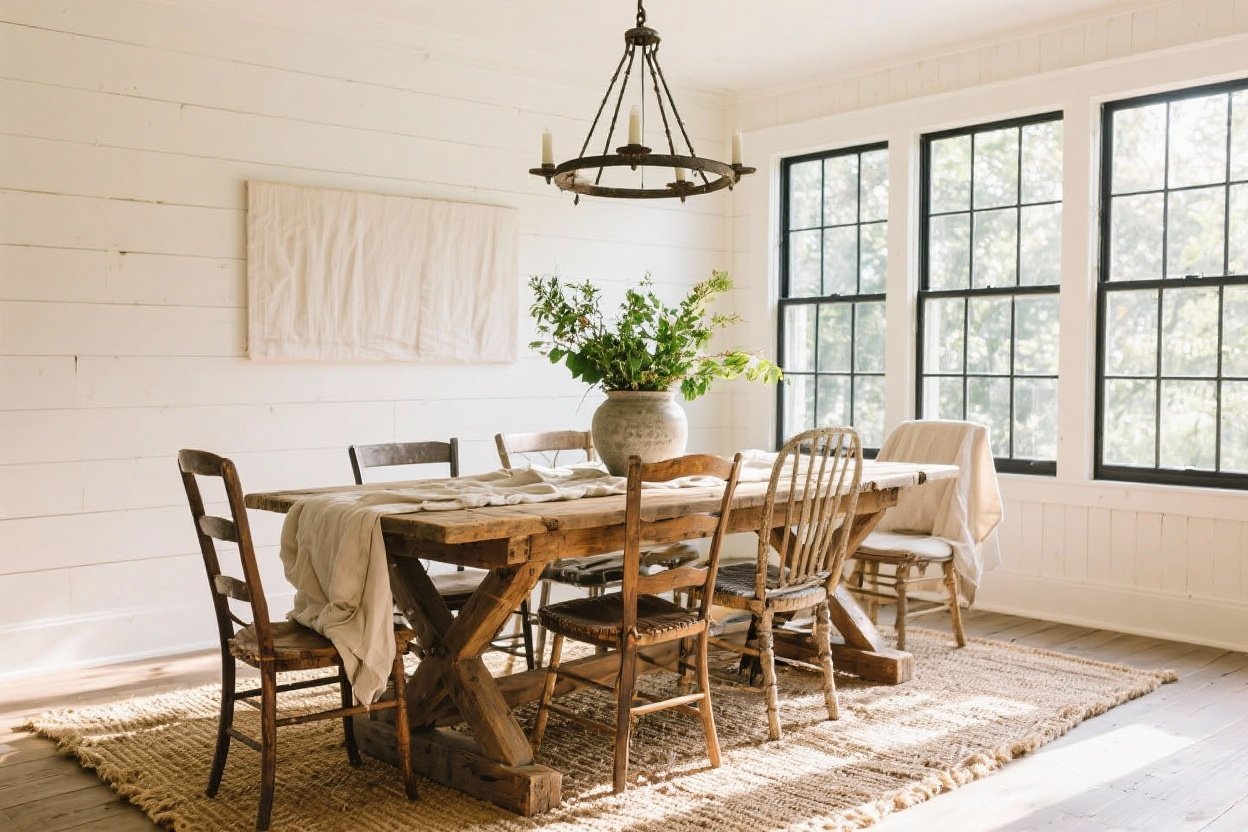
14 Farmhouse Dining Room Table Ideas You’ll Want to Steal Asap
Pull up a chair—preferably a vintage one—and let’s talk farmhouse dining tables. You want cozy, lived-in charm without it looking like a barn exploded in your house, right? Cool.
From rustic woods to modern twists, these ideas bring the soul of farmhouse style without the kitsch. Expect texture, warmth, and a few clever tricks to make your table the star of the room.
1. Go For A Chunky Reclaimed Wood Statement
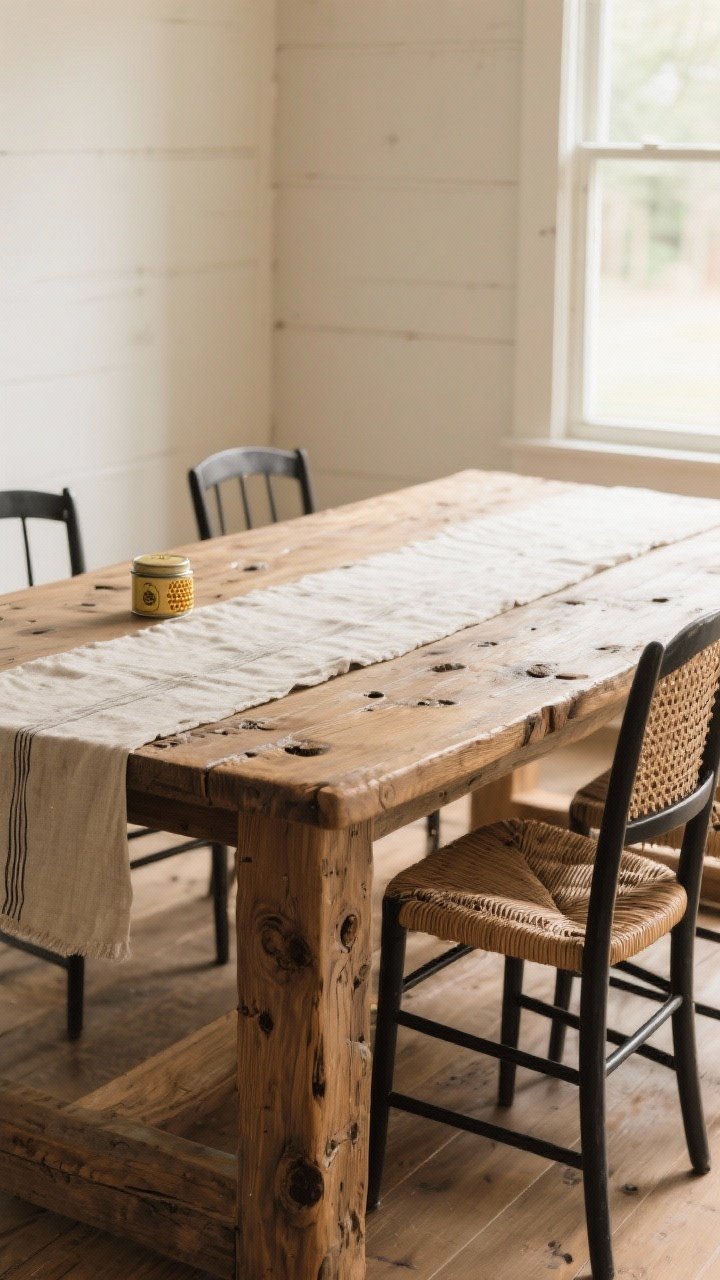
Let’s start with the classic: a big, solid reclaimed wood table that looks like it’s seen some stories. The knots, the grain, the perfectly imperfect surfaces—chef’s kiss. It instantly grounds the room and makes every meal feel like a family gathering (even when it’s just Tuesday night pasta).
Quick Tips
- Finish matters: A matte or oil finish keeps it casual. Avoid overly glossy—it reads “boardroom,” not “breadboard.”
- Balance the heft: Pair with lighter chairs (think cane, open-back, or sleek metal) to keep it from feeling bulky.
- Protect smartly: Use beeswax or tung oil seasonally. It nourishes the wood and shrugs off water rings.
2. Farmhouse X-Legs For That Sturdy Craftsman Look
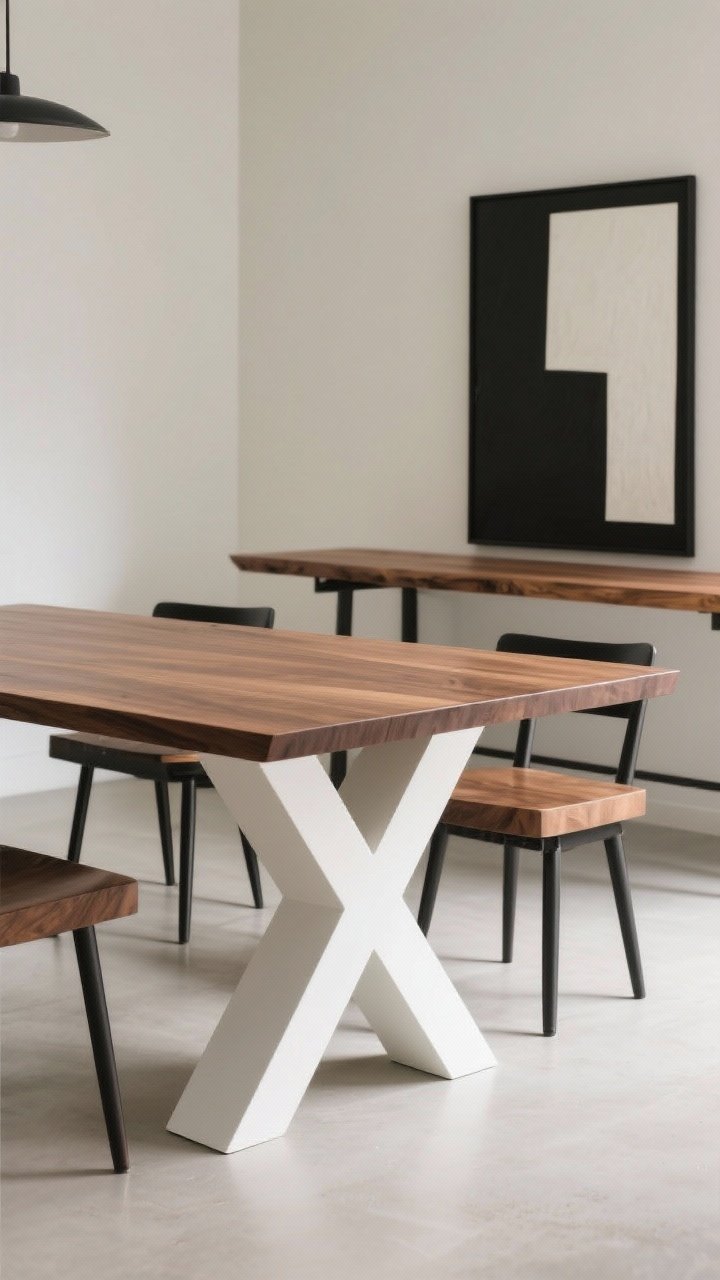
If you love structure and symmetry, an X-leg base is your bestie. It’s bold, architectural, and pure farmhouse drama—without tipping into “theme.” Bonus: it leaves maximum space for knees and side chairs.
Design Combos That Work
- Natural top + painted base: Walnut top with an off-white base screams modern farmhouse chic.
- Industrial vibe: Black iron X-legs with a warm oak top = rustic meets urban.
- Pro tip: Keep the top slightly thinner if your base is chunky to avoid visual overload.
3. The Pedestal Table That Saves Space (And Looks Fancy)
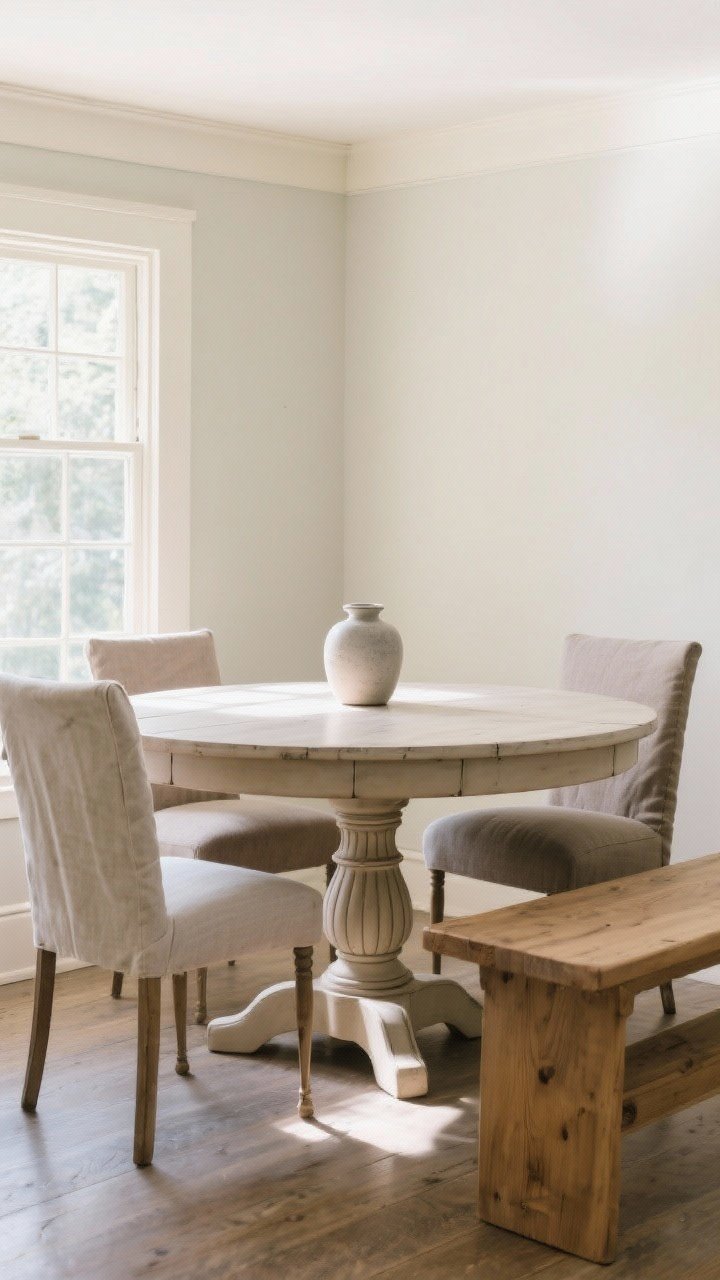
Pedestal tables are the unsung heroes of tight dining rooms. No annoying legs to bump into, and they bring a subtle elegance to farmhouse style. Think turned pedestal bases—curvy, substantial, and charming.
Make It Work
- Round tops rule: They encourage conversation and fit small spaces beautifully.
- Mix chairs: Pair with slipcovered side chairs and a wood bench if you’re feeling edgy.
- Scale it right: For four people, 48 inches round is the sweet spot. Six? Try 54–60 inches.
4. Mix-And-Match Chairs For Instant Personality
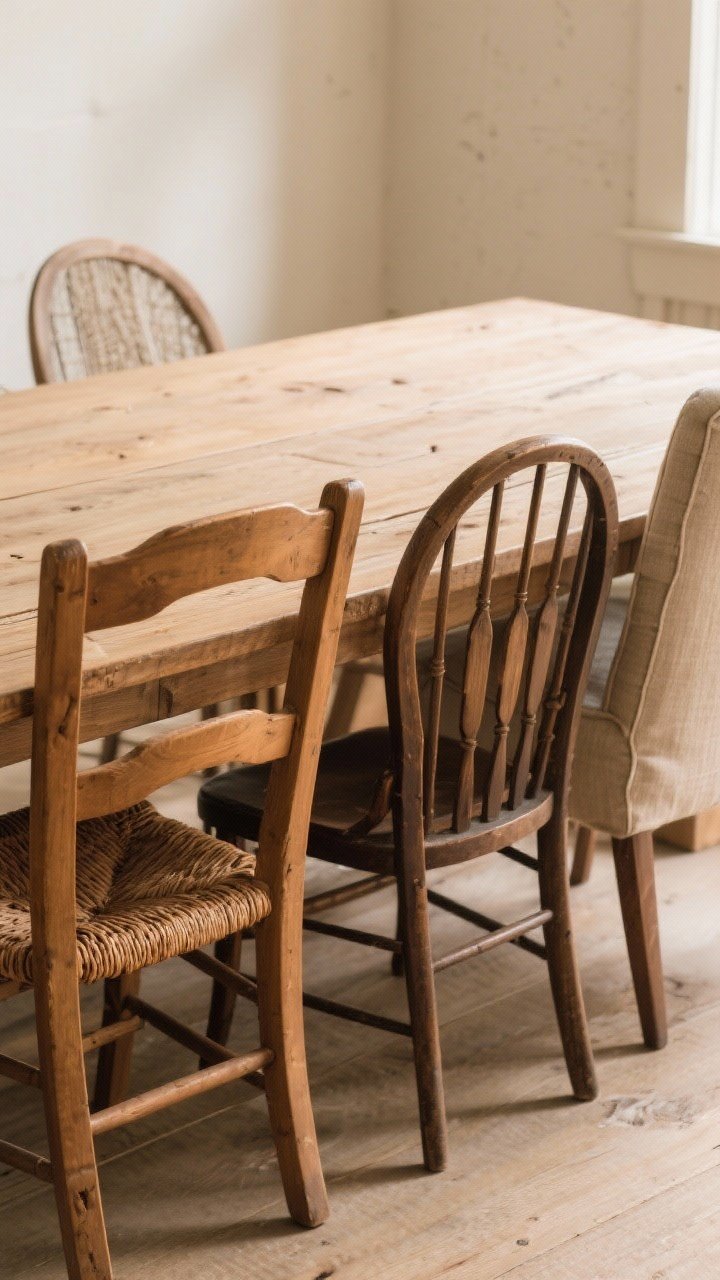
Farmhouse doesn’t matchy-match. Give your table character with mismatched chairs in coordinated tones. It looks collected over time instead of “bought yesterday in aisle 9.”
How To Nail The Mix
- Unify color or material: Keep all wood chairs in similar stain, or all painted in a single tone.
- Anchor with host chairs: Upholstered chairs at the ends give the whole setup polish.
- FYI: Cane-backed and Windsor chairs play very well together.
5. Two-Tone Magic: Painted Base, Natural Top

Can’t decide between cozy and clean? Do both. A natural wood top with a painted base feels fresh and lived-in at the same time. It’s the “best of both” move for farmhouse style.
Palette Pairings
- Greige base + oak top: Soft, neutral, and timeless.
- Deep navy base + walnut top: Chic without trying too hard.
- Distressing strategy: Light distressing on edges keeps it subtle—skip the heavy sanding unless you’re going full rustic.
6. Add A Weathered Whitewash (Without The Mess)
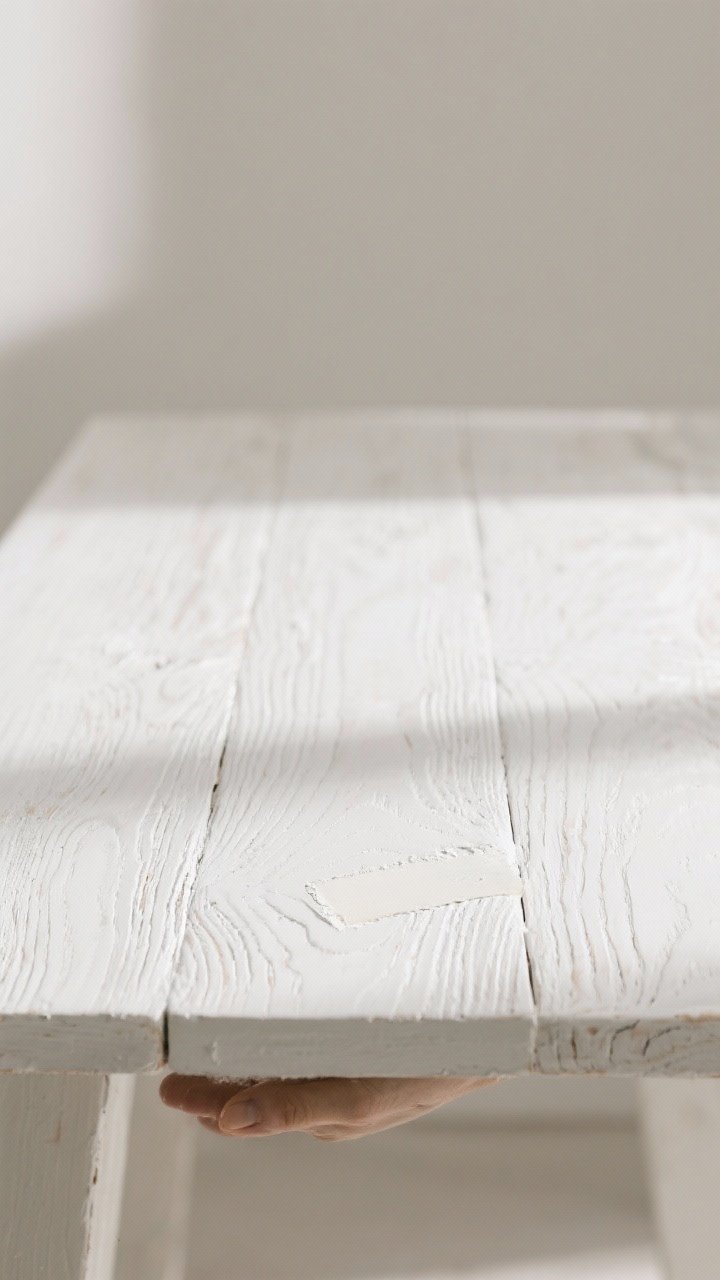
Whitewashed wood brings that beachy farmhouse vibe without feeling too coastal. It lightens heavy rooms and makes everything feel airy—great for dark corners or north-facing spaces.
Application Tips
- Test swatches: Try diluted white paint (50/50 with water) on the underside first.
- Highlight grain: Wipe back quickly so the wood grain shows through.
- Seal with matte: A matte water-based poly keeps it from looking artificial.
7. Embrace The Breadboard Ends
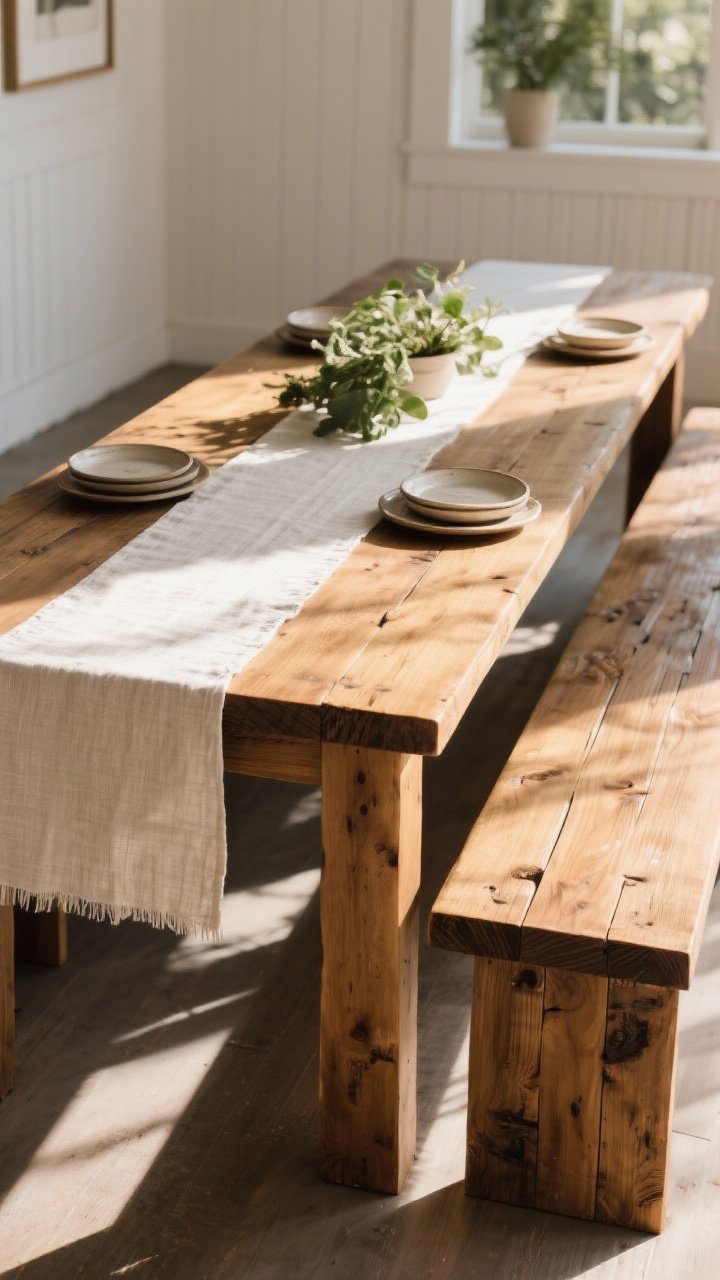
Breadboard ends are those transverse boards on the ends of the tabletop—classic farmhouse detail alert. They add structure and visual weight, plus they help the table resist warping. Function, but make it cute.
Design Notes
- Contrast subtly: Slightly darker end pieces look intentional and handcrafted.
- Go long: Breadboard ends are perfect for long rectangular tables—think 84 inches and up.
- Pair with linen: A narrow runner highlights the joinery instead of hiding it.
8. Bench Seating For The Win (Especially With Kids)
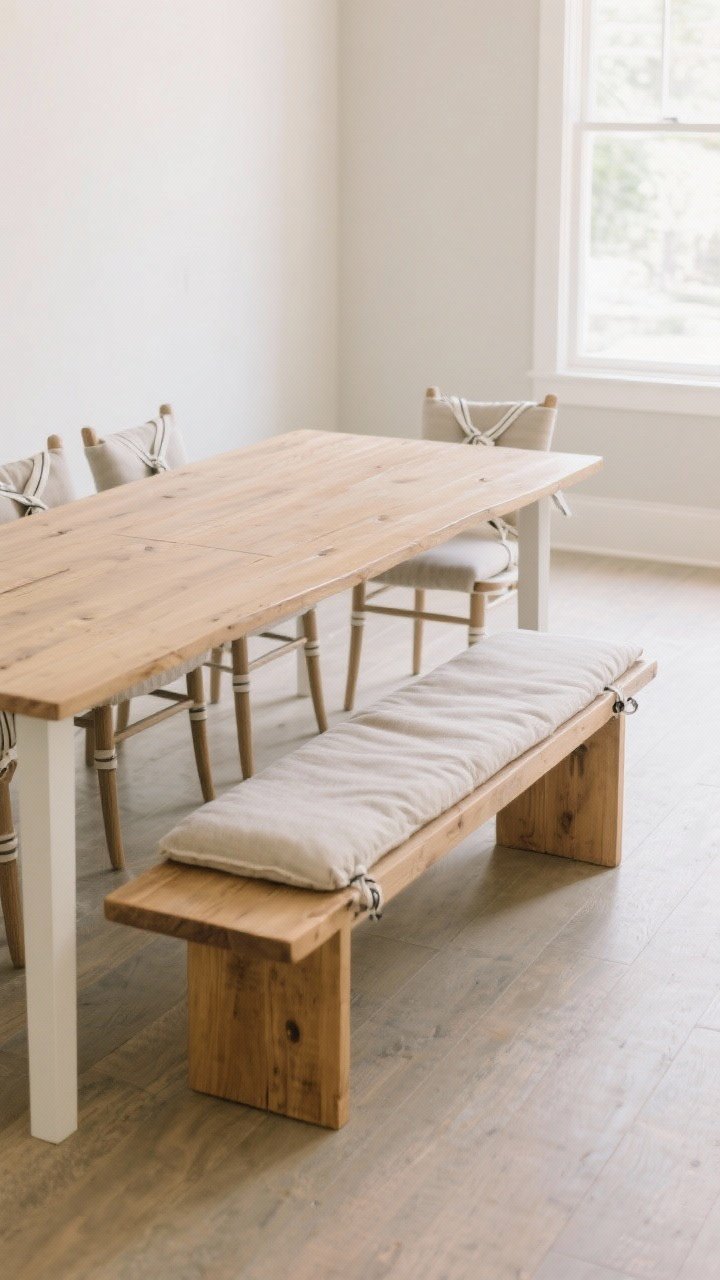
Benches keep things casual and seat more people in a pinch. They tuck neatly under the table and create a long, clean line—easy on the eyes and the vacuum.
Best Practices
- One bench, not two: Balance with chairs on the opposite side for a curated look.
- Seat cushion strategy: Use washable, tie-on cushions for comfort and quick cleanup.
- Scale matters: The bench should be 2–4 inches shorter than the distance between table legs.
9. Layer Textures: Linens, Woven Placemats, And Ceramic Accents
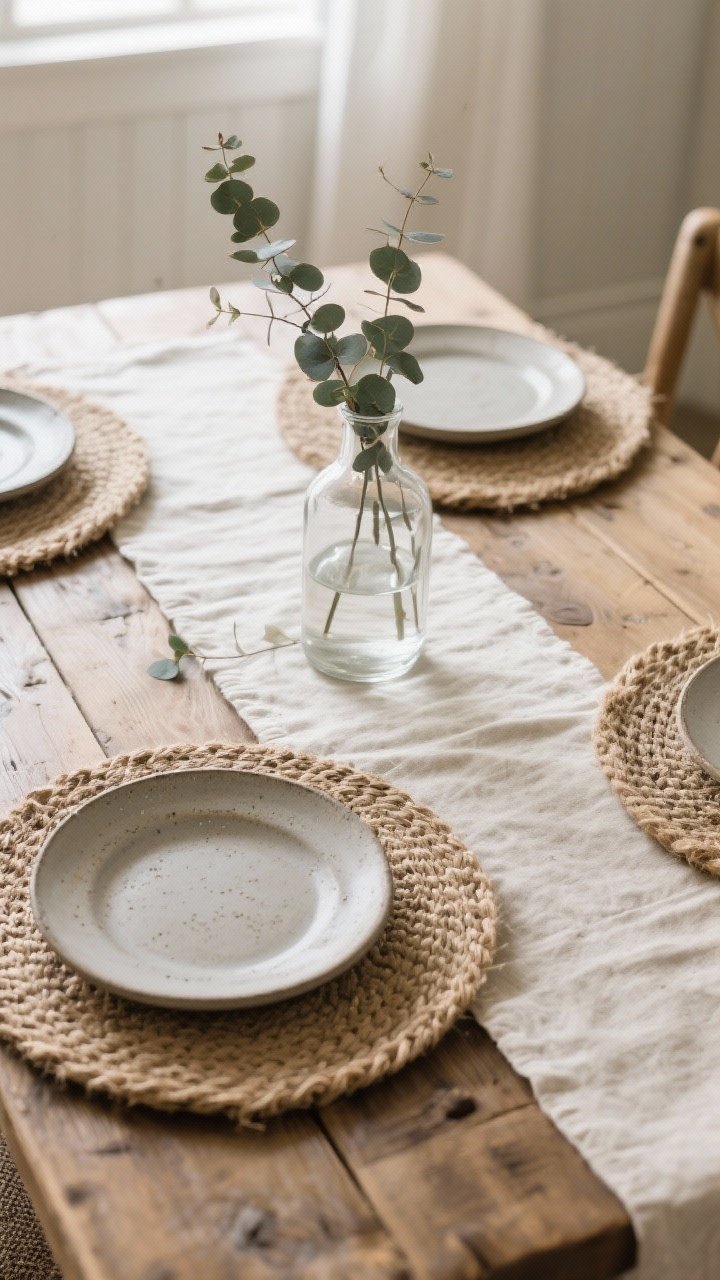
The table is the anchor, but the textures are the vibe. Layer natural materials—linen, jute, stoneware—to make the farmhouse look feel relaxed and intentional. It’s like a cozy sweater for your dining room.
Texture Toolkit
- Linen runner + jute placemats: Soft meets sturdy, effortless combo.
- Stoneware or matte ceramics: The imperfect glaze adds artisan warmth.
- Wood + greenery: A simple vase with eucalyptus or olive branches—always a win.
10. Go Round In A Rectangular Room (Surprise!)
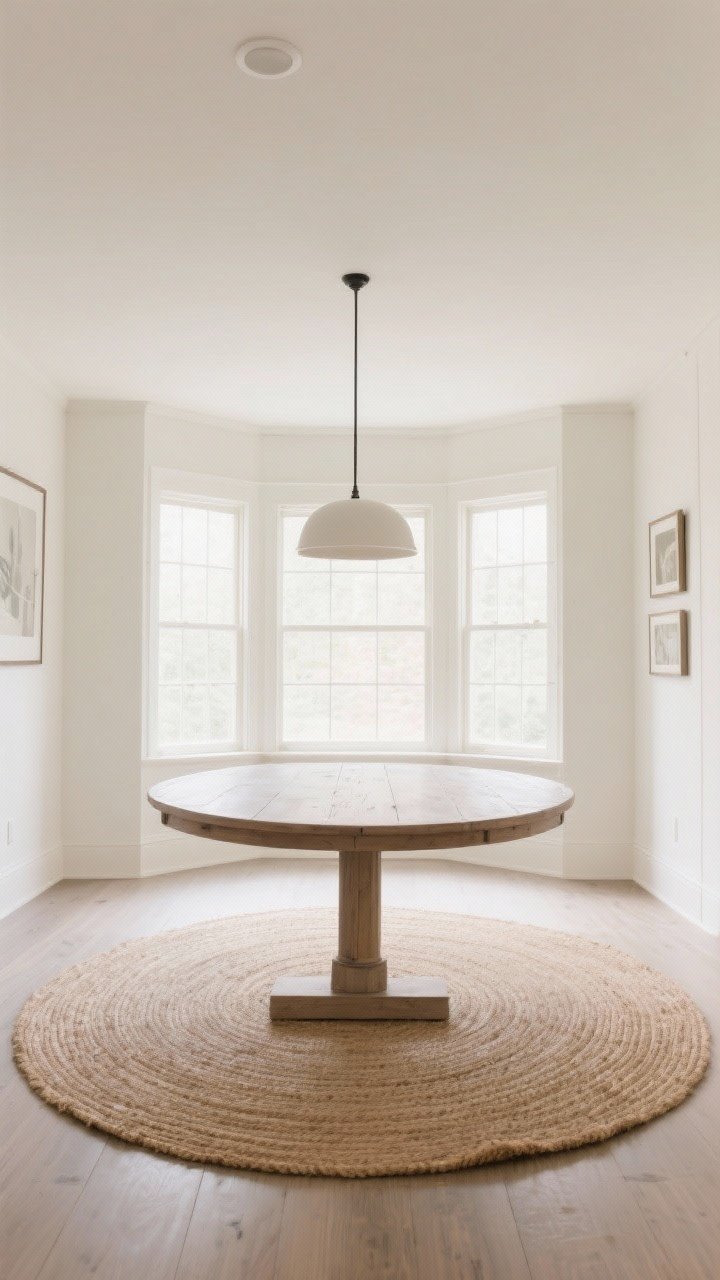
Here’s a twist: if your dining room is rectangular and tight, a round farmhouse table can actually make the flow better. No sharp corners, and it visually expands the space. It’s also friendlier for conversation—no one’s left out.
Pro Moves
- Keep the base slim: A single pedestal base saves legroom.
- Float it: Don’t cram it into a corner. Give it 36 inches of clearance all around if possible.
- Rug selection: Use a round jute rug to echo the shape and define the zone.
11. Add Industrial Touches (But Keep It Warm)
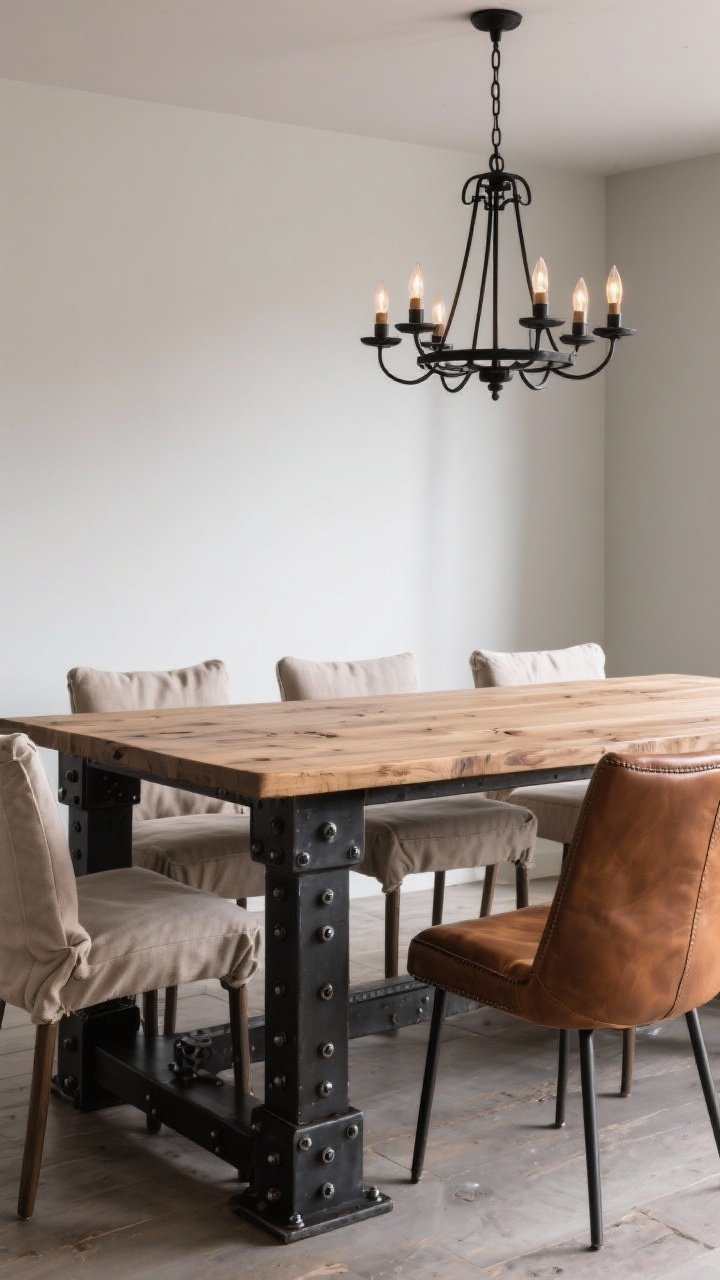
Industrial-farmhouse is a vibe when you crave a bit of edge. Think metal bases, exposed bolts, and darker finishes—balanced with soft textiles and warm wood tones so it doesn’t feel cold.
How To Balance
- Metal base + oak top: Classic. Keep metal matte or blackened for depth.
- Soften with upholstery: Slipcovered chairs or leather seats add warmth.
- Lighting matters: A black iron chandelier above the table ties it all together without shouting.
12. Extendable Tables For Hosts With The Most
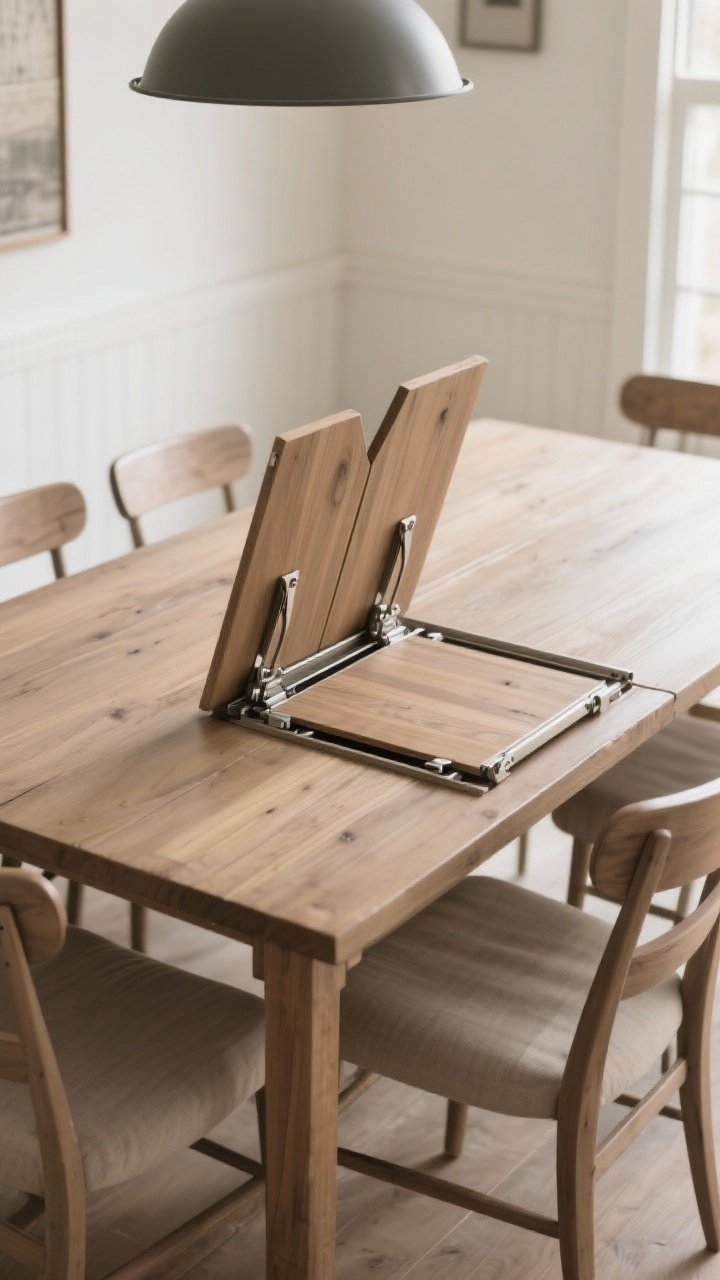
You don’t need a giant table 24/7. An extendable farmhouse table gives you flexibility for holidays, birthdays, and spontaneous feasts. When the leaves aren’t in, you get a tighter footprint and a cleaner look.
Smart Picks
- Butterfly leaves: They store within the table—no closet spelunking required.
- Slide hardware: Quality is everything. Cheap slides wobble; good ones glide.
- Visual consistency: Make sure the grain direction and finish match on the leaves—clues of quality.
13. Style A Simple, High-Impact Centerpiece
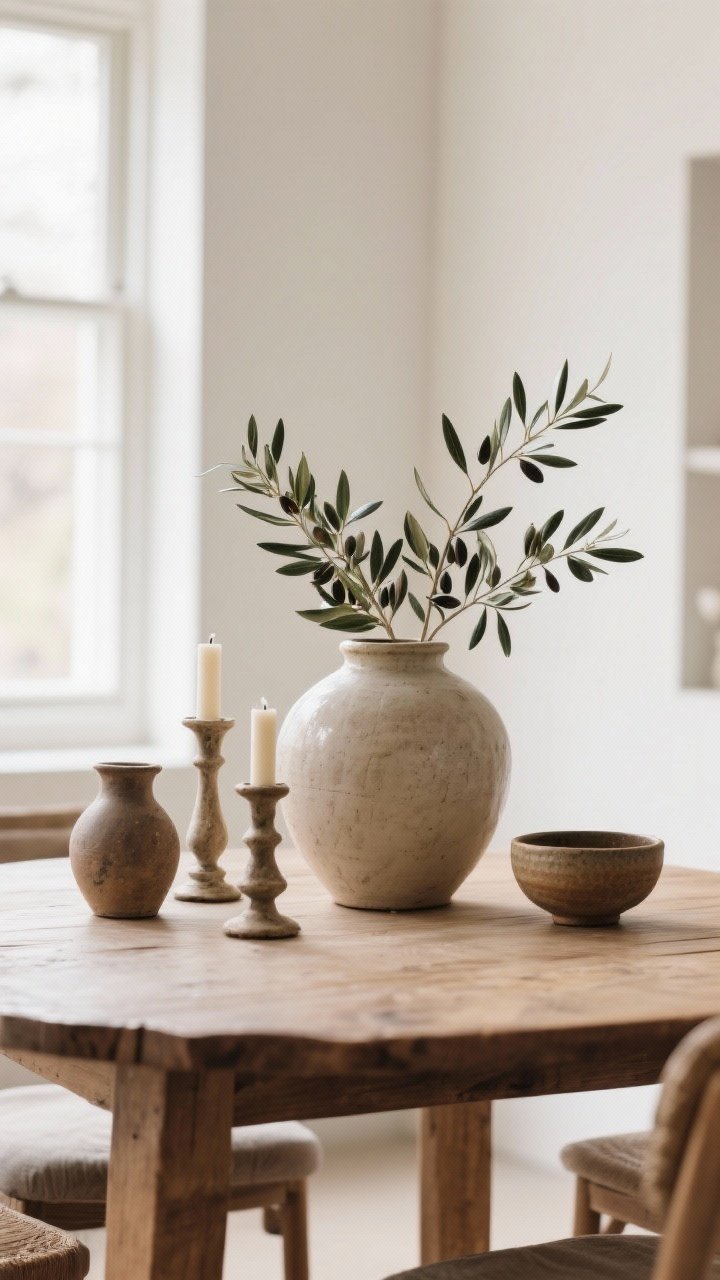
Your farmhouse table wants a centerpiece that feels effortless. Translation: skip the overdone arrangements. Go for one large statement or a tight trio that you can move easily at mealtime.
Centerpiece Ideas
- Oversized vase + branches: Olive, eucalyptus, or foraged clippings. High style, low effort.
- Trio of rustic vessels: Mix heights—candlesticks, a pottery bowl, and a glass jug.
- Seasonal swap: Switch in pumpkins, citrus, or pine as the year rolls—keeps it fresh without a full redesign.
14. Finish The Look With The Right Rug And Lighting
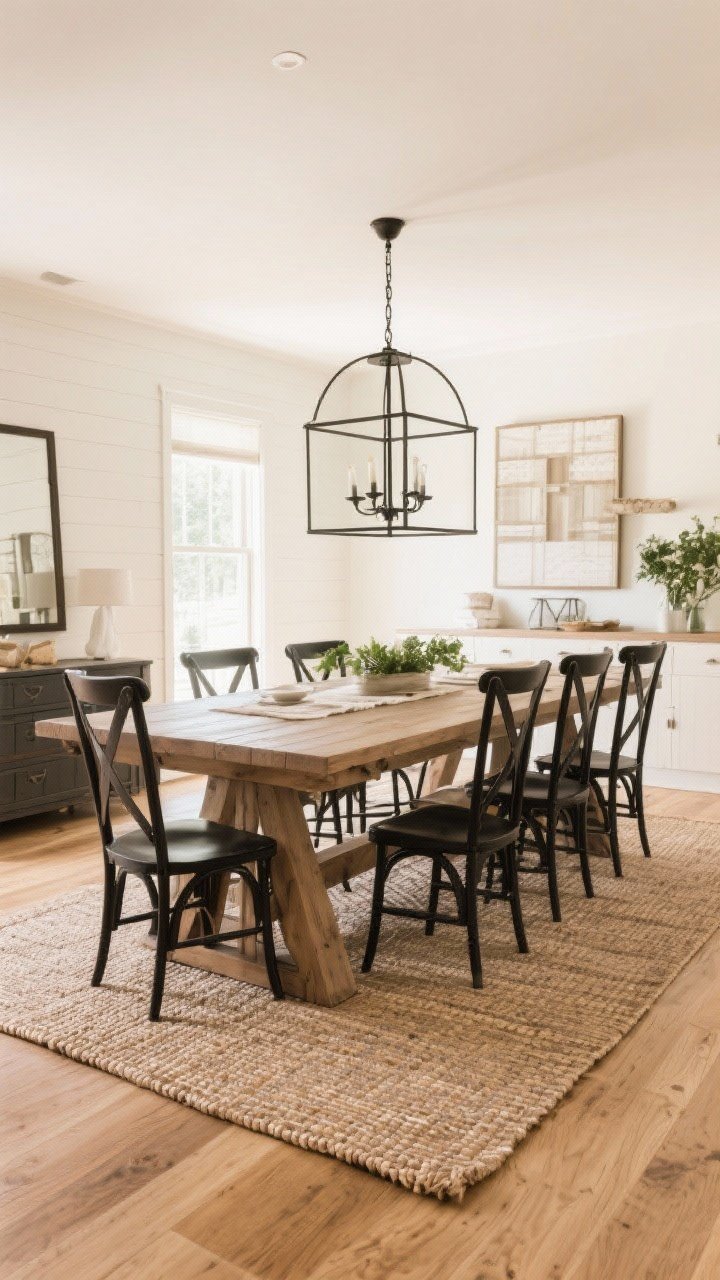
Think of rugs and lighting as the framing for your masterpiece. They can make your farmhouse table feel intentional and polished—or lonely and confused. Choose textures and shapes that echo the story you’re telling.
Rug + Lighting Rules
- Rug size: Add 24 inches on all sides of the table so chairs stay on the rug when pulled out.
- Material: Flatweave or indoor-outdoor is practical for crumbs and red wine “oops” moments.
- Chandelier height: Hang 30–34 inches above the tabletop. Diameter should be roughly half to two-thirds the table width.
- Style synergy: Wood-bead chandeliers = soft farmhouse. Iron cage fixtures = modern farmhouse. Linen drum = quietly elegant.
Bonus Styling Cheats (Because I Can’t Help Myself)
- Color story: Stick to 3–4 tones: warm wood, creamy whites, black accents, and soft green. Done.
- Patina beats perfection: Nicks and knots add soul. Don’t panic over scratches—they’re part of the look.
- Storage near the table: A vintage sideboard or hutch keeps linens and plates handy and layers that farmhouse charm.
There you go—14 farmhouse dining room table ideas to make your space feel warm, relaxed, and undeniably stylish. Mix what you love, ignore the rest, and remember: the best tables are the ones that get used. Light the candles, pour the drinks, and let the imperfect moments be the most beautiful ones. IMO, that’s peak farmhouse.