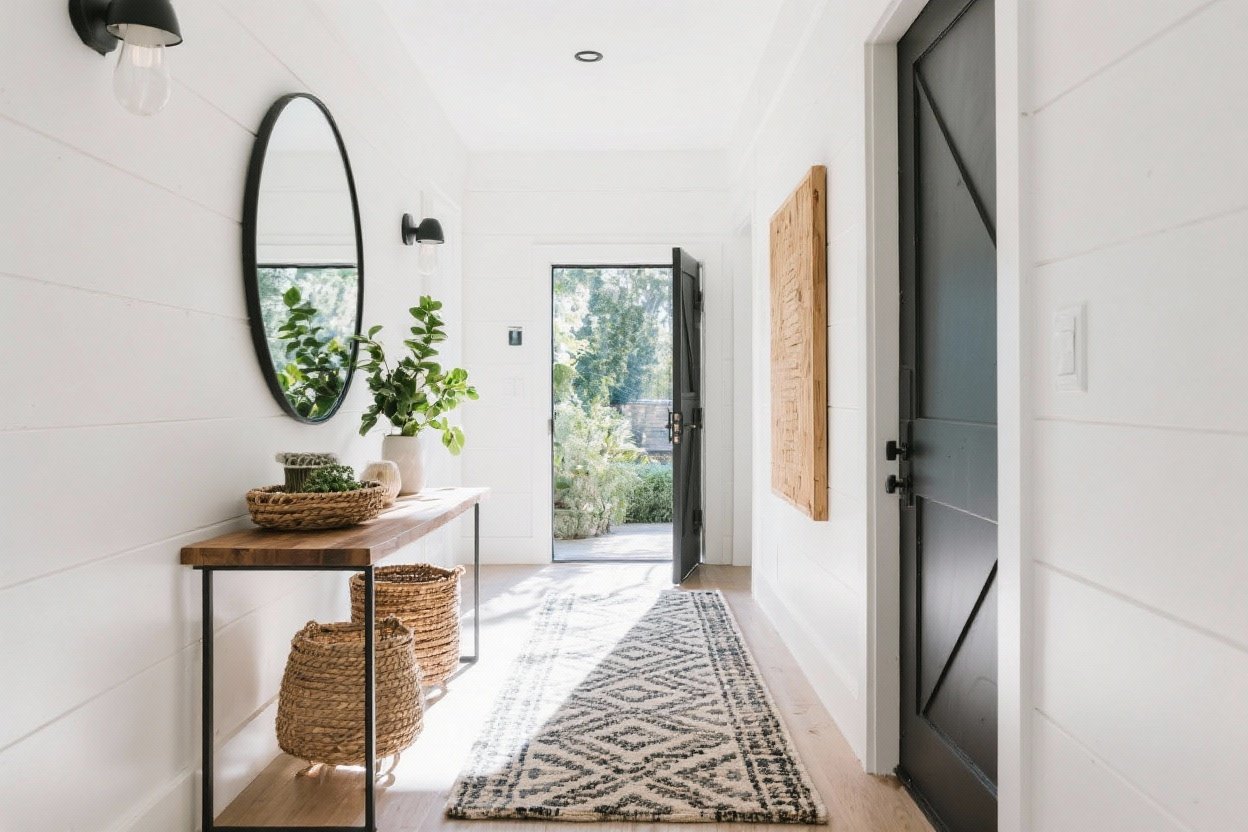
14 Entryway Runner Rug Ideas That Instantly Wow Your Guests
Your entryway sets the tone for your whole home—aka it’s not the place to phone it in. A great runner rug can warm up the space, protect your floors, and say “I have taste” without you uttering a word. But which one? And how do you style it without tripping over it every morning?
Here are 14 entryway runner rug ideas that are practical, stylish, and surprisingly easy to pull off. From high-traffic heroes to color-drenched moments, we’ve got your threshold covered.
1. Go Vintage for Instant Character
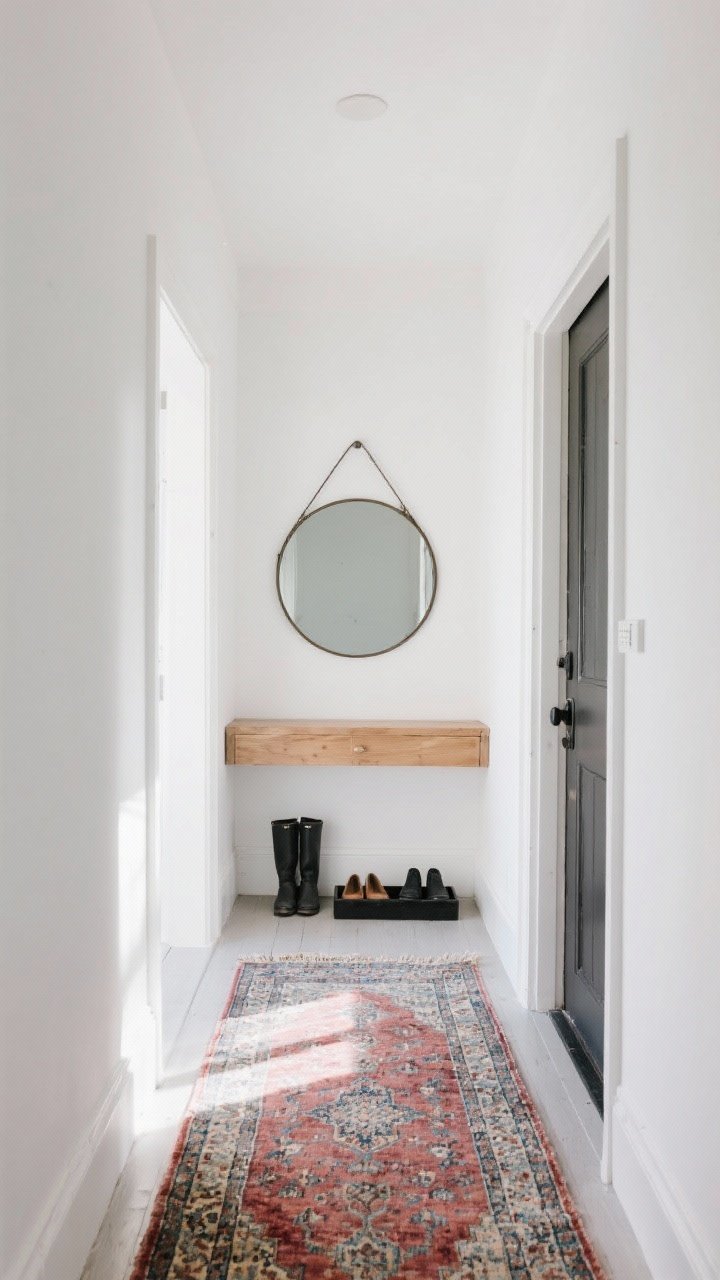
Want your entryway to look collected, not decorated? A vintage or vintage-style runner delivers that cool, lived-in vibe instantly. The muted patterns disguise dirt, the colors are already mellowed, and it just feels like you’ve had it forever (in the best way).
Why It Works
- Pattern = camouflage. Foot traffic, dust, and the occasional shoe scuff disappear into those intricate motifs.
- Warmth + history. Vintage pieces add depth to newer homes or minimal spaces.
Style Tips
- Pair with a clean-lined console and metal-framed mirror to balance old and new.
- Layer a slim boot tray nearby so wet shoes never touch it.
- If real vintage is $$$, grab a vintage-look washable runner for the same aesthetic without the drama.
2. Choose a Washable Runner (Your Future Self Says Thanks)
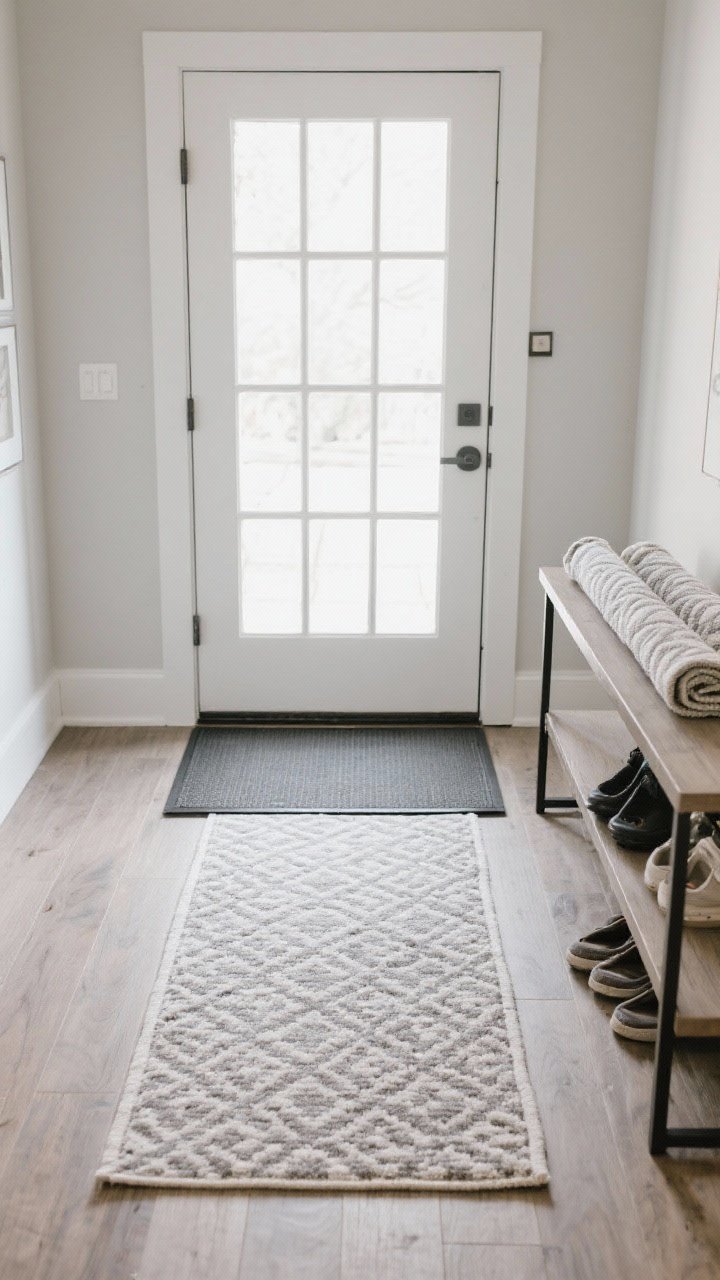
If your entryway sees pets, kids, or someone who refuses to wipe their feet (not naming names), go for a washable runner. You can toss it in the machine, let it air dry, and boom—good as new.
Best For
- High-traffic homes
- Rainy or snowy climates
- Rental spaces where you want low-maintenance style
Pro Tips
- Look for low-pile so doors glide over it.
- Match it with a grippy rug pad to prevent skating incidents.
- Keep a second one on hand and rotate when washing—pro-level move, IMO.
3. Try Natural Fibers for Earthy Texture
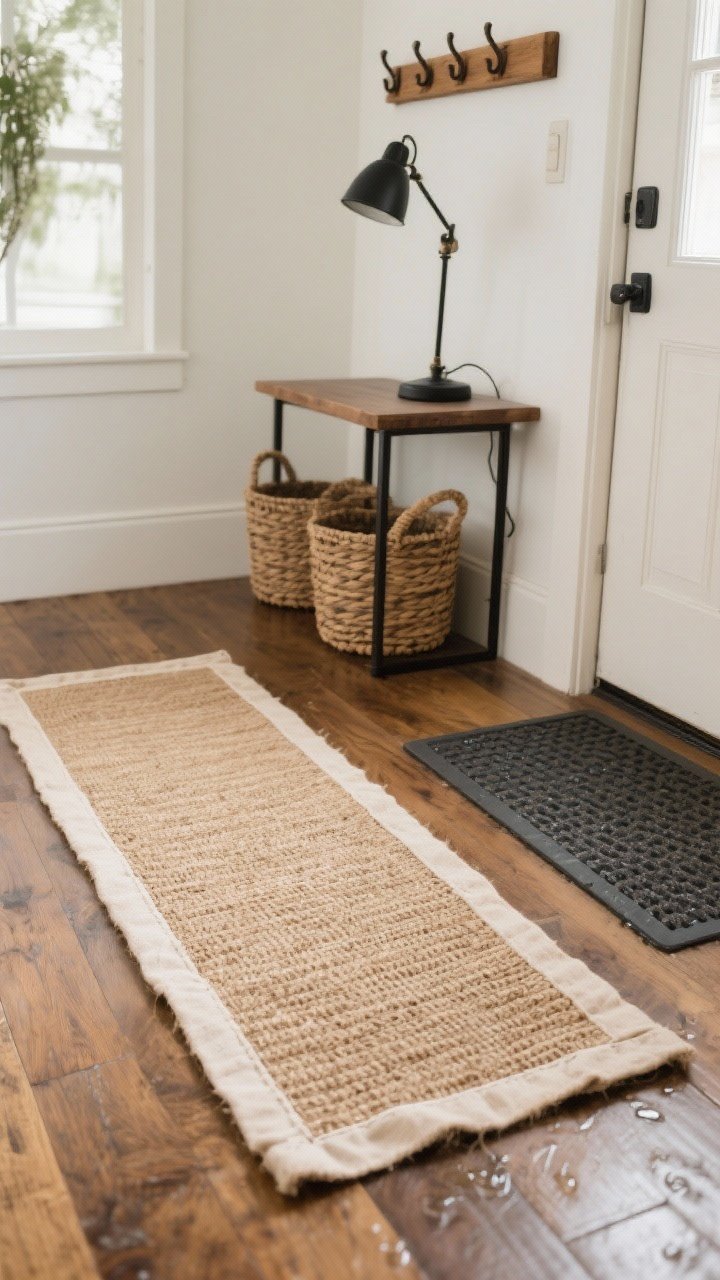
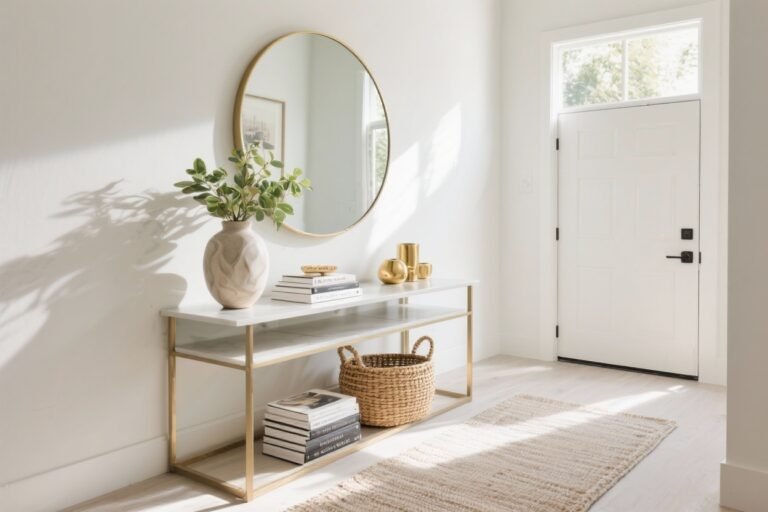
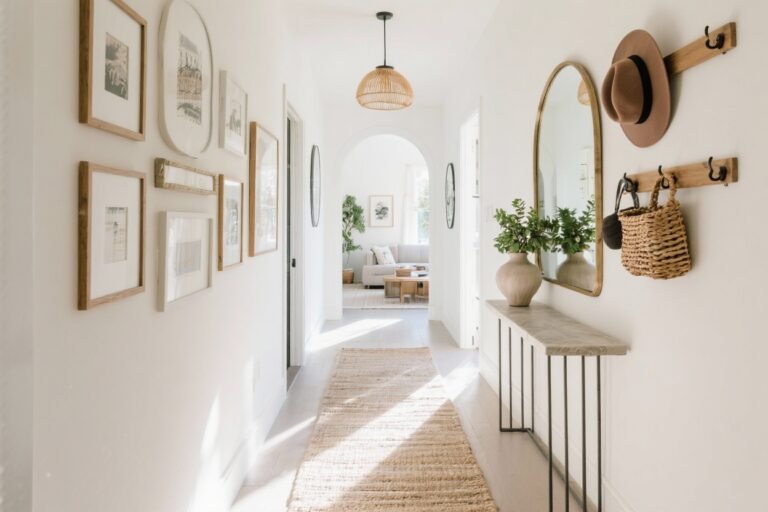
Jute, sisal, or seagrass brings texture and a calm, coastal vibe. They’re tough, they age well, and they instantly make your space feel grounded and organic.
What to Know
- Durable but not plush. Think rustic charm, not soft and fuzzy.
- Choose bordered styles for a cleaner, tailored look.
- Use a water-resistant mat by the door if you deal with rain or snow.
Styling Ideas
- Pair with woven baskets, wood hooks, and a black metal lamp for contrast.
- Add a small, colorful artwork to keep it from reading too neutral.
4. Add a Bold Stripe for Instant Energy
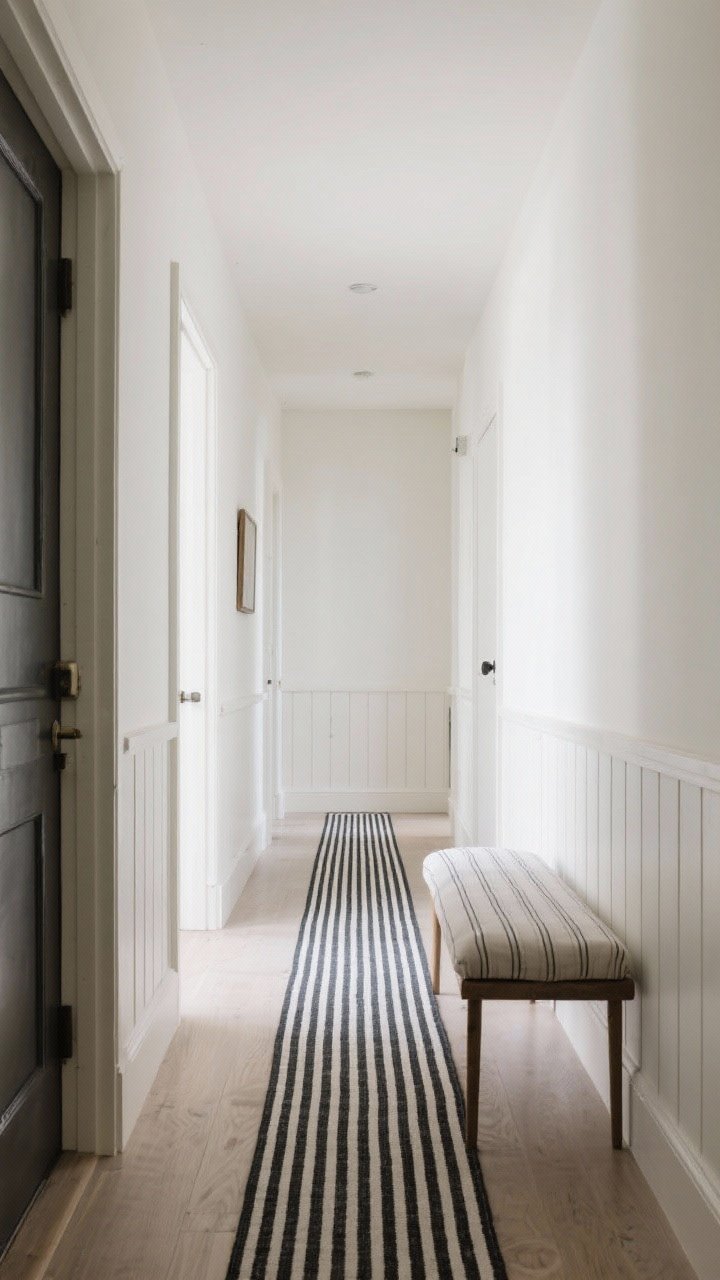
Stripes are the trench coat of runners: classic, flattering, and hard to mess up. A striped runner elongates your hallway visually and wakes up a basic entryway in two seconds flat.
How to Pull It Off
- For small spaces, choose narrow stripes so it doesn’t overwhelm.
- Go black-and-white for a crisp, modern look, or navy/cream for coastal-prep vibes.
- Echo the stripe with a ribbed bench cushion or paneled wall for a subtle tie-in.
5. Lean Into Dark and Moody
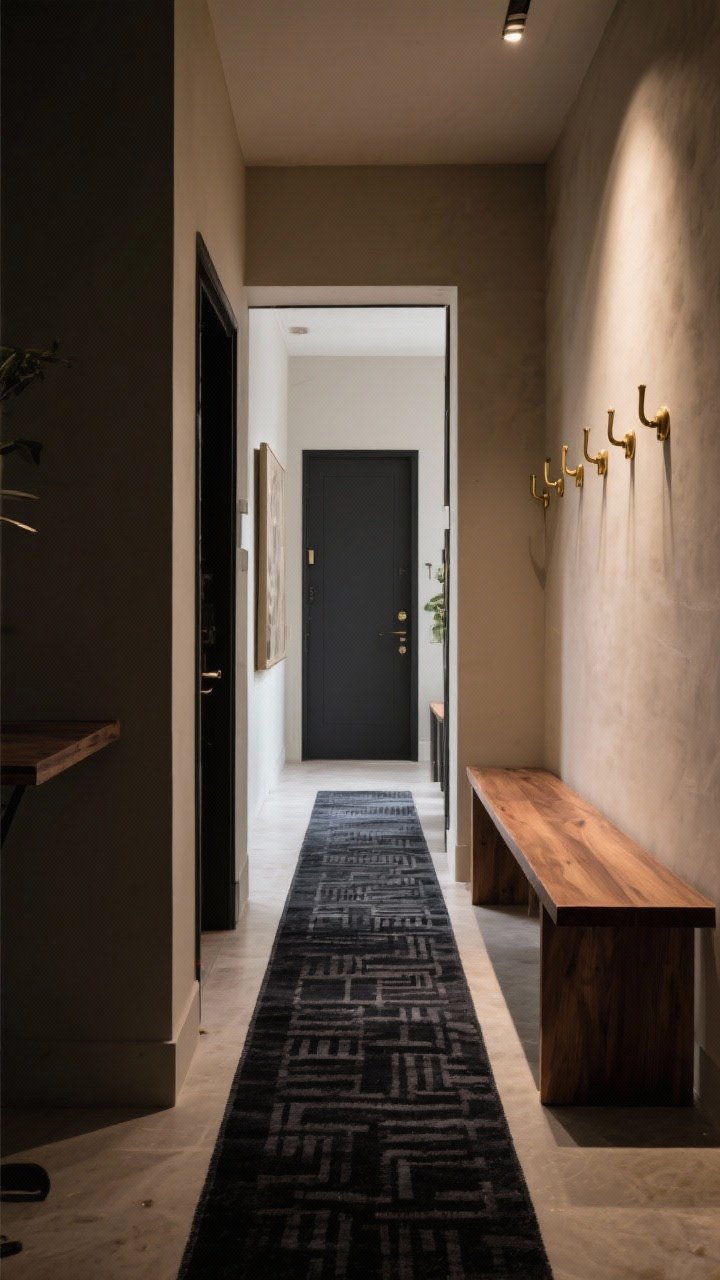
If your entryway takes a beating, go deep and dramatic—think charcoal, espresso, or vintage red. It looks chic and cleverly hides dirt until you have time to clean (FYI, this is the real luxury).
Try This Combo
- Dark runner + light walls + brass hooks = designer contrast.
- Choose a low-contrast pattern for that moody, subtle texture.
- Layer in a warm wood bench so it doesn’t feel cold.
6. Pop of Color for Serious Personality
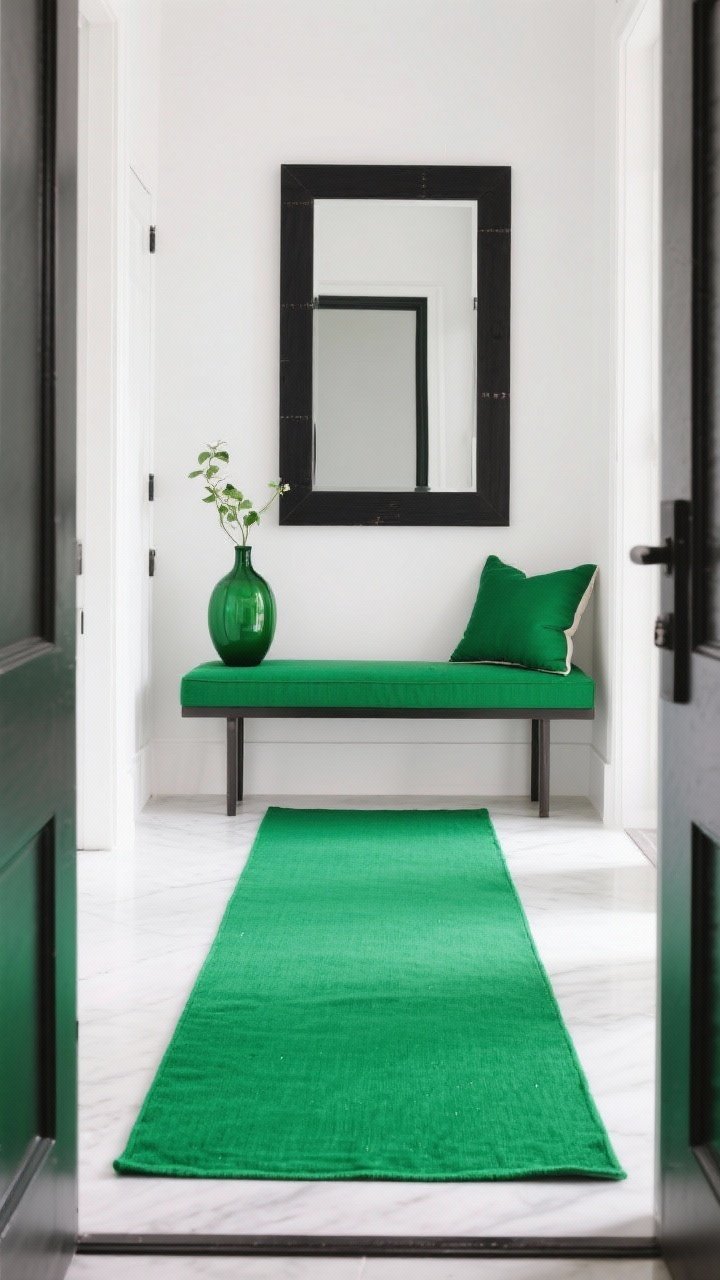
Neutrals are nice, but a colorful runner in emerald, rust, or cobalt is the “main character” moment your entry might be missing. It sets the tone the second you step in.
Keep It Cohesive
- Repeat your rug color in a throw pillow, vase, or art nearby.
- Use a simple frame for your mirror so the color can do the talking.
- Pick a washable version if you go bright—marks are less forgiving on solids.
7. Embrace Geometrics for a Modern Edge
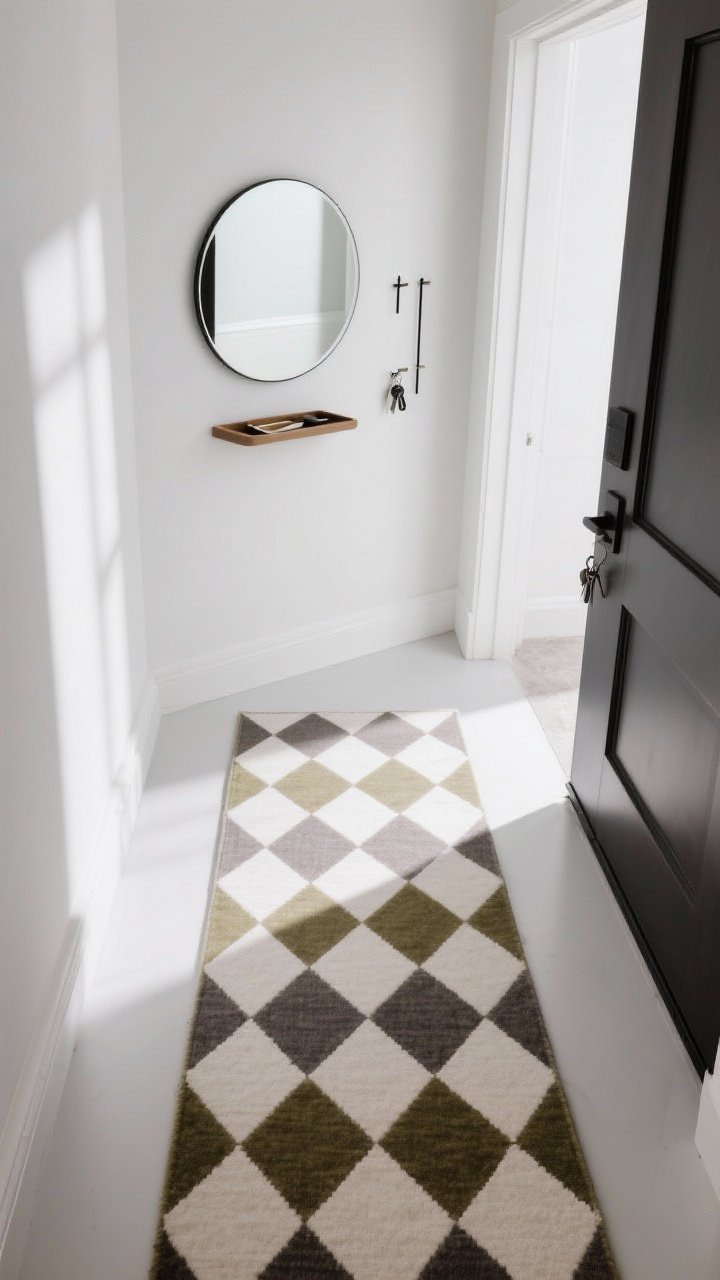
If your home leans modern or minimal, a geometric runner adds structure without looking busy. Think grids, diamonds, checkerboard, or tonal blocks.
Design Notes
- Choose 2-3 colors max for a clean, edited feel.
- Pair with a round mirror to soften the angles.
- Let your rug be the hero; keep decor streamlined and functional.
8. Layer Runners for a Luxe, Collected Look
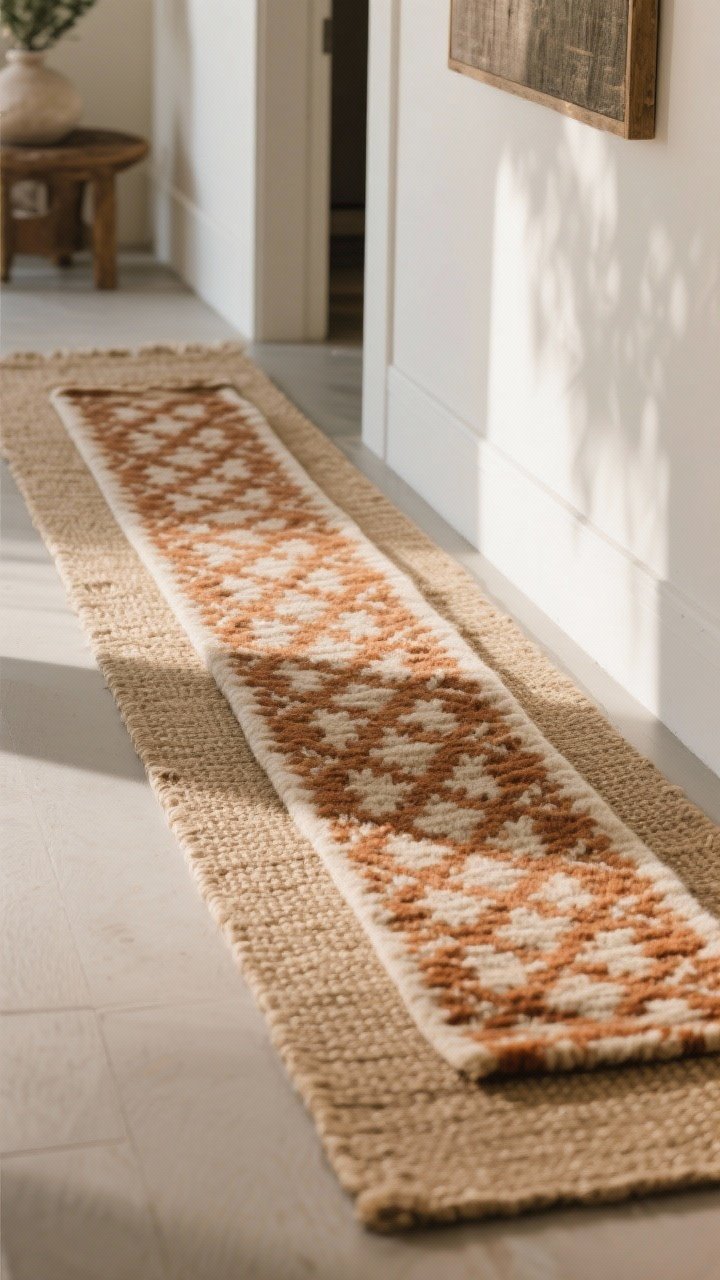
Yes, you can layer runners. Place a flatwoven base (like jute) and top it with a patterned or plush runner for depth and dimension. It’s a designer trick that looks expensive, fast.
How to Layer
- Base runner slightly wider; top runner slightly shorter.
- Stick to one hero pattern; keep the other solid or subtly textured.
- Add a thin pad under the bottom layer to keep everything in place.
9. Go Plush in a No-Shoe Zone
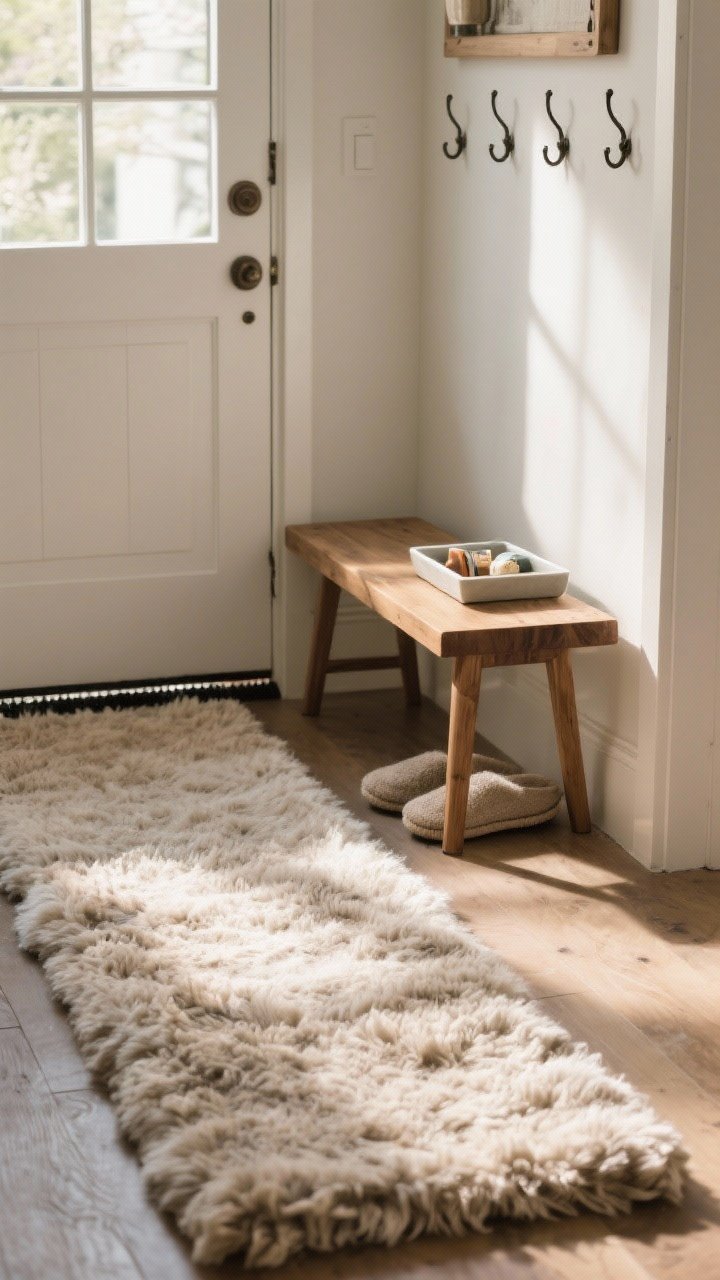
If your entryway is more of a foyer and shoes come off at the door, treat your feet to a plush runner. It feels luxe and instantly cozy.
Best Materials
- Wool: Durable, stain-resistant, naturally insulating.
- Poly blends: Budget-friendly and kid/pet tolerant.
- Shag? Only if it won’t see snow, mud, or spilled coffee. You’ve been warned.
Pro Move
- Make a mini “drop zone” with a tray, bench, and hooks to keep dirt from traveling.
- Use a door sweep so fibers don’t snag under the door.
10. Pick Performance Fibers for High Traffic
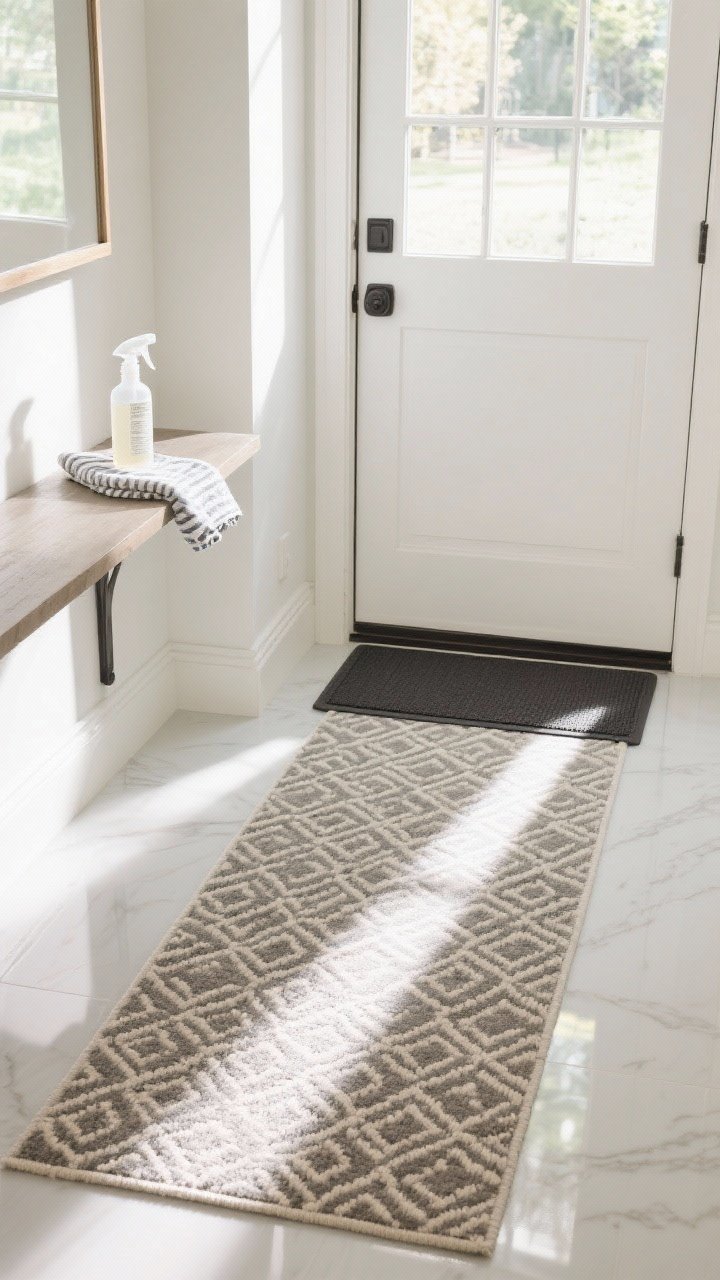
Hallway chaos? Choose a runner made from indoor-outdoor or performance fibers like polypropylene or PET. They resist stains, moisture, and pretty much anything your life throws at them.
What You’ll Love
- Easy spot-cleaning
- Fades less in sunny entryways
- Budget-friendly with a ton of design options
Smart Styling
- Use a rubber-backed pad if your floors are slippery.
- Choose low to medium pile for smooth door clearance.
11. Oversize It for a Grand Entrance
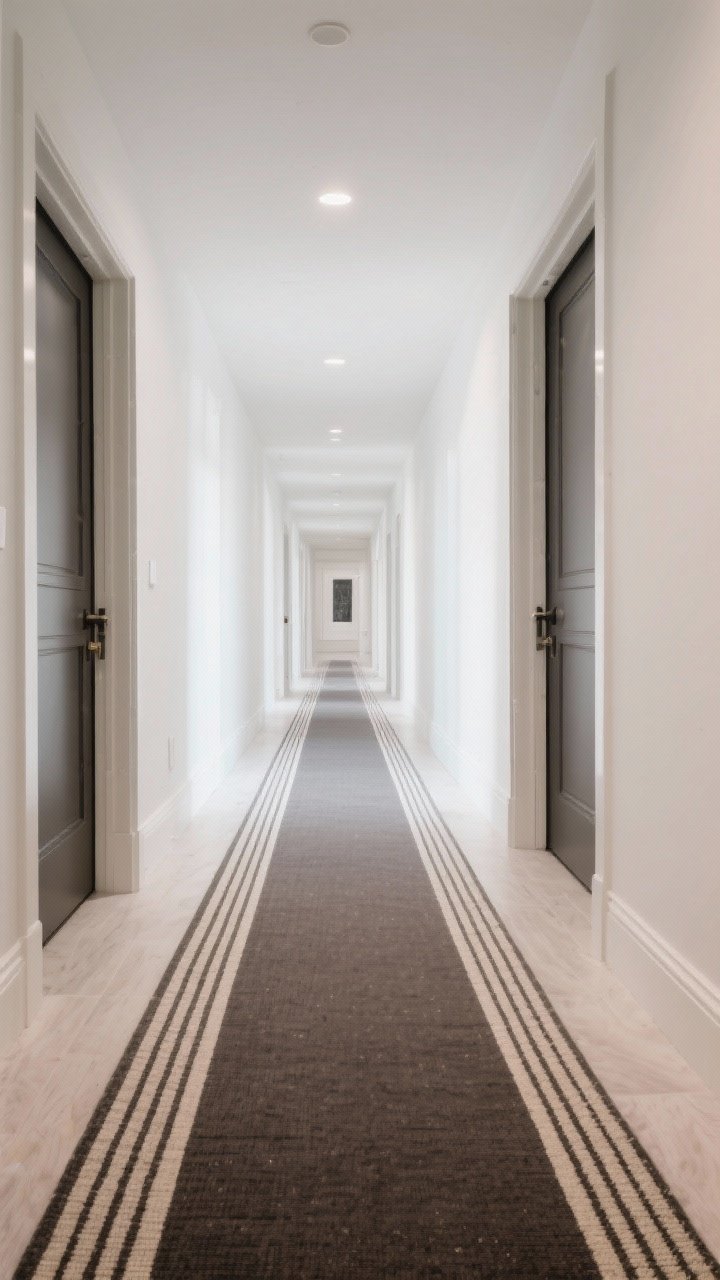
Most people go too small. If you’ve got the space, size up your runner so it feels intentional and anchored—not like a bathmat lost in a hallway.
Sizing Rules of Thumb
- Leave 3–5 inches of floor showing on each long side.
- Stop the rug 3–8 inches from the door swing.
- For long hallways, consider two identical runners separated by a few inches of floor.
Pro Tip
- Custom-cut runners (especially with stair runner remnants) can give you the perfect fit without a luxury price.
12. Add a Border for a Tailored Finish
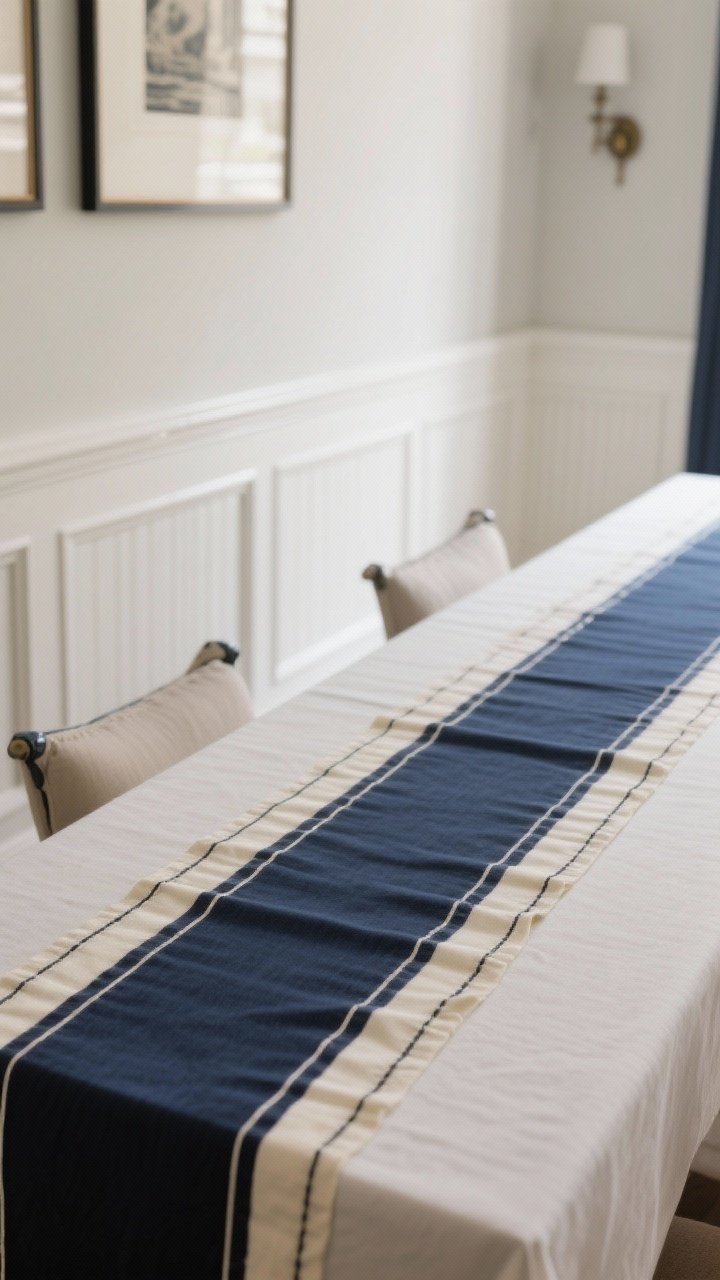
A bordered runner looks crisp and finished—perfect for traditional or transitional homes. It frames the space and makes your entry feel curated.
Design Options
- Contrast border (like navy/ivory) for classic appeal.
- Tonal border for subtle sophistication.
- Double border for extra architectural detail in plain hallways.
How to Style
- Match your border to your hardware or trim color for cohesion.
- Pair with framed art or wainscoting to echo the tailored lines.
13. Play With Pattern: Florals, Tribal, and Global Prints
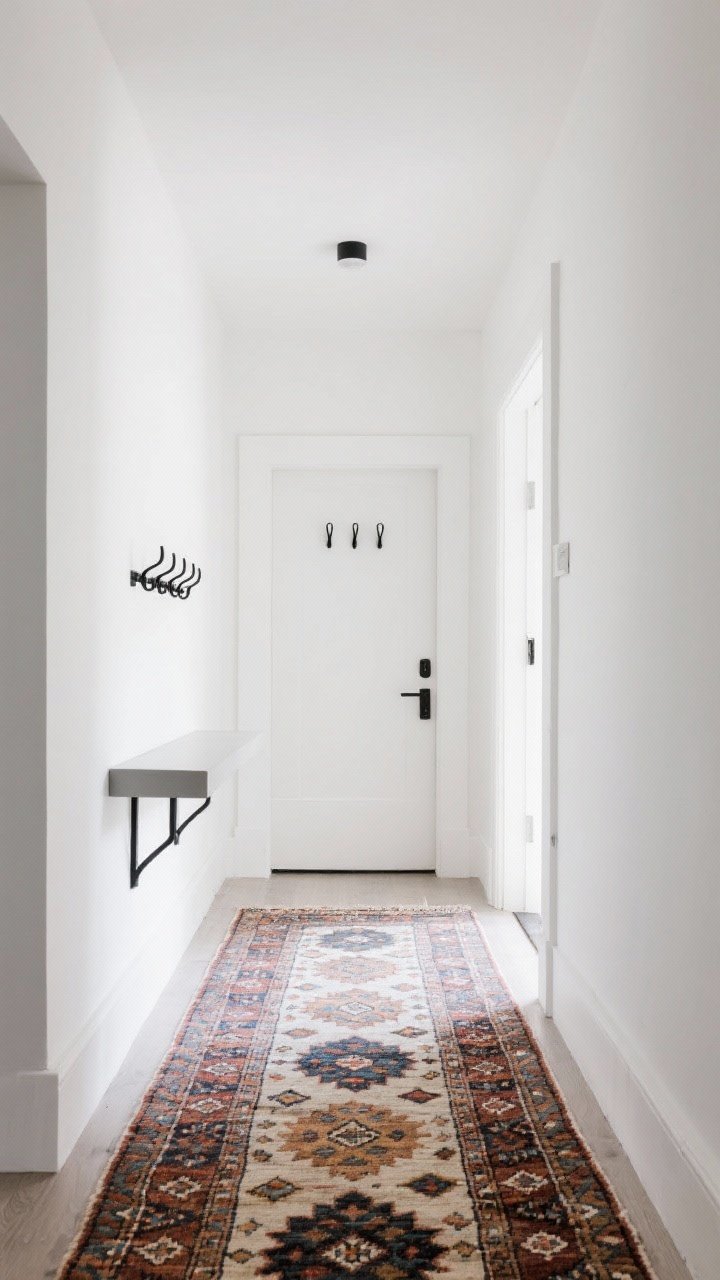
If your entry is basically a blank box, inject personality with a patterned runner—florals, kilim, Persian, ikat, or Moroccan-inspired prints deliver instant charm.
Make It Work
- Balance busy patterns with clean-lined furniture.
- Stick to a limited palette and repeat one color elsewhere.
- Use gallery walls sparingly so it doesn’t become visual chaos.
Pattern Pairing Ideas
- Kilim runner + matte black hooks + white walls = modern boho.
- Persian-style runner + antique brass mirror + marble tray = classic chic.
14. Seasonal Swap: Keep Two Looks on Rotation
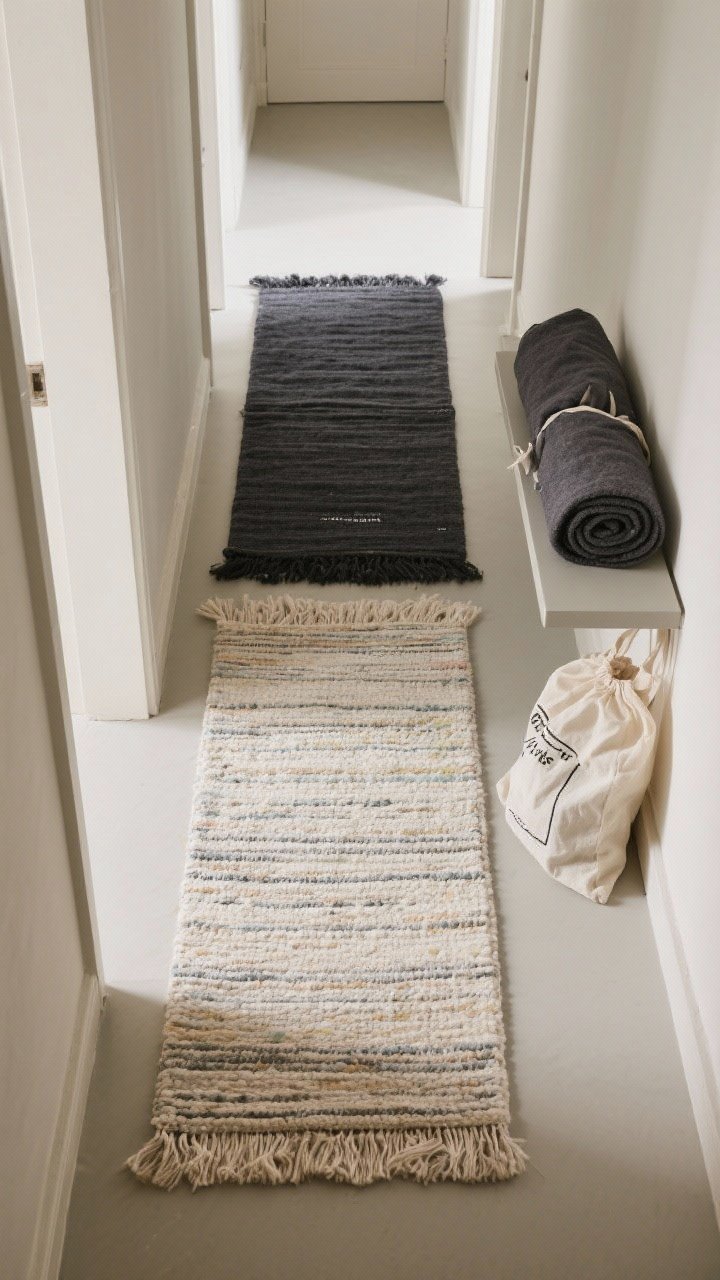
Want an easy switch-up? Keep two runners—one for mucky months and one for the pretty seasons. It keeps things fresh and saves your favorite from winter salt and sludge.
How to Rotate
- Winter: Performance or washable in darker tones.
- Spring/Summer: Lighter or brighter colors and natural textures.
- Store the off-season runner rolled, not folded, in a breathable bag.
Entryway Runner FAQs (Because Yes, These Always Come Up)
- Do I need a rug pad? Yes. It prevents slipping, protects your floor, and keeps the rug from stretching.
- What size runner should I get? Leave a few inches of floor around it and avoid blocking the door swing.
- How do I clean it? Vacuum weekly, spot-treat stains fast, and machine-wash if the label says so. For wool, gentle blotting and a pro clean yearly works wonders.
- Can I use outdoor rugs inside? Absolutely. They’re practical, especially for high-traffic entries.
Quick Styling Checklist
- Mirror at eye level (around 60–65 inches from the floor).
- Drop zone: hooks, tray, bowl for keys—simple but effective.
- Lighting: one statement sconce or a compact lamp on a console.
- Greenery: faux or real—just add life.
Materials Cheat Sheet
- Wool: Durable, stain-resistant, cozy.
- Poly/Polypropylene/PET: Performance, budget-friendly, easy clean.
- Cotton: Soft, washable, better for light traffic.
- Jute/Sisal/Seagrass: Textured, durable, more rustic, keep dry.
Your entryway works hard—your rug should too. Whether you go vintage, washable, bold, or textured, the right runner will make your space feel pulled together the second you step inside. Pick the one that fits your lifestyle (and your vibe), add a good rug pad, and watch your entryway glow up—no renovation required.