12 Entryway Rug Ideas That Instantly Upgrade Your First Impression
Your entryway sets the tone for your home—cozy, chaotic, or chic. And honestly, nothing does that faster than the right rug. It’s the handshake of your space. If you’ve been staring at your front door wondering why things feel unfinished, start at your feet.
Below are 12 entryway rug ideas that are stylish, practical, and surprisingly transformative. We’re talking patterns, textures, runners, layering tricks, and the little details that make your threshold look high-end (without high effort).
1. Choose a Bold Pattern That Hides Everything
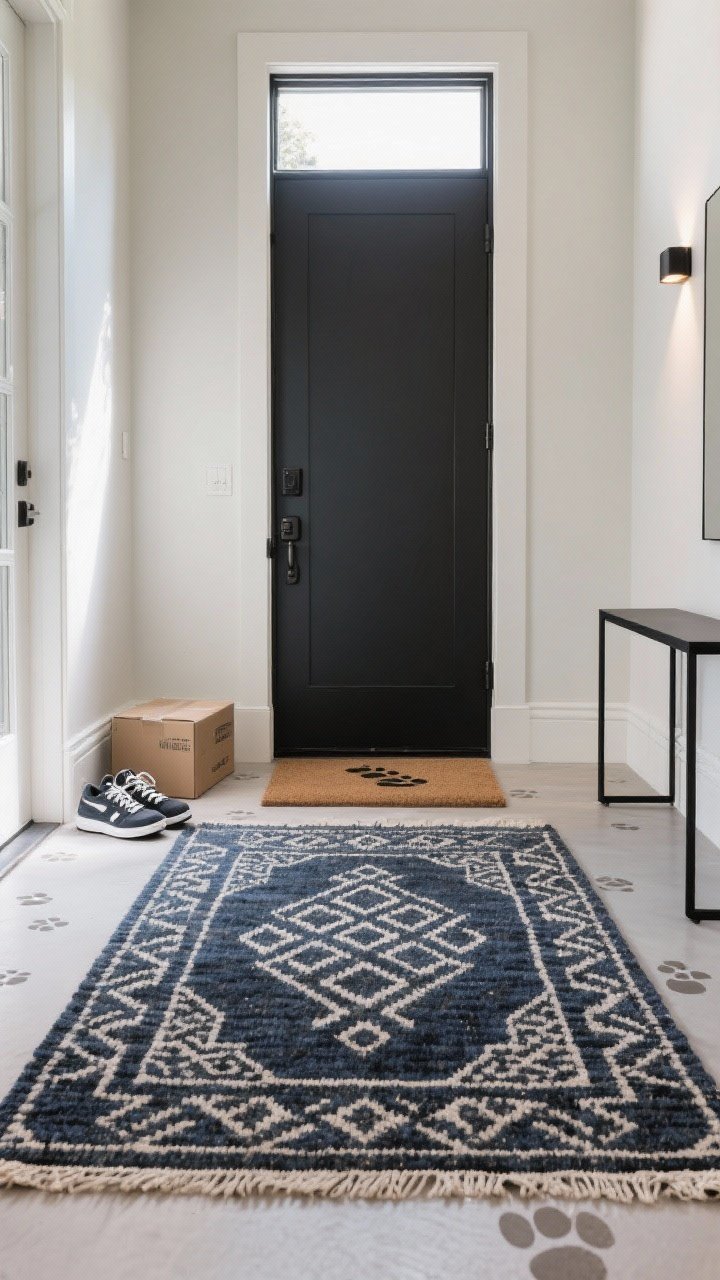
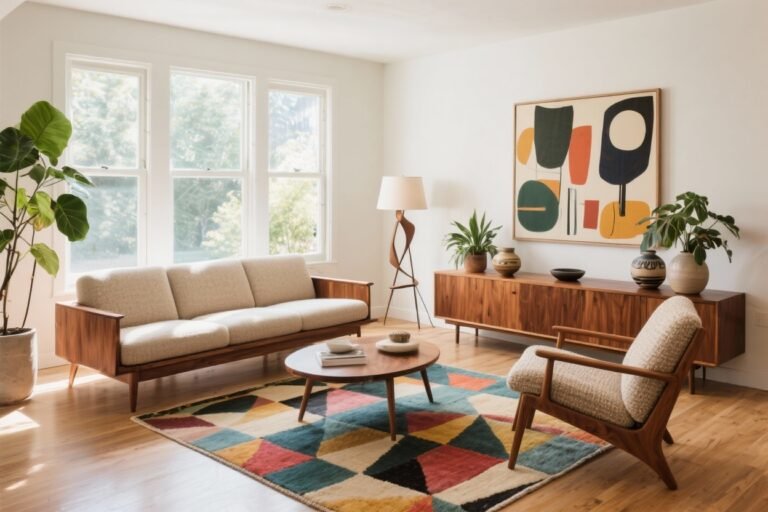
High-traffic areas need stealth. A rug with a bold pattern—think Moroccan, Persian-inspired, or geometric—does double duty: it looks luxe and hides dirt like a pro. Great if your entry sees sneakers, paw prints, and delivery boxes on repeat.
Why it works
- Camouflage for everyday mess.
- Adds instant character and color to neutral spaces.
- Plays well with both modern and classic decor.
Quick tips
- Pick darker bases with mid-scale patterns (not too tiny, not too oversized).
- Low-pile or flatweave = easy vacuuming and fewer trip hazards.
- Go stain-resistant or indoor/outdoor if you’re in mud-and-snow territory.
2. Layer Textures Like a Designer
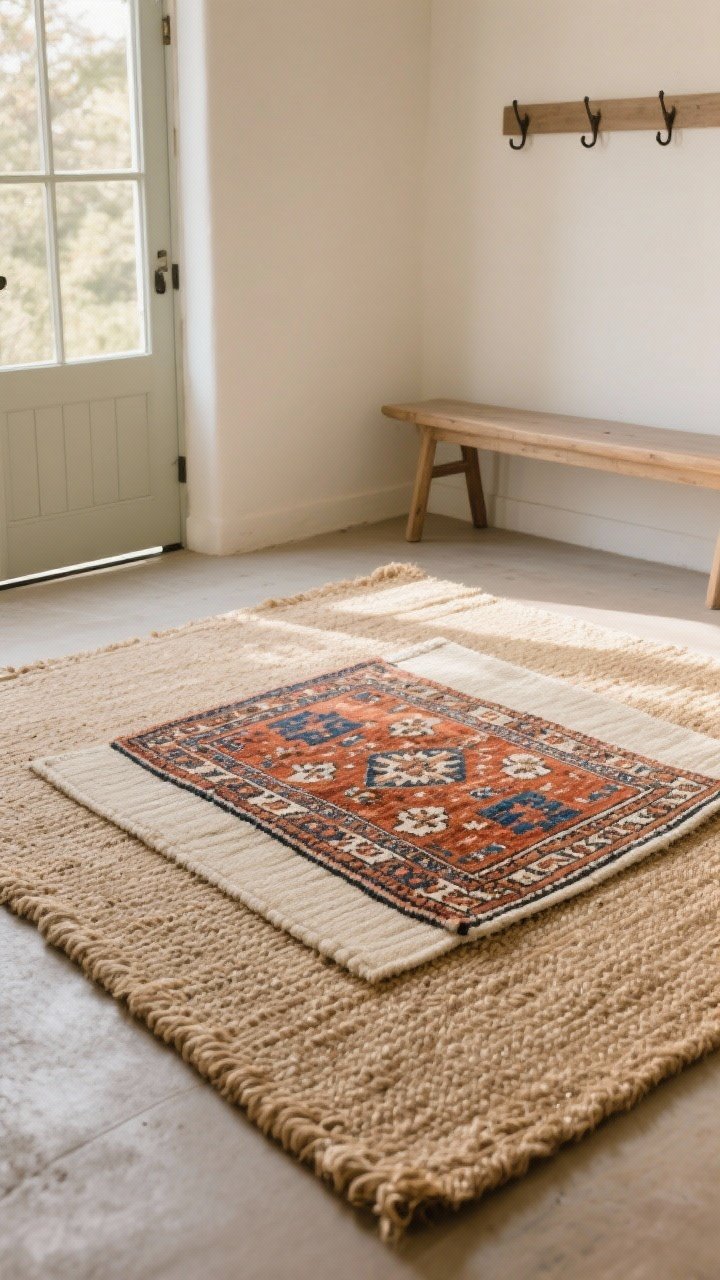
Layering a natural fiber rug under a patterned smaller rug gives that “I have taste and I know it” vibe. It adds depth, softness, and a curated look without much effort. Plus, it’s adjustable—swap the top rug seasonally.
What to layer
- Base: jute or sisal for texture and durability.
- Top: flatweave kilim, wool, or a patterned cotton for color.
Pro moves
- Make sure the base rug extends at least 4–6 inches beyond the top rug.
- Use a thin rug pad under the base for grip and comfort.
- Keep door clearance in mind—test before committing, FYI.
3. Go Runner-Style for Long, Narrow Entries
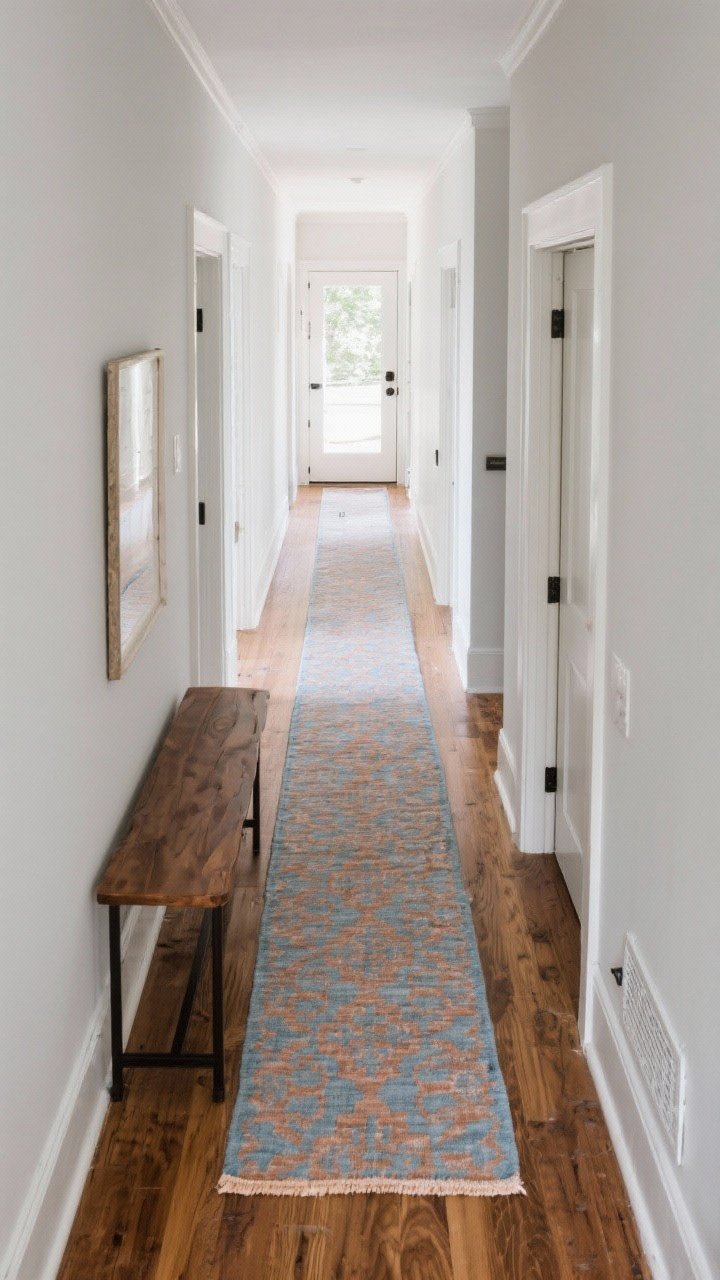
If your entry is basically a bowling alley, embrace the runner. It visually stretches the space and anchors furniture like console tables and benches. Bonus: runners guide guests where to walk—no more wet boot zig-zagging.
Sizing cheat sheet
- Leave 3–5 inches of floor showing on each side for a tailored look.
- Length should run close to the wall but not bump into doors or vents.
- Patterned runners add movement, solid ones feel calm—pick your vibe.
4. Try a Round Rug for Square or Boxy Foyers
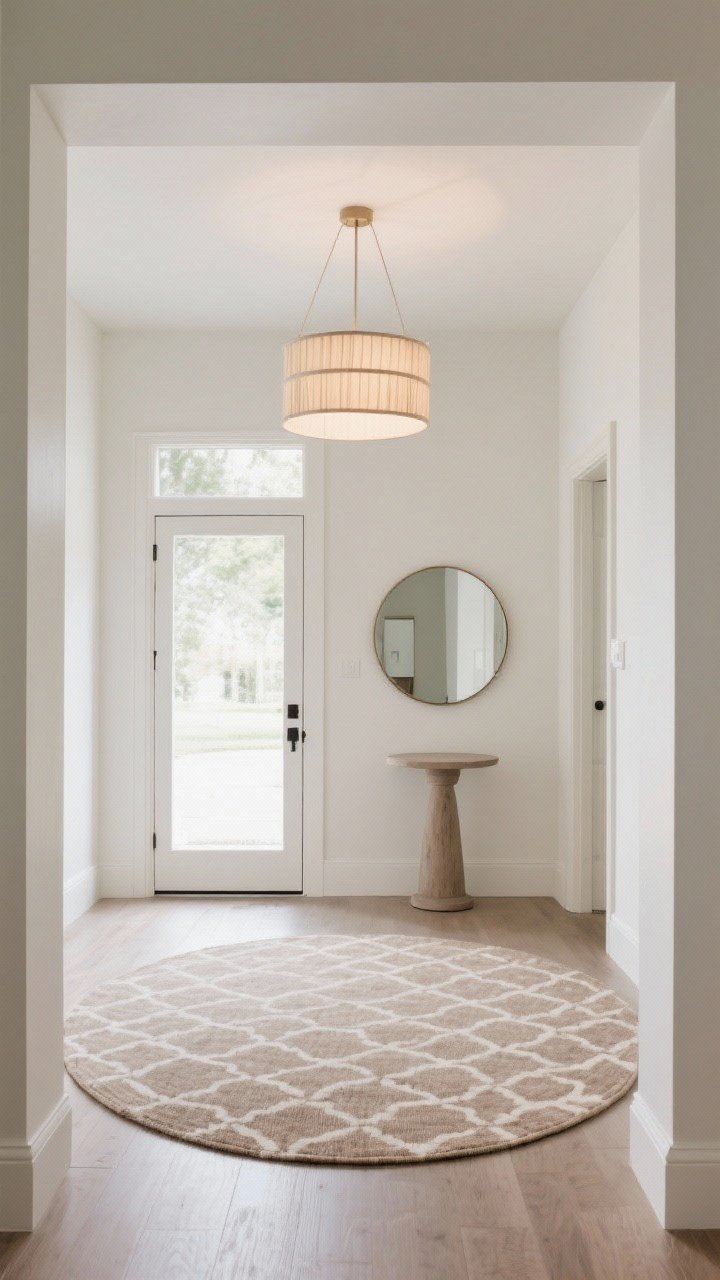
Square entry? Go round. A circular rug softens angles and makes small spaces feel more inviting and intentional. It’s great for showcasing a statement pendant or centered entry table, too.
Consider this
- Round rugs work best if the space is at least 5’x5’.
- Choose a rug that fits fully under your door swing—no bunching or curling.
- Pair with curved accessories (round mirror, drum pendant) to echo the shape.
5. Make It Indoor/Outdoor and Chill
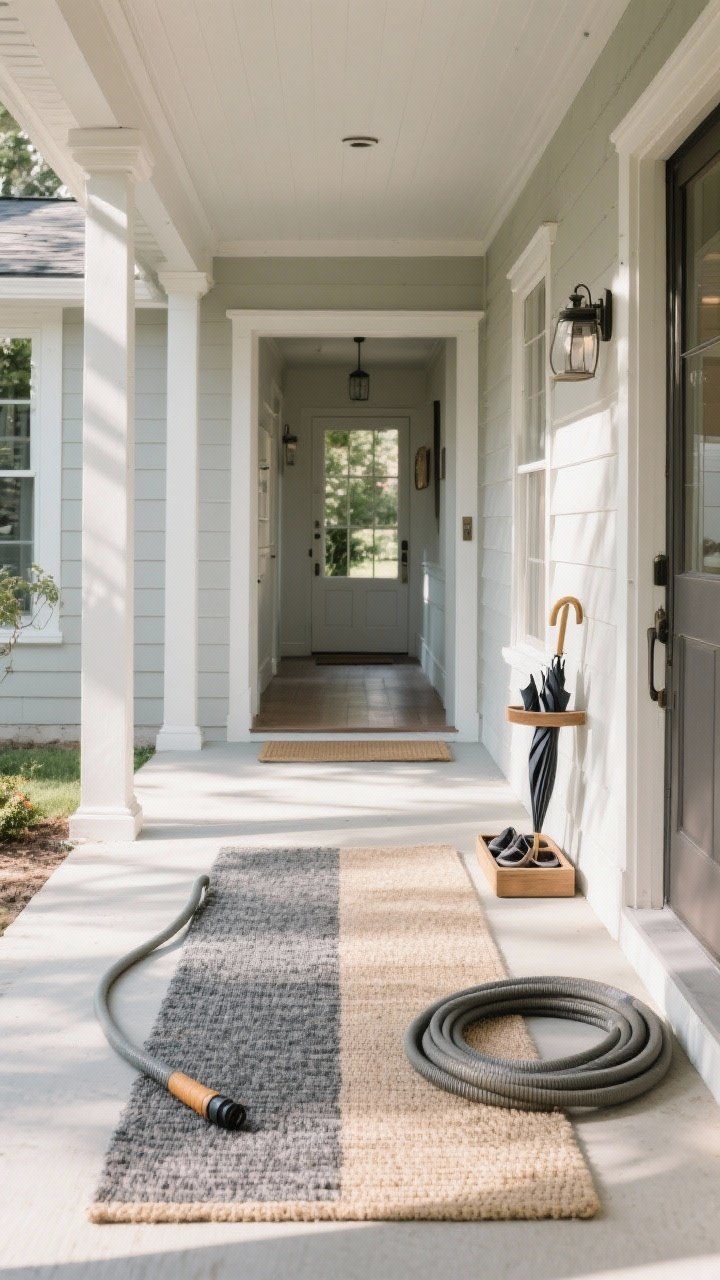
Kids, dogs, weather… life happens. Indoor/outdoor rugs are built tough and still look chic. They’re fade-resistant, easy to scrub down, and perfect for covered porches that blur into your foyer.
Best materials
- Polypropylene: durable, budget-friendly, easy to clean.
- PET (made from recycled plastic): soft underfoot, sustainable, great texture.
- Solution-dyed fibers: hold color longer and resist stains.
Cleaning hack
- Take it outside and hose it down, then air dry. That’s it. IMO the easiest rug care ever.
6. Neutral and Nubby for a Calm Welcome
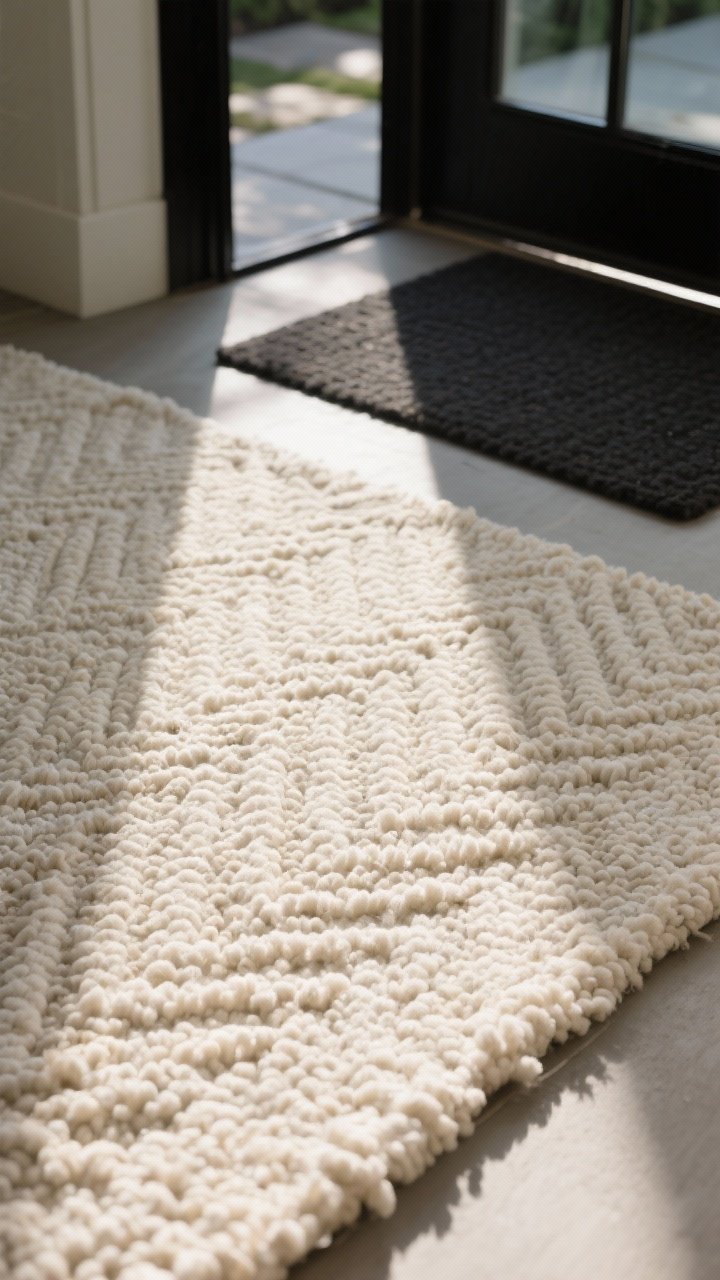
If your entry gets visual noise from art or statement lighting, keep the rug neutral but tactile. Think nubby wool, subtle herringbones, or creamy flatweaves that whisper “elevated.” It’s soft on feet and won’t compete with everything else.
How to keep it interesting
- Play with texture—bouclé, mini loops, or a chunky weave.
- Choose tonal patterns (beige on ivory, gray on greige) for depth without distraction.
- Layer with a darker doormat outside to protect the light tones inside.
7. Go Vintage or Vintage-Look for Character
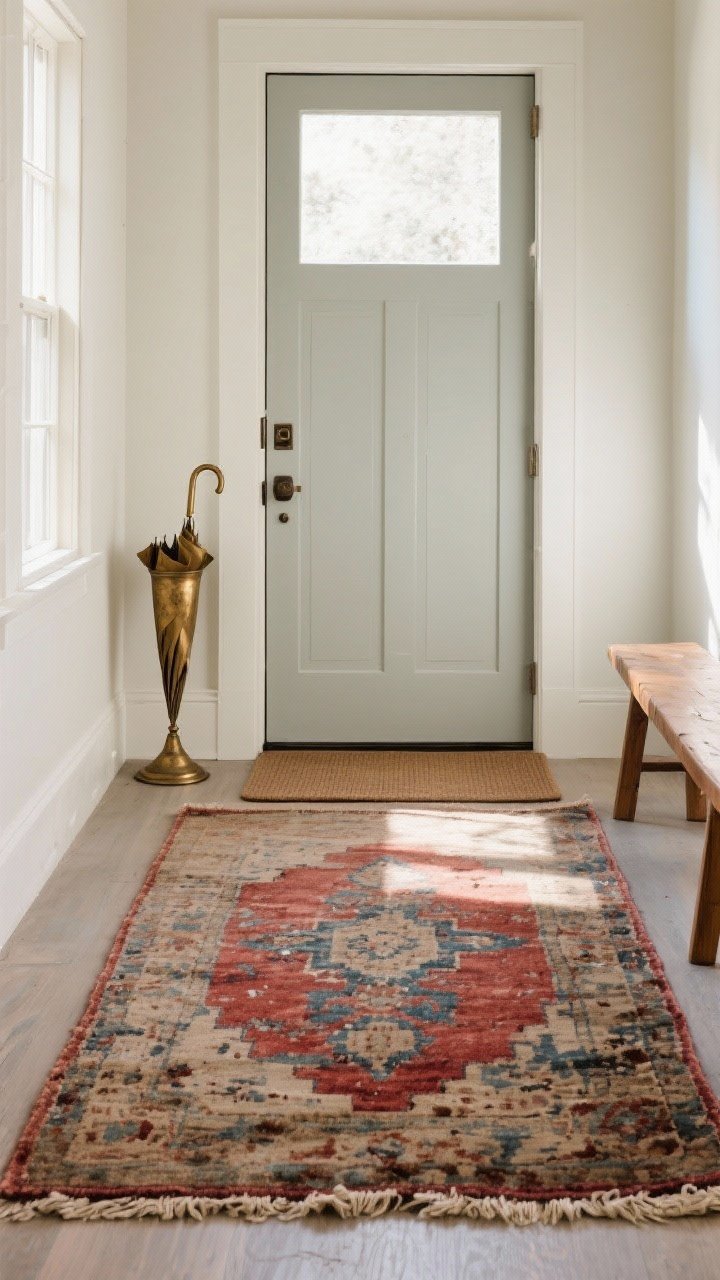
Nothing beats the patina of a vintage rug in the entry. The colors are toned down, the pattern is complex, and it looks like you hunted it down in a charming market in Florence (we’ll never tell). If real vintage isn’t in the budget, try a distressed-look power-loomed option.
What to watch
- Low pile is best for door swing and cleaning ease.
- Rugs with existing fade or wear are forgiving—spills and scuffs blend in.
- Use a felt pad to protect the backing and add cushion.
8. Color-Block to Define Zones
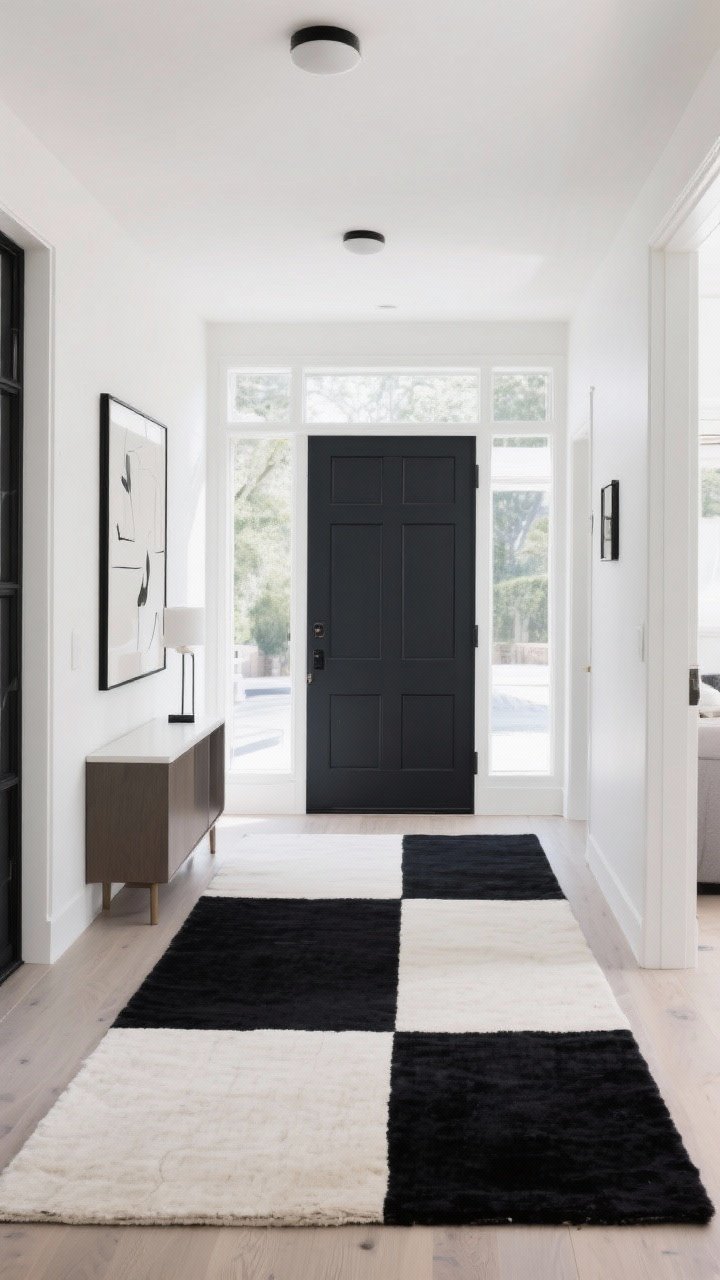
Open-plan entry without clear boundaries? A color-block rug can define the “you’ve arrived” zone and visually break up a big space. It’s modern, graphic, and great for pairing with simple furniture.
Styling ideas
- Match one block to your door color or stair runner for cohesion.
- Go tonal (navy + sky) for subtlety or high-contrast (black + cream) for drama.
- Keep other textiles simple so the blocks take the spotlight.
9. Embrace Natural Fibers (Jute, Sisal, Seagrass)
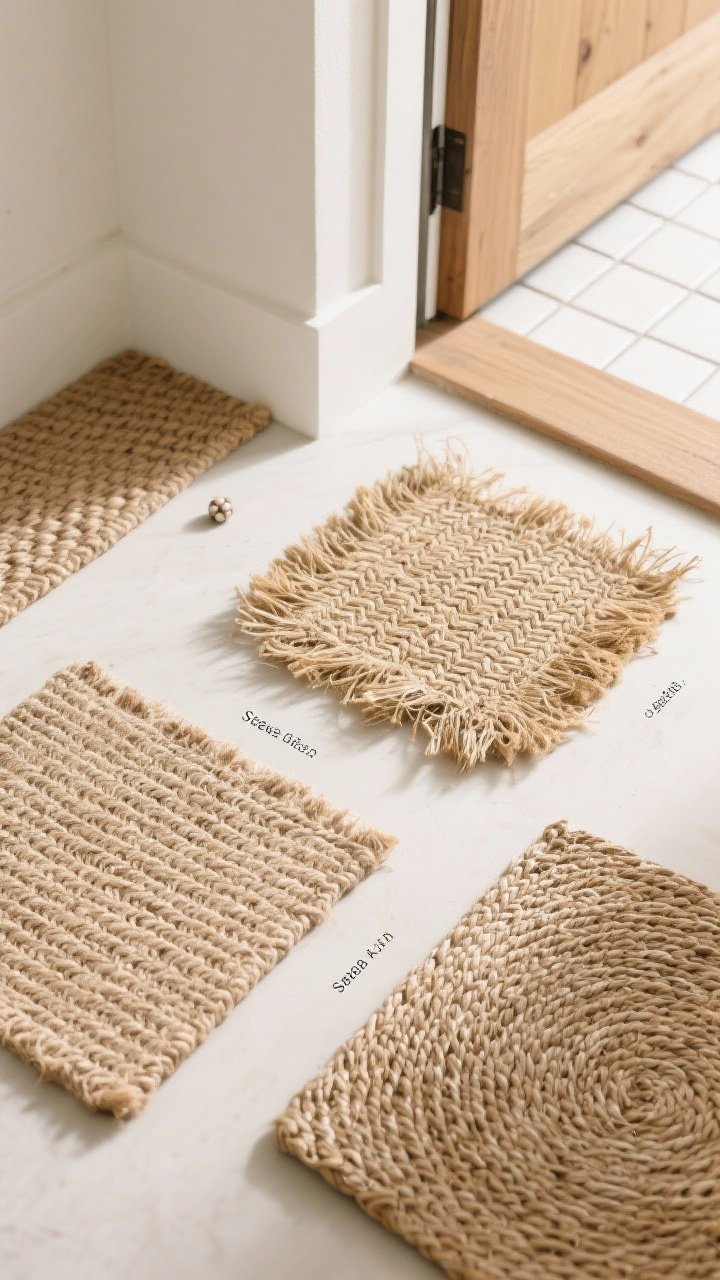
Natural fiber rugs are practically made for entryways. They’re textured, durable, and bring warmth to tile or wood. Seagrass is more stain-resistant than jute, and sisal sits somewhere in the middle with a crisp, tailored look.
Best use cases
- Jute: soft and beachy, better for low-to-moderate traffic.
- Seagrass: naturally repels spills, perfect for busy entries.
- Sisal: structured and refined—great when you need polish.
Care tips
- Blot spills quickly; avoid steam cleaning.
- Rotate every few months to even out wear and sun fade.
10. Oversize It for a Luxe Look
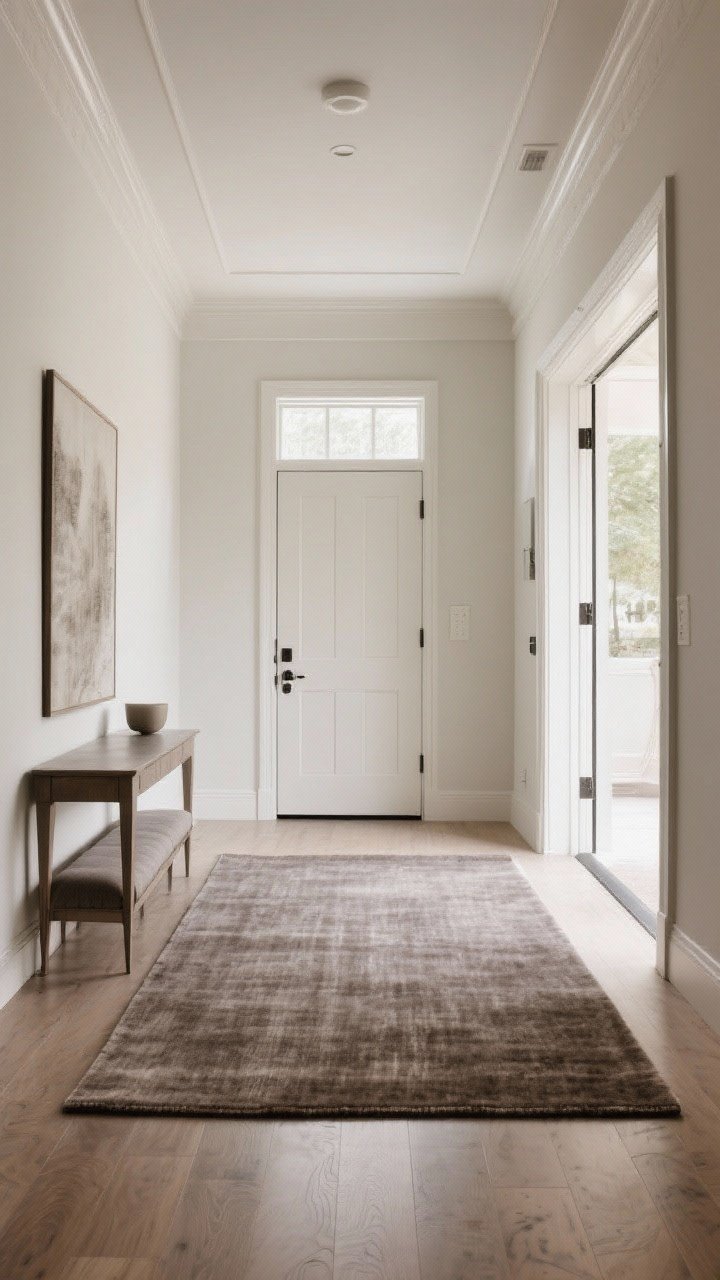
Most people go too small. An oversized rug instantly makes your entry feel intentional and upscale. It frames furniture, reduces echo, and feels so much more inviting underfoot.
How big is big enough?
- Your front legs of benches or consoles should sit on the rug.
- Leave at least 4–8 inches of floor around the edges to “float” the rug.
- If your door swings over it, keep pile thin to avoid catching.
11. Pattern Play With the Stair Runner
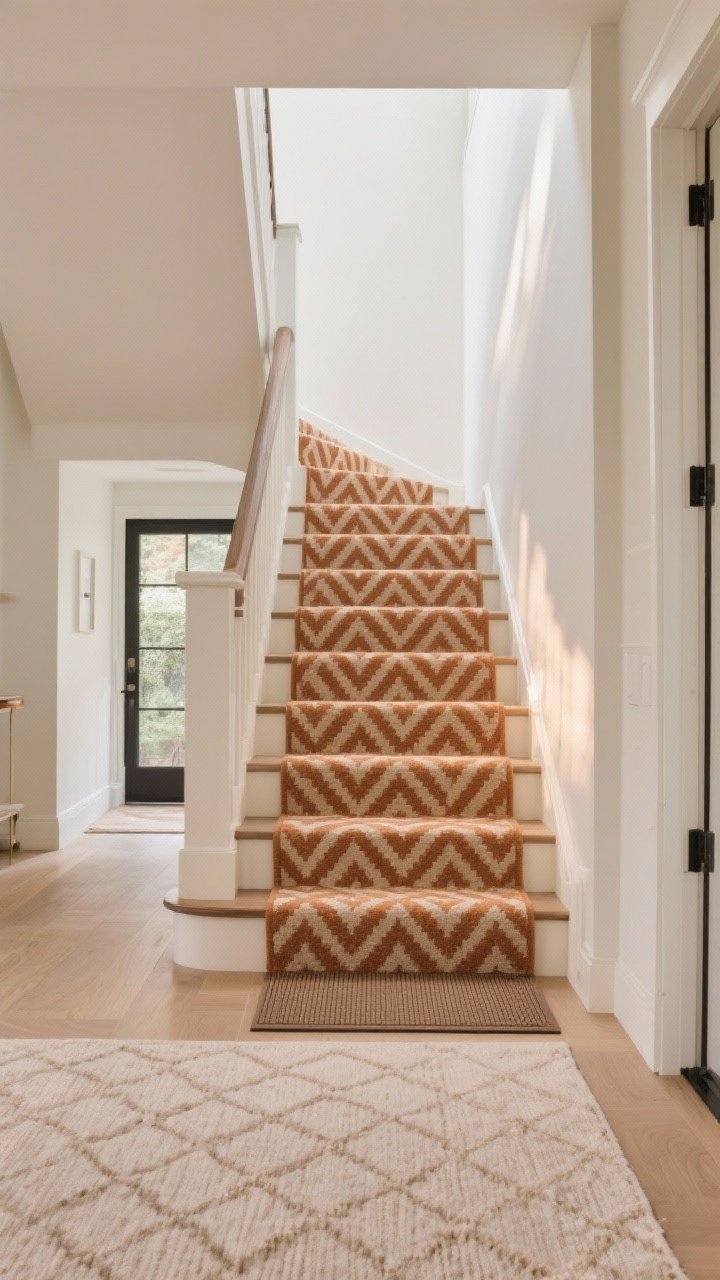
If your entry flows into a staircase, coordinate your entry rug and stair runner like they’re best friends. They don’t need to match, but they should vibe—repeat a color, echo a pattern scale, or keep one bold and one quiet.
Pairing formulas
- Bold stairs + quiet rug: neutral flatweave in the foyer.
- Neutral stairs + patterned rug: go vintage-style or geometric below.
- Tie them together with the same tone family (warm vs. cool).
PSA
- Use a non-slip pad—stairs are no place for skids (obviously).
12. Seasonal Switch-Ups That Don’t Break You

Want a fresh entry without a remodel? Rotate rugs seasonally. Light, airy textures for spring and summer; richer, darker tones for fall and winter. It keeps things feeling new and, FYI, spreads wear evenly.
Easy rotation plan
- Spring/Summer: natural fibers, lighter stripes, coastal neutrals.
- Fall/Winter: deeper hues, plush wool blends, moody patterns.
- Store off-season rugs in breathable cotton bags with a cedar block.
Entryway Rug Sizing Quick Guide
- Small entries (3’x5’ or less): 2’x3’ or 3’x5’ rugs, or a small round.
- Medium entries: 4’x6’ or 5’x7’ works; consider a runner if narrow.
- Large foyers: 5’x8’ to 6’x9’, or oversize round (6’–8’ diameter).
Material Match-Up
- Best for heavy traffic: indoor/outdoor polypropylene, seagrass, PET.
- Cozy feel: wool blends, low-pile tufted or hand-loomed.
- Budget-friendly: flatweave cotton or power-loomed synthetics.
Care and Maintenance Essentials
- Use a non-slip rug pad to prevent sliding and extend life.
- Vacuum weekly (both sides if possible) and spot-clean immediately.
- Place a heavy-duty doormat outside to catch debris before it enters.
- Rotate the rug every 3–6 months for even fade and wear.
That’s your entryway playbook. Whether you go bold and patterned, calm and textured, or indestructible and washable, the right rug makes your foyer feel intentional and pulled together. Start with size and material, then layer in pattern and personality. Your home’s first impression? About to be A+.