Easy Classic Lemon Meringue Pie – Bright, Tangy, and Comforting
There’s something timeless about a good lemon meringue pie. It’s bright and sunny, yet cozy and nostalgic, with a creamy lemon filling and a cloud of sweet meringue on top. This version keeps things simple without cutting corners on flavor.
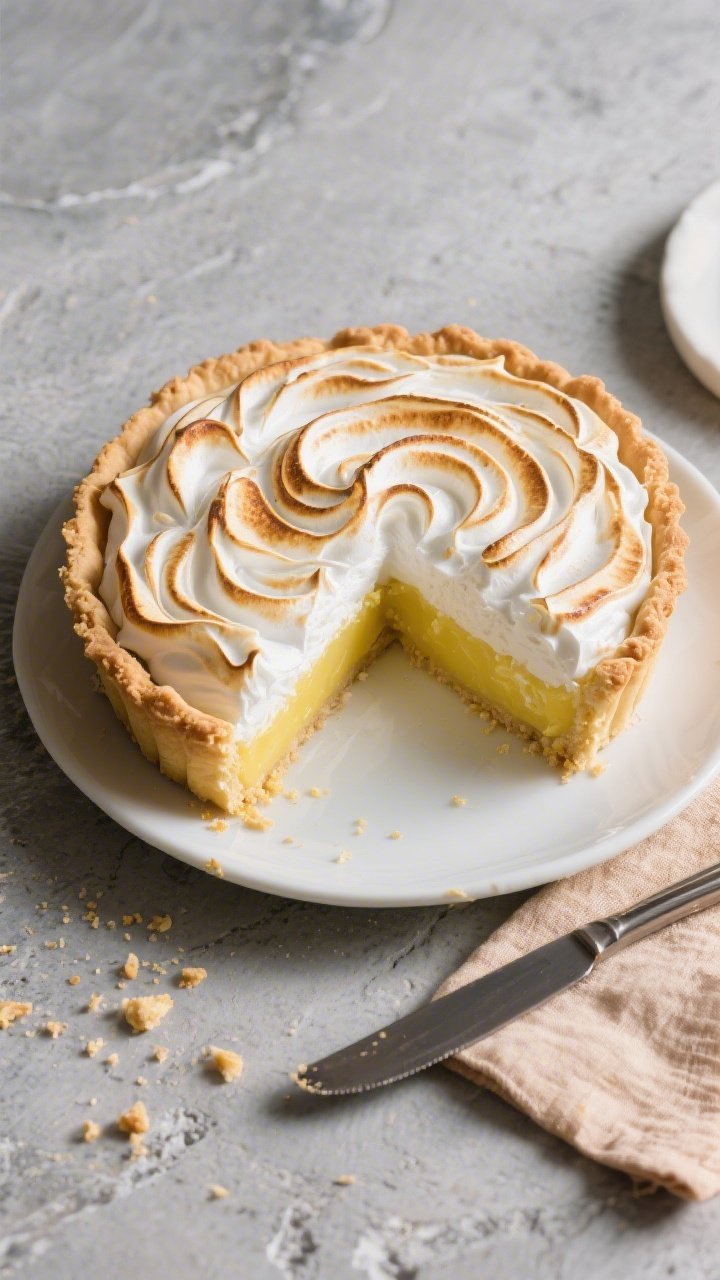
You’ll get a crisp crust, a smooth, zingy lemon curd, and a glossy meringue that holds its shape. If you’ve ever been intimidated by meringue, don’t worry—this guide walks you through every step.

Easy Classic Lemon Meringue Pie - Bright, Tangy, and Comforting
Ingredients
Method
- Pre-bake the crust: Heat the oven to 375°F (190°C).Fit the crust into a 9-inch pie dish, prick the bottom with a fork, line with parchment, and fill with pie weights. Bake for 15 minutes, remove weights and parchment, and bake 8–10 more minutes until golden. Let cool slightly.
- Set up the lemon filling: In a medium saucepan, whisk together sugar, cornstarch, and salt.Add water gradually while whisking to prevent lumps. Cook over medium heat, whisking, until it starts to bubble and thicken, 5–7 minutes.
- Add lemon and yolks: In a small bowl, whisk the egg yolks. Slowly ladle in about 1/2 cup of the hot mixture to temper, whisking constantly.Return the yolk mixture to the saucepan. Cook 1–2 minutes, whisking, until thick and glossy.
- Finish the curd: Remove from heat. Whisk in lemon juice, zest, and butter until smooth.Taste for balance—add a little more juice if you like it sharper. Keep warm over the lowest heat while you make the meringue.
- Preheat for baking: Reduce oven to 350°F (175°C).
- Make the meringue: In a clean, grease-free bowl, whisk egg whites with cream of tartar and a pinch of salt on medium speed until foamy. Mix sugar and cornstarch together in a small bowl.Increase mixer speed to medium-high and add the sugar mixture 1 tablespoon at a time. Beat until glossy, stiff peaks form. Beat in vanilla just to combine.
- Assemble the pie: Pour the hot lemon filling into the warm crust.Immediately spoon the meringue over the filling, starting at the edges and sealing to the crust all the way around. Mound and swirl the top with a spatula for peaks.
- Bake to set: Bake at 350°F (175°C) for 15–18 minutes, until the meringue is lightly browned with toasted tips. Avoid overbaking.
- Cool gradually: Cool on a wire rack for 1 hour, then refrigerate uncovered for at least 3 hours before slicing.Wipe your knife between cuts for cleaner slices.
- Serve: Enjoy chilled or slightly cool. The filling should be set and sliceable, with a tender, glossy meringue.
What Makes This Special

This recipe focuses on balance—sweet, tart, and silky all at once. The filling is made with fresh lemon juice and zest for that true citrus punch.
The meringue is stabilized with cornstarch, so it stays glossy and doesn’t weep as easily. And we start with a pre-baked crust, which helps keep the bottom flaky, not soggy. It’s a classic dessert, streamlined for real home kitchens.
Shopping List
- Pie Crust: 1 (9-inch) pie crust, homemade or store-bought
- Lemon Filling:
- 1 cup granulated sugar
- 1/3 cup cornstarch
- 1/4 teaspoon salt
- 1 3/4 cups water
- 1/2 cup fresh lemon juice (about 3–4 lemons)
- 2 tablespoons lemon zest (from the same lemons)
- 4 large egg yolks (reserve the whites for the meringue)
- 3 tablespoons unsalted butter
- Meringue:
- 4 large egg whites (room temperature)
- 1/2 cup granulated sugar
- 1 tablespoon cornstarch
- 1/4 teaspoon cream of tartar
- 1 teaspoon vanilla extract
- Pinch of salt
Step-by-Step Instructions
- Pre-bake the crust: Heat the oven to 375°F (190°C).Fit the crust into a 9-inch pie dish, prick the bottom with a fork, line with parchment, and fill with pie weights. Bake for 15 minutes, remove weights and parchment, and bake 8–10 more minutes until golden. Let cool slightly.
- Set up the lemon filling: In a medium saucepan, whisk together sugar, cornstarch, and salt.Add water gradually while whisking to prevent lumps. Cook over medium heat, whisking, until it starts to bubble and thicken, 5–7 minutes.
- Add lemon and yolks: In a small bowl, whisk the egg yolks. Slowly ladle in about 1/2 cup of the hot mixture to temper, whisking constantly.Return the yolk mixture to the saucepan. Cook 1–2 minutes, whisking, until thick and glossy.
- Finish the curd: Remove from heat. Whisk in lemon juice, zest, and butter until smooth.Taste for balance—add a little more juice if you like it sharper. Keep warm over the lowest heat while you make the meringue.
- Preheat for baking: Reduce oven to 350°F (175°C).
- Make the meringue: In a clean, grease-free bowl, whisk egg whites with cream of tartar and a pinch of salt on medium speed until foamy. Mix sugar and cornstarch together in a small bowl.Increase mixer speed to medium-high and add the sugar mixture 1 tablespoon at a time. Beat until glossy, stiff peaks form. Beat in vanilla just to combine.
- Assemble the pie: Pour the hot lemon filling into the warm crust.Immediately spoon the meringue over the filling, starting at the edges and sealing to the crust all the way around. Mound and swirl the top with a spatula for peaks.
- Bake to set: Bake at 350°F (175°C) for 15–18 minutes, until the meringue is lightly browned with toasted tips. Avoid overbaking.
- Cool gradually: Cool on a wire rack for 1 hour, then refrigerate uncovered for at least 3 hours before slicing.Wipe your knife between cuts for cleaner slices.
- Serve: Enjoy chilled or slightly cool. The filling should be set and sliceable, with a tender, glossy meringue.
How to Store
Refrigerate: Keep the pie loosely covered in the fridge for up to 2 days. Avoid plastic wrap touching the meringue; use a domed cover or an inverted bowl.
The meringue may soften slightly over time, but it will still taste great.
Do not freeze: Freezing causes the meringue to weep and the filling to separate. For best texture, enjoy within 48 hours.
Make-ahead tips: You can bake the crust a day ahead. The filling and meringue are best prepared and assembled the day you plan to serve.
Health Benefits
Lemons bring vitamin C, which supports immune health and provides antioxidants.
The zest adds essential oils that boost aroma and flavor without extra calories. While this is a dessert, the citrus offers a fresh, bright note that feels lighter than many cream pies.
Portion awareness can make this a sensible treat. A small slice satisfies thanks to the bold lemon flavor.
If you’d like to reduce sugar slightly, you can trim the filling sugar by 2–3 tablespoons without losing structure.
Common Mistakes to Avoid
- Not sealing the meringue to the crust: Gaps let steam escape and cause weeping. Spread the meringue edge-to-edge, touching the crust.
- Adding meringue to a cool filling: The filling should be hot when you top it. Heat helps cook the bottom of the meringue and prevents separation.
- Under-whipping or over-whipping egg whites: Aim for glossy stiff peaks that hold their shape.Dry, clumpy whites can collapse; soft peaks may slump.
- Skipping cornstarch in the meringue: It helps stabilize and reduce weeping. Don’t leave it out.
- Cutting too soon: The filling needs time to set. Chill for at least 3 hours before slicing.
- Using a greasy bowl for meringue: Any fat prevents proper whipping.Make sure the bowl and whisk are spotless.
Variations You Can Try
- Meyer lemon pie: Swap regular lemons for Meyer lemons for a sweeter, floral flavor. Reduce sugar in the filling by 2 tablespoons if you prefer.
- Graham cracker crust: Use a buttery graham crust for a toasty, slightly caramel note. Pre-bake it as you would a pastry crust.
- Lime twist: Replace lemon juice and zest with lime for a zesty variation.Keep the rest of the recipe the same.
- Toasted coconut topping: Fold 1/2 cup finely shredded toasted coconut into the meringue for texture and a tropical vibe.
- Less-sweet meringue: Reduce meringue sugar to 6 tablespoons for a lighter sweetness and a more pronounced lemon bite.
FAQ
Why did my meringue weep or leak syrup?
Weeping often comes from undercooked meringue, sugar not fully dissolved, or topping a cool filling. Make sure the filling is hot, add sugar gradually until dissolved, and bake long enough to set the meringue.
Can I use bottled lemon juice?
Fresh juice gives the best flavor and aroma. Bottled juice can taste flat or harsh.
If you must use it, add extra zest to boost freshness.
How do I know the meringue has stiff peaks?
Lift the whisk: the peaks should stand tall with a slight curl at the tip and look glossy, not foamy or grainy. The meringue should cling to the bowl without sliding.
Can I use cornstarch-only to thicken the filling?
Yes. This recipe already uses cornstarch, which sets cleanly and slices well.
Just be sure to cook it until it bubbles and thickens to avoid a starchy taste.
What’s the best way to slice the pie cleanly?
Chill thoroughly, then use a sharp, thin knife. Wipe the blade with a warm, damp cloth between cuts. A small offset spatula helps lift slices neatly.
Is there a dairy-free option?
Use a dairy-free crust and swap the butter in the filling for a neutral dairy-free alternative.
The meringue is naturally dairy-free.
How can I prevent a soggy bottom?
Fully pre-bake the crust, let it cool slightly, and add the hot filling. You can also brush the warm crust with a thin layer of lightly beaten egg white and bake 2 minutes to create a moisture barrier.
Final Thoughts
Easy Classic Lemon Meringue Pie is all about simple steps and fresh flavor. With a crisp crust, bright lemon curd, and a stable, glossy meringue, it hits that perfect sweet-tart spot.
Follow the tips here, give it time to chill, and you’ll have a stunning dessert that feels special without being fussy. It’s a classic for a reason—and now it’s one you can make anytime.