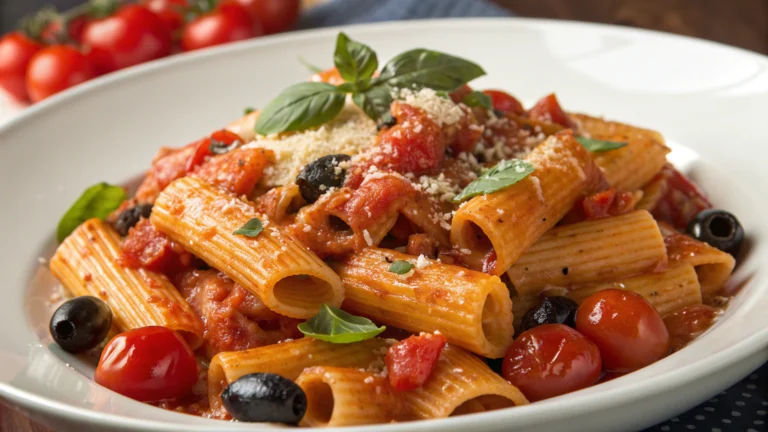
Classic Penne Carbonara – Creamy, Comforting, and Easy to Master
Penne carbonara is the kind of weeknight hero that feels like a treat. It’s rich, creamy, and deeply satisfying, yet it comes together with just a handful of everyday ingredients. No cream, no fancy tricks—just eggs, cheese, pork, and pasta cooked with care.
If you’ve ever worried about scrambling the eggs or ending up with a dry sauce, this guide will walk you through it in simple steps. By the time you’re done, you’ll have a silky, glossy bowl of comfort that tastes like something from a small Roman trattoria.
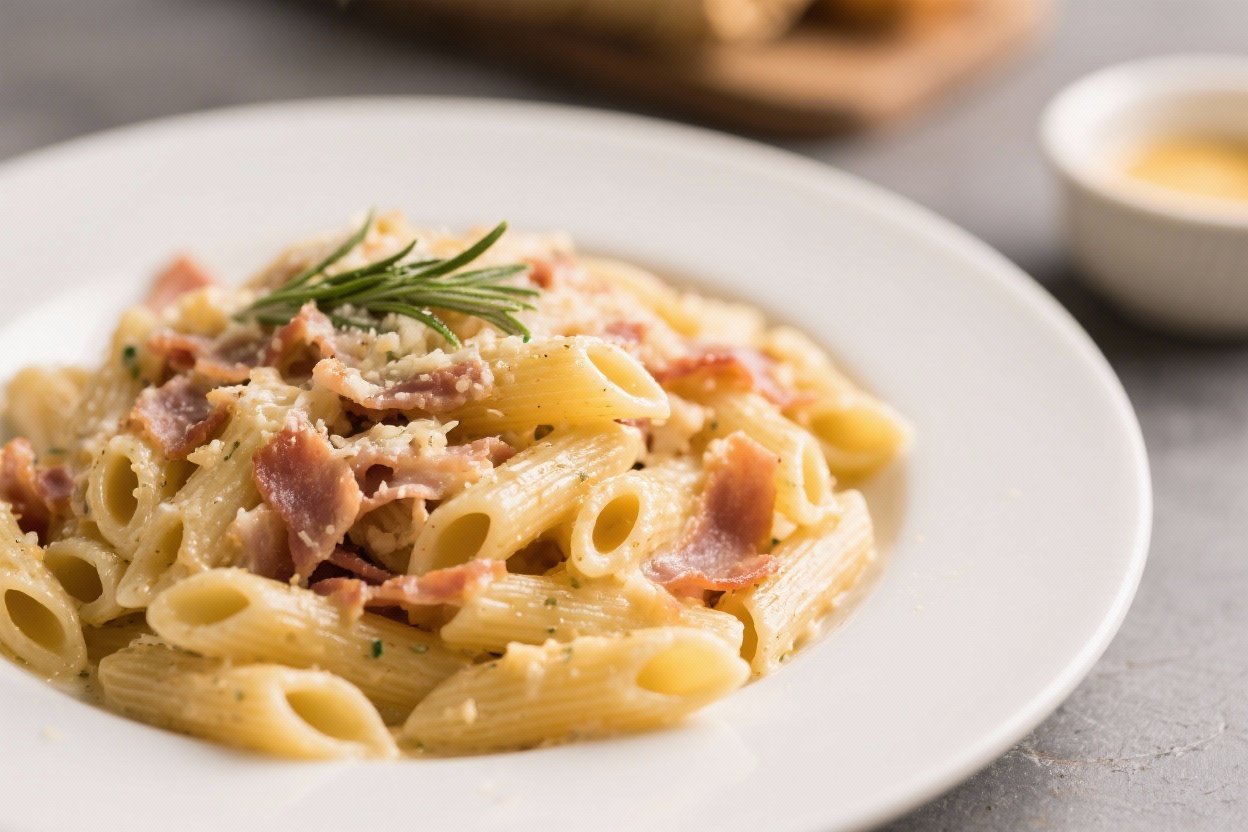
Classic Penne Carbonara - Creamy, Comforting, and Easy to Master
Ingredients
Method
- Bring a large pot of water to a boil. Salt it well—it should taste like the sea. This is your only chance to season the pasta from within.
- Prep your ingredients. Finely grate the cheese and whisk it with the eggs and extra yolks in a bowl.Add a generous pinch of black pepper. Set aside near the stove.
- Cook the penne. Add the pasta to the boiling water and cook until just shy of al dente. You want it to have a firm bite, since it will finish in the pan. Reserve at least 1 cup of the starchy pasta water before draining.
- Crisp the pork. While the pasta cooks, set a large skillet over medium heat.Add the guanciale or pancetta. If it’s very lean, add a teaspoon of olive oil to get it started. Cook until the fat renders and the edges turn golden and crisp, about 5–8 minutes.
- Control the heat. When the pork is crisp, turn the heat to low.You want hot fat, but not scorching. If it seems too hot, take the pan off the burner for a minute.
- Combine pasta and pork. Add the drained penne to the skillet with the pork and its fat. Toss for 30 seconds to coat.Add a splash of reserved pasta water to loosen things up.
- Temper the egg mixture. Remove the pan from the heat. Slowly pour the egg-and-cheese mixture over the pasta while tossing constantly. The residual heat cooks the eggs gently, forming a creamy sauce rather than scrambling.Add more pasta water, a little at a time, until the sauce turns glossy and clings to the penne.
- Season and adjust. Grind in more black pepper and taste for salt. Pecorino and pork are salty, so you may not need much. If the sauce thickens too much, stir in another splash of pasta water to revive the silkiness.
- Serve immediately. Plate hot, and finish with extra grated cheese and pepper.Carbonara waits for no one.
What Makes This Special
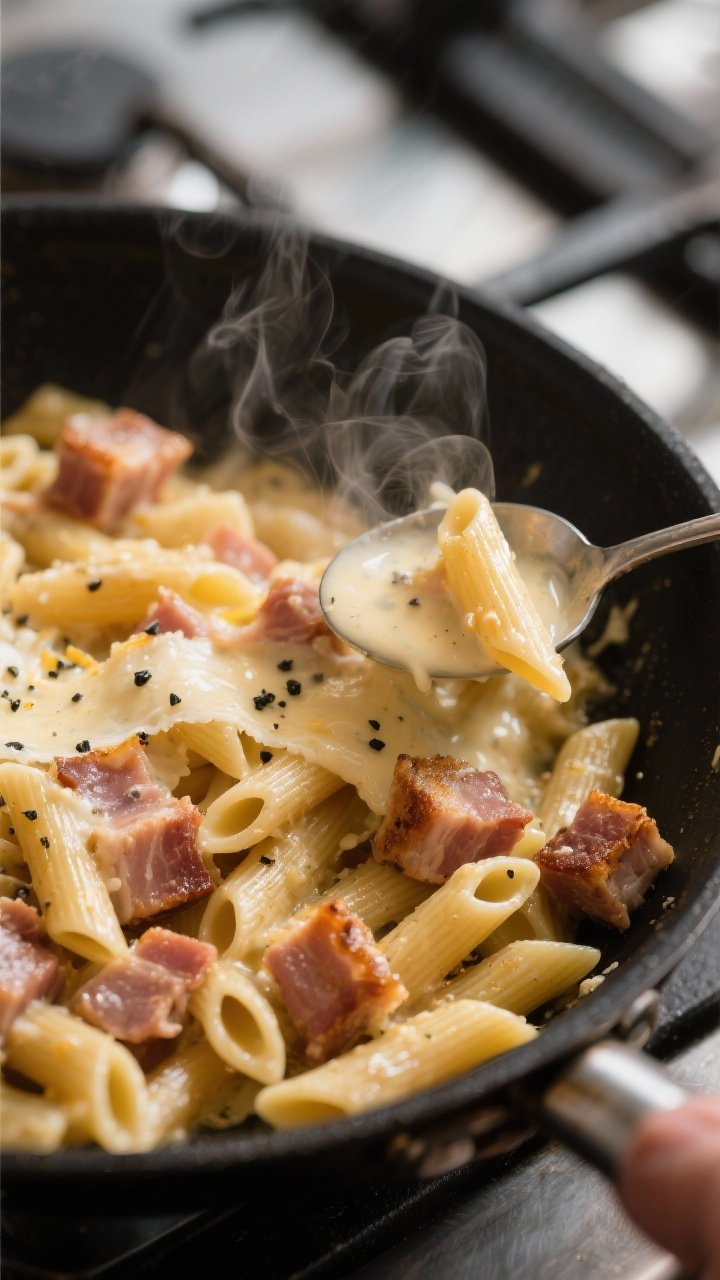
Carbonara is famous for its simplicity. The sauce is made from eggs, Pecorino Romano or Parmesan, and pasta water—the starchy secret that makes everything cling just right.
Using penne instead of spaghetti gives you a heartier bite and little pockets to catch the sauce.
It’s great for feeding a crowd or for those who prefer a shorter pasta shape. And once you learn the rhythm—cook pasta, crisp pork, temper eggs, toss—this recipe becomes second nature.
Shopping List
- Penne: 12 ounces (340 g)
- Guanciale or Pancetta: 5–6 ounces (140–170 g), diced (bacon works in a pinch)
- Eggs: 3 large whole eggs
- Egg yolks: 1–2 additional yolks for extra richness (optional but recommended)
- Pecorino Romano: 1 cup finely grated (or use half Parmesan for a milder flavor)
- Freshly ground black pepper: to taste (be generous)
- Kosher salt: for the pasta water
- Olive oil: 1 teaspoon, only if your pork is very lean
- Reserved pasta water: 1–1.5 cups (you’ll use it to make the sauce silky)
Step-by-Step Instructions

- Bring a large pot of water to a boil. Salt it well—it should taste like the sea. This is your only chance to season the pasta from within.
- Prep your ingredients. Finely grate the cheese and whisk it with the eggs and extra yolks in a bowl.Add a generous pinch of black pepper. Set aside near the stove.
- Cook the penne. Add the pasta to the boiling water and cook until just shy of al dente. You want it to have a firm bite, since it will finish in the pan. Reserve at least 1 cup of the starchy pasta water before draining.
- Crisp the pork. While the pasta cooks, set a large skillet over medium heat.Add the guanciale or pancetta. If it’s very lean, add a teaspoon of olive oil to get it started. Cook until the fat renders and the edges turn golden and crisp, about 5–8 minutes.
- Control the heat. When the pork is crisp, turn the heat to low.You want hot fat, but not scorching. If it seems too hot, take the pan off the burner for a minute.
- Combine pasta and pork. Add the drained penne to the skillet with the pork and its fat. Toss for 30 seconds to coat.Add a splash of reserved pasta water to loosen things up.
- Temper the egg mixture. Remove the pan from the heat. Slowly pour the egg-and-cheese mixture over the pasta while tossing constantly. The residual heat cooks the eggs gently, forming a creamy sauce rather than scrambling.Add more pasta water, a little at a time, until the sauce turns glossy and clings to the penne.
- Season and adjust. Grind in more black pepper and taste for salt. Pecorino and pork are salty, so you may not need much. If the sauce thickens too much, stir in another splash of pasta water to revive the silkiness.
- Serve immediately. Plate hot, and finish with extra grated cheese and pepper.Carbonara waits for no one.
Storage Instructions
- Best served fresh: Carbonara is at its peak right off the stove. The sauce can tighten as it cools.
- Short-term storage: If you must store leftovers, keep them in an airtight container for up to 1 day in the fridge.
- Reheating: Warm gently in a skillet over low heat with a splash of water, milk, or broth. Stir constantly until it loosens.Avoid microwaving on high, which can scramble the sauce.
- Freezing: Not recommended. The egg-based sauce doesn’t freeze well and can separate.
Benefits of This Recipe
- Simple ingredients, big payoff: With pantry staples and a few fresh items, you get restaurant-level results.
- Quick: From start to finish, you can have dinner on the table in about 25–30 minutes.
- Flexible: If you can’t find guanciale, pancetta or bacon works. Cheese can be adjusted to taste.
- Comforting and satisfying: The creamy, peppery sauce hits every cozy note without feeling heavy.
- Teaches technique: You’ll master tempering and emulsion skills that translate to other dishes.
Common Mistakes to Avoid
- Scrambling the eggs: Adding the egg mixture over high heat is the fast track to scrambled bits.Take the pan off the heat and stir continuously.
- Skipping the pasta water: This is your built-in sauce thickener and smoother. Always save some before draining.
- Overcooking the pasta: Penne needs to be slightly under al dente before it hits the pan, or it will turn mushy.
- Not using enough pepper: Carbonara should be pepper-forward. Freshly ground is key.
- Using pre-shredded cheese: It often contains anti-caking agents that affect melting and texture.Freshly grated is best.
- Dry pan when mixing: If the pan is too dry, the sauce can seize. Keep some rendered fat and add pasta water to help emulsify.
Alternatives
- Cheese swap: Use half Parmesan and half Pecorino for a gentler, nutty flavor.
- Pork options: Guanciale is traditional, but pancetta or thick-cut bacon works. Turkey bacon can be used, but add a bit of olive oil for richness.
- Vegetarian version: Skip the pork and add sautéed mushrooms for umami.A touch of smoked paprika can mimic some of the smoky notes.
- Gluten-free: Use gluten-free penne and ensure your cheese is GF. The method stays the same.
- Lighter take: Use 2 whole eggs and skip extra yolks. Choose Parmesan over Pecorino for a milder profile.
- Add-ins: Peas, asparagus tips, or a handful of baby spinach can be tossed in with the pasta for color and freshness.
FAQ
Do I need cream for carbonara?
No.
Traditional carbonara relies on eggs, cheese, and pasta water to create its velvety sauce. Cream isn’t necessary and can weigh the dish down.
What’s the best cheese to use?
Pecorino Romano is classic and gives a salty, tangy bite. If you prefer a softer flavor, use half Pecorino and half Parmesan, or all Parmesan for a mellower taste.
Can I use bacon instead of guanciale?
Yes.
Bacon is a common substitute and will still taste great. Choose thick-cut and cook until crisp, then adjust salt since bacon can be quite salty.
How do I prevent the eggs from scrambling?
Remove the pan from heat before adding the egg mixture, toss vigorously, and add pasta water gradually to moderate the temperature. Work quickly and keep the pasta moving.
What if my sauce turns too thick?
Stir in more reserved pasta water a little at a time over low heat until it loosens and turns glossy again.
The starch in the water keeps the sauce smooth.
Can I make this ahead?
It’s best cooked and served right away. If you need to prep, grate the cheese and dice the pork in advance, but cook and assemble just before eating.
Is penne traditional for carbonara?
Spaghetti is more traditional, but penne or rigatoni are excellent choices for catching the sauce. Use the shape you enjoy most.
Can I add garlic or onions?
Purists skip them, but a small amount of garlic gently warmed in the pork fat can be delicious.
Keep it subtle so it doesn’t overpower the sauce.
How much pepper should I use?
Be generous. Carbonara should have a pronounced peppery kick. Freshly ground black pepper is essential for the right aroma and bite.
What’s the ideal egg ratio?
For 12 ounces of pasta, 3 eggs plus 1–2 yolks strikes a rich balance.
Adjust with more yolks for extra creaminess or fewer for a lighter sauce.
In Conclusion
Classic Penne Carbonara is proof that a few good ingredients can deliver big comfort. With careful heat control, plenty of pepper, and that magic splash of pasta water, you’ll get a silky sauce every time. Keep it simple, serve it hot, and let the cheese and pork do the talking.
Once you’ve nailed this method, you’ll have a reliable go-to that feels special any night of the week.