Beef Stew With Root Vegetables – A Cozy, Hearty One-Pot Meal
Nothing beats a pot of beef stew slowly simmering on the stove, filling the kitchen with warmth and good smells. This version leans into earthy root vegetables and a rich, glossy broth. It’s the kind of meal that feels special but doesn’t ask much of you besides a bit of chopping and patience.
The stew tastes even better the next day, so it’s great for make-ahead dinners. Serve it with crusty bread or creamy mashed potatoes, and you’re set.
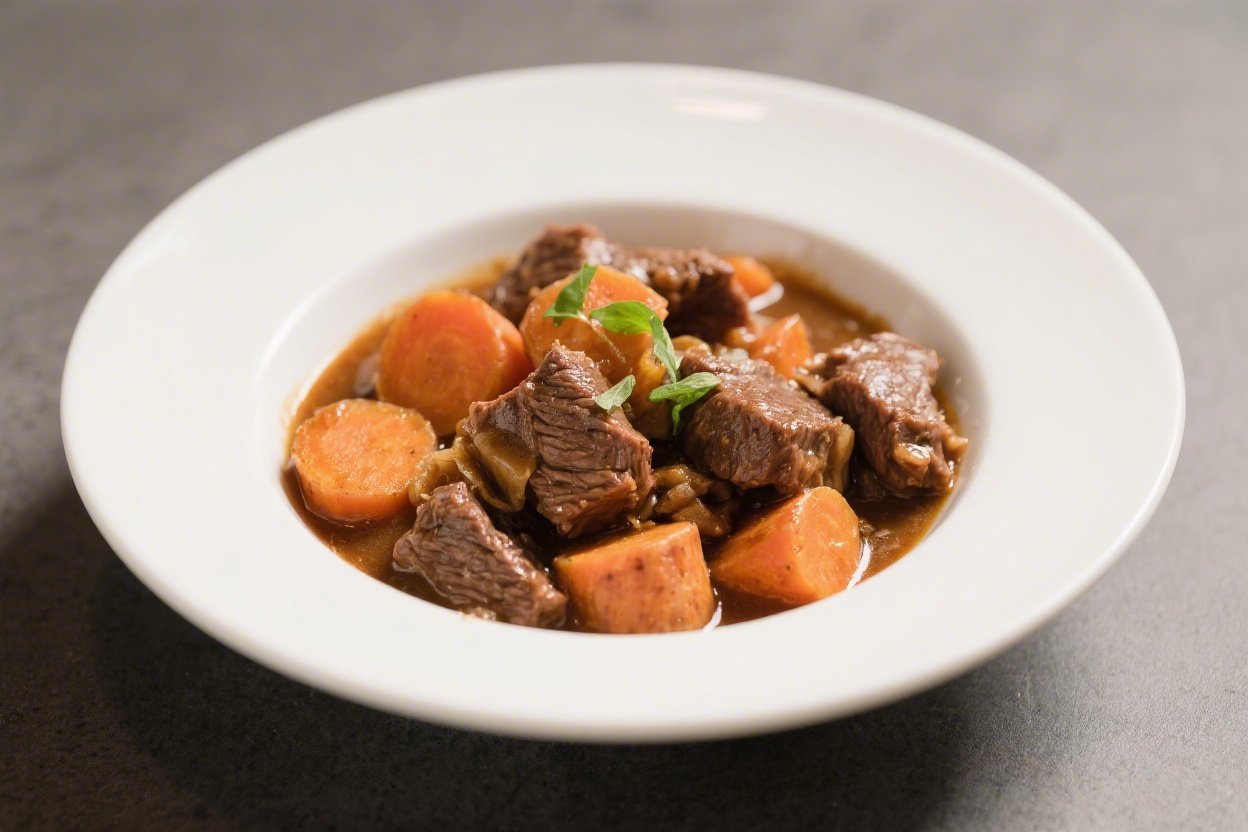
Beef Stew With Root Vegetables - A Cozy, Hearty One-Pot Meal
Ingredients
Method
- Pat the beef dry and season well. Dry meat browns better. Sprinkle the beef generously with salt and pepper. If you like a slightly thicker stew, lightly coat the cubes in flour, shaking off excess.
- Brown the beef in batches. Heat 1 to 2 tablespoons of oil in a heavy Dutch oven over medium-high heat.Sear the beef on two sides until deeply browned, about 3 to 4 minutes per side. Don’t crowd the pot. Transfer browned pieces to a plate and repeat with remaining beef, adding oil as needed.
- Sauté the aromatics. Lower heat to medium.Add onions and a pinch of salt. Cook, stirring, until softened and lightly golden, 5 to 7 minutes. Add garlic and cook 30 seconds, just until fragrant.
- Build the base. Stir in tomato paste and cook 1 to 2 minutes until it darkens slightly.This step adds sweetness and depth.
- Deglaze with wine. Pour in the red wine and scrape up the browned bits. Simmer 2 to 3 minutes to reduce slightly. If you’re skipping wine, use an extra cup of stock and a splash of balsamic vinegar for brightness.
- Add liquids and herbs. Return the beef (and any juices) to the pot.Pour in beef stock to mostly cover the meat. Add bay leaves, thyme, and Worcestershire. Bring to a gentle boil.
- Simmer low and slow. Reduce heat to low, cover with the lid slightly ajar, and simmer for 60 minutes.Keep it at a soft bubble, not a rolling boil. Stir occasionally to prevent sticking.
- Add the root vegetables. Stir in carrots, parsnips, potatoes, and celery. Continue simmering, partially covered, for 35 to 45 minutes, until the beef is fork-tender and vegetables are cooked through but not falling apart.
- Finish and adjust thickness. If the stew seems thin, stir in the cornstarch slurry and simmer 2 to 3 more minutes until glossy and slightly thickened.If it’s too thick, add a splash of stock or water.
- Season and brighten. Remove bay leaves and thyme stems. Taste and adjust salt and pepper. Stir in peas for the last 3 minutes if using.A teaspoon of red wine vinegar or lemon juice at the end can lift the flavors.
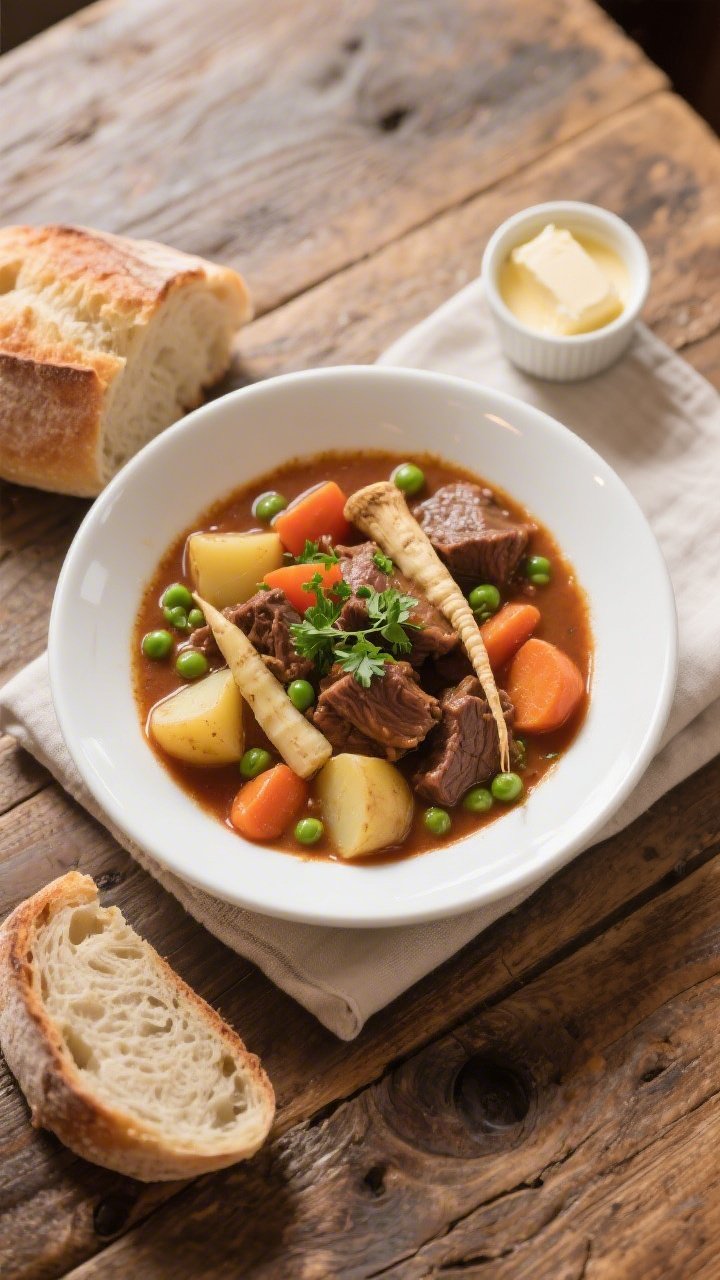
- Serve. Ladle into warm bowls and top with chopped parsley. Pair with crusty bread, buttered noodles, or mashed potatoes.
Why This Recipe Works
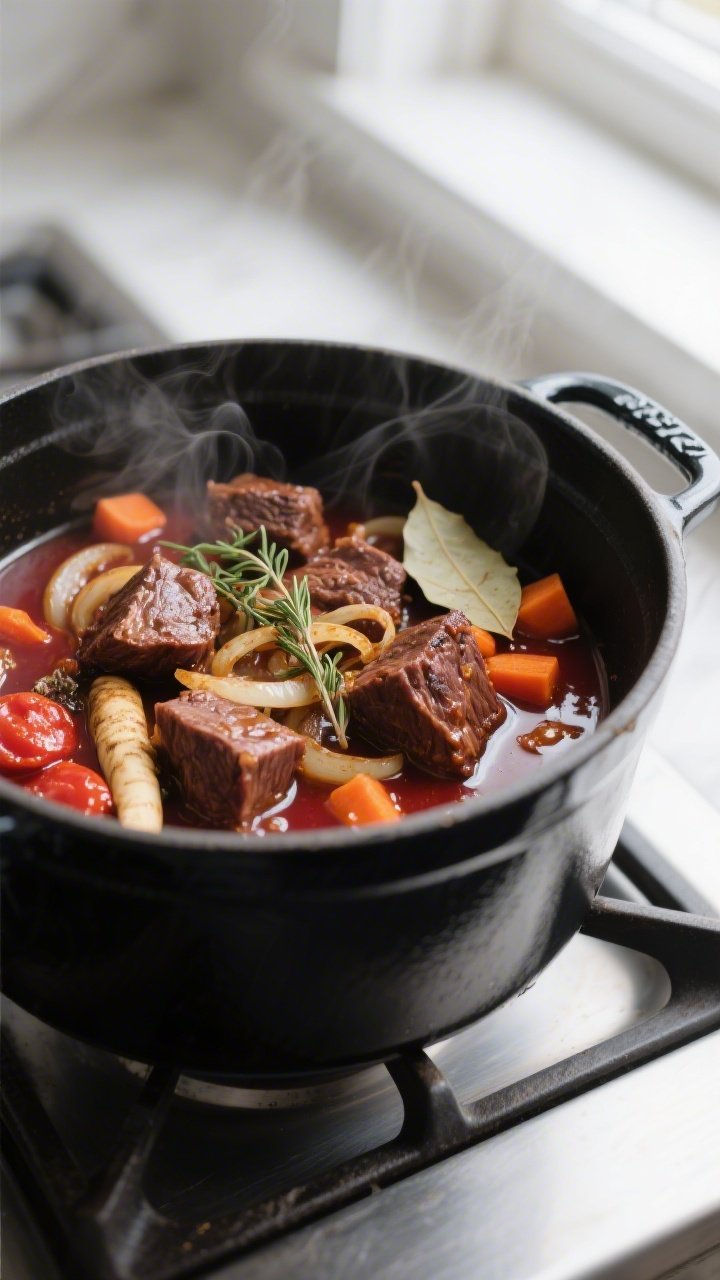
This stew layers flavor from the start. Browning the beef creates deep, caramelized notes that carry through the whole pot.
Tomato paste, red wine, and beef stock give the broth body and a little tang, while fresh herbs keep it bright. Root vegetables—carrots, parsnips, and potatoes—hold up to long cooking without turning mushy. They soak up flavor while keeping their shape.
A small cornstarch slurry or flour dusting thickens the sauce just enough so it clings to the beef and vegetables without turning pasty.
Shopping List
- Beef chuck (2 to 2.5 pounds), cut into 1.5-inch cubes
- Kosher salt and black pepper
- All-purpose flour (optional, for dredging)
- Olive oil or neutral oil (2 to 3 tablespoons)
- Yellow onion (1 large), diced
- Garlic (4 cloves), minced
- Tomato paste (2 tablespoons)
- Dry red wine (1 cup), such as Cabernet or Merlot
- Beef stock or broth (4 cups)
- Bay leaves (2)
- Fresh thyme (4 sprigs) or 1 teaspoon dried thyme
- Carrots (3), cut into 1-inch chunks
- Parsnips (2), cut into 1-inch chunks
- Russet or Yukon Gold potatoes (3 medium), cut into 1.5-inch chunks
- Celery (2 stalks), sliced
- Worcestershire sauce (1 tablespoon)
- Frozen peas (1 cup), optional
- Fresh parsley, chopped (for garnish)
- Cornstarch (1 tablespoon) mixed with 1 tablespoon water, optional for thickening
Step-by-Step Instructions
- Pat the beef dry and season well. Dry meat browns better. Sprinkle the beef generously with salt and pepper. If you like a slightly thicker stew, lightly coat the cubes in flour, shaking off excess.
- Brown the beef in batches. Heat 1 to 2 tablespoons of oil in a heavy Dutch oven over medium-high heat.Sear the beef on two sides until deeply browned, about 3 to 4 minutes per side. Don’t crowd the pot. Transfer browned pieces to a plate and repeat with remaining beef, adding oil as needed.
- Sauté the aromatics. Lower heat to medium.Add onions and a pinch of salt. Cook, stirring, until softened and lightly golden, 5 to 7 minutes. Add garlic and cook 30 seconds, just until fragrant.
- Build the base. Stir in tomato paste and cook 1 to 2 minutes until it darkens slightly.This step adds sweetness and depth.
- Deglaze with wine. Pour in the red wine and scrape up the browned bits. Simmer 2 to 3 minutes to reduce slightly. If you’re skipping wine, use an extra cup of stock and a splash of balsamic vinegar for brightness.
- Add liquids and herbs. Return the beef (and any juices) to the pot.Pour in beef stock to mostly cover the meat. Add bay leaves, thyme, and Worcestershire. Bring to a gentle boil.
- Simmer low and slow. Reduce heat to low, cover with the lid slightly ajar, and simmer for 60 minutes.Keep it at a soft bubble, not a rolling boil. Stir occasionally to prevent sticking.
- Add the root vegetables. Stir in carrots, parsnips, potatoes, and celery. Continue simmering, partially covered, for 35 to 45 minutes, until the beef is fork-tender and vegetables are cooked through but not falling apart.
- Finish and adjust thickness. If the stew seems thin, stir in the cornstarch slurry and simmer 2 to 3 more minutes until glossy and slightly thickened.If it’s too thick, add a splash of stock or water.
- Season and brighten. Remove bay leaves and thyme stems. Taste and adjust salt and pepper. Stir in peas for the last 3 minutes if using.A teaspoon of red wine vinegar or lemon juice at the end can lift the flavors.
- Serve. Ladle into warm bowls and top with chopped parsley. Pair with crusty bread, buttered noodles, or mashed potatoes.
How to Store
– Refrigerator: Cool completely, then store in airtight containers for up to 4 days. The flavor improves by day two. – Freezer: Freeze in labeled containers for up to 3 months.
Leave a little headspace for expansion. – Reheating: Warm gently on the stove over medium-low heat, adding a splash of water or stock if it thickens too much. Microwave in short bursts, stirring between intervals.
Benefits of This Recipe
– Balanced and hearty: Protein-rich beef, fiber-packed vegetables, and a satisfying broth make a complete meal. – Make-ahead friendly: Tastes better the next day, perfect for meal prep or hosting. – One-pot simplicity: Minimal cleanup and straightforward steps. – Flexible: Swap vegetables, adjust thickness, or change the flavor profile with herbs and spices. – Budget-conscious: Chuck roast is affordable, and root vegetables are inexpensive and filling.
Pitfalls to Watch Out For
– Skipping the browning step: This robs the stew of depth and color. Take the time to sear the meat properly. – Crowding the pot: Overcrowded beef steams instead of browns.
Work in batches. – Boiling too hard: A vigorous boil can toughen the meat and break up vegetables. Keep it to a gentle simmer. – Adding vegetables too early: They’ll overcook and fall apart. Add them after the first hour of simmering. – Under-seasoning: Taste at the end and adjust salt, pepper, and acidity for balance.
Alternatives
– Different cuts of beef: Try beef shin, short rib, or round.
Adjust simmer time until tender. – More root veg: Turnips, rutabaga, sweet potatoes, or celeriac add variety. Keep pieces similar in size. – No wine version: Use extra beef stock plus 1 to 2 teaspoons balsamic or red wine vinegar for brightness. – Herb swaps: Rosemary or a bay-thyme-rosemary mix works well. Add a pinch of smoked paprika for warmth. – Gluten-free: Skip flour and use cornstarch to thicken. – Slow cooker: Brown the beef and aromatics on the stove, then transfer to a slow cooker.
Cook on Low 7 to 8 hours or High 4 to 5 hours, adding peas at the end. – Pressure cooker: After browning, cook on High pressure for 35 minutes with natural release for 10 minutes, then quick release. Add vegetables and pressure-cook 5 more minutes.
FAQ
Can I make this stew a day ahead?
Absolutely. In fact, the flavors meld and deepen overnight.
Cool, refrigerate, then reheat gently on the stove the next day.
What if I don’t have tomato paste?
You can skip it, but the stew will be a bit less rich. A small spoonful of ketchup or a few sun-dried tomatoes blended into the stock can add a similar sweetness and body.
How do I keep the potatoes from getting mushy?
Use waxy potatoes like Yukon Golds and cut them into larger chunks. Add them during the last 35 to 45 minutes of simmering, not earlier.
Can I use chicken or vegetable stock instead of beef stock?
Yes, but expect a lighter flavor.
You can boost savoriness with a splash of soy sauce or an extra teaspoon of Worcestershire.
What wine works best?
Choose a dry, medium-bodied red you’d enjoy drinking—Cabernet Sauvignon, Merlot, or a Côtes du Rhône. Avoid sweet wines, which can throw off the balance.
How do I thicken stew without cornstarch or flour?
Let it reduce uncovered for a bit longer, or mash a few potato pieces into the broth. Both methods naturally thicken the sauce.
Can I add mushrooms?
Yes.
Sauté sliced mushrooms after browning the beef, then add them back with the vegetables. They bring an earthy, meaty flavor.
Is this recipe freezer-friendly?
Very. Freeze in portions, and reheat gently.
Potatoes can soften slightly after freezing, but the stew will still taste great.
How can I make it lower in sodium?
Use low-sodium stock and Worcestershire, salt the beef lightly, and season to taste at the end. Acid (a splash of vinegar) can enhance flavor without more salt.
What should I serve with it?
Crusty bread, buttered noodles, mashed or roasted potatoes, or a simple green salad all work well. A dollop of sour cream or horseradish cream is a fun touch.
Wrapping Up
This Beef Stew with Root Vegetables is simple, sturdy, and deeply comforting.
With a few smart techniques—good browning, gentle simmering, and well-timed vegetables—you get tender beef and a flavorful, velvety broth every time. Make a big batch, enjoy it over a couple of nights, and stash some in the freezer for a cold evening when you want an easy, satisfying meal.