White Bolognese Sauce With Pasta – A Cozy, Savory Weeknight Favorite
White Bolognese is comfort food with a twist. Instead of tomatoes, this sauce leans on white wine, stock, aromatic vegetables, and a touch of dairy for richness. It’s silky, savory, and deeply satisfying without being heavy.
The flavors are layered and mellow, making it perfect for a quiet night in or an easy dinner with friends. If you love a classic ragu but want something lighter and a little unexpected, this is your next go-to.
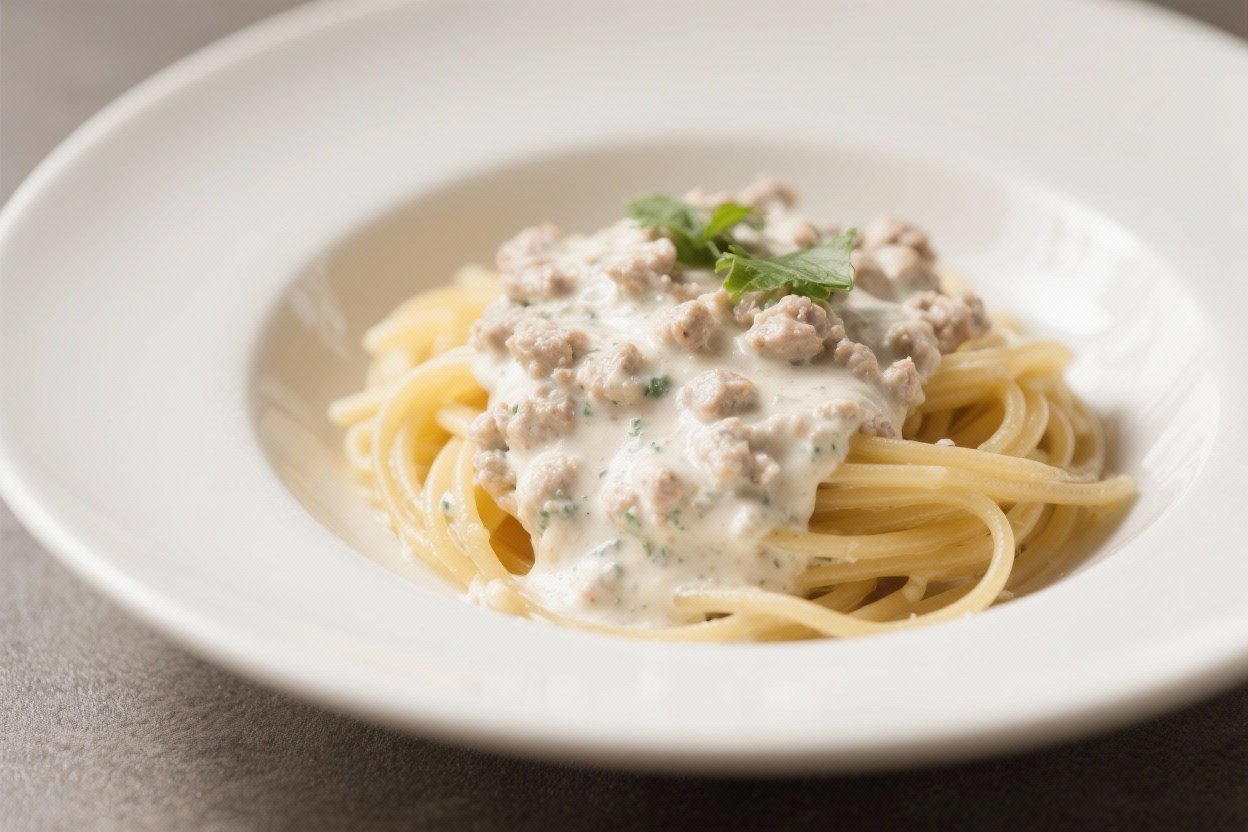
White Bolognese Sauce With Pasta - A Cozy, Savory Weeknight Favorite
Ingredients
Method
- Prep the aromatics. Finely dice the onion, carrot, and celery so they soften quickly and melt into the sauce. Mince the garlic.This small cut is key to a refined texture.
- Heat the base. In a wide, heavy pot, warm olive oil (or butter) over medium heat. Add pancetta and cook until lightly crisp and the fat renders. If not using pancetta, use a bit more oil.
- Sweat the vegetables. Add onion, carrot, and celery with a pinch of salt.Cook 8–10 minutes, stirring, until soft and lightly golden. Add garlic and cook 30 seconds, just until fragrant.
- Brown the meat. Crumble in the ground meat. Season with salt and pepper.Cook over medium-high, breaking it up but not pulverizing it. Let it take on color; browning = flavor. Drain excess fat if needed.
- Deglaze with wine. Pour in the white wine and scrape up any browned bits.Simmer 3–5 minutes until the alcohol cooks off and the pot smells mellow and savory.
- Add stock and herbs. Stir in 1 cup stock, thyme or rosemary, and the bay leaf. Lower the heat and simmer gently, uncovered, 25–35 minutes, stirring occasionally. Add more stock if it gets too dry; you want a loose but glossy ragù.
- Finish with dairy. Reduce the heat to low.Stir in milk or cream. Grate in a little nutmeg. Simmer 5–8 minutes until the sauce is silky and cohesive.Remove herb stems and bay leaf. Adjust salt and pepper.
- Cook the pasta. Boil in well-salted water until just shy of al dente. Reserve 1 cup of pasta water before draining.
- Bring it together. Add pasta to the sauce with a splash of pasta water.Toss over low heat until the sauce coats every strand or shape. Add more pasta water as needed for shine and movement.
- Finish and serve. Off the heat, fold in a handful of grated Parmesan and a whisper of lemon zest if you like. Taste once more for seasoning.Serve with extra Parmesan and black pepper.
Why This Recipe Works
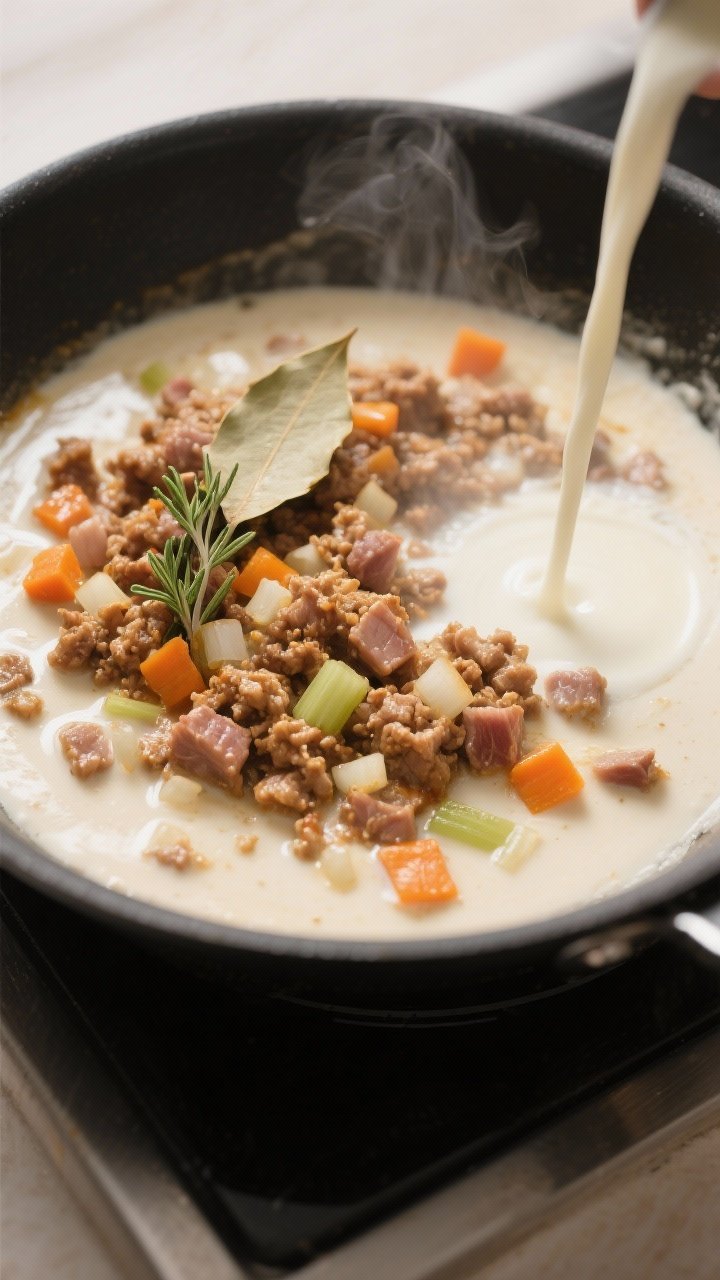
This version builds flavor in steps: vegetables soften and sweeten, meat browns for savory depth, and wine and stock reduce into a glossy sauce. A small amount of milk or cream rounds everything out without turning it into Alfredo.
The result is a sauce that clings to pasta and tastes slow-simmered, even on a weeknight. It’s a clever way to get big flavor from simple, everyday ingredients.
Shopping List
- Ground meat: 1 lb (450 g) ground pork, veal, turkey, or a mix (pork + veal is classic for tenderness)
- Pancetta or bacon: 3–4 oz (85–115 g), finely chopped (optional but recommended)
- Olive oil or butter: 2–3 tbsp
- Onion: 1 medium, finely diced
- Carrot: 1 medium, finely diced
- Celery: 1 rib, finely diced
- Garlic: 2–3 cloves, minced
- Dry white wine: 1 cup
- Chicken or veal stock: 1–1.5 cups, preferably low-sodium
- Whole milk or heavy cream: 1/2–3/4 cup
- Fresh herbs: 1–2 sprigs thyme or rosemary, and a bay leaf
- Nutmeg: a few grates (optional but excellent)
- Parmesan cheese: for finishing
- Salt and black pepper
- Pasta: 12–16 oz (340–450 g) pappardelle, tagliatelle, rigatoni, or orecchiette
- Lemon zest: from 1/2 lemon (optional, for brightness)
Step-by-Step Instructions
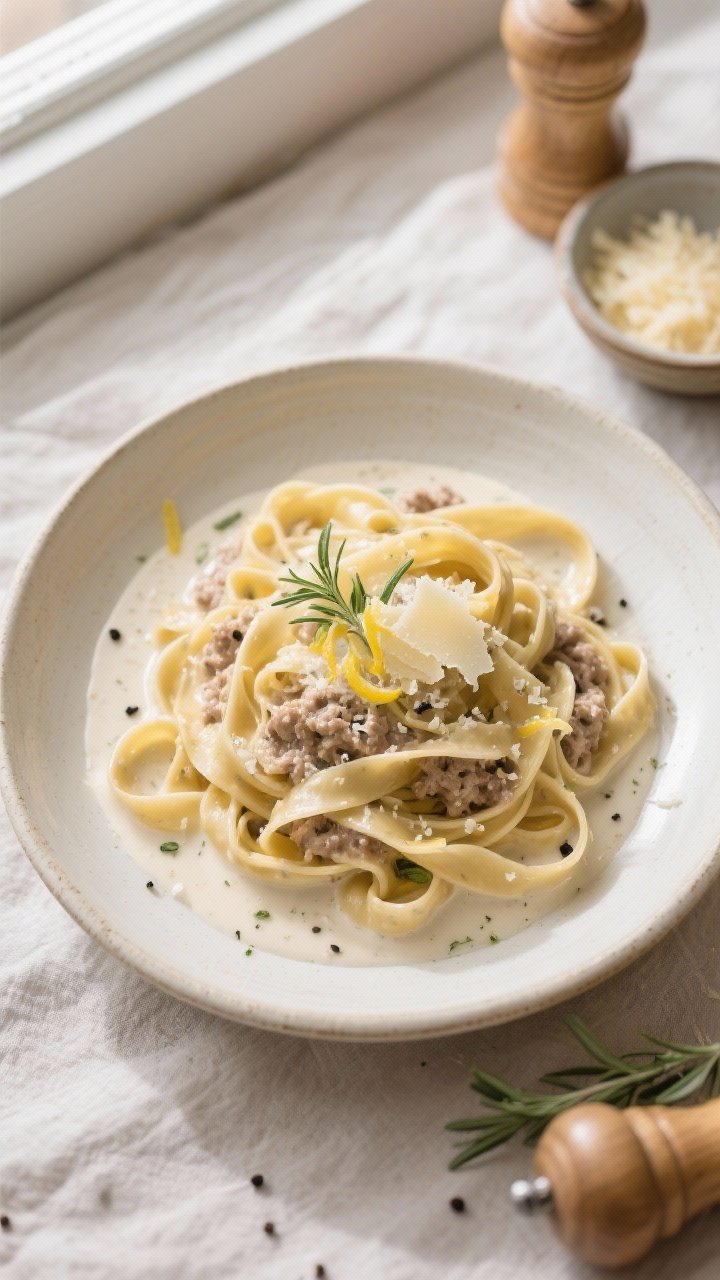
- Prep the aromatics. Finely dice the onion, carrot, and celery so they soften quickly and melt into the sauce. Mince the garlic.This small cut is key to a refined texture.
- Heat the base. In a wide, heavy pot, warm olive oil (or butter) over medium heat. Add pancetta and cook until lightly crisp and the fat renders. If not using pancetta, use a bit more oil.
- Sweat the vegetables. Add onion, carrot, and celery with a pinch of salt.Cook 8–10 minutes, stirring, until soft and lightly golden. Add garlic and cook 30 seconds, just until fragrant.
- Brown the meat. Crumble in the ground meat. Season with salt and pepper.Cook over medium-high, breaking it up but not pulverizing it. Let it take on color; browning = flavor. Drain excess fat if needed.
- Deglaze with wine. Pour in the white wine and scrape up any browned bits.Simmer 3–5 minutes until the alcohol cooks off and the pot smells mellow and savory.
- Add stock and herbs. Stir in 1 cup stock, thyme or rosemary, and the bay leaf. Lower the heat and simmer gently, uncovered, 25–35 minutes, stirring occasionally. Add more stock if it gets too dry; you want a loose but glossy ragù.
- Finish with dairy. Reduce the heat to low.Stir in milk or cream. Grate in a little nutmeg. Simmer 5–8 minutes until the sauce is silky and cohesive.
Remove herb stems and bay leaf. Adjust salt and pepper.
- Cook the pasta. Boil in well-salted water until just shy of al dente. Reserve 1 cup of pasta water before draining.
- Bring it together. Add pasta to the sauce with a splash of pasta water.Toss over low heat until the sauce coats every strand or shape. Add more pasta water as needed for shine and movement.
- Finish and serve. Off the heat, fold in a handful of grated Parmesan and a whisper of lemon zest if you like. Taste once more for seasoning.Serve with extra Parmesan and black pepper.
Storage Instructions
Cool the sauce to room temperature, then store in an airtight container for up to 4 days in the fridge. Reheat gently on the stove with a splash of water, stock, or milk to loosen. For freezing, portion the sauce (without pasta) and freeze for up to 3 months.
Thaw overnight in the fridge and reheat slowly to maintain texture.
Benefits of This Recipe
- Comforting but lighter: Rich and savory without tomato heaviness.
- Flexible protein: Works with pork, veal, turkey, chicken, or a mix.
- Make-ahead friendly: Tastes even better the next day as flavors meld.
- Kid- and crowd-pleasing: Creamy, mild, and cheese-friendly.
- Elegant yet simple: Feels special with minimal fuss and common ingredients.
Pitfalls to Watch Out For
- Skipping browning: Pale meat = flat flavor. Let the meat actually brown before adding wine.
- Boiling the dairy: High heat can split milk or cream. Keep it gentle.
- Undersalting the pasta water: The sauce relies on well-seasoned pasta to pop.
- Too much liquid: Add stock gradually and simmer until glossy, not soupy.
- Overchopping the meat: Don’t mash it to paste.You want small, tender crumbles.
Alternatives
- Meat swaps: Use ground chicken thighs or lamb for a different flavor profile. A half beef, half pork blend also works.
- Dairy-free: Swap milk/cream for unsweetened oat milk or a splash of coconut milk, then finish with olive oil instead of Parmesan.
- No wine: Use extra stock plus 1–2 tsp white wine vinegar or lemon juice for brightness.
- Herb variations: Sage or marjoram add warmth; skip rosemary if you prefer subtler notes.
- Pasta shapes: Pappardelle and tagliatelle are classic, but rigatoni or shells catch the sauce beautifully.
- Add mushrooms: Brown 8 oz chopped cremini with the vegetables for extra savoriness.
FAQ
What’s the difference between white Bolognese and traditional Bolognese?
Traditional Bolognese includes tomatoes and often a longer simmer. White Bolognese skips tomatoes and leans on white wine, stock, and dairy for a lighter color and a gentler, savory flavor.
Can I make this ahead?
Yes.
The sauce keeps well and tastes even better the next day. Cook the pasta fresh and toss with reheated sauce just before serving.
Which wine should I use?
Choose a dry white like Pinot Grigio, Sauvignon Blanc, or an unoaked Chardonnay. Avoid sweet or heavily oaked wines, which can skew the flavor.
How do I thicken a too-thin sauce?
Simmer uncovered to reduce, or add a small knob of butter and a handful of Parmesan while tossing with the pasta.
Both help emulsify and thicken without heaviness.
Is nutmeg necessary?
No, but a pinch adds warmth and a classic Italian touch to creamy meat sauces. Use lightly—just a few grates.
What if my sauce looks split after adding milk?
Lower the heat and whisk gently. Add a splash of pasta water and Parmesan when you toss with the pasta to help it come back together.
Can I use pre-grated Parmesan?
You can, but freshly grated melts better and helps create a smoother sauce.
If using pre-grated, choose a fine texture and add gradually.
How do I make it gluten-free?
Use your favorite gluten-free pasta and confirm your stock is gluten-free. Everything else in the recipe is naturally gluten-free.
In Conclusion
White Bolognese is a cozy, elegant twist on a classic, bringing together tender meat, mellow aromatics, and a silky, dairy-kissed finish. It’s simple enough for weeknights and special enough for company.
Keep the heat gentle, season well, and let the sauce cling to your pasta of choice. The result is warm, satisfying, and effortlessly impressive—comfort food with a lighter touch.