Italian Meatballs With Spaghetti – A Comforting Classic Done Right
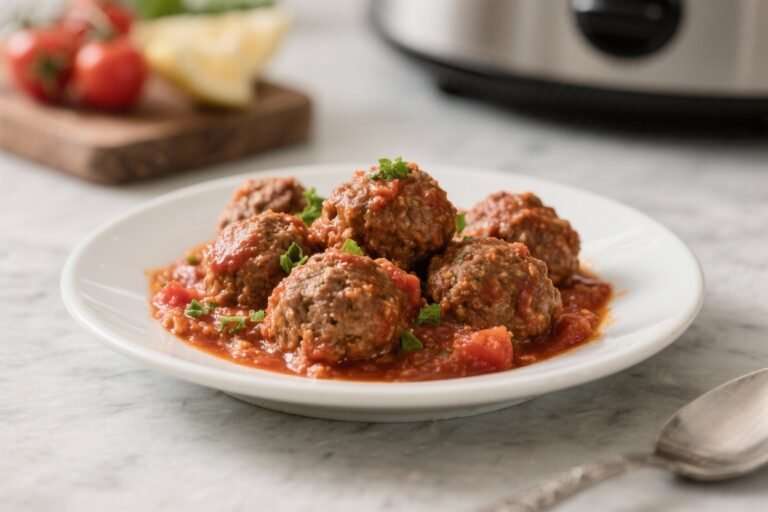
There’s something about a bowl of spaghetti and meatballs that instantly feels like home. It’s hearty, familiar, and full of flavor without trying too hard. This version leans on simple pantry staples and a few smart techniques to get tender meatballs and a bright, balanced tomato sauce.
No special equipment, no fuss—just honest cooking. If you’re feeding a family or meal prepping for the week, this one always hits the spot.

Italian Meatballs With Spaghetti – A Comforting Classic Done Right
Ingredients
Method
- Make the panade. Tear the bread into small pieces and place in a bowl.Add the milk and let it soak for 5 minutes, then mash into a paste with a fork. This keeps the meatballs moist.
- Mix the meatballs. In a large bowl, combine ground beef, ground pork, the panade, 1 beaten egg, 1/2 cup grated Parmesan, 2 minced garlic cloves, 2 tablespoons finely chopped parsley, 1 teaspoon salt, and 1/2 teaspoon black pepper. Mix gently with your hands until just combined.Do not overmix.
- Shape the meatballs. Lightly oil your hands and form 18–22 golf ball–sized meatballs. Place them on a tray and chill in the fridge for 15 minutes to firm up.
- Sear the meatballs. Heat 2 tablespoons olive oil in a large, wide pot or high-sided skillet over medium-high heat. Working in batches, brown the meatballs on all sides, 5–7 minutes total per batch.Transfer to a plate. They don’t need to be cooked through yet.
- Build the sauce base. In the same pot, lower the heat to medium. Add another tablespoon of olive oil if needed.Add 1 diced onion and a pinch of salt. Cook until soft and translucent, 6–8 minutes, scraping up the browned bits.
- Add aromatics and tomato paste. Stir in 3–4 minced garlic cloves, 1 tablespoon tomato paste, 1 teaspoon dried oregano, and crushed red pepper if using. Cook 1–2 minutes until fragrant and the paste darkens slightly.
- Add tomatoes and simmer. Pour in the crushed tomatoes (or crush whole peeled tomatoes by hand as they go in).Add 1 bay leaf and a few torn basil leaves. Bring to a gentle simmer.
- Finish cooking the meatballs. Nestle the browned meatballs into the sauce. Partially cover and simmer on low for 25–30 minutes, turning once or twice.Taste and adjust salt and pepper. The sauce should be rich but bright.
- Cook the spaghetti. Bring a large pot of salted water to a boil. Add the spaghetti and cook until al dente according to package timing.Reserve 1/2 cup pasta water, then drain.
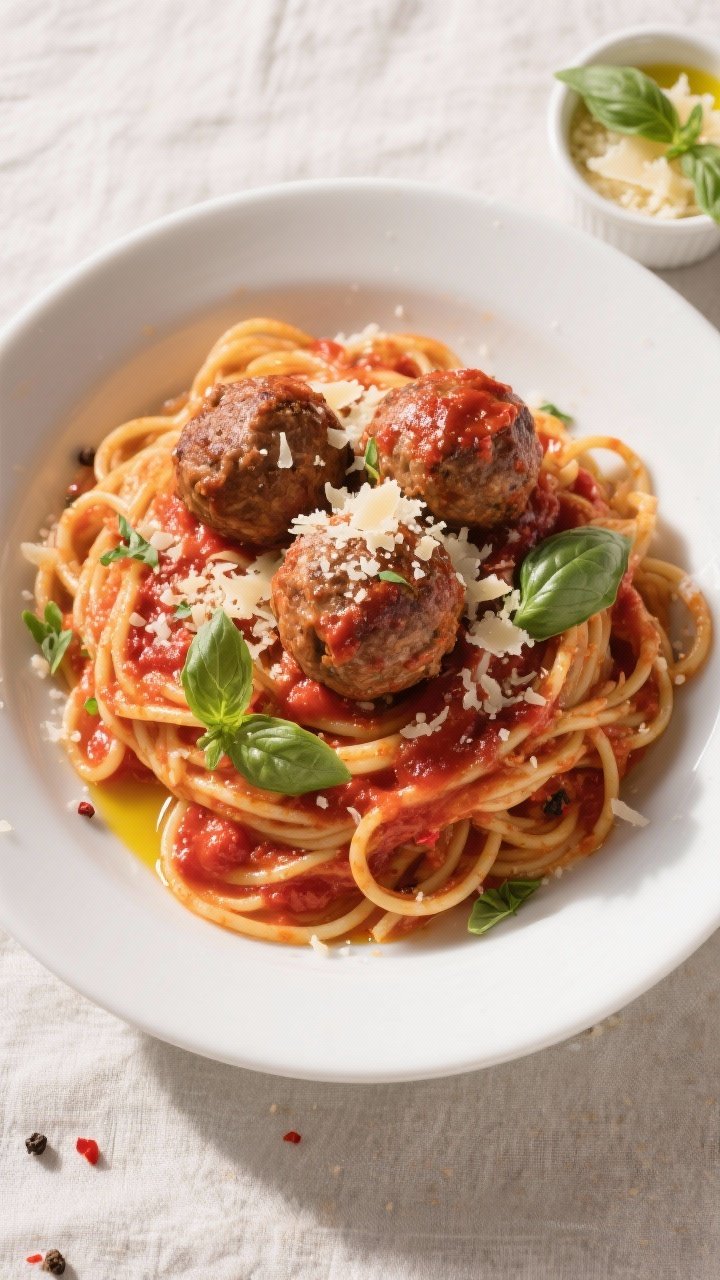
- Toss and serve. Add a splash of pasta water to the sauce if it’s too thick. Toss the spaghetti with a few ladles of sauce to coat. Plate the pasta, top with meatballs and more sauce.Finish with grated Parmesan and torn basil. Drizzle with a little olive oil if you like.
What Makes This Special

These meatballs are soft and juicy thanks to a quick panade—a small amount of bread soaked in milk—folded into the meat. The sauce is simmered with garlic, onion, and a touch of crushed red pepper for warmth, then finished with fresh basil for a clean, aromatic finish.
You’ll sear the meatballs first for flavor, then let them finish cooking in the sauce so they soak up all that goodness. The spaghetti stays al dente, which means it’s firm to the bite and holds up well. It’s a simple approach that creates a restaurant-quality result at home.
Shopping List
- Ground meat: 1 lb (450 g) ground beef (80–85% lean) and 1/2 lb (225 g) ground pork
- Bread: 2 slices day-old white bread or 1 cup fresh breadcrumbs
- Milk: 1/2 cup (120 ml) for the panade
- Eggs: 1 large
- Parmesan: 1/2 cup finely grated, plus more for serving
- Garlic: 5–6 cloves
- Yellow onion: 1 medium
- Fresh parsley: Small bunch
- Fresh basil: Small bunch
- Tomatoes: 2 cans (28 oz/800 g each) crushed or whole peeled tomatoes
- Tomato paste: 1 tablespoon
- Olive oil: Extra-virgin
- Crushed red pepper flakes: Optional, 1/2 teaspoon
- Dried oregano: 1 teaspoon
- Salt and black pepper: Kosher salt and freshly ground pepper
- Spaghetti: 1 lb (450 g)
- Bay leaf: 1 (optional)
Instructions
- Make the panade. Tear the bread into small pieces and place in a bowl.Add the milk and let it soak for 5 minutes, then mash into a paste with a fork. This keeps the meatballs moist.
- Mix the meatballs. In a large bowl, combine ground beef, ground pork, the panade, 1 beaten egg, 1/2 cup grated Parmesan, 2 minced garlic cloves, 2 tablespoons finely chopped parsley, 1 teaspoon salt, and 1/2 teaspoon black pepper. Mix gently with your hands until just combined.Do not overmix.
- Shape the meatballs. Lightly oil your hands and form 18–22 golf ball–sized meatballs. Place them on a tray and chill in the fridge for 15 minutes to firm up.
- Sear the meatballs. Heat 2 tablespoons olive oil in a large, wide pot or high-sided skillet over medium-high heat. Working in batches, brown the meatballs on all sides, 5–7 minutes total per batch.Transfer to a plate. They don’t need to be cooked through yet.
- Build the sauce base. In the same pot, lower the heat to medium. Add another tablespoon of olive oil if needed.Add 1 diced onion and a pinch of salt. Cook until soft and translucent, 6–8 minutes, scraping up the browned bits.
- Add aromatics and tomato paste. Stir in 3–4 minced garlic cloves, 1 tablespoon tomato paste, 1 teaspoon dried oregano, and crushed red pepper if using. Cook 1–2 minutes until fragrant and the paste darkens slightly.
- Add tomatoes and simmer. Pour in the crushed tomatoes (or crush whole peeled tomatoes by hand as they go in).Add 1 bay leaf and a few torn basil leaves. Bring to a gentle simmer.
- Finish cooking the meatballs. Nestle the browned meatballs into the sauce. Partially cover and simmer on low for 25–30 minutes, turning once or twice.Taste and adjust salt and pepper. The sauce should be rich but bright.
- Cook the spaghetti. Bring a large pot of salted water to a boil. Add the spaghetti and cook until al dente according to package timing.Reserve 1/2 cup pasta water, then drain.
- Toss and serve. Add a splash of pasta water to the sauce if it’s too thick. Toss the spaghetti with a few ladles of sauce to coat. Plate the pasta, top with meatballs and more sauce.Finish with grated Parmesan and torn basil. Drizzle with a little olive oil if you like.
How to Store
Let leftovers cool to room temperature, then store meatballs and sauce together in an airtight container for up to 4 days in the fridge. Keep the spaghetti separate so it doesn’t turn mushy.
For longer storage, freeze the meatballs and sauce in a freezer-safe container for up to 3 months. Thaw overnight in the fridge and reheat gently on the stove with a splash of water. Cook fresh pasta when you’re ready to serve for the best texture.
Health Benefits
- Protein-rich: The combination of beef and pork provides high-quality protein to support muscle repair and satiety.
- Lycopene boost: Cooked tomatoes are rich in lycopene, an antioxidant linked to heart health.
- Calcium and minerals: Parmesan adds calcium and savory depth without needing excessive salt.
- Herbs and aromatics: Garlic, parsley, and basil bring antioxidants and flavor, reducing the need for heavy sauces or added sugar.
- Balance it your way: Choose whole-wheat spaghetti for extra fiber, or add a side salad to round out the meal.
Pitfalls to Watch Out For
- Overmixing the meat: This can make the meatballs tough.Mix gently until just combined.
- Skipping the panade: Without bread-and-milk, meatballs can dry out. It’s a small step with big impact.
- Boiling the sauce hard:</-strong> A rapid boil can toughen meatballs and reduce flavor too quickly. Keep it at a gentle simmer.
- Overcooking pasta: Soft spaghetti turns gluey when tossed with hot sauce.Aim for al dente and reserve a little pasta water to adjust consistency.
- Underseasoning: Taste the sauce toward the end. A pinch of salt and fresh pepper can wake up all the flavors.
Alternatives
- Meat swaps: Use all beef, or try a mix of beef and turkey. If using lean meats, add an extra tablespoon of olive oil to the mixture.
- Gluten-free: Use gluten-free breadcrumbs and pasta.Some brands make great texture now.
- Dairy-free: Replace milk with unsweetened oat milk and skip the Parmesan, or use a dairy-free hard cheese alternative.
- Herb variations: Swap parsley for finely chopped fennel fronds, or add a pinch of ground fennel seed to the meat mixture for a subtle sausage vibe.
- Tomato tweak: For extra depth, stir in a splash of red wine after the tomato paste step and cook it down before adding tomatoes.
- Breadcrumb-free: Use cooked, cooled rice or rolled oats as a binder if you’re out of bread.
FAQ
Can I bake the meatballs instead of pan-searing?
Yes. Arrange them on a lightly oiled baking sheet and bake at 425°F (220°C) for 12–15 minutes, until lightly browned. Then add to the simmering sauce to finish cooking and absorb flavor.
How do I keep meatballs from falling apart?
Use a binder (panade and egg), don’t overwork the mixture, and chill the shaped meatballs briefly before searing.
Turning them gently with a thin spatula also helps maintain their shape.
What pasta shapes work besides spaghetti?
Spaghettoni, bucatini, or even rigatoni are great. Long strands cling to the sauce nicely, but short shapes catch chunky sauce in their ridges.
Can I make the sauce ahead?
Absolutely. The sauce tastes even better the next day.
Store it in the fridge for up to 4 days or freeze for up to 3 months. Reheat gently and add fresh basil before serving.
How many meatballs per serving?
Plan on 3–4 medium meatballs per person with a generous portion of spaghetti. This recipe serves about 4–6, depending on appetite.
Is sugar necessary in the sauce?
Not usually.
If your tomatoes taste overly acidic, a small knob of butter or a splash of milk at the end can round out the edges without adding sweetness.
What’s the best way to reheat leftovers?
Warm meatballs and sauce in a covered saucepan over low heat with a splash of water until hot. Boil fresh spaghetti or reheat leftover pasta briefly in boiling water to revive its texture.
In Conclusion
Italian Meatballs with Spaghetti is comfort cooking at its best—simple ingredients, solid technique, and big flavor. With a tender meatball, a lively tomato sauce, and perfectly cooked pasta, you don’t need anything fancy to make a memorable meal.
Keep these steps handy, tweak the seasoning to your taste, and you’ve got a reliable favorite for weeknights or Sunday dinner. It’s a classic for a reason.