14 Green Living Room Ideas That Feel Fresh, Chic, and so You
Ready to make your living room feel calmer, cooler, and infinitely more stylish? Green is your secret weapon. It’s versatile, soothing, and weirdly flattering to literally every design style—modern, traditional, boho, farmhouse, you name it. Plus, there’s a shade for every mood, from whisper-light sage to dramatic forest.
Let’s build your dream green living room with 14 ideas that actually work in real homes (yours). Short, punchy, and practical—because you’ve got a sofa to style.
1. Start With A Signature Shade
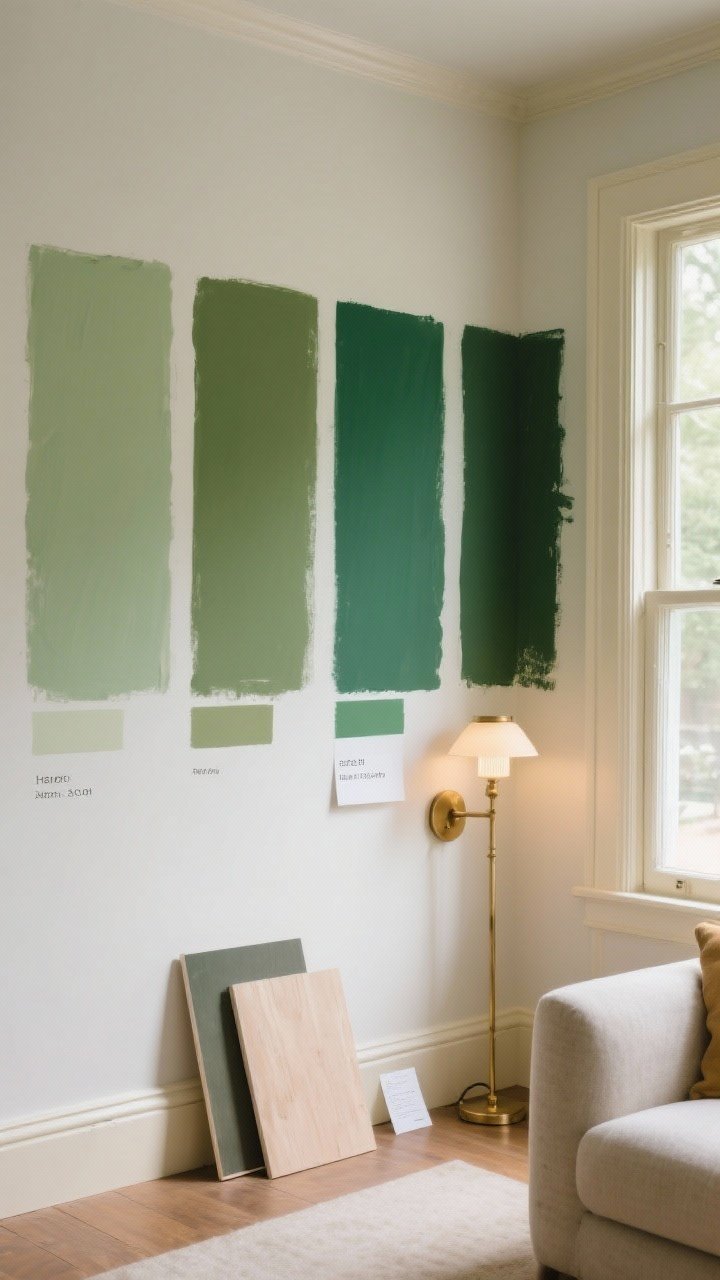
First things first: pick your hero green. Are you feeling light and airy with sage, or moody and dramatic with forest? Deciding your main shade keeps everything else from turning into a chaotic salad bar of greens.
Quick Guide To Greens
- Sage: Calm, airy, perfect for small spaces and minimalist vibes.
- Olive: Cozy, earthy, ideal for rustic or Mediterranean styles.
- Emerald: Glam, luxe, loves velvet, brass, and bold art.
- Forest: Moody, sophisticated, great for paneled rooms or high drama.
Pro tip: Test large paint samples on different walls and check them at morning, noon, and night. Green shifts like a chameleon with light. IMO, this is the step that separates “nice” from “designer-level.”
2. Paint The Walls (Or Just One!)

Want instant transformation? Paint. A full room in green wraps you in coziness; a single accent wall gives you punch without commitment. If your room is small or dark, choose a softer tone like sage or pistachio to keep it fresh.
- Full room: Try matte sage with creamy trim for a serene, soft-focus effect.
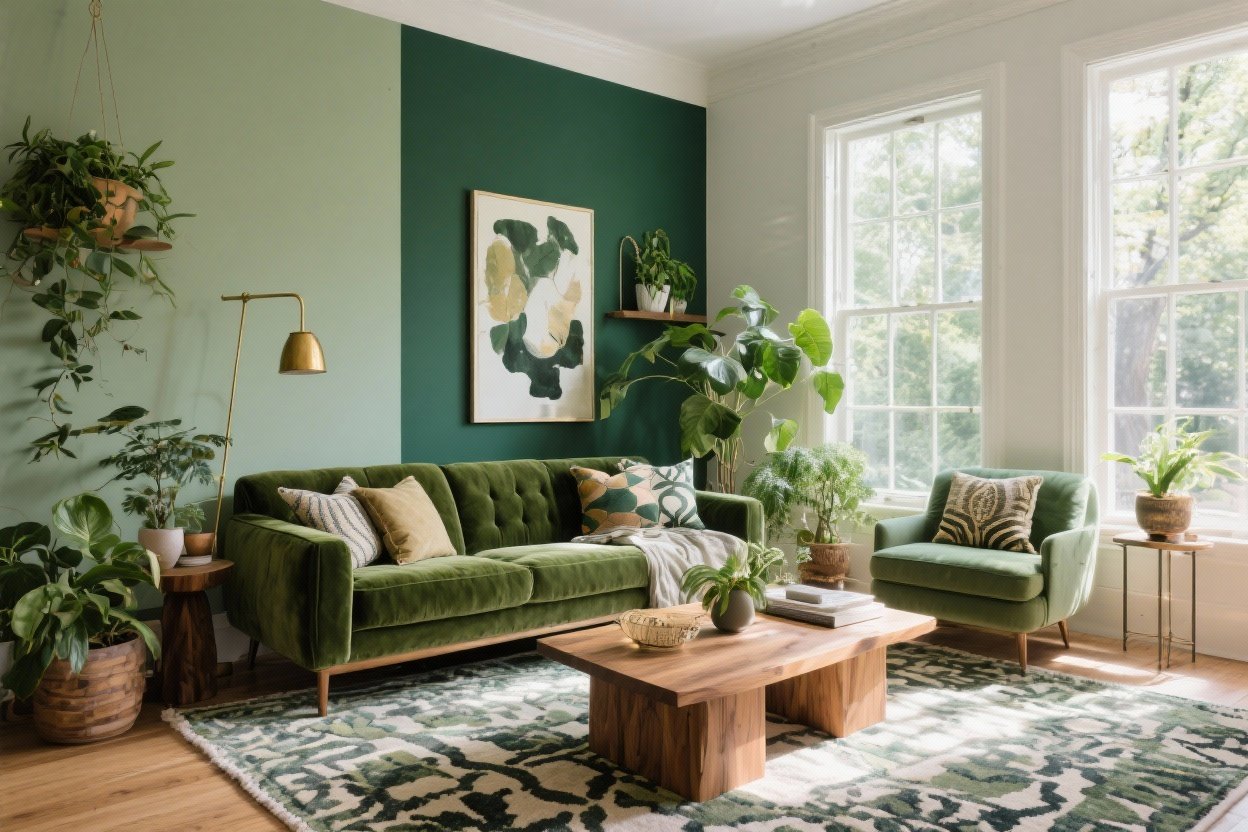
- Accent wall: Deep emerald behind the sofa or TV for high contrast and focus.
- Tone-on-tone: Trim and walls in the same green, different sheens. Chef’s kiss.
Not sure about green everywhere? Paint built-ins or a fireplace surround instead. It’s less scary and still high impact.
3. Go Big With A Green Sofa
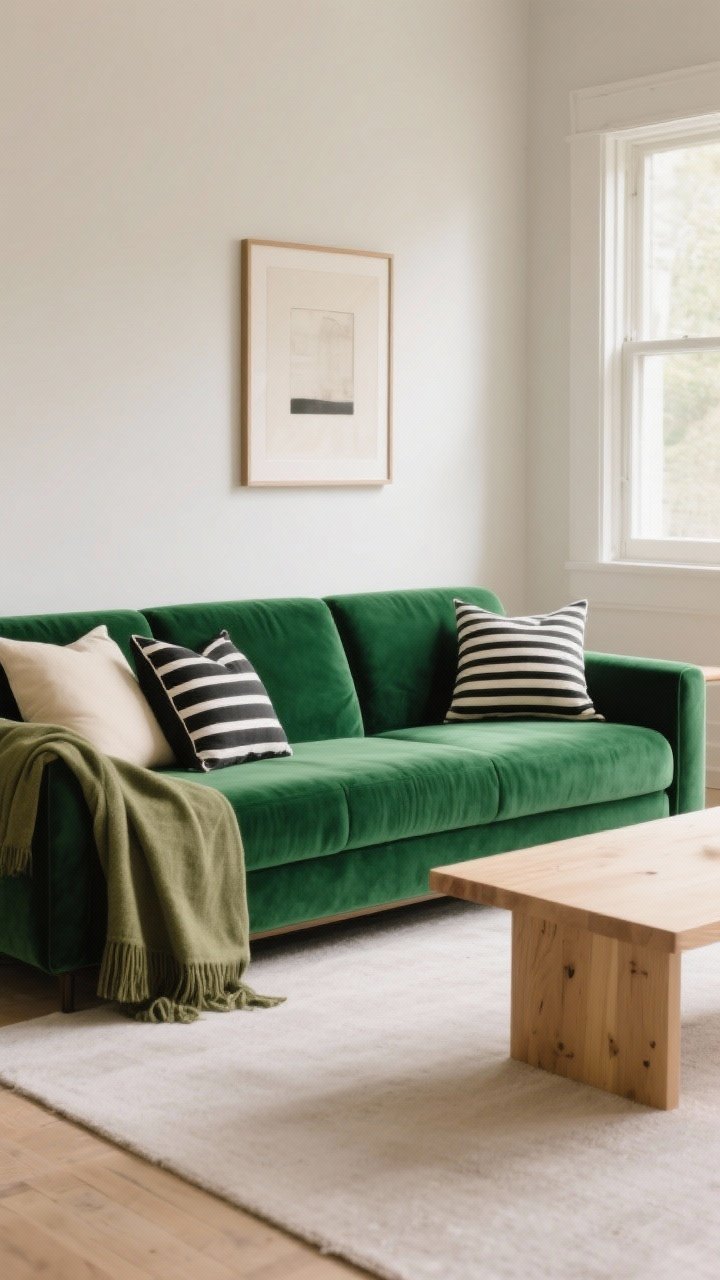
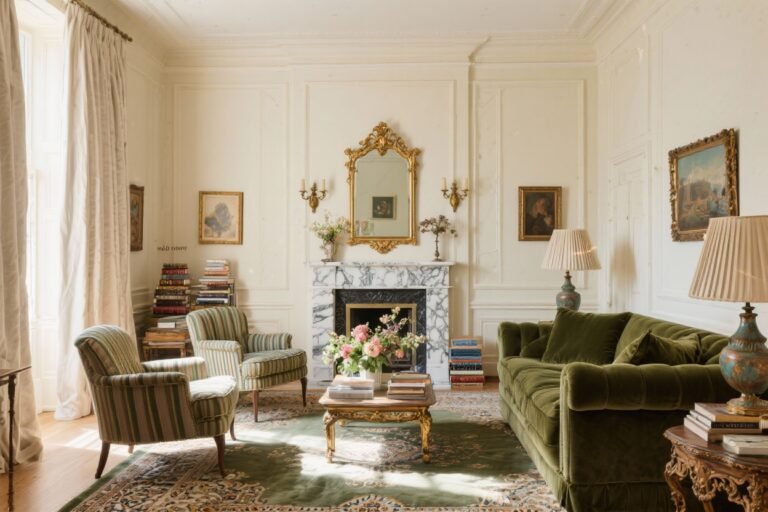
If you love the idea of green but don’t want to repaint your life, choose a green sofa. It’s an instant statement. Velvet in emerald feels indulgent, while linen in olive or sage leans relaxed and coastal.
- Emerald velvet: Glam, dramatic, surprisingly durable.
- Olive linen: Casual, earthy, comfy with layered neutrals.
- Sage boucle: Trendy texture that still reads timeless.
Style it with neutral pillows at first, then add pattern once the sofa settles in. FYI, green plays insanely well with black-and-white stripes, florals, and geometric prints.
4. Layer Textures Like A Pro

Green really comes alive when you vary the textures. Think smooth leather, chunky knits, nubby linen, glossy ceramics, and matte paint. When everything is one texture, the room feels flat. We want depth and dimension.
Texture Pairings That Work
- Velvet + Brass: Elegant, formal, rich.
- Linen + Wood: Natural, breezy, grounded.
- Leather + Wool: Cozy, masculine edge.
- Ceramics + Rattan: Earthy with an artisan vibe.
Even if your green is subtle, texture layering makes it feel intentional and designer-y.
5. Add Pattern With Pillows And Rugs
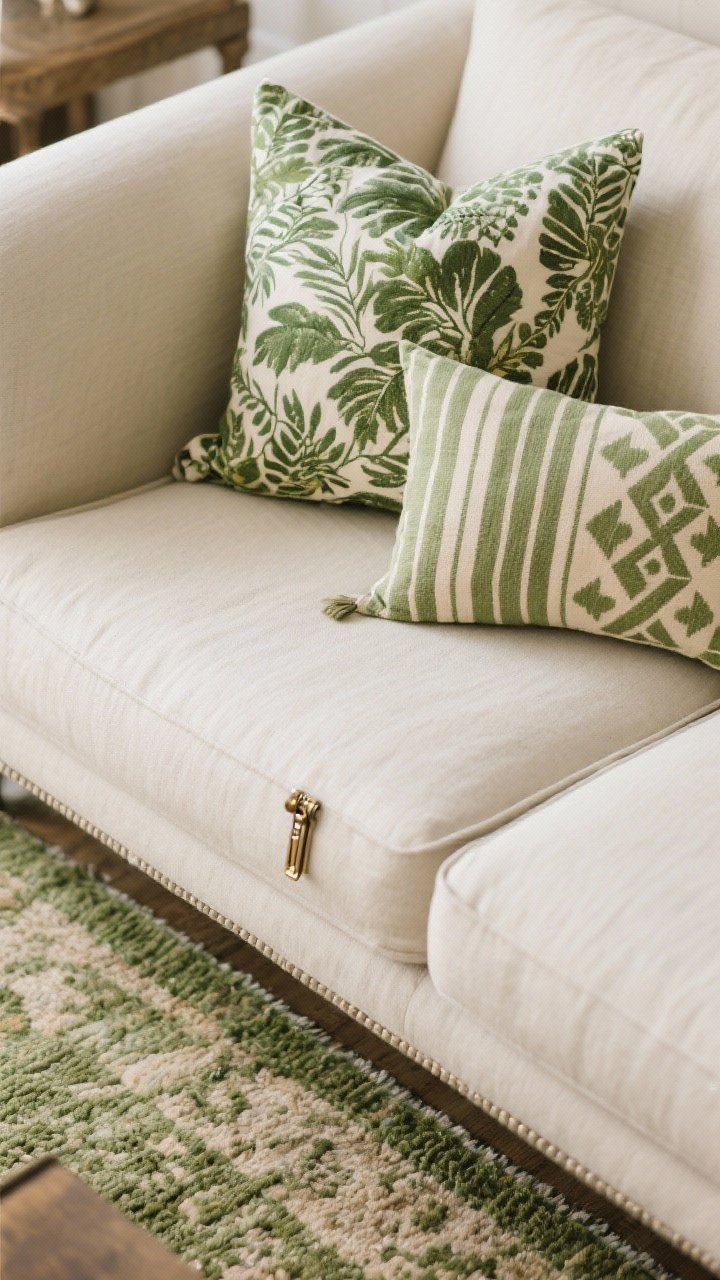
Pillows and rugs are your low-stakes way to test drive green. Start with a neutral sofa and add pillows in botanical prints, stripes, or subtle geo patterns. Then ground it with a rug that has a hint of green woven in.
- Mix scales: One large floral, one medium stripe, one small geometric.
- Keep a common thread: Tie patterns together with a repeated green or cream.
- Try vintage: Worn, time-softened greens in Oushak or Persian rugs feel effortless.
Scared of going overboard? Use the 60-30-10 rule: 60% neutral, 30% green, 10% metallic or accent color.
6. Bring In Botanical Art
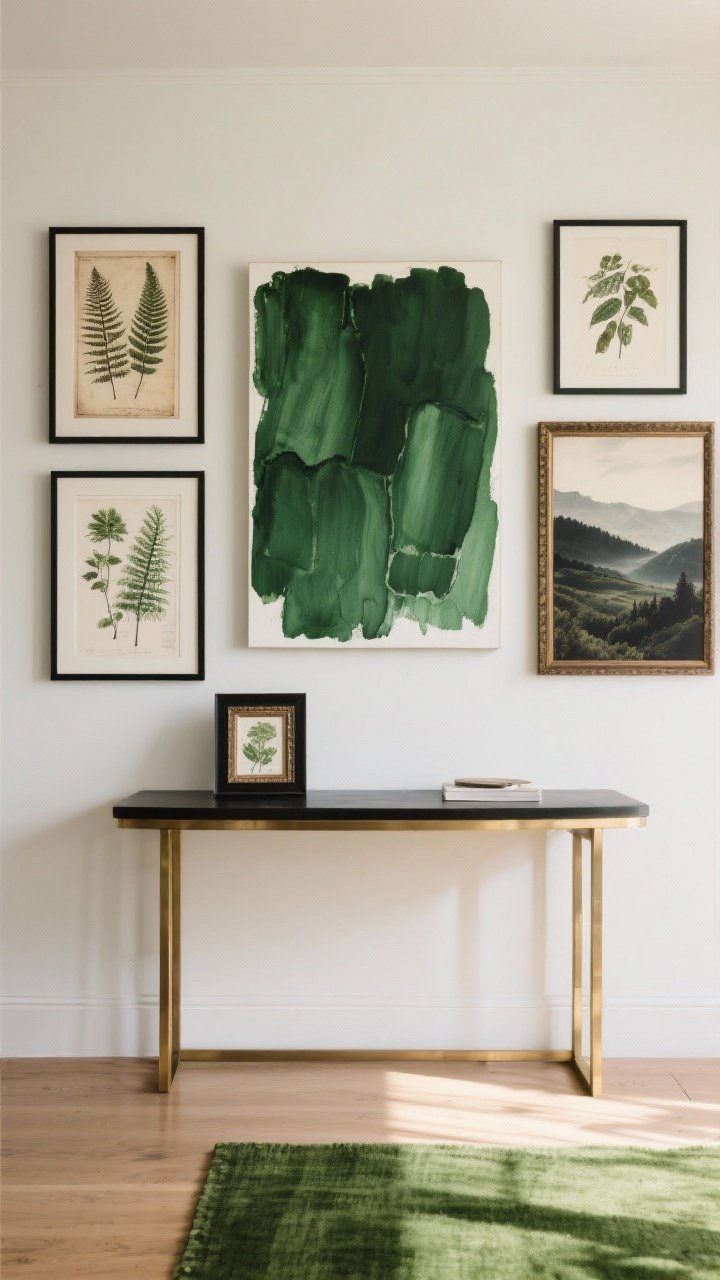
Green + plants = obviously perfect. But you can go further with botanical artwork. Think vintage fern prints, abstract green washes, or moody landscapes. It’s a way to introduce green on your walls with personality.
- Gallery wall: Mix black frames with brass for a tailored look.
- Oversized piece: One big abstract in green tones = instant focal point.
- DIY hack: Press leaves and frame with linen mats for high-end vibes on a budget.
Pro move: Choose art that echoes your sofa or rug tones so the room feels cohesive without being too matchy.
7. Style With Real (And Faux) Plants
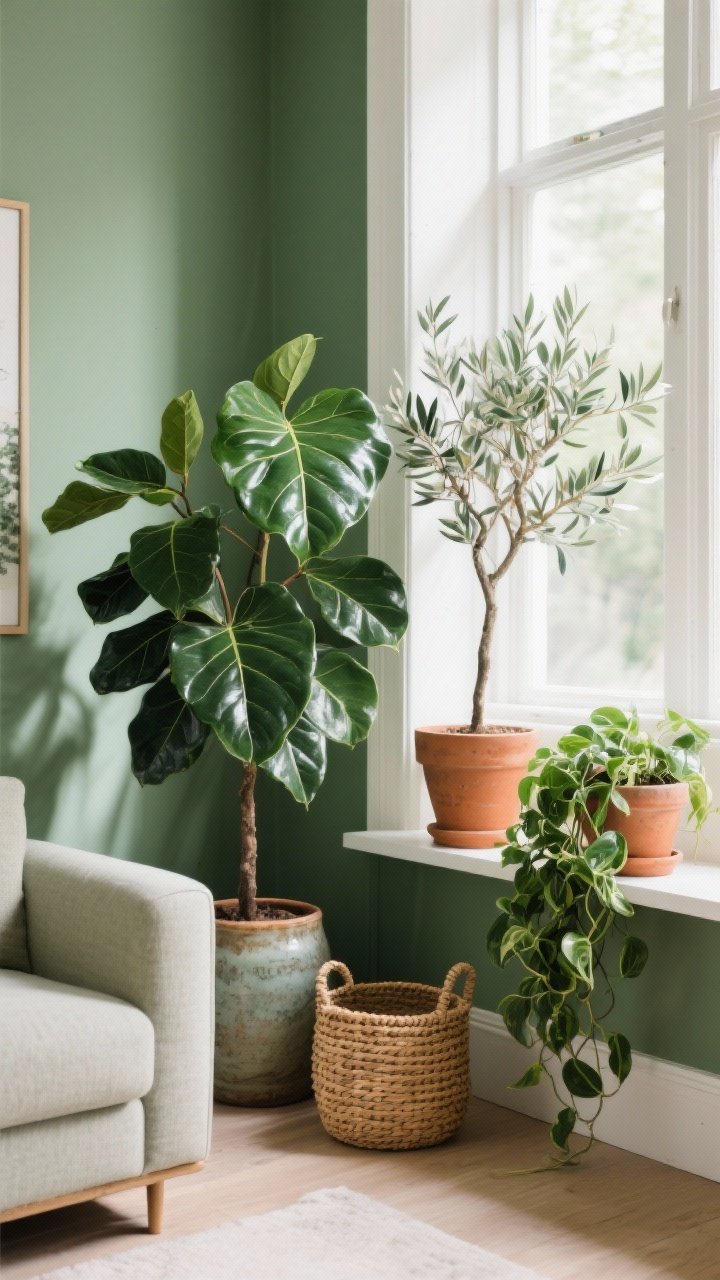
Yes, we’re putting the “green” in green living room. Plants literally make every room better—texture, height, life. If you’re not a plant person, faux is fine. No judgment.
Plant Pairings That Thrive
- Fiddle-leaf fig: Tall, sculptural, loves bright light.
- Rubber plant: Deep green, glossy, forgiving.
- Pothos or philodendron: Trailing, easy, cute on shelves.
- Olive tree: Airy, subtle, not too dense visually.
Group plants in odd numbers, vary heights, and use pots in ceramic, terracotta, and woven materials. The mix is what makes it feel curated.
8. Choose Warm Metals And Natural Woods

Green loves company, especially from warm metals and real wood. Brass, antique gold, bronze—all of these make green feel luxe. Oak, walnut, or even rustic pine tones add warmth and prevent the room from feeling cold.
- Brass hardware: On a media console or bookcase for subtle shine.
- Wood coffee table: Balanced with a glass or marble side table to keep it light.
- Woven accents: Rattan chairs, seagrass baskets, cane details. Earthy and light.
Cool-toned metals like chrome can work, but you’ll want to add extra warmth with textiles if you go that route.
9. Try Tone-On-Tone Styling
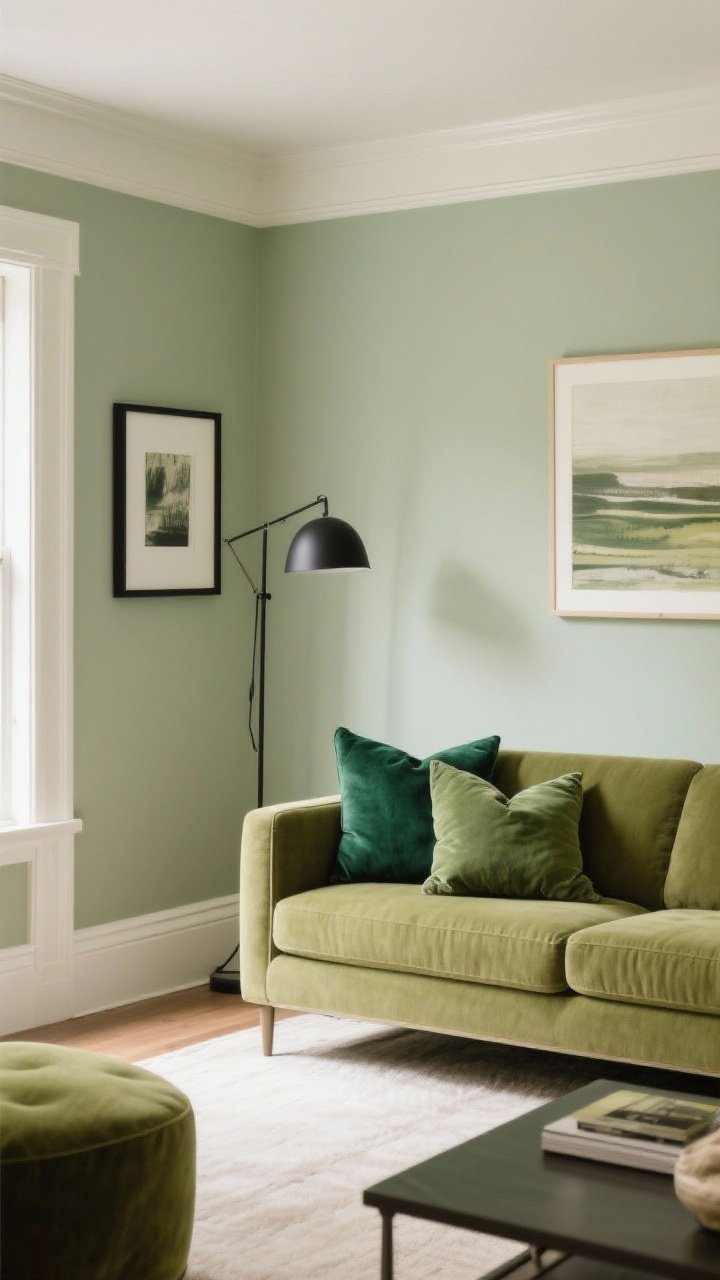
Want to look like you hired a designer? Go tone-on-tone. Use varying shades of green across walls, upholstery, accessories, and art. The key is to mix light, medium, and dark tones so it never looks flat.
Easy Tone Palette
- Walls: Soft sage
- Sofa: Olive
- Pillows/accents: Emerald and forest
- Trim: Creamy off-white or a slightly darker green
Layering greens this way feels calm and intentional. Add black accents to anchor everything—like a black lamp or frame—to avoid the “floating” look.
10. Balance With Neutrals (So It’s Not A Jungle)
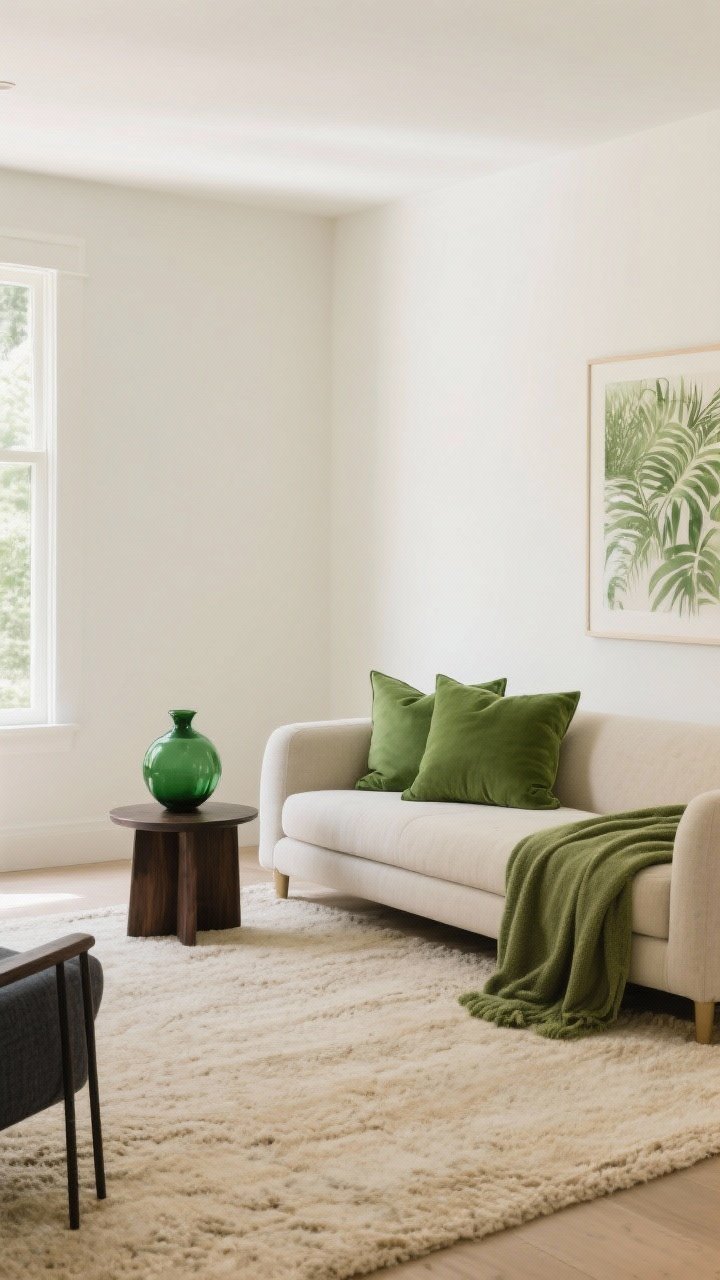
Green is bold. To keep your living room from looking like a botanical lab, balance it with neutrals. Warm white, beige, greige, and charcoal are your besties here.
- Neutral base: Keep your rug and large furniture pieces neutral.
- Green accents: Use green in pillows, throws, art, and a single hero piece.
- Pop of contrast: Add black or dark wood for definition.
FYI: If your green is cool-toned, don’t overload on icy grays—they can make the room feel sterile. Lean warm instead.
11. Play With Wallpaper Or Paneling

Wallpaper can do that “expensive” thing in 10 minutes. Go bold with a botanical print or subtle with grasscloth. Paneled walls painted green? That’s English library chic without living in a manor.
- Accent wall wallpaper: Behind the sofa or in an alcove for a focal moment.
- Full room grasscloth: Texture + depth without busy pattern.
- Board-and-batten: Paint in olive or forest for tailored, classic vibes.
Keep your furniture relatively simple if your walls are busy. Let one element do the talking.
12. Light It Like A Designer
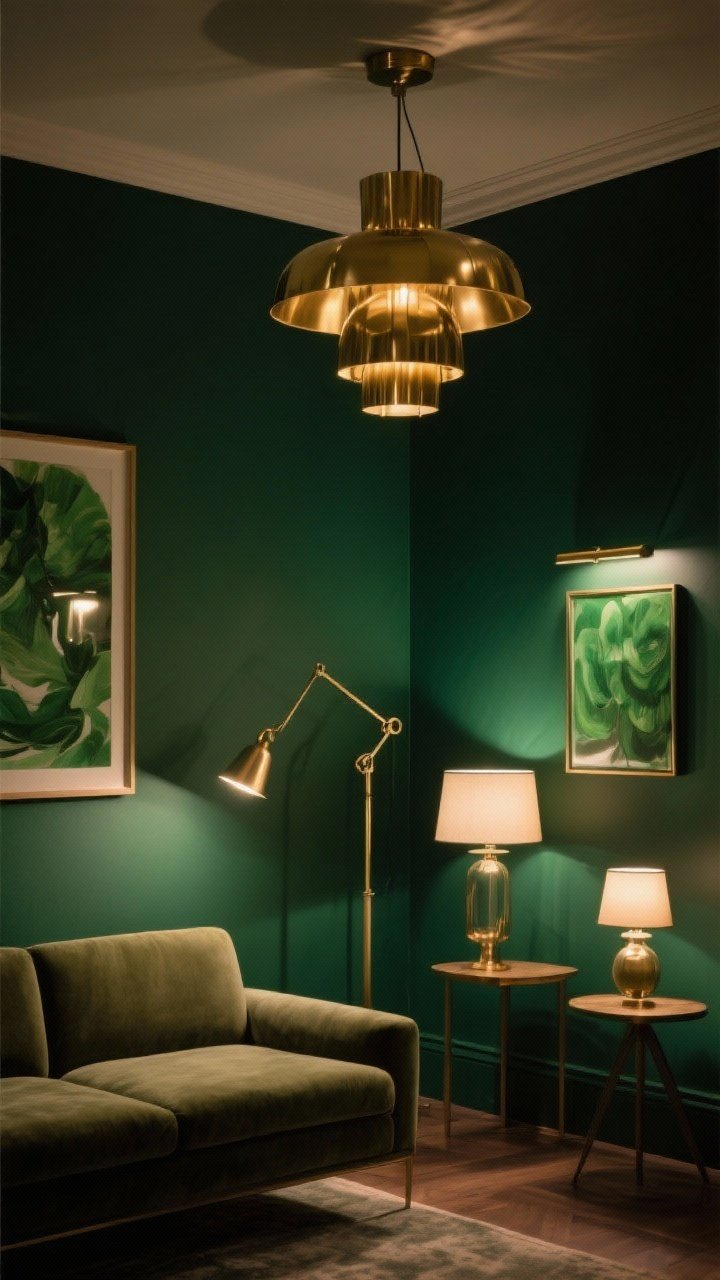
Lighting is make-or-break for green. A badly lit green can read muddy or dull. You want layers: overhead, table, and floor lighting, all with warm bulbs (2700–3000K).
Lighting Checklist
- Overhead: Statement pendant or flush mount that matches your metal finishes.
- Task: Adjustable floor lamp by the sofa for reading.
- Ambient: Table lamps on a console or end table to warm up corners.
- Accent: Picture lights over art or a lit cabinet for mood.
Bonus points for lamps with green ceramic bases or sage linen shades. Subtle, but it ties everything together.
13. Curate Accessories The Smart Way
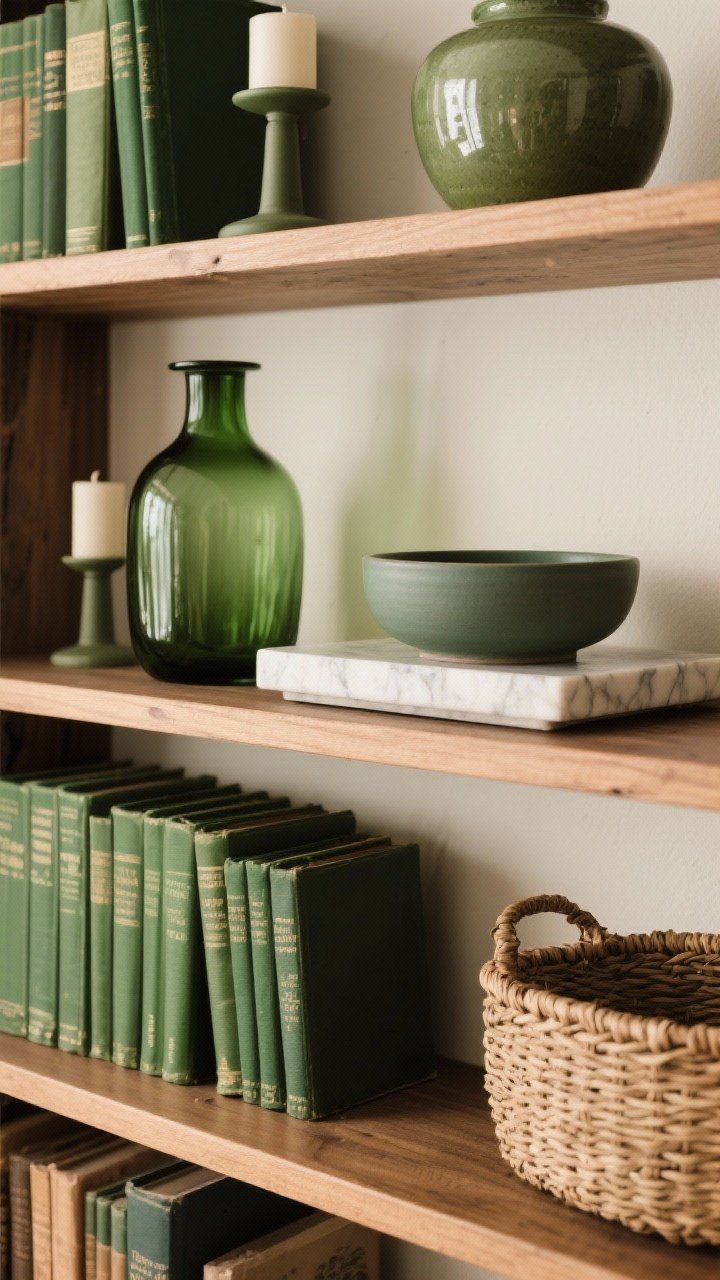
This is where your room gets personality. Sprinkle in green glass vases, ceramic bowls, marble trays, and vintage books with green spines. Less clutter, more intention.
- Group in threes: Vary height, shape, and material.
- Repeat green three times in each sightline—like a pillow, a plant, and a vase.
- Mix finishes: Matte candleholders, glossy pottery, woven baskets.
Avoid buying 12 of the same green thing. It’s about rhythm, not repetition. Your shelves should feel collected over time, not one-clicked last night.
14. Add A Wildcard Color (Trust Me)
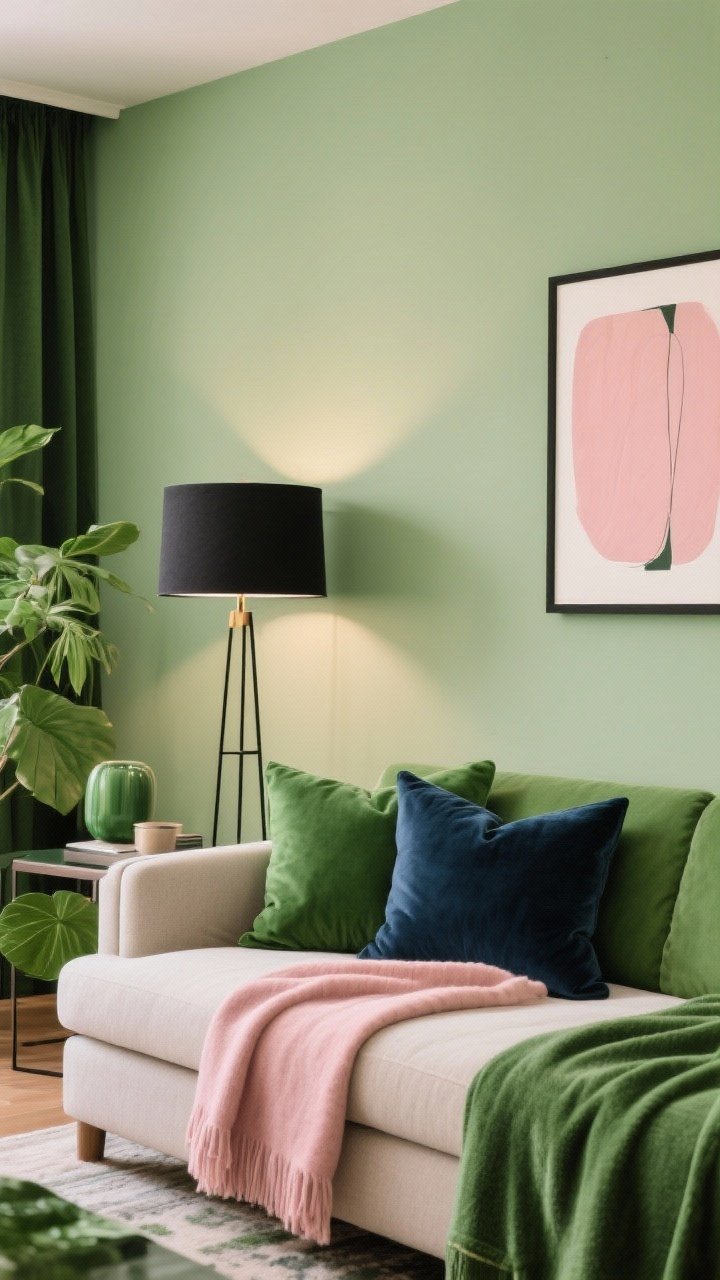
This is the secret sauce. Pick one accent color to pop against your greens. It keeps the room from feeling too “safe” and gives it editorial flair.
Wildcard Combos That Hit
- Green + Blush: Soft, romantic, modern.
- Green + Navy: Tailored, preppy, elevated.
- Green + Mustard: Retro, warm, fun in pillows or a throw.
- Green + Black: Crisp and graphic—use sparingly for frame lines and lamps.
Start with one or two pieces in your wildcard color—like a throw and a small piece of art—then step back. If it sings, keep going. If it screams, scale back.
Final Thoughts
Green is one of those rare colors that can be both calming and exciting—depends on how you style it. Choose your hero shade, balance it with texture and warm tones, then layer in plants, pattern, and lighting. Before you know it, you’ll have a living room that feels curated, cozy, and totally you.
Now go grab some paint swatches, test a few fabrics, and let your inner plant parent thrive. Your fresh, chic, green living room is basically calling your name.