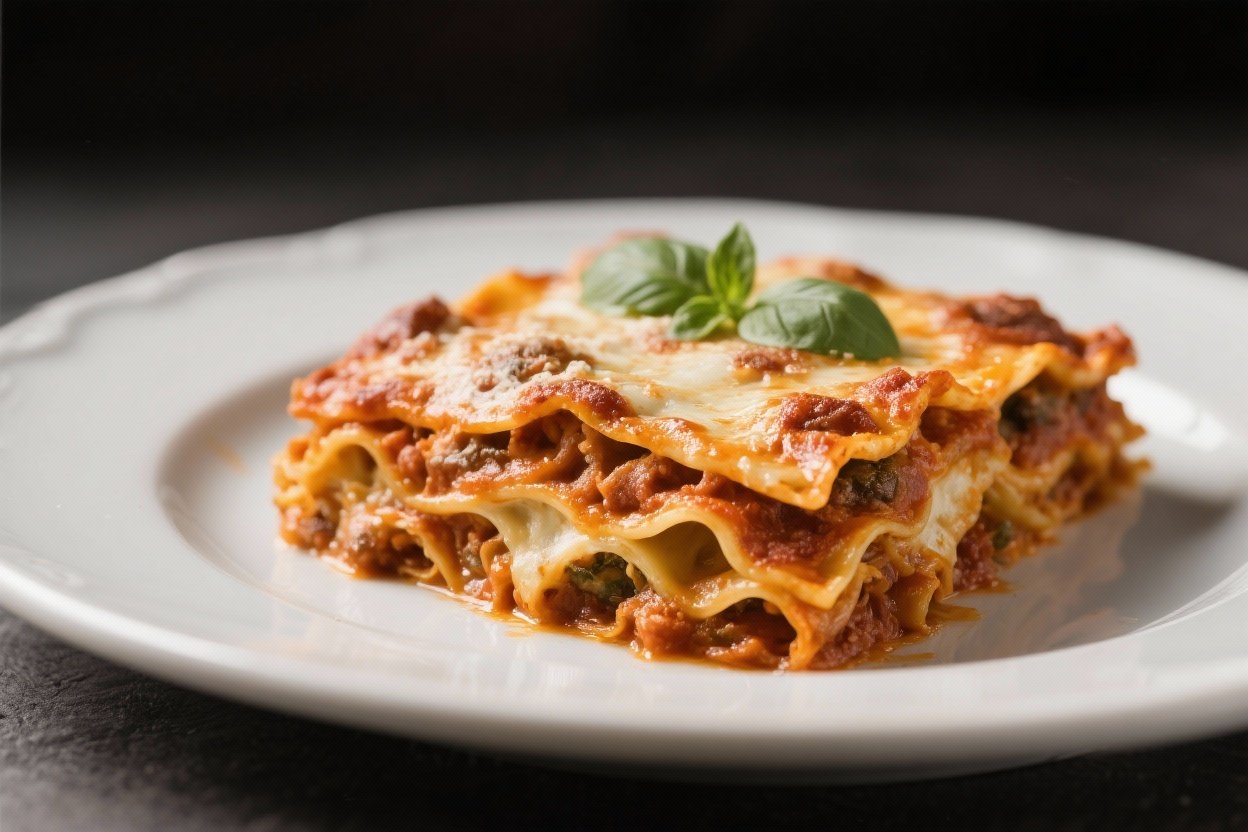
Authentic Italian Lasagna – Rich, Comforting, and Truly Classic
Italian lasagna is the kind of dish that brings everyone to the table without a word. It’s hearty, deeply flavorful, and layered with simple ingredients that feel like home. This version stays true to tradition: slow-simmered ragù, silky béchamel, and tender pasta sheets baked until bubbling and golden.
You don’t need fancy tricks—just patience and good ingredients. The result is a lasagna that slices cleanly, tastes balanced, and makes even better leftovers.
Authentic Italian Lasagna - Rich, Comforting, and Truly Classic
Ingredients
Method
- Sweat the aromatics: Warm 1 tablespoon olive oil and a small knob of butter in a large pot.Add pancetta (if using), onion, carrot, and celery. Cook over medium-low heat until soft and fragrant, about 8–10 minutes. Add garlic for the last minute.
- Brown the meat: Increase heat to medium-high.Add ground beef and pork with a big pinch of salt and pepper. Cook, breaking up the meat, until lightly browned. Don’t rush—color builds flavor.
- Build the ragù: Stir in tomato paste and cook for 1 minute to caramelize.Pour in red wine and let it reduce by half. Add crushed tomatoes and a splash of milk if using. Reduce to a low simmer, partially cover, and cook 45–60 minutes, stirring occasionally.Adjust salt and pepper.
- Make the béchamel: In a saucepan, melt 3 tablespoons butter. Whisk in flour and cook 1–2 minutes until foamy but not browned. Slowly whisk in 3 cups milk, a little at a time, until smooth.Simmer gently until thick enough to coat a spoon, 5–7 minutes. Season with salt, pepper, and a pinch of nutmeg.
- Prepare the pasta: If using fresh sheets, blanch in salted boiling water for 30–45 seconds, then cool briefly on a towel. If using no-boil sheets, you can use them as is, but ensure your sauces aren’t too thick so they hydrate in the oven.
- Preheat and set up: Heat oven to 375°F (190°C).Grease a 9x13-inch (23x33 cm) baking dish. Keep ragù and béchamel warm so they spread easily.
- Layer the lasagna: Spoon a thin layer of béchamel in the dish. Add a layer of pasta.Spread a modest layer of ragù, then béchamel, then dust with Parmesan. Add a light sprinkle of mozzarella if using. Repeat 3–4 times, finishing with pasta, béchamel, and a generous shower of Parmesan.Avoid overfilling; aim for about 5–6 total pasta layers.
- Bake: Cover loosely with foil (tent it so it doesn’t stick to the top). Bake 25 minutes. Remove foil and bake 15–20 minutes more, until bubbling and lightly golden on top.
- Rest and serve: Let the lasagna rest at least 15–20 minutes before slicing.This helps the layers set and gives you clean, neat squares.
Why This Recipe Works

This lasagna rests on three pillars: a robust meat ragù, a smooth béchamel, and quality pasta. The ragù develops depth from a gentle simmer with aromatics, tomatoes, and a splash of wine.
Béchamel adds creaminess without overwhelming the meat, keeping the dish balanced instead of heavy. Finally, using fresh pasta or no-boil sheets keeps the layers thin and delicate. Together, these choices create clean layers, rich flavor, and that classic Italian texture you expect.
What You’ll Need
- Lasagna sheets: Fresh egg pasta or quality no-boil sheets
- Ground meat: 1 lb (450 g) mix of beef and pork
- Pancetta or finely diced bacon: 2 oz (60 g), optional but traditional
- Onion, carrot, celery: 1 small of each, finely chopped (soffritto)
- Garlic: 2 cloves, minced
- Tomato paste: 2 tablespoons
- Crushed tomatoes: 1 can (14–16 oz / 400–450 g)
- Dry red wine: 1/2 cup (120 ml)
- Milk: 1 cup (240 ml) for the ragù (optional, for softness)
- Olive oil and butter: for sautéing and béchamel
- Flour: 1/3 cup (40 g) for béchamel
- Milk: 3 cups (720 ml) for béchamel
- Nutmeg: a pinch, freshly grated
- Salt and black pepper: to taste
- Parmesan: 1 to 1 1/2 cups (90–135 g), finely grated
- Mozzarella: 1 to 1 1/2 cups (120–180 g), shredded (optional, for extra melt)
How to Make It
- Sweat the aromatics: Warm 1 tablespoon olive oil and a small knob of butter in a large pot.
Add pancetta (if using), onion, carrot, and celery. Cook over medium-low heat until soft and fragrant, about 8–10 minutes. Add garlic for the last minute.
- Brown the meat: Increase heat to medium-high.
Add ground beef and pork with a big pinch of salt and pepper. Cook, breaking up the meat, until lightly browned. Don’t rush—color builds flavor.
- Build the ragù: Stir in tomato paste and cook for 1 minute to caramelize.
Pour in red wine and let it reduce by half. Add crushed tomatoes and a splash of milk if using. Reduce to a low simmer, partially cover, and cook 45–60 minutes, stirring occasionally.
Adjust salt and pepper.
- Make the béchamel: In a saucepan, melt 3 tablespoons butter. Whisk in flour and cook 1–2 minutes until foamy but not browned. Slowly whisk in 3 cups milk, a little at a time, until smooth.
Simmer gently until thick enough to coat a spoon, 5–7 minutes. Season with salt, pepper, and a pinch of nutmeg.
- Prepare the pasta: If using fresh sheets, blanch in salted boiling water for 30–45 seconds, then cool briefly on a towel. If using no-boil sheets, you can use them as is, but ensure your sauces aren’t too thick so they hydrate in the oven.
- Preheat and set up: Heat oven to 375°F (190°C).
Grease a 9×13-inch (23×33 cm) baking dish. Keep ragù and béchamel warm so they spread easily.
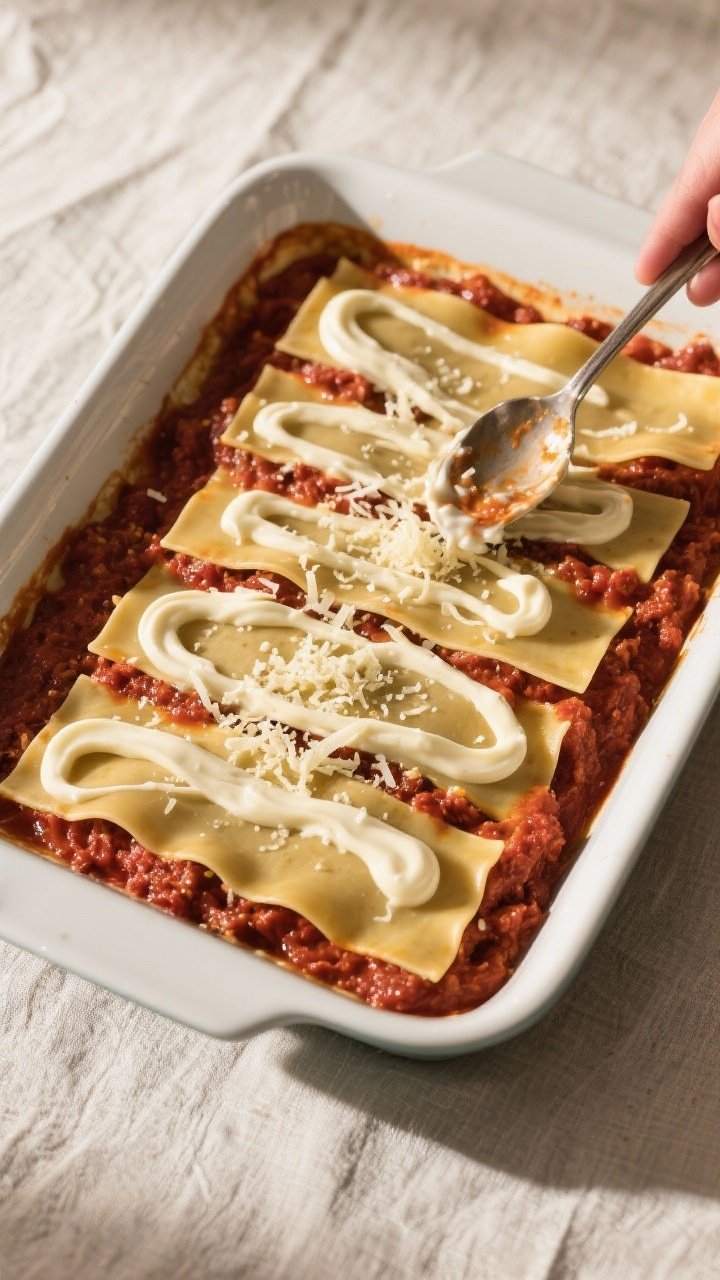
- Layer the lasagna: Spoon a thin layer of béchamel in the dish. Add a layer of pasta.
Spread a modest layer of ragù, then béchamel, then dust with Parmesan. Add a light sprinkle of mozzarella if using. Repeat 3–4 times, finishing with pasta, béchamel, and a generous shower of Parmesan.
Avoid overfilling; aim for about 5–6 total pasta layers.
- Bake: Cover loosely with foil (tent it so it doesn’t stick to the top). Bake 25 minutes. Remove foil and bake 15–20 minutes more, until bubbling and lightly golden on top.
- Rest and serve: Let the lasagna rest at least 15–20 minutes before slicing.
This helps the layers set and gives you clean, neat squares.
How to Store
- Refrigerator: Cool completely, then cover tightly. Store up to 4 days.
- Freezer: Wrap portions well or freeze the whole pan before baking. Keeps for 2–3 months.
Thaw overnight in the fridge.
- Reheating: For best results, reheat covered at 325°F (165°C) until hot, about 20–30 minutes for slices. Add a spoonful of milk or a bit of béchamel over the top if it looks dry.
Health Benefits
Lasagna is comfort food, but it can still offer some balanced nutrition. The meat provides high-quality protein and iron.
Milk and cheese add calcium and vitamin B12. Tomatoes bring lycopene, an antioxidant linked to heart health. To lighten it up, use leaner meat, add finely chopped mushrooms or spinach to the ragù, and lean on Parmesan for flavor so you can use less mozzarella.
Common Mistakes to Avoid
- Rushing the ragù: A quick sauce tastes flat.
Give it time to simmer and reduce.
- Over-thick béchamel: If it’s too thick, the lasagna can feel stodgy. It should flow easily but coat a spoon.
- Too much sauce per layer: Thick layers can cause slipping and soggy results. Keep layers modest and even.
- Skipping the rest: Cutting too soon leads to a messy slice.
Resting sets the layers.
- Underseasoning: Taste both sauces. Proper seasoning is key to a balanced bite.
- Dry noodles: No-boil sheets need moisture. If your sauces are very thick, add a splash of milk or stock between layers.
Recipe Variations
- Lasagna alla Bolognese: Use a classic meat ragù with a bit of milk and white wine, plus spinach pasta sheets for a traditional Emilia-Romagna touch.
- Spinach and Ricotta: Swap meat for sautéed spinach and a ricotta-Parmesan mix.
Keep the béchamel for silkiness.
- Mushroom Lasagna: Sauté mixed mushrooms with thyme and garlic, then layer with béchamel and Parmesan for deep, savory flavor.
- Lightened Version: Use turkey and pork mix, skim milk for béchamel, and extra vegetables in the ragù.
- No-Tomato (Bianca): Skip tomatoes and use a meaty, wine-reduced sauce with béchamel and plenty of Parmesan.
FAQ
Can I make this ahead of time?
Yes. Assemble the lasagna up to a day in advance, cover, and refrigerate. Add 10–15 minutes to the baking time if it goes into the oven cold.
Do I have to use béchamel?
Béchamel is traditional and adds a smooth, creamy texture that balances the ragù.
If you prefer, you can use a light ricotta mixture, but expect a different texture and flavor.
What’s the best pasta to use?
Fresh egg pasta gives the most delicate layers. Quality no-boil sheets also work well if your sauces are slightly loose so they hydrate properly during baking.
Can I use only beef?
Yes, but a mix of beef and pork gives a richer, rounder flavor. If using only beef, consider adding a bit more olive oil and a splash of milk to soften the sauce.
How do I keep the top from burning?
Keep it covered with foil for the first part of baking, then uncover just to brown.
If it darkens too quickly, tint with foil again.
Why did my lasagna come out watery?
Likely the ragù wasn’t reduced enough or the béchamel was too thin. Simmer sauces longer and let the lasagna rest after baking to allow juices to settle.
What wine pairs well with lasagna?
A medium- to full-bodied red like Sangiovese, Chianti Classico, or Barbera complements the rich ragù without overpowering it.
Can I freeze individual portions?
Absolutely. Slice, wrap well, and freeze.
Reheat from thawed for the best texture, covered in the oven until hot.
In Conclusion
Authentic Italian lasagna isn’t complicated—it’s careful layering, patient simmering, and good ingredients. With a well-developed ragù, a silky béchamel, and tender pasta, you’ll get a lasagna that tastes balanced and slices beautifully. Make it for Sunday dinner, save some for the week, and enjoy the way it brings people together around the table.
Simple, satisfying, and timeless.