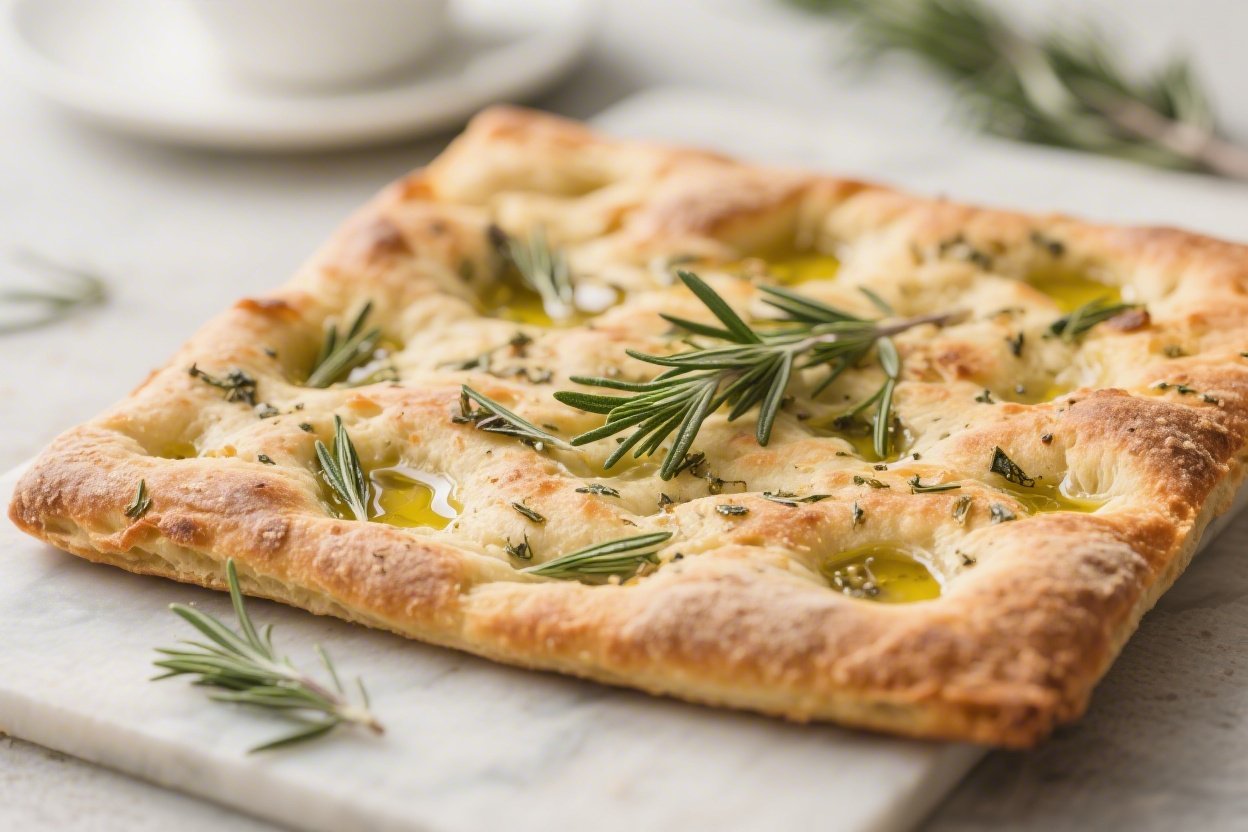
Rosemary & Olive Oil Sourdough Focaccia – Light, Chewy, and Full of Flavor
Warm, golden, and fragrant with rosemary, this sourdough focaccia is the kind of bread that makes a meal feel special. It’s crisp at the edges, airy inside, and soaked with good olive oil in all the right places. You don’t need a mixer or fancy tools—just time, patience, and a lively sourdough starter.
If you love baking bread but want something a bit more forgiving than a classic loaf, this is a perfect place to start. It’s easy, flexible, and wildly satisfying to pull from the oven.
Rosemary & Olive Oil Sourdough Focaccia - Light, Chewy, and Full of Flavor
Ingredients
Method
- Mix the dough (morning): In a large bowl, whisk the starter into the water until mostly dissolved.Add flour and salt (and honey if using). Mix with a spoon or your hands until no dry spots remain. The dough will be shaggy and sticky—perfect.
- Rest and hydrate: Cover and let the dough rest for 30 minutes.This autolyse helps the flour fully hydrate and makes the dough easier to handle.
- Coil folds for strength: With wet hands, perform 2–3 sets of gentle folds over the next 60–90 minutes, spaced 30 minutes apart. Lift the dough from the middle, tuck it under itself, and rotate the bowl. You’ll feel it tighten and smooth out.
- Bulk fermentation: Cover and let rise at room temperature until puffed by 50–75% and showing bubbles along the edges.This can take 3–5 hours depending on temperature and starter strength. Be patient—watch the dough, not the clock.
- Prep the pan: Generously oil a 9x13-inch pan or a half sheet pan with 2–3 tablespoons olive oil. Transfer the dough to the pan, and drizzle another tablespoon over the top.
- Pan proof and chill (optional but recommended): Gently stretch the dough toward the corners.Don’t force it; it will relax. Cover and let it rest at room temp for 30–60 minutes, then refrigerate for 8–18 hours for deeper flavor and easier handling. If you’re short on time, skip the chill and continue proofing at room temp until very puffy.
- Final proof: If chilled, bring the dough back to room temperature for 45–60 minutes.Preheat the oven to 450°F (230°C). The dough should look airy and slightly jiggly.
- Dimple and top: Drizzle 2–3 tablespoons olive oil over the dough. With oiled fingers, press straight down to create deep dimples across the surface.Sprinkle chopped rosemary and a generous pinch of flaky salt.
- Bake: Place the pan on the middle rack and bake for 22–28 minutes until the top is golden and the edges are crisp. If you like extra color, bake 2–3 minutes more. The bottom should be well bronzed.
- Finish and cool: While hot, brush or drizzle a little more olive oil over the top for shine and richness.Cool in the pan for 10 minutes, then transfer to a rack if you want to keep the bottom crisp. Slice warm or at room temperature.
What Makes This Special
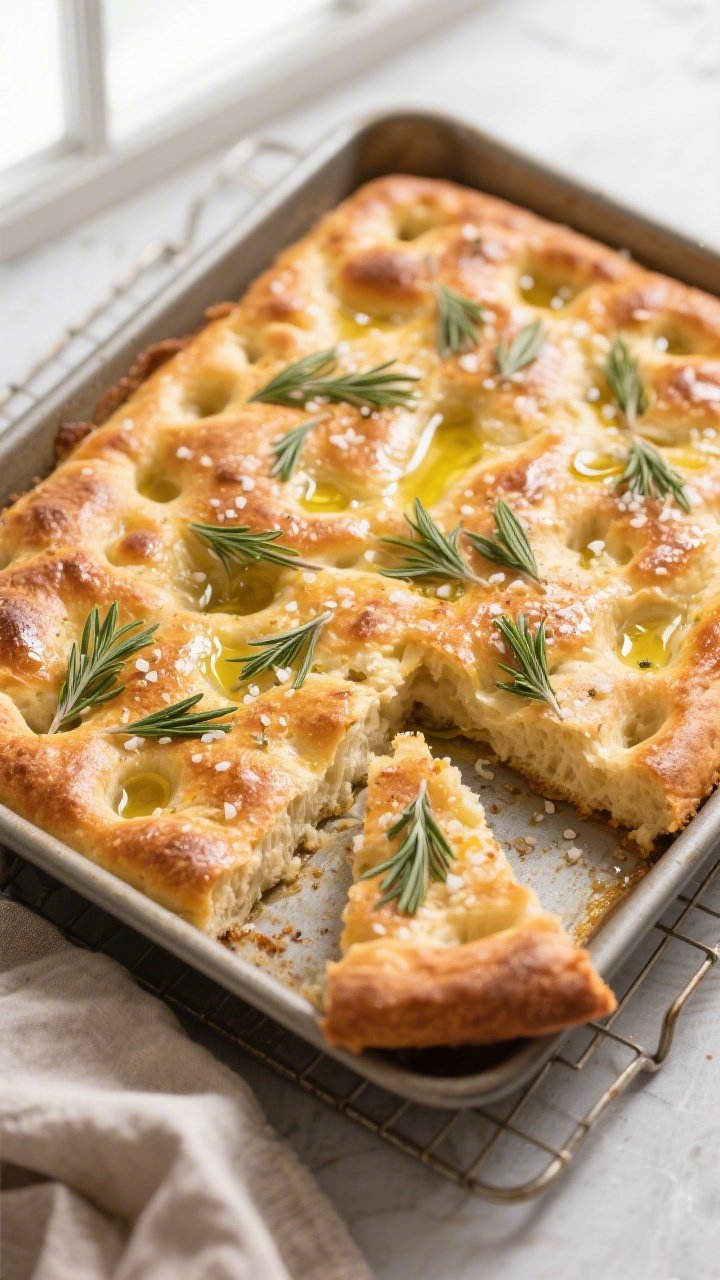
This focaccia balances the gentle tang of sourdough with the richness of extra-virgin olive oil. The dough is naturally leavened, which gives it a deeper flavor and a lovely open crumb.
Fresh rosemary adds bright, piney notes that work beautifully with sea salt. And best of all, the process is hands-off for most of the time. A few simple folds, a long rest, and a good dimple before baking—that’s it.
- Flavor-forward: Sourdough starter adds complexity without being overly sour.
- Texture you crave: Crispy edges, pillowy middle, and a glossy, olive-oil sheen.
- Make-ahead friendly: The dough loves a cold overnight rise for better flavor and easier handling.
- Minimal equipment: A mixing bowl, baking pan, and your hands.
What You’ll Need
- Active sourdough starter: 150 g (about 2/3 cup), bubbly and recently fed
- Water: 400 g (about 1 2/3 cups), room temperature
- Bread flour: 500 g (about 4 cups), or use a 50/50 mix of bread and all-purpose
- Fine sea salt: 10 g (about 1 3/4 tsp)
- Extra-virgin olive oil: 60–80 ml total (4–5 tbsp), divided
- Fresh rosemary: 2–3 tbsp leaves, finely chopped
- Flaky sea salt: For topping
- Optional: 1 tsp honey for a gentler fermentation boost and subtle sweetness
Instructions
- Mix the dough (morning): In a large bowl, whisk the starter into the water until mostly dissolved.Add flour and salt (and honey if using). Mix with a spoon or your hands until no dry spots remain. The dough will be shaggy and sticky—perfect.
- Rest and hydrate: Cover and let the dough rest for 30 minutes.This autolyse helps the flour fully hydrate and makes the dough easier to handle.
- Coil folds for strength: With wet hands, perform 2–3 sets of gentle folds over the next 60–90 minutes, spaced 30 minutes apart. Lift the dough from the middle, tuck it under itself, and rotate the bowl. You’ll feel it tighten and smooth out.
- Bulk fermentation: Cover and let rise at room temperature until puffed by 50–75% and showing bubbles along the edges.This can take 3–5 hours depending on temperature and starter strength. Be patient—watch the dough, not the clock.
- Prep the pan: Generously oil a 9×13-inch pan or a half sheet pan with 2–3 tablespoons olive oil. Transfer the dough to the pan, and drizzle another tablespoon over the top.
- Pan proof and chill (optional but recommended): Gently stretch the dough toward the corners.Don’t force it; it will relax. Cover and let it rest at room temp for 30–60 minutes, then refrigerate for 8–18 hours for deeper flavor and easier handling. If you’re short on time, skip the chill and continue proofing at room temp until very puffy.
- Final proof: If chilled, bring the dough back to room temperature for 45–60 minutes.Preheat the oven to 450°F (230°C). The dough should look airy and slightly jiggly.
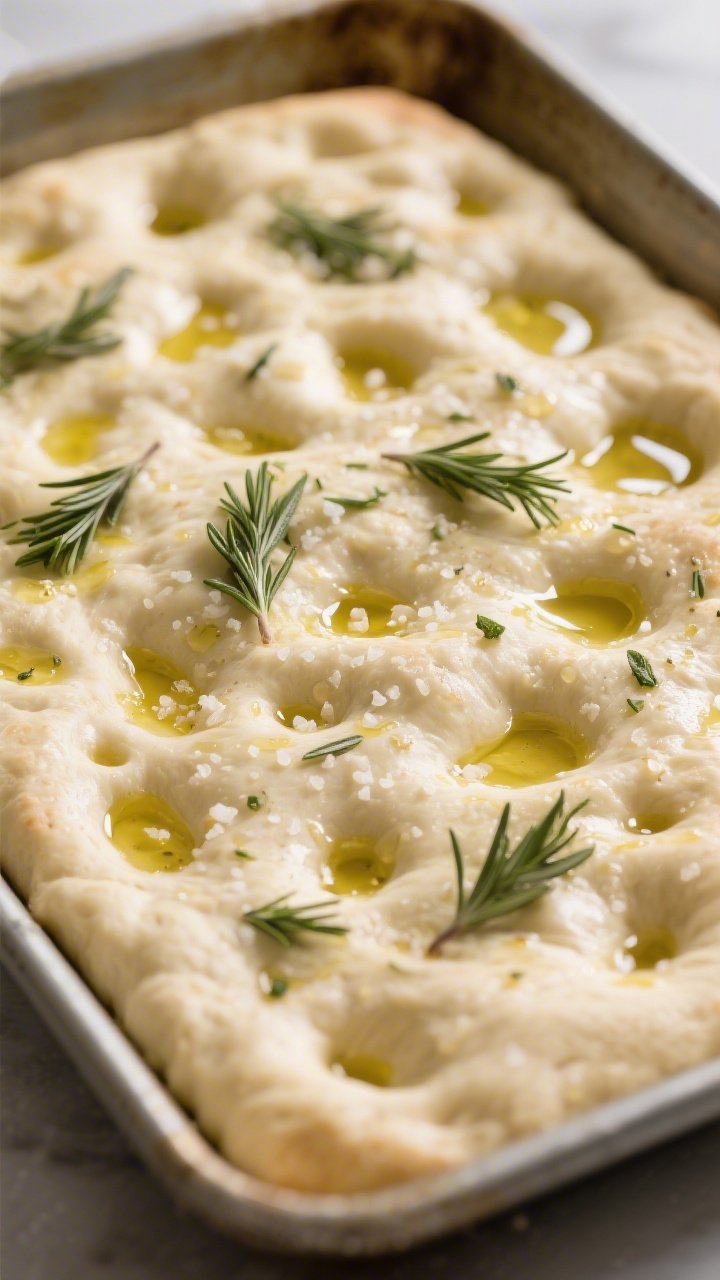
- Dimple and top: Drizzle 2–3 tablespoons olive oil over the dough. With oiled fingers, press straight down to create deep dimples across the surface.Sprinkle chopped rosemary and a generous pinch of flaky salt.
- Bake: Place the pan on the middle rack and bake for 22–28 minutes until the top is golden and the edges are crisp. If you like extra color, bake 2–3 minutes more. The bottom should be well bronzed.
- Finish and cool: While hot, brush or drizzle a little more olive oil over the top for shine and richness.Cool in the pan for 10 minutes, then transfer to a rack if you want to keep the bottom crisp. Slice warm or at room temperature.
How to Store
- Room temperature: Wrap loosely in parchment or a clean tea towel for up to 2 days. Avoid airtight plastic—it softens the crust.
- Freezer: Freeze slices in a single layer, then bag for up to 2 months.Reheat from frozen at 350°F (175°C) for 10–12 minutes.
- Revive the crust: If it softens, toast on a sheet pan at 400°F (200°C) for 5–8 minutes to re-crisp.
Health Benefits
- Fermentation perks: Sourdough fermentation can make gluten easier to digest for some people and may lower the bread’s glycemic impact compared to yeasted loaves.
- Heart-healthy fats: Extra-virgin olive oil provides monounsaturated fats and polyphenols that support cardiovascular health.
- Herbal boost: Rosemary brings antioxidants and a fresh, uplifting aroma that pairs well with savory dishes.
- Satisfying but simple: A small square goes a long way thanks to its rich crumb and olive oil content.
What Not to Do
- Don’t rush fermentation: Under-proofed focaccia bakes up dense and tight. Wait for visible bubbles and a light, jiggly feel.
- Don’t skimp on oil: The oil prevents sticking, crisps the crust, and carries flavor. A dry pan leads to tough edges.
- Don’t overwork the dough: Gentle folds are enough.Aggressive kneading tightens the crumb and reduces those lovely air pockets.
- Don’t overload toppings: Heavy, wet toppings weigh down the dough. Keep it light or add after baking.
- Don’t cut it too soon: Let it rest at least 10 minutes so the crumb sets and stays moist.
Recipe Variations
- Garlic & Chili: Add thinly sliced garlic and a pinch of red pepper flakes before baking.
- Tomato & Basil: Nestle halved cherry tomatoes into the dimples. Finish with fresh basil after baking.
- Olive & Lemon: Scatter sliced Castelvetrano olives and a little lemon zest for brightness.
- Cheesy Edge: Sprinkle grated Parmigiano-Reggiano around the perimeter for a lacy, crisp halo.
- Whole Grain: Swap 20–30% of the flour for fine whole wheat.Add 15–20 g extra water if needed.
- Herb Trio: Mix rosemary with thyme and oregano for a fuller, garden-style flavor.
FAQ
How active should my sourdough starter be?
Use your starter at peak or just past peak—bubbly, doubled in size, and slightly domed. If it’s sluggish, feed it 1–2 times before mixing the dough for best rise and flavor.
Can I make this same-day without the fridge rest?
Yes. Let the dough complete bulk fermentation, then proof in the pan until very puffy, dimple, and bake.
The flavor won’t be as deep, but the texture will still be excellent.
Why is my dough sticking to the pan?
Not enough oil. Focaccia needs a well-oiled pan and a drizzle on top before dimpling. If your pan is old or prone to sticking, line it with parchment and oil the parchment too.
How do I know it’s fully baked?
Look for an even golden top, crisp edges, and a well-browned bottom.
If the center feels squishy when pressed, give it 2–4 more minutes. An instant-read thermometer will read around 200–205°F (93–96°C).
Can I use instant yeast instead of starter?
Yes. Replace the starter with 1 1/2 teaspoons instant yeast and add 75 g water plus 75 g flour to balance hydration.
The flavor will be less tangy but still delicious.
What if my kitchen is cold?
Extend the bulk fermentation time, or use a warm spot (around 75–78°F / 24–26°C). A turned-off oven with the light on works well. Avoid temperatures above 85°F (29°C), which can overproof the dough.
Can I add caramelized onions?
Absolutely.
Cool them completely and scatter a light layer before baking. Too much moisture can sog the top, so keep it moderate.
Is bread flour necessary?
No, but it helps with chew and structure. All-purpose flour will work.
If using AP, consider one extra fold and keep an eye on hydration.
How thick should focaccia be?
It’s flexible. In a 9×13 pan, expect a thicker, pillowy focaccia. On a half sheet, it bakes thinner with more crisp edges.
Both are great—choose your style.
Can I bake it in a cast-iron skillet?
Yes. A 12-inch cast iron works beautifully. Preheat the skillet lightly, oil well, add the dough, and proceed as usual.
Final Thoughts
This Rosemary & Olive Oil Sourdough Focaccia is simple food at its best—fragrant, textural, and generous.
With a little time and a healthy starter, you’ll get a golden slab that pairs with soups, salads, or a glass of wine. Make it your own with toppings, slice it into sandwiches, or serve it warm at the center of the table. It’s the kind of bread that brings people close and makes any meal feel like an occasion.