Sausage & Herb Stuffing – A Cozy, Crowd-Pleasing Classic
Nothing says comfort like a warm dish of sausage and herb stuffing. It smells like the holidays, tastes like Sunday supper, and fits right in at any table. This version is savory, slightly crisp on top, and soft in the middle, with plenty of fresh herbs and a hint of sweetness from onion and celery.
It’s easy to make ahead, easy to scale, and even easier to love. Whether you’re hosting a feast or just want a cozy side for roast chicken, this one delivers every time.
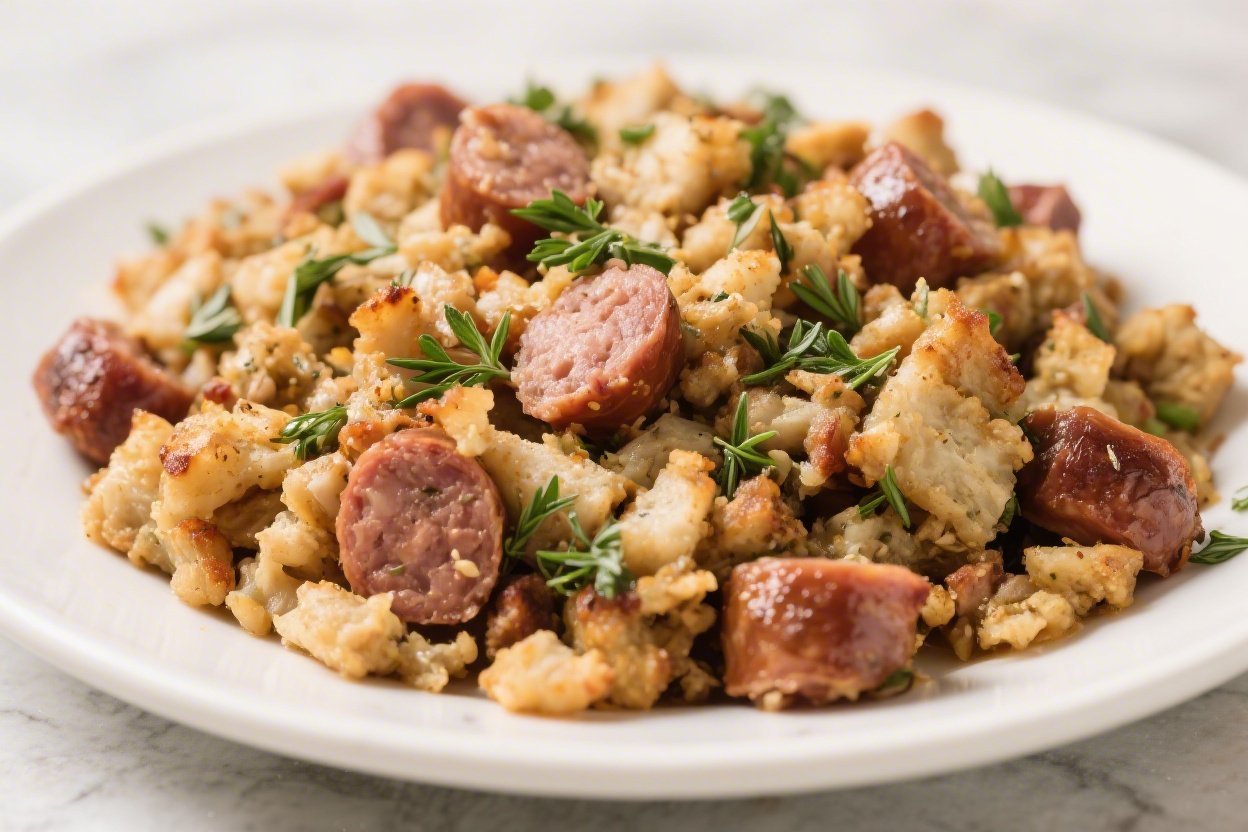
Sausage & Herb Stuffing - A Cozy, Crowd-Pleasing Classic
Ingredients
Method
- Dry the bread: Spread cubed bread on baking sheets and let it sit out overnight to dry.In a hurry? Toast in a 300°F (150°C) oven for 20–30 minutes, stirring once, until the edges feel dry but not browned.
- Prep the pan: Grease a 9x13-inch baking dish with butter. Set aside.
- Brown the sausage: In a large skillet over medium-high heat, warm 1 tablespoon olive oil (optional) and add the sausage.Break it into small crumbles. Cook until browned with some crisp bits, about 6–8 minutes. Transfer to a plate, leaving the drippings in the pan.
- Cook the aromatics: Reduce heat to medium.Add 4 tablespoons butter to the pan. When melted, add onion, celery, and a pinch of salt. Cook, stirring often, until soft and translucent, 8–10 minutes.Stir in garlic and cook 1 minute more.
- Add the herbs: Stir in sage, thyme, and half the parsley. Cook 30 seconds to bloom the flavors.
- Combine with bread: In a large bowl, add the dried bread cubes, cooked sausage, and the onion-celery mixture. Toss gently to distribute everything evenly.
- Moisten the mixture: Whisk the warm stock with the beaten eggs.Pour about 2 cups over the bread mixture and toss. The bread should feel evenly damp but not soggy. Add more stock a little at a time if needed.
- Season: Add salt and pepper to taste.Remember, sausage and stock can be salty, so season gradually. Stir in any optional add-ins now.
- Rest: Let the mixture sit 5–10 minutes so the bread absorbs the liquid. If there are dry patches, sprinkle on a bit more stock.
- Transfer and dot with butter: Spoon the mixture into the prepared baking dish.Melt the remaining 2 tablespoons butter and drizzle over the top, or dot small pieces across the surface for extra browning.
- Bake covered, then uncovered: Cover tightly with foil and bake at 350°F (175°C) for 25 minutes. Remove foil and bake another 20–25 minutes until the top is golden and crisp and the center is hot and set.
- Finish and serve: Sprinkle with the remaining parsley. Let rest 5–10 minutes before serving so it slices cleanly and the flavors settle.
What Makes This Recipe So Good

- Balanced texture: Crisp edges and a tender, custardy center keep every bite interesting.
- Big, herby flavor: Fresh sage, thyme, and parsley brighten the rich sausage and buttery bread.
- Make-ahead friendly: Assemble it a day ahead, then bake before serving. Great for busy holidays.
- Flexible base: Use your favorite bread, tweak the herbs, or swap the sausage—this recipe forgives and adapts.
- Feeds a crowd: It’s easy to double and holds well on a buffet without drying out.
What You’ll Need
- Bread: 1 pound day-old bread (French, sourdough, or country loaf), cut into 1-inch cubes
- Butter: 6 tablespoons unsalted butter
- Olive oil: 1 tablespoon (optional, for browning)
- Sausage: 1 pound pork sausage (Italian or breakfast style), casings removed
- Onion: 1 large yellow onion, finely diced
- Celery: 4 ribs celery, finely diced
- Garlic: 3 cloves garlic, minced
- Fresh herbs: 2 tablespoons chopped fresh sage; 1 tablespoon chopped fresh thyme; 1/4 cup chopped fresh parsley
- Stock: 2 to 2 1/2 cups low-sodium chicken or turkey stock, warmed
- Eggs: 2 large eggs, lightly beaten
- Salt and pepper: To taste (start with 1 1/2 teaspoons kosher salt and 1/2 teaspoon black pepper)
- Optional add-ins: 1/2 cup chopped toasted pecans or walnuts; 1/2 cup dried cranberries; 1/2 teaspoon crushed red pepper flakes
Step-by-Step Instructions
- Dry the bread: Spread cubed bread on baking sheets and let it sit out overnight to dry.In a hurry? Toast in a 300°F (150°C) oven for 20–30 minutes, stirring once, until the edges feel dry but not browned.
- Prep the pan: Grease a 9×13-inch baking dish with butter. Set aside.
- Brown the sausage: In a large skillet over medium-high heat, warm 1 tablespoon olive oil (optional) and add the sausage.Break it into small crumbles. Cook until browned with some crisp bits, about 6–8 minutes. Transfer to a plate, leaving the drippings in the pan.
- Cook the aromatics: Reduce heat to medium.Add 4 tablespoons butter to the pan. When melted, add onion, celery, and a pinch of salt. Cook, stirring often, until soft and translucent, 8–10 minutes.
Stir in garlic and cook 1 minute more.
- Add the herbs: Stir in sage, thyme, and half the parsley. Cook 30 seconds to bloom the flavors.
- Combine with bread: In a large bowl, add the dried bread cubes, cooked sausage, and the onion-celery mixture. Toss gently to distribute everything evenly.
- Moisten the mixture: Whisk the warm stock with the beaten eggs.Pour about 2 cups over the bread mixture and toss. The bread should feel evenly damp but not soggy. Add more stock a little at a time if needed.
- Season: Add salt and pepper to taste.Remember, sausage and stock can be salty, so season gradually. Stir in any optional add-ins now.
- Rest: Let the mixture sit 5–10 minutes so the bread absorbs the liquid. If there are dry patches, sprinkle on a bit more stock.
- Transfer and dot with butter: Spoon the mixture into the prepared baking dish.Melt the remaining 2 tablespoons butter and drizzle over the top, or dot small pieces across the surface for extra browning.
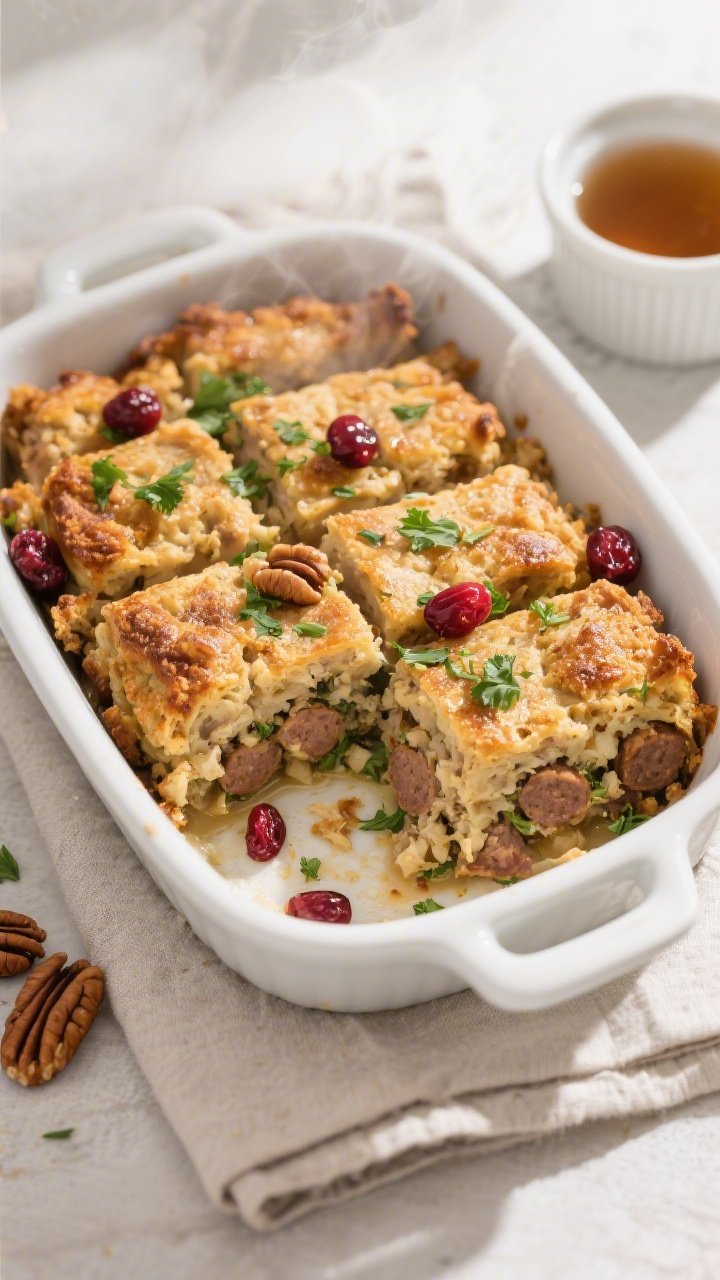
- Bake covered, then uncovered: Cover tightly with foil and bake at 350°F (175°C) for 25 minutes. Remove foil and bake another 20–25 minutes until the top is golden and crisp and the center is hot and set.
- Finish and serve: Sprinkle with the remaining parsley. Let rest 5–10 minutes before serving so it slices cleanly and the flavors settle.
How to Store
- Refrigerate: Cool completely, then cover and refrigerate for up to 4 days.
- Reheat: Warm, covered, at 325°F (165°C) for 15–20 minutes, then uncover for 5–10 minutes to re-crisp the top.Single servings reheat well in a skillet with a little butter.
- Freeze: Freeze baked stuffing, tightly wrapped, for up to 2 months. Thaw in the fridge overnight, then reheat as above.
- Make-ahead: Assemble up to the baking step, cover, and refrigerate up to 24 hours. Add 5–10 extra minutes to the covered bake time.
Health Benefits
- Protein boost: Sausage adds protein, which helps with satiety and makes this side feel substantial.
- Aromatic veggies: Onion, celery, and garlic provide fiber and antioxidants, plus they add depth without extra heaviness.
- Herbs for flavor, not fat: Fresh sage, thyme, and parsley pack flavor so you don’t need to lean on excess salt.
- Customizable: You can use whole-grain or sourdough bread for more fiber and swap in chicken or turkey sausage to lighten it up.
Pitfalls to Watch Out For
- Overly wet stuffing: If your bread isn’t dry enough, it can turn mushy.Dry the cubes thoroughly and add stock gradually.
- Under-seasoning: Bread soaks up salt. Taste the mixture before baking and adjust, keeping in mind the saltiness of your sausage and stock.
- Dry top, dry center: If you bake uncovered the whole time, the top can over-brown while the center stays dry. Bake covered first to steam, then uncover to crisp.
- Huge bread chunks: Oversized cubes resist absorbing liquid evenly.Aim for 1-inch pieces for balanced texture.
- Soggy bottom: Packing the dish too tightly traps moisture. Fluff the mixture in the pan so heat circulates.
Variations You Can Try
- Apple & fennel: Add 1 diced apple and 1 bulb fennel (sliced thin) to the onion-celery mix. Use sweet Italian sausage.
- Mushroom & thyme: Sauté 12 ounces cremini mushrooms until browned and add with extra thyme.Great with turkey sausage.
- Spicy Calabrian: Use hot Italian sausage, add red pepper flakes, and finish with lemon zest and parsley.
- Cornbread base: Swap half the bread for cornbread. Reduce stock slightly since cornbread absorbs more.
- Gluten-free: Use your favorite gluten-free loaf and check that your sausage and stock are certified gluten-free.
- Nuts and fruit: Toasted pecans or walnuts and dried cranberries add crunch and sweetness that play well with sage.
- Dairy-free: Replace butter with olive oil and ensure the sausage is dairy-free.
FAQ
Can I make this stuffing without eggs?
Yes. Eggs help bind and add a custardy feel, but you can skip them.
Use a little extra stock and bake covered slightly longer to ensure the center sets.
What’s the best bread to use?
Sturdy, rustic loaves hold up best—think sourdough, country white, or French bread. Avoid very soft sandwich bread unless you dry it thoroughly and reduce the stock slightly.
Can I cook the stuffing inside a turkey?
It’s safer and more reliable to bake stuffing in a separate dish. If you choose to stuff the bird, make sure the center of the stuffing reaches 165°F (74°C) to be food-safe.
How do I keep the top from getting too dark?
If the top browns too quickly, tent the dish loosely with foil.
You’ll keep the moisture in while protecting the crust.
Can I use vegetable stock?
Absolutely. Vegetable stock works well, especially if you’re using chicken or turkey sausage and want a lighter flavor. Just choose a low-sodium option and adjust salt at the end.
How do I make it less salty?
Use low-sodium stock, taste your sausage before seasoning, and salt the mixture in stages.
Acid (a squeeze of lemon) and fresh herbs also brighten flavor without more salt.
What if my stuffing is too wet after baking?
Bake uncovered for an extra 5–10 minutes to evaporate excess moisture. If it’s still very wet, gently stir the stuffing to expose more surface area and return it to the oven.
Final Thoughts
Sausage and herb stuffing is the kind of side that turns a meal into an occasion. It’s straightforward to make, forgiving to tweak, and full of comforting flavor.
With crisp edges, a tender center, and fresh herbs throughout, it satisfies both traditionalists and tinkerers. Make it once, and it might become the dish everyone asks you to bring year after year.