12 Coastal Garden Ideas That Bring the Beach Home
Craving that breezy, salt-kissed vibe at home? Coastal gardens are low-fuss, high-charm, and surprisingly resilient. Think silvery foliage, sandy textures, and plants that don’t blink at wind or salt spray. Ready to build your own little shoreline sanctuary—no matter your ZIP code?
Here are 12 fully-formed coastal garden ideas that actually work, look amazing, and don’t require babying. Pick one or mix a few to create your perfect seaside mood.
1. Windswept Grasses and Dunes Border
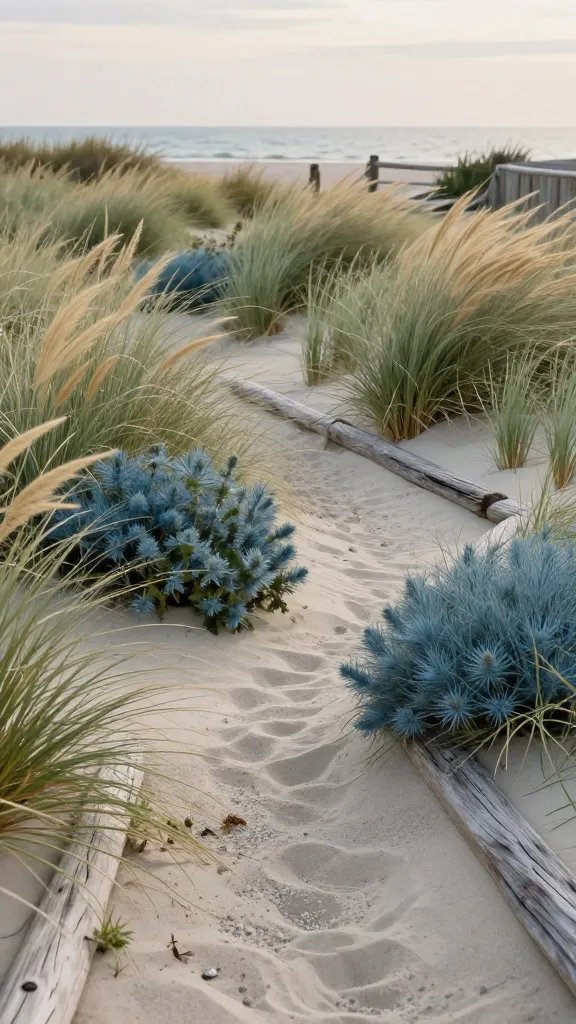
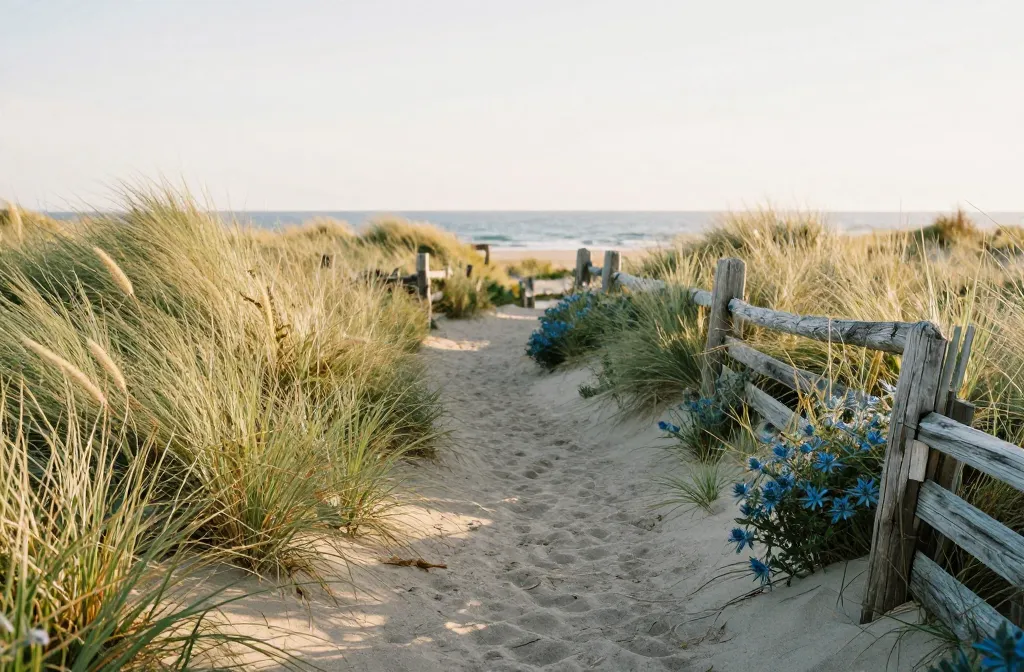
Channel a natural dune system with swaying grasses that move with the breeze and soften hard edges. This look pairs beautifully with sandy paths, weathered wood, and a minimal color palette.
Plant in generous sweeps for drama. Go for Ammophila (beach grass), Panicum virgatum, and Deschampsia mixed with sea holly (Eryngium) and blue fescue for color and texture. Leave open pockets of sand or gravel to mimic wind-sculpted spaces.
Why It Works
- Grasses handle wind and salt like champs.
- Movement adds life even on quiet days.
- Low water and low maintenance once established.
Perfect for gardeners who love natural, minimalist style with maximum mood.
2. Salt-Tough Groundcovers That Hold the Line
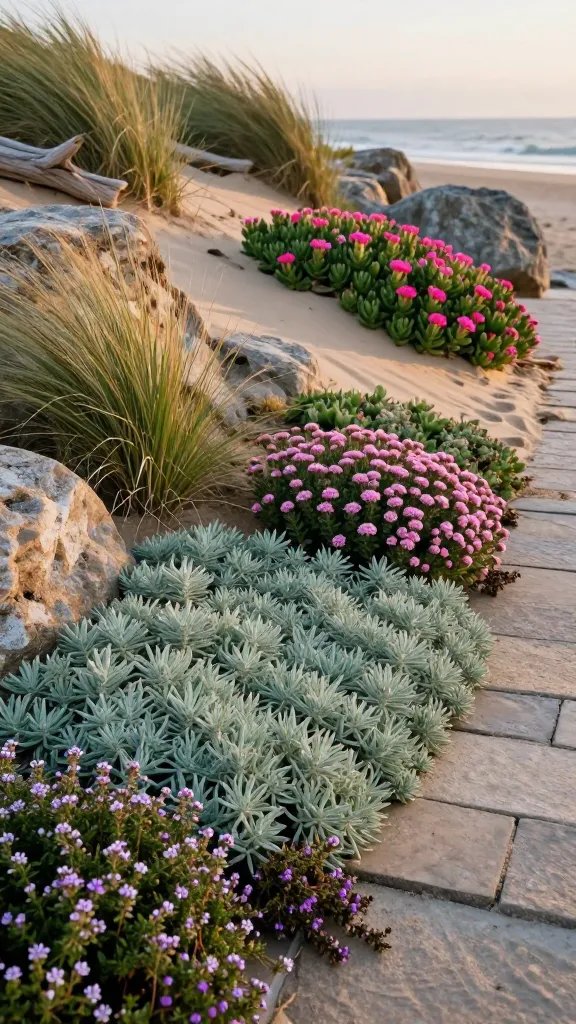
Coastal gardens need groundcovers that won’t melt at the first salty breeze. A carpet of tough, drought-tolerant plants prevents erosion, fills gaps, and looks effortlessly lush.
Try Dymondia margaretae for a silvery mat between pavers, sea thrift (Armeria maritima) for pink pom-poms, and creeping thyme for scented steps. On sandy banks, plant carpobrotus (ice plant) for neon blooms and serious staying power.
Design Tips
- Layer groundcovers around boulders to soften edges.
- Use a mix of heights and bloom times so it never looks flat.
- Let them spill onto paths for that “nature took over” charm.
Ideal if you want a living carpet that thrives where lawns fail.
3. Driftwood and Rope Accents with Native Planting
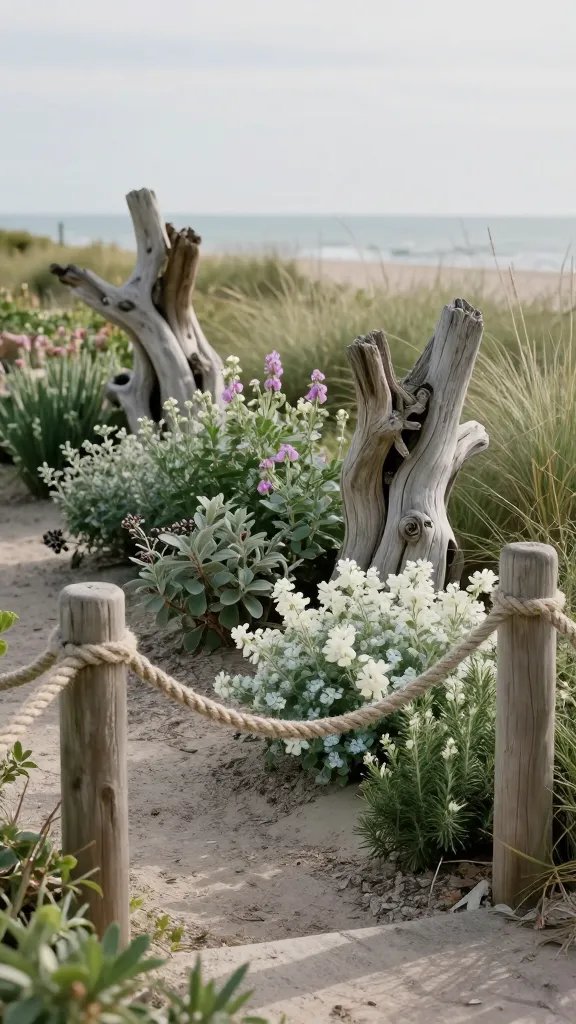
Lean into coastal character with tactile, weathered materials that look like they washed ashore. Driftwood stakes, rope handrails, and reclaimed posts help frame the space without feeling fussy.
Plant natives like beach pea (Lathyrus japonicus), bayberry (Myrica), and coastal rosemary (Westringia) around sculptural wood pieces. Keep the palette soft: grey-green foliage, white flowers, pale blues.
Why It Works
- Natural textures age gracefully—no upkeep panic.
- Native plants support local wildlife and withstand coastal conditions.
- Feels relaxed, not theme-park nautical.
Great for anyone who loves found objects and slow, soulful design.
4. White-and-Blue Coastal Courtyard with Hydrangeas
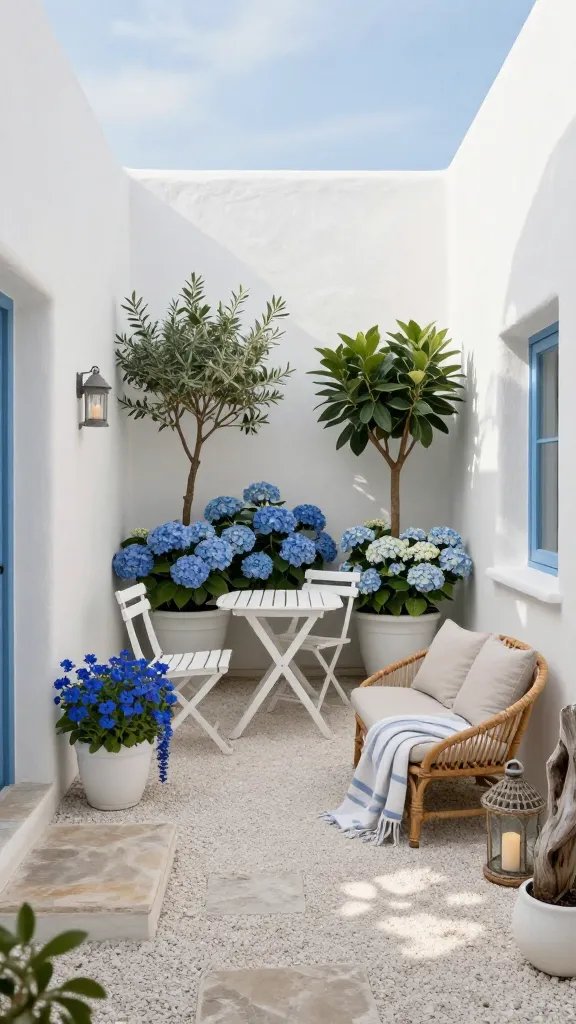
Classic coastal romance, but make it compact. A small courtyard with pale gravel, white pots, and blue-and-white blooms turns even a side yard into a seaside nook.
Use Hydrangea macrophylla in containers (choose varieties for your climate), add salvia and lobelia for cobalt pops, and ground it with olive or bay laurel standard trees. Keep furniture in whitewashed wood or rattan for cohesion.
Design Tips
- Choose light surfaces to reflect sun and brighten shade.
- Hydrangeas prefer morning sun and afternoon shade near coasts.
- Blue glaze pots echo sea tones without feeling kitschy.
Perfect for patio dwellers with a soft spot for timeless coastal charm.
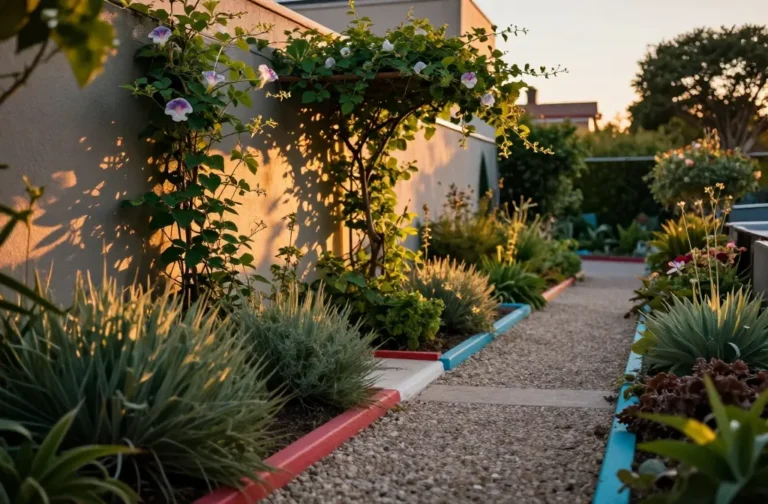
5. Crushed Shell Paths and Maritime Mulch
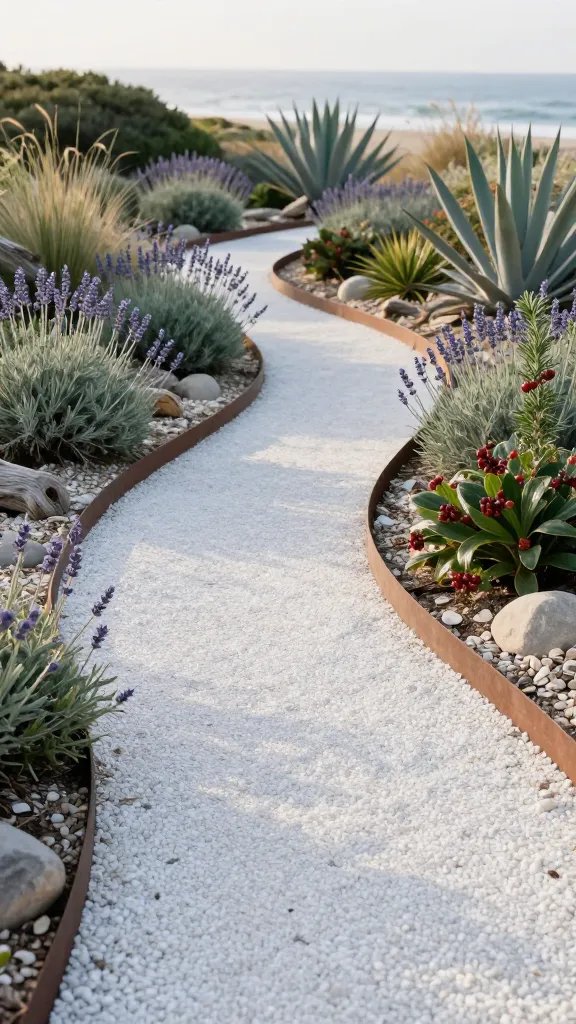
Hardscaping sets the tone fast, and few materials say “coastal” like crushed shells. They brighten shady corners, drain well, and make every footstep sound like the beach.
Edge paths with lavender, cotoneaster, or rosemary to release fragrance and soften the white. Use shell or gravel mulch around plants that hate wet feet, like agave and yucca.
Care Notes
- Install a sturdy sub-base and edging to keep paths tidy.
- Refresh the top layer annually for that crisp look.
- Check local sources for sustainably harvested shell products.
Ideal for low-maintenance pathways with a bright, coastal feel.
6. Seaside Meadow with Pollinator Power
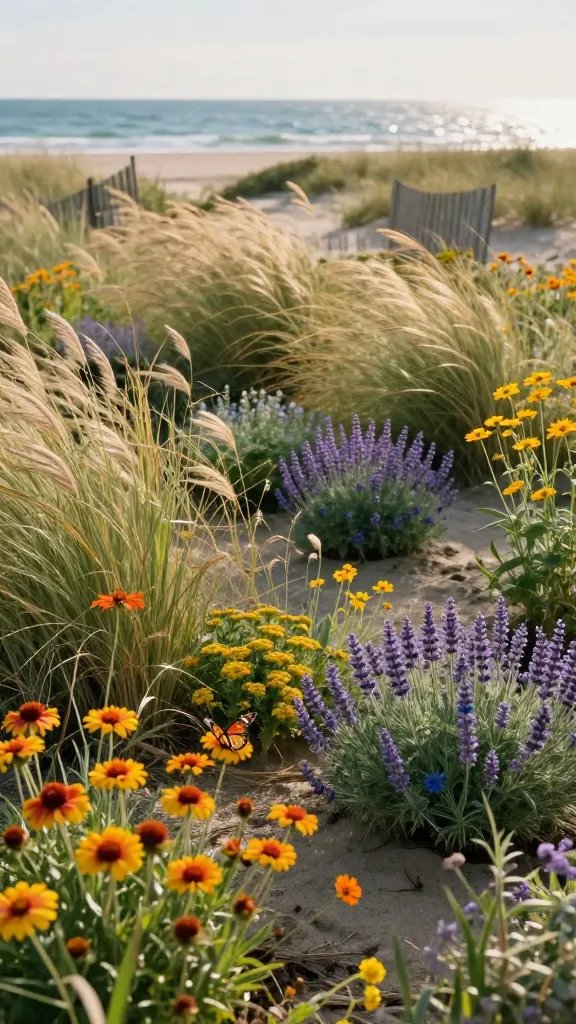
A loose, meadow-style planting brings color and wildlife without strict borders. It loves wind, shrugs off sandy soil, and looks good even when a bit wild—because that’s the point.
Mix gaillardia, yarrow, sea lavender (Limonium), coreopsis, verbena bonariensis, and catmint. Add a few butterfly weed clumps to support monarchs. Let grasses like Stipa tenuissima and Pennisetum weave through for movement.
Best For
- Sunny, open sites with a relaxed vibe.
- Gardeners who prefer scissors to sprinklers (cut flowers galore).
Perfect if you want a painterly, wildlife-friendly garden that feels easy and free.
7. Coastal Containers: Olive, Citrus, and Succulents
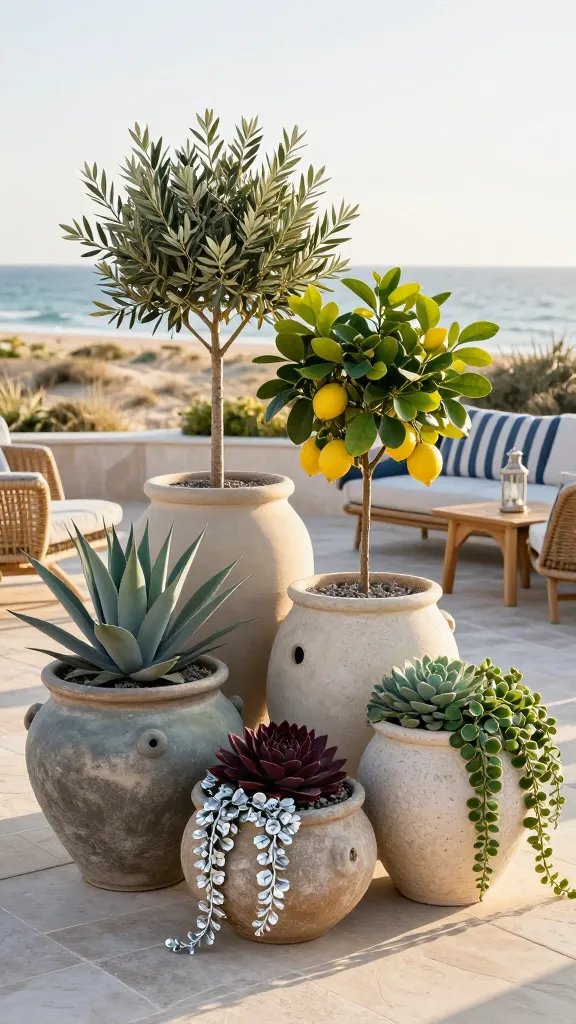
Containers thrive in salty air when you choose the right plants and pots. Cluster a mix of heights and textures for a patio that feels vacation-ready year-round.
Anchor with a dwarf olive or bay in a tall pot, surround with agave, aeonium, or senecio for sculptural foliage, and tuck in trailing dichondra ‘Silver Falls’. If your climate allows, add a potted lemon or kumquat for fragrance and fruit.
Design Tips
- Use heavy ceramic or fiberstone to withstand wind.
- Fast-draining mix and large drainage holes are non-negotiable.
- Group pots to create a microclimate and reduce watering needs.
Great for renters or anyone wanting instant coastal impact without digging.
8. Weathered Timber Deck with Built-In Planter Benches
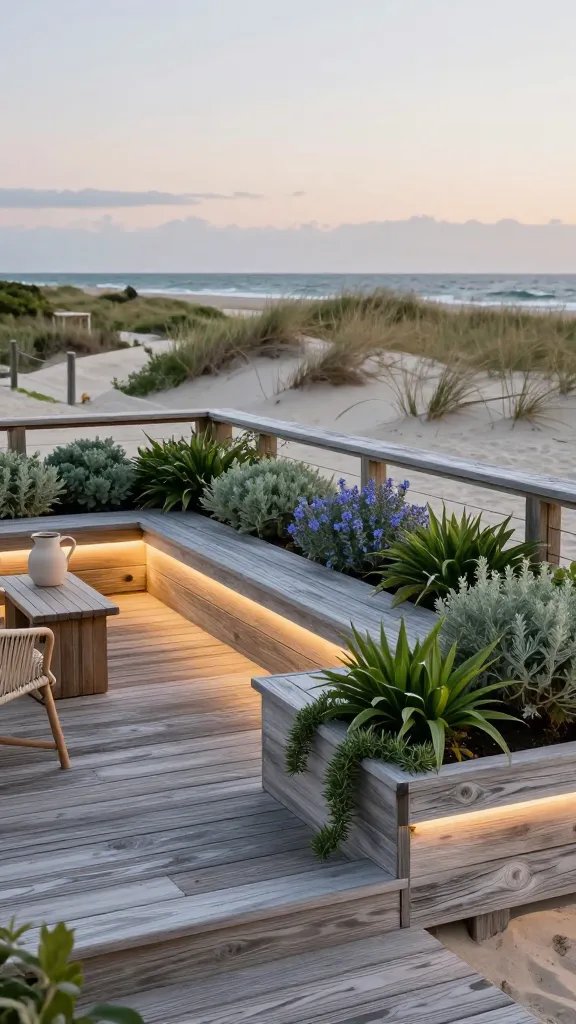
Blend seating and planting in one streamlined structure. A simple deck with integrated planters feels tailored but relaxed, especially in silvery, weathered tones.
Use reclaimed hardwood or composite decking in driftwood gray. Plant planters with westringia, teucrium, liriope, and prostrate rosemary for a tidy yet coastal palette. Add warm lighting under bench overhangs for glow after sunset.
Why It Works
- Planters act as wind buffers and privacy screens.
- Fewer freestanding pots mean less clutter in breezy sites.
- Subtle colors keep the look calm and cohesive.
Perfect if you want a lounge-friendly spot that still feels planted and alive.
9. Pebble Beach Fire Pit Ringed with Hardy Shrubs
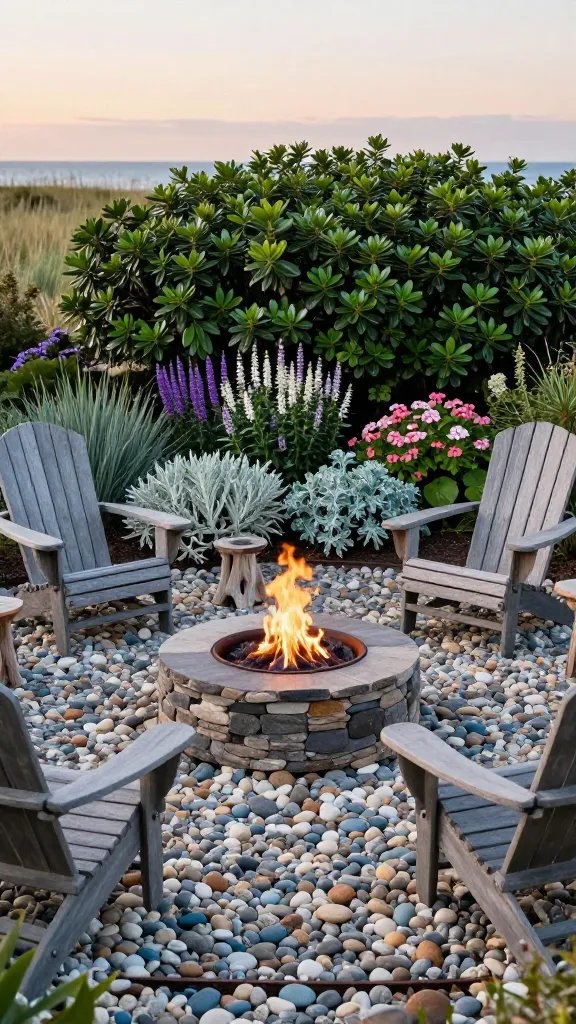
Create an all-season gathering zone with a round fire pit set in pebbles, surrounded by tough shrubs that can handle coastal conditions. It’s functional, beautiful, and low effort.
Plant a backdrop of Pittosporum tobira ‘Nanum’, Hebes, and Escallonia. Underplant with lamb’s ear and sea kale (Crambe maritima). Choose smooth river rock or beach pebbles and add low, movable Adirondack chairs.
Care Notes
- Use non-combustible, well-draining materials around the pit.
- Position shrubs to block wind without trapping smoke.
- Check local fire regulations—safety first, always.
Ideal for coast lovers who entertain even when it’s sweater weather.
10. Boardwalk Path Through a Coastal Shade Pocket
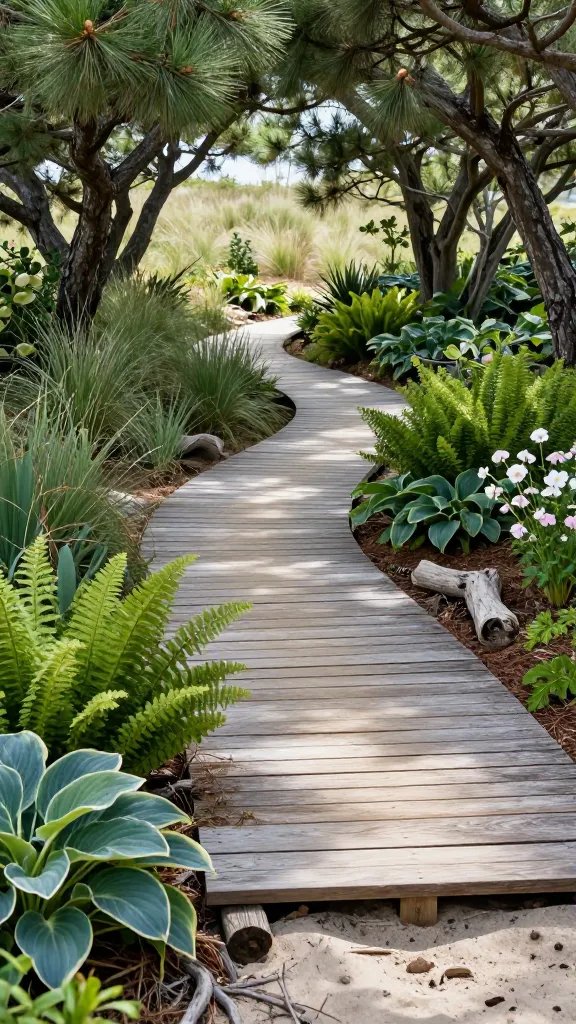
Not all coastal gardens are blazing sun. If you’ve got dappled shade from pines or oaks, build a low boardwalk path that glides over roots and sandy soils.
Plant ferns, hosta (salt-tolerant varieties), Japanese anemone, and carex for texture. Add hellebores for winter interest if your climate allows. The wooden walkway keeps feet dry and looks delightfully beach-town chic.
Design Tips
- Choose slatted decking to allow sand and water to pass through.
- Curve the path for a meandering, coastal-trail feel.
- Layer leaf mulch to retain moisture in windy conditions.
Great for coastal lots with trees—and for anyone who loves a little secret-garden drama.
11. Coastal Kitchen Plot with Herbs and Edibles
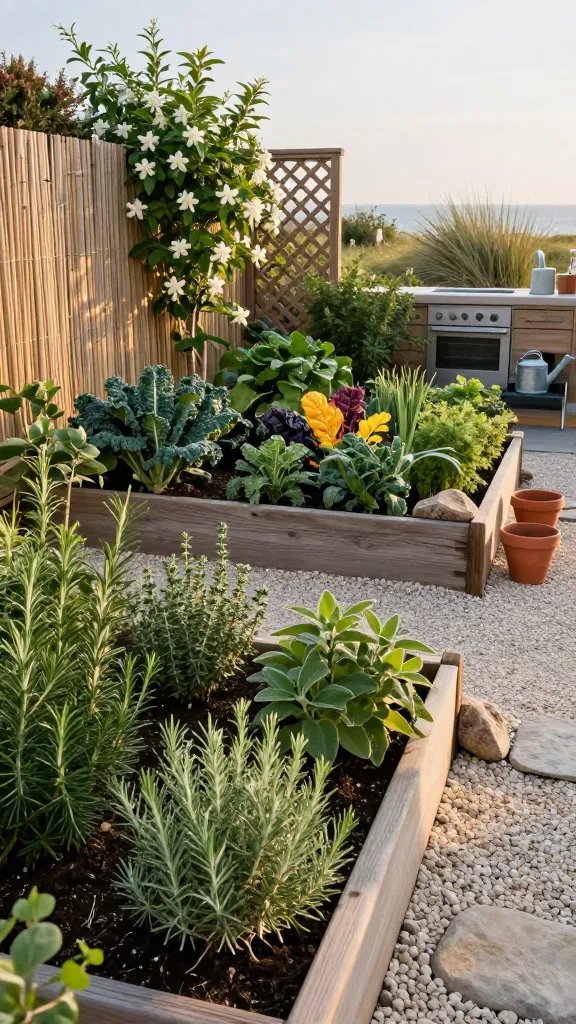
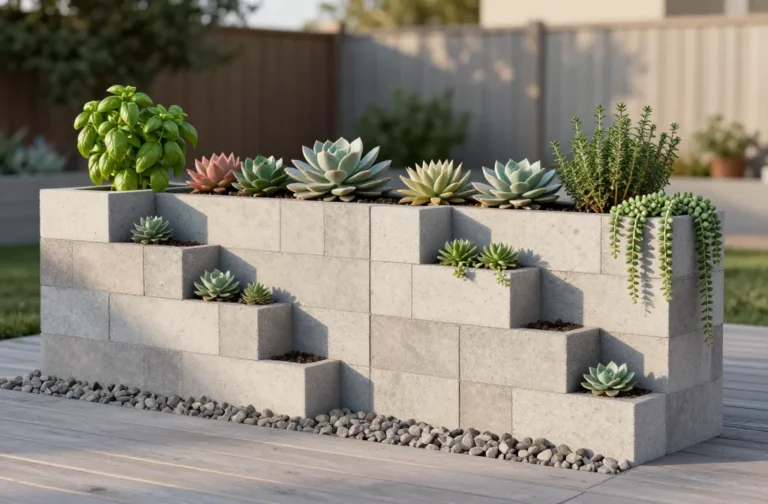
Yes, you can grow food by the sea—just choose resilient edibles and shelter them smartly. A raised bed or two with the right mix becomes both beautiful and productive.
Plant rosemary, thyme, sage, bay, and oregano as hardy perennials. Add annuals like kale, chard, and cherry tomatoes behind a low windbreak of bamboo screening or a lattice with star jasmine. Mulch heavily with gravel to keep soil warm and well-drained.
Why It Works
- Mediterranean herbs love sun, wind, and lean soil.
- Raised beds improve drainage near the coast.
- Strategic screening takes the sting out of salty gusts.
Perfect for cooks who want fresh flavors with a side of sea breeze.
12. Statement Succulent Slope with Boulders
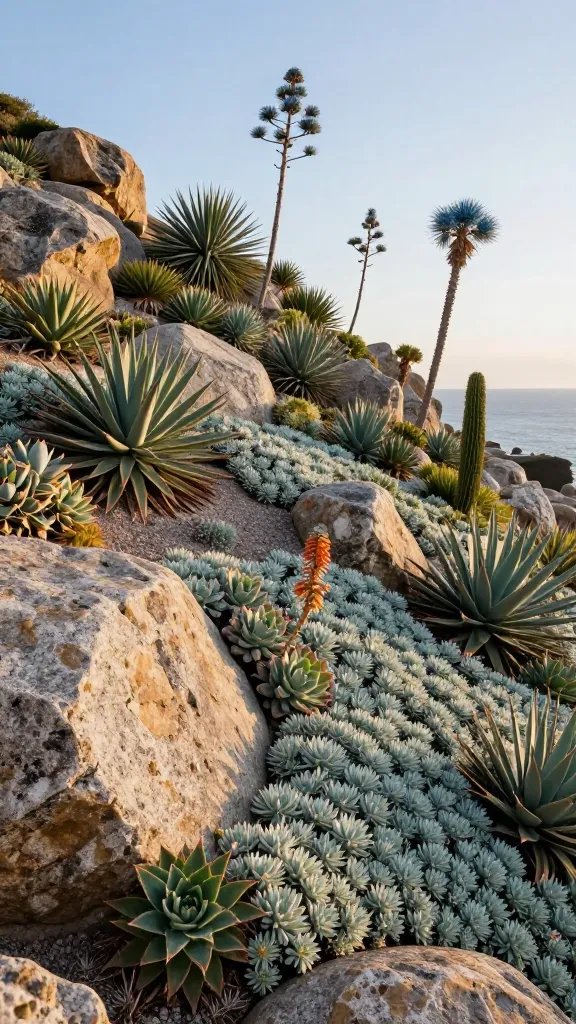
If you have a sloped or awkward patch, turn it into a sculptural succulent display. The look is bold, architectural, and insanely low maintenance once established.
Stagger agave, aloes, euphorbia, and cotyledon among large boulders, then weave in sedum and delosperma as groundcover. Add a few vertical accents like Yucca rostrata for skyline drama.
Design Tips
- Use chunky rocks to slow runoff and create planting pockets.
- Go heavy on gritty soil mix—these plants hate wet roots.
- Repeat forms and colors for a cohesive, gallery-like feel.
Ideal for sunny, sloped sites where traditional plantings struggle.
See a theme here? Coastal gardens embrace texture, movement, and plants with backbone. They don’t demand perfection—just a good eye and a willingness to play with wind and light.
Pick one idea to start—maybe a shell path, a pot of silver foliage, or a sweep of grasses—and build from there. Before long, you’ll have that breezy, barefoot vibe on your doorstep. Seriously, you’ll hear the waves every time the wind rustles the leaves.