Spicy Mayo Poke Sauce That Slaps: Creamy Heat in 5 Minutes
Want poke that tastes like you paid $18 a bowl for it? This sauce is the cheat code.
It’s creamy, fiery, slightly sweet, and engineered to cling to fish like it was born for it. No fancy gear, no culinary degree—just a whisk, a bowl, and five minutes of your life.
Make it once, and your weeknight bowls suddenly look like they have a marketing budget.
What Makes This Recipe So Good
- Balanced heat and creaminess: The mayo softens the spice while gochujang and sriracha bring layered heat, not napalm.
- Flavor depth, not just fire: Rice vinegar and soy add tang and umami, while a hint of sugar rounds it out.
- Incredibly versatile: Works on tuna, salmon, tofu, shrimp, or drizzled on sushi, bowls, tacos, even fries. Yes, fries.
- No guesswork: Ratios are dialed for poke, meaning it coats fish without turning watery or gloopy.
- Batch-friendly: Mix once, stash it, and upgrade lunches all week.
Servings, Prep Time, Cooking Time, Calories
- Servings: About 8 (2 tablespoons per serving)
- Prep Time: 5 minutes
- Cooking Time: 0 minutes
- Calories: ~120 per 2 tablespoons (varies by mayo brand)
Ingredients
- 1/2 cup Kewpie mayo (or regular mayo; Kewpie is creamier and tangier)
- 1 tablespoon sriracha (adjust to taste)
- 2 teaspoons gochujang (Korean chili paste for depth)
- 1 teaspoon soy sauce (or tamari for gluten-free)
- 1 teaspoon rice vinegar (unseasoned)
- 1 teaspoon sesame oil
- 1 teaspoon sugar (or honey)
- 1 small clove garlic, grated (or 1/4 teaspoon garlic powder)
- Optional kick: 1/2 teaspoon chili crisp oil or a pinch of red pepper flakes
- Optional garnish: Toasted sesame seeds, sliced scallions, lime zest
Making This Recipe
- Start with the base: Add mayo to a medium bowl.
Kewpie gives you that ultra-smooth, restaurant-style texture.
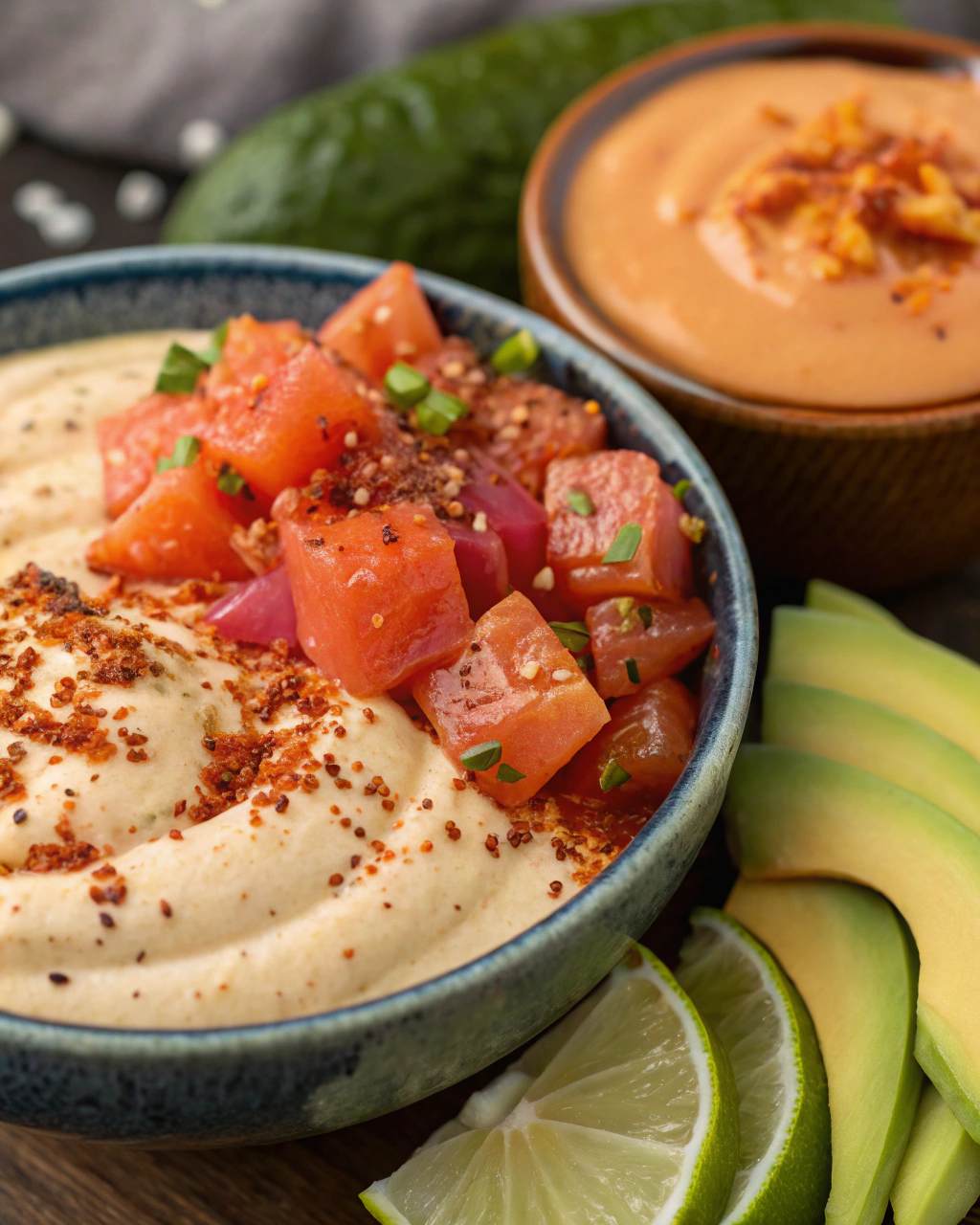
- Build heat and umami: Whisk in sriracha, gochujang, and soy sauce until completely smooth and orange-red.
- Add brightness: Stir in rice vinegar to help the sauce cut through rich fish. This is the secret “why is this so good?” moment.
- Layer aroma: Whisk in sesame oil and sugar.
The sugar doesn’t make it sweet; it balances the heat.
- Go garlicky: Add the grated garlic. Raw garlic is punchy; go light if you’re meeting humans after lunch.
- Customize the heat: Add chili crisp or flakes if you want a bigger kick and some texture.
- Taste and tweak: Need more salt?
A dash of soy. Too thick?
A teaspoon of water or lime juice to loosen it.
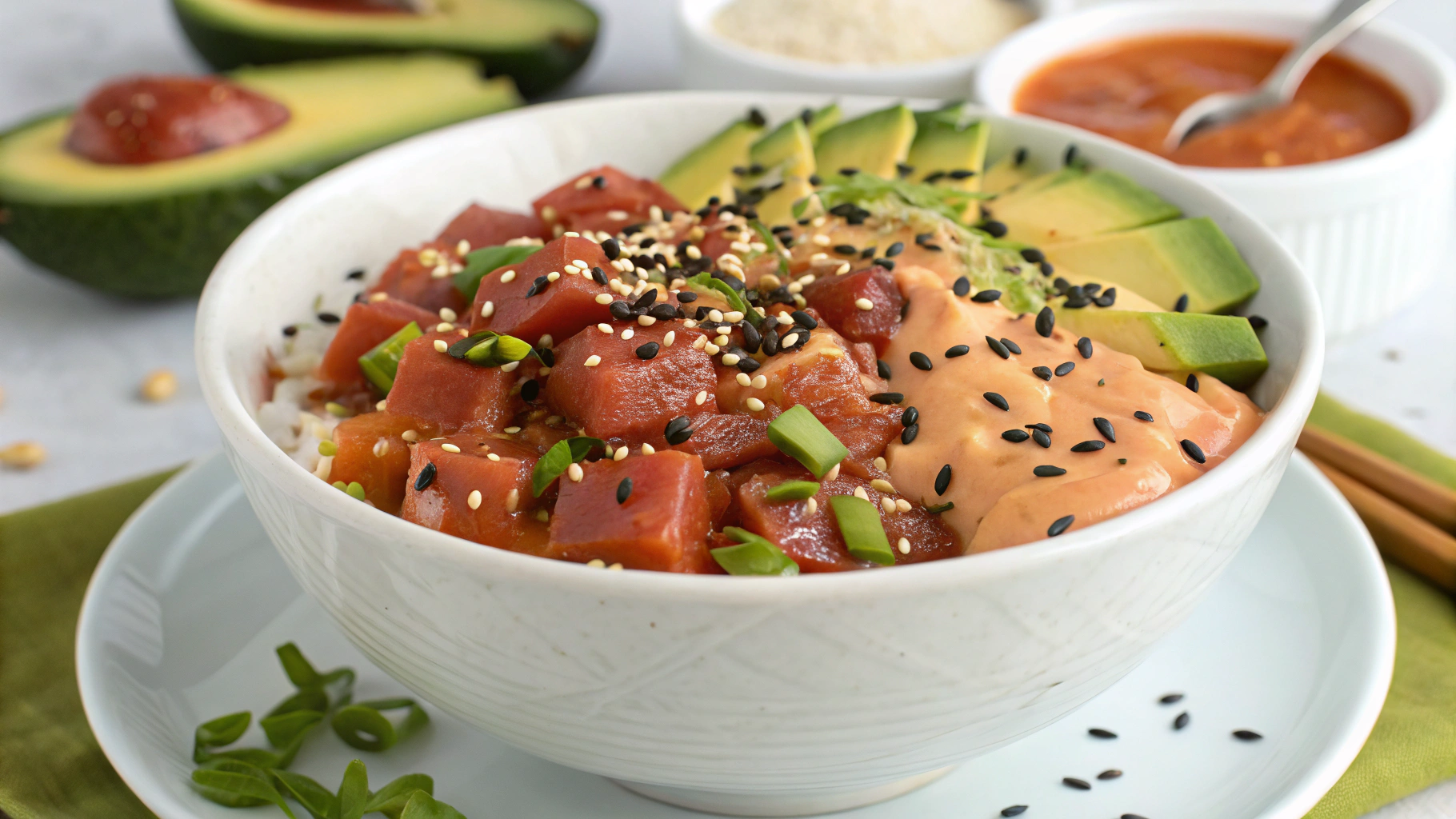
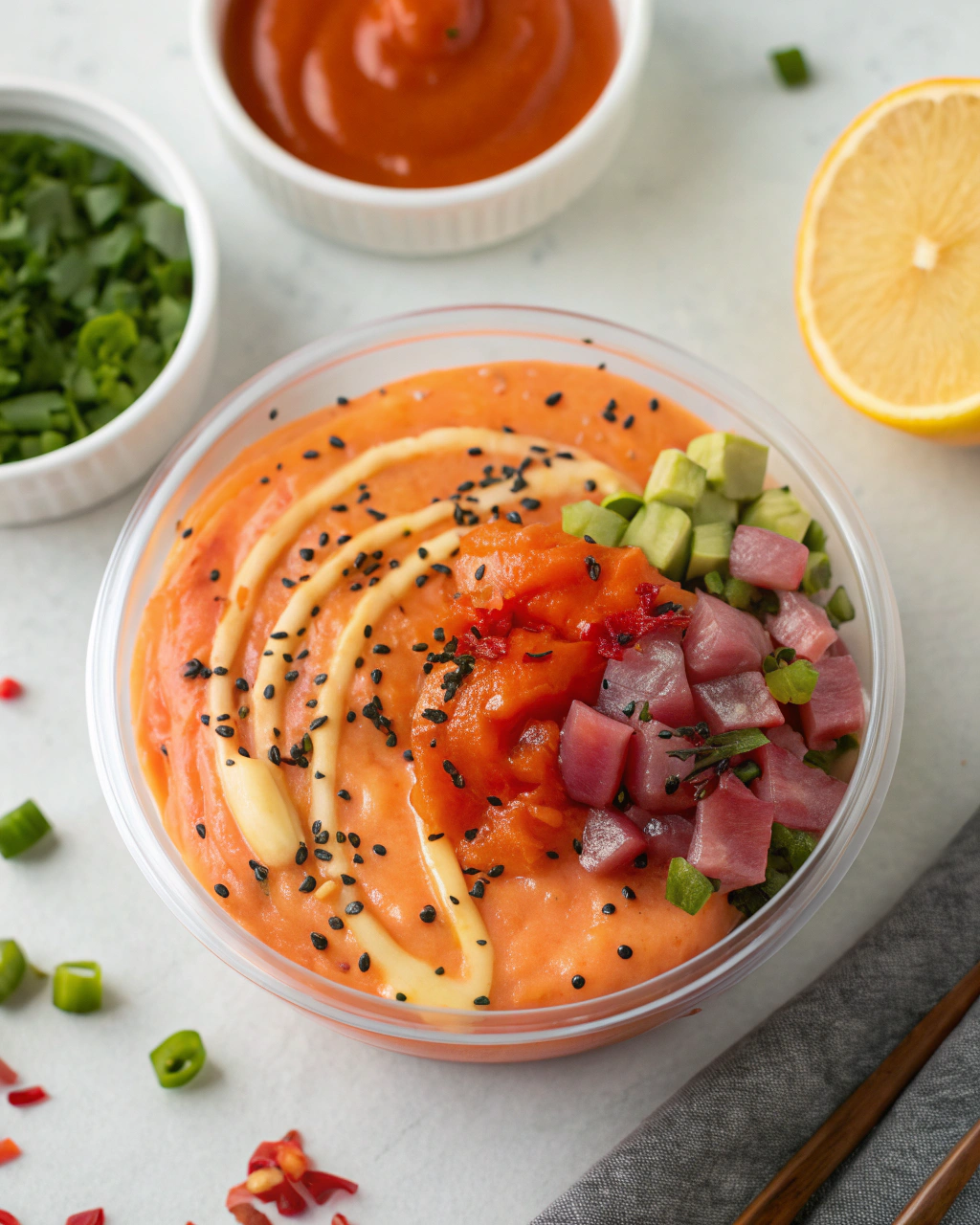
- Use it right: Toss 1 pound of sushi-grade tuna or salmon cubes with 1/4 to 1/3 cup sauce. Rest 5–10 minutes so flavors marry.
- Finish like a pro: Top bowls with scallions, sesame seeds, avocado, cucumber, and nori.
Add a squeeze of lime if you’re extra.
Storage Instructions
- Refrigerate: Store sauce in an airtight jar up to 7 days. Stir before using.
- Do not freeze: Mayo-based sauces split when thawed—sad times.
- Pre-sauced poke: If mixed with fish, eat within 24 hours.
The sauce will continue to cure and soften the fish over time.
Better-for-You Benefits
- Built-in portion control: Big flavor means you need less to feel satisfied.
- Healthy fats: Mayo provides fats that help absorb fat-soluble nutrients from veggies in your bowl.
- Protein-friendly: Designed to complement lean proteins like tuna and salmon, adding mouthfeel without breading or frying.
- Lower sugar than bottled sauces: You control the sweetness—no mystery corn syrup here.
Nutrition Stats
Per 2 tablespoons (estimate, using Kewpie mayo):
- Calories: ~120
- Fat: ~12g (mostly from mayo)
- Carbohydrates: ~2–3g
- Protein: ~0g
- Sodium: ~220–300mg (varies with soy and gochujang)
When tossed with 1 pound of fish using 1/3 cup of sauce, you’re looking at roughly 35–45 calories of sauce per 3-ounce serving of fish—manageable and delicious, IMO.
Pitfalls to Watch Out For
- Over-salting: Soy and gochujang both have sodium. Taste before adding more salt or extra soy.
- Too thick or too thin: If it doesn’t cling, whisk in 1 teaspoon water.
If it slides off, add 1 tablespoon mayo.
- Garlic overload: Fresh garlic intensifies over time. If making ahead, use half or switch to garlic powder.
- Wrong vinegar: Seasoned rice vinegar adds extra sugar and salt—can throw off balance.
Use unseasoned.
- Non-sushi-grade fish: If you’re saucing raw fish, it must be sushi-grade. Food safety, not optional.
Variations You Can Try
- Lemon Pepper Kick: Swap rice vinegar for lemon juice and add 1/4 teaspoon cracked black pepper.
- Wasabi Mayo: Add 1 teaspoon wasabi paste for nose-tingling heat.
Fantastic on salmon.
- Mango Heat: Blend in 1 tablespoon pureed ripe mango and a pinch of cayenne for sweet-spicy vibes.
- Ginger-Lime: Add 1 teaspoon grated fresh ginger and 1 teaspoon lime juice. Bright and zesty.
- Garlic-Chili Crisp: Stir in 1 teaspoon chili crisp for crunchy, smoky heat and a touch of umami.
- Dairy-Free: Use vegan mayo; bump sesame oil to 1.5 teaspoons for richness.
- Gluten-Free: Use tamari or coconut aminos; check your gochujang label for wheat.
FAQ
Can I use regular mayo instead of Kewpie?
Yes.
Regular mayo works fine. For a closer Kewpie vibe, add a tiny squeeze of lemon and an extra pinch of sugar to mimic its tang and sweetness.
How spicy is this sauce?
Medium.
It’s warm and tingly, not face-melting. Reduce sriracha or skip chili crisp if you’re spice-shy, or add more gochujang for deeper heat without as much burn.
Is this safe for raw fish?
The sauce itself doesn’t “cook” fish.
If you’re serving raw, use sushi-grade fish from a reputable source and keep it chilled. When in doubt, sear or use cooked shrimp or tofu.
What if I don’t have gochujang?
Use extra sriracha and a 1/4 teaspoon miso paste if you have it.
You’ll lose some depth, but the sauce will still be excellent.
Can I make it ahead?
Absolutely. It actually gets better after 30 minutes in the fridge as flavors meld.
Just stir before using because separation happens.
How much sauce should I use per pound of fish?
Start with 1/4 cup, then add up to 1/3 cup if you want it saucier. You want glossy cubes, not soup.
Will this work without garlic?
Yes.
Skip the raw garlic and use 1/4 teaspoon garlic powder or nothing at all for a cleaner, lighter profile.
Can I make it lower calorie?
Use light mayo and reduce sesame oil to 1/2 teaspoon. Flavor stays strong, calories drop fast—FYI, texture will be slightly thinner.
The Bottom Line
Spicy Mayo Poke Sauce is the five-minute upgrade that turns “meh” bowls into “where did you order from?” meals.
It’s creamy, punchy, balanced, and ridiculously flexible. Keep a jar in the fridge, and you’ve basically unlocked a cheat meal that isn’t cheating.
Fast, bold, and very repeatable—just how weeknight cooking should be.