Creamy Dill Salmon Spaghetti – A Cozy, Weeknight Pasta
This is the kind of pasta you make when you want something comforting but also fresh and bright. Creamy dill salmon spaghetti brings rich, flaky salmon together with a tangy, lemony cream sauce and plenty of dill. It tastes elegant but comes together quickly, which makes it perfect for weeknights.
The sauce clings to every strand, and the dill lifts the whole dish. If you love classic creamy pasta but want something lighter and more aromatic, this one fits the bill.
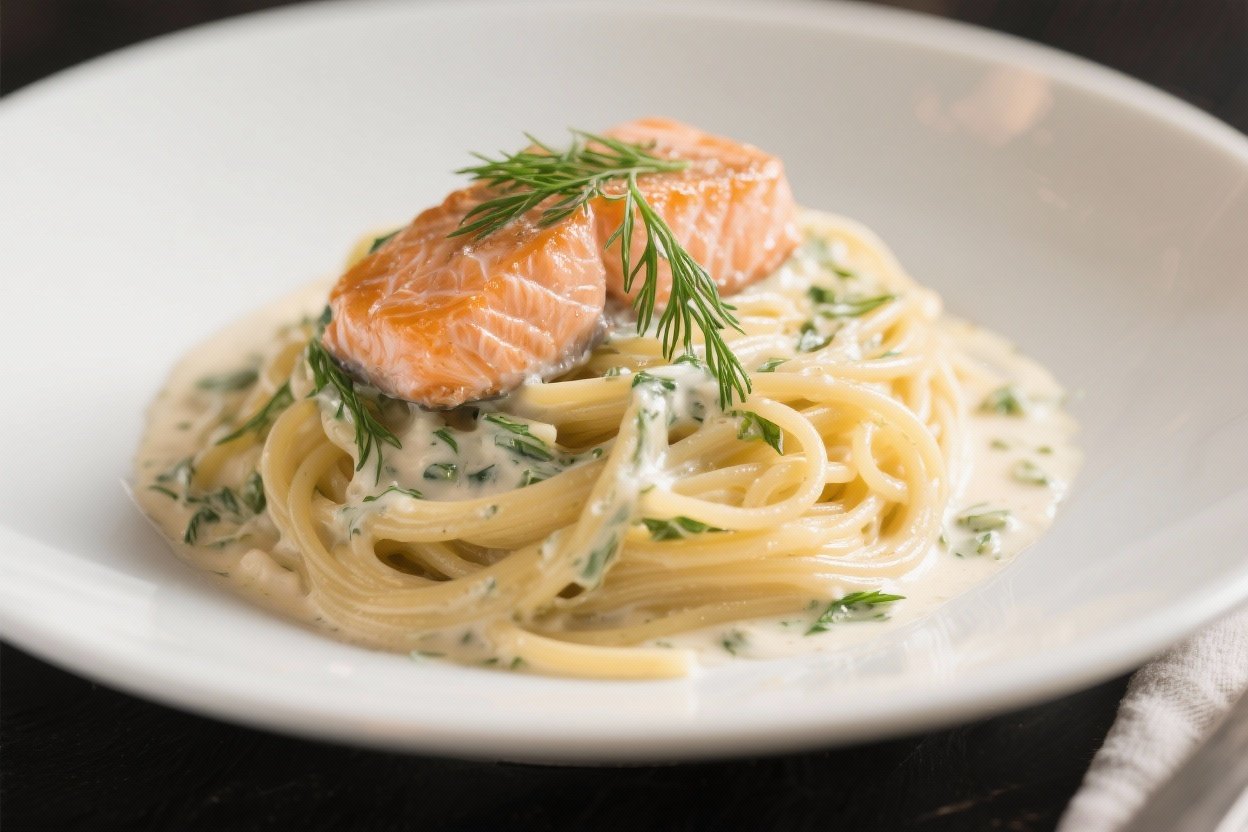
Creamy Dill Salmon Spaghetti - A Cozy, Weeknight Pasta
Ingredients
Method
- Cook the spaghetti. Bring a large pot of salted water to a boil.Add spaghetti and cook until al dente. Reserve at least 1/2 cup of the pasta water before draining.
- Prep the salmon. Pat the salmon dry and season both sides with salt and pepper. Cut into large chunks (about 2-inch pieces) for even cooking.
- Sear the salmon. Heat 1 tbsp olive oil in a large skillet over medium-high heat.Add the salmon and sear 2–3 minutes per side until just cooked through and lightly golden. Remove to a plate and tent loosely with foil.
- Build the flavor base. Reduce heat to medium. Add the remaining 1 tbsp olive oil and the butter to the same skillet.Stir in shallot and cook 2–3 minutes until softened. Add garlic and cook 30 seconds until fragrant.
- Deglaze. Pour in the white wine and scrape up any browned bits. Let it simmer 2–3 minutes until reduced by about half.
- Make it creamy. Stir in the cream and Dijon.Simmer gently for 2–3 minutes until slightly thickened. Avoid a hard boil to prevent curdling.
- Add lemon and dill. Stir in lemon zest, 1 tbsp lemon juice, and most of the dill. Taste and season with salt, pepper, and red pepper flakes if using.If using cheese, whisk it in now until melted. The sauce should be silky.
- Toss the pasta. Add the drained spaghetti to the skillet. Toss to coat, splashing in reserved pasta water a little at a time until the sauce clings and looks glossy.
- Fold in salmon. Gently flake the salmon into large pieces and fold into the pasta.Warm through for 1–2 minutes. Add more lemon juice or dill to taste.
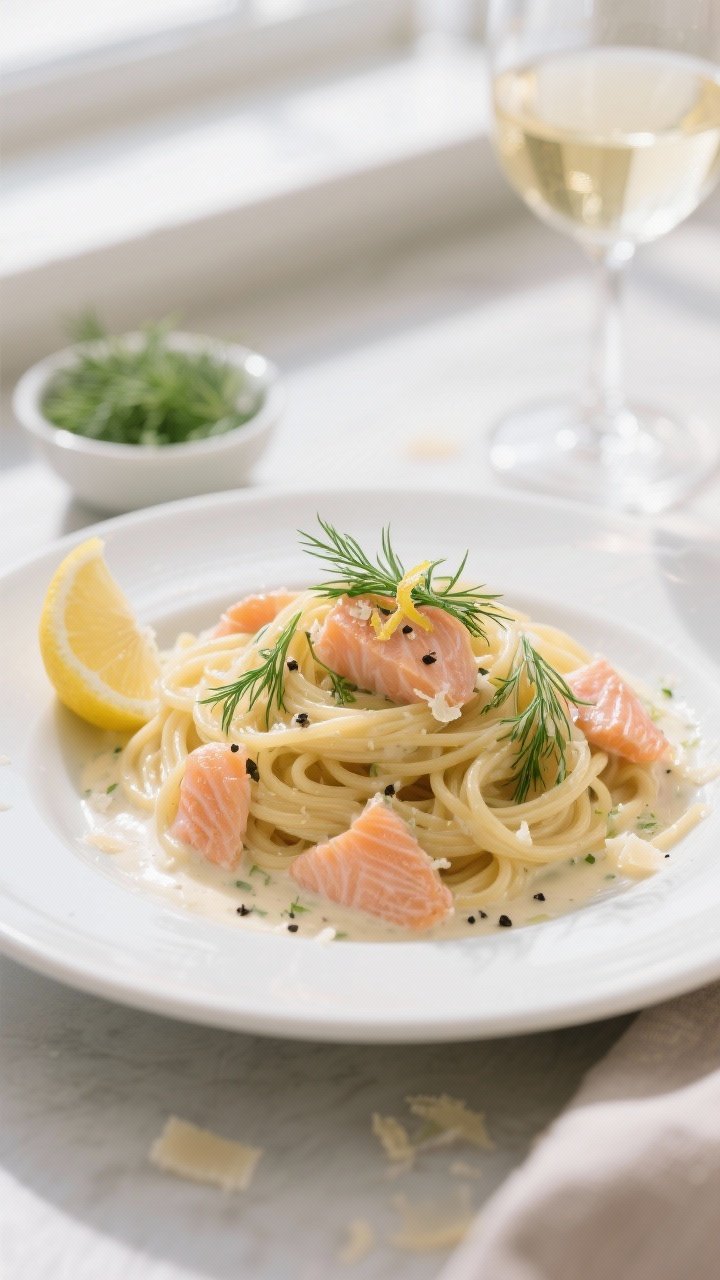
- Serve. Plate the pasta and top with extra dill, black pepper, and a squeeze of lemon. Serve immediately.
What Makes This Special
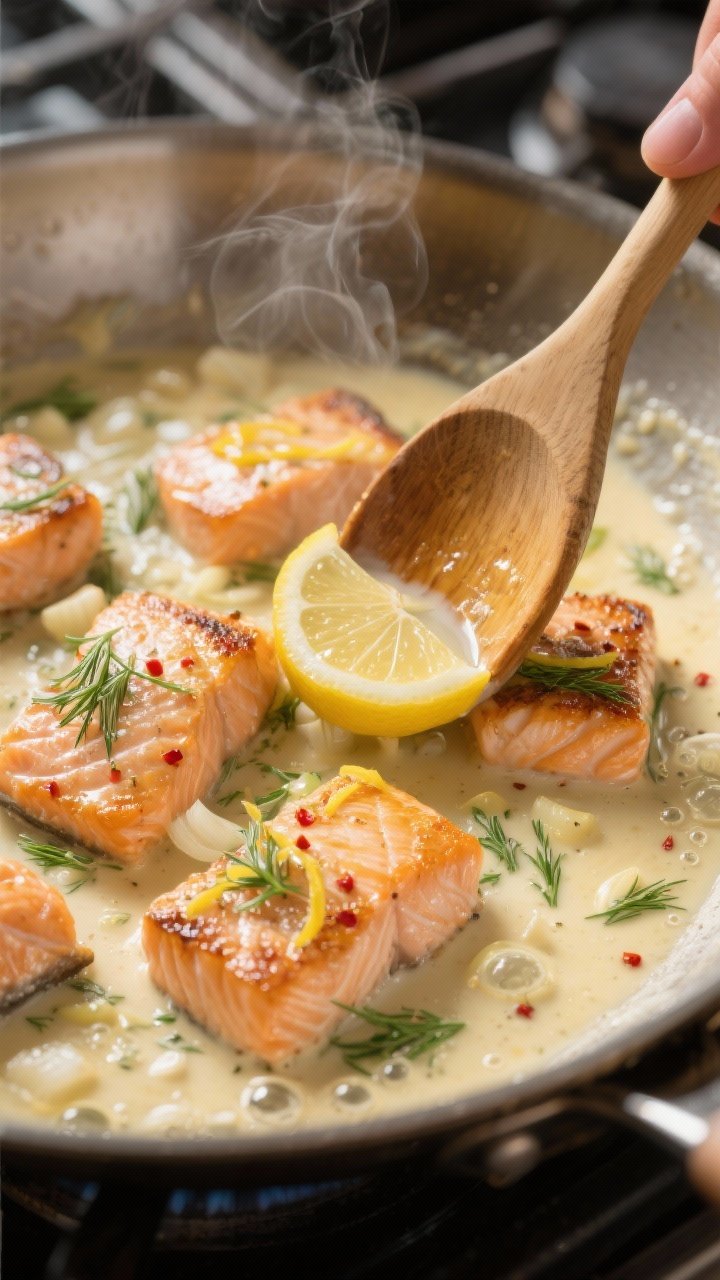
This dish hits that sweet spot between indulgent and refreshing. The cream sauce is rich, but fresh dill and lemon keep it lively.
Salmon adds omega-3s and satisfying protein, while spaghetti gives you that nostalgic twirl factor.
It’s also flexible. You can use fresh or leftover salmon, adjust the creaminess, and swap in veggies you already have. Best of all, it’s a one-pan sauce that comes together while the pasta boils, so dinner is ready without much fuss.
Ingredients
- 12 oz (340 g) spaghetti
- 12 oz (340 g) salmon fillet, skin removed
- 2 tbsp olive oil, divided
- 1 tbsp unsalted butter
- 3 garlic cloves, minced
- 1 small shallot, finely chopped (or 1/4 small onion)
- 1/2 cup dry white wine (or low-sodium chicken/vegetable broth)
- 1 cup heavy cream (or half-and-half for lighter)
- 1 tsp Dijon mustard
- Zest of 1 lemon + 1–2 tbsp lemon juice
- 1/2 cup fresh dill, finely chopped (plus extra for serving)
- 1/3 cup grated Parmesan or Pecorino Romano (optional, for extra depth)
- 1/2 cup pasta cooking water, reserved
- Sea salt and freshly ground black pepper, to taste
- Red pepper flakes, to taste (optional)
- Lemon wedges, for serving
Instructions
- Cook the spaghetti. Bring a large pot of salted water to a boil.Add spaghetti and cook until al dente. Reserve at least 1/2 cup of the pasta water before draining.
- Prep the salmon. Pat the salmon dry and season both sides with salt and pepper. Cut into large chunks (about 2-inch pieces) for even cooking.
- Sear the salmon. Heat 1 tbsp olive oil in a large skillet over medium-high heat.Add the salmon and sear 2–3 minutes per side until just cooked through and lightly golden. Remove to a plate and tent loosely with foil.
- Build the flavor base. Reduce heat to medium. Add the remaining 1 tbsp olive oil and the butter to the same skillet.Stir in shallot and cook 2–3 minutes until softened. Add garlic and cook 30 seconds until fragrant.
- Deglaze. Pour in the white wine and scrape up any browned bits. Let it simmer 2–3 minutes until reduced by about half.
- Make it creamy. Stir in the cream and Dijon.Simmer gently for 2–3 minutes until slightly thickened. Avoid a hard boil to prevent curdling.
- Add lemon and dill. Stir in lemon zest, 1 tbsp lemon juice, and most of the dill. Taste and season with salt, pepper, and red pepper flakes if using.If using cheese, whisk it in now until melted. The sauce should be silky.
- Toss the pasta. Add the drained spaghetti to the skillet. Toss to coat, splashing in reserved pasta water a little at a time until the sauce clings and looks glossy.
- Fold in salmon. Gently flake the salmon into large pieces and fold into the pasta.Warm through for 1–2 minutes. Add more lemon juice or dill to taste.
- Serve. Plate the pasta and top with extra dill, black pepper, and a squeeze of lemon. Serve immediately.
Storage Instructions
- Refrigerator: Store leftovers in an airtight container for up to 2 days.The sauce will thicken as it sits.
- Reheating: Reheat gently on the stovetop over low heat with a splash of water, milk, or cream to loosen the sauce. Stir often to avoid breaking the cream.
- Freezing: Not recommended. Cream-based sauces and cooked salmon both lose quality after freezing and thawing.
Health Benefits
- Omega-3s: Salmon is rich in EPA and DHA, which support heart and brain health and help manage inflammation.
- Protein: You get a satisfying dose of protein, which helps with fullness and muscle maintenance.
- Herbs and citrus: Fresh dill and lemon add flavor without excess salt, and bring antioxidants and vitamin C.
- Flexible richness: You can balance indulgence and lightness by choosing heavy cream, half-and-half, or a mix.
Pitfalls to Watch Out For
- Overcooking salmon: Salmon dries out quickly.Sear it just until opaque and flake-able, then remove from heat. It will finish gently when folded into the pasta.
- Boiling the cream: A hard boil can cause separation. Keep it at a gentle simmer for a smooth sauce.
- Skipping pasta water: The starchy water is key for a silky, clingy sauce.Add it gradually until you get the right texture.
- Too much lemon at once: Acid can split dairy. Add lemon at the end, start small, and adjust to taste.
- Heavy hand with cheese: If adding Parmesan, go slow. Too much can thicken and clump.Whisk in off heat if needed.
Alternatives
- Lighter sauce: Use half-and-half instead of cream. Add 1 tsp cornstarch slurry (cornstarch mixed with cold water) to help thicken without extra fat.
- No wine: Use low-sodium broth plus a splash of extra lemon for brightness.
- Different pasta: Linguine, fettuccine, or bucatini work well. For gluten-free, choose a rice or corn-based pasta and cook just to al dente.
- Herb swap: If dill isn’t your favorite, try tarragon, chives, or parsley.Tarragon gives a delicate anise note that pairs nicely with salmon.
- Veggie boost: Add peas, baby spinach, asparagus tips, or sautéed zucchini. Stir in tender greens at the end so they just wilt.
- Canned salmon: In a pinch, use good-quality canned wild salmon. Drain well, remove skin and bones, and fold in gently at the end.
- Dairy-free: Use full-fat coconut milk or an unsweetened cashew cream, and skip the cheese.Add extra dill and lemon to balance richness.
FAQ
Can I make this ahead?
It’s best fresh because the sauce can thicken and the pasta can soften over time. If you need to prep, cook the salmon and chop the aromatics ahead. Make the sauce and cook the pasta just before serving.
What if I don’t have fresh dill?
Use 1 to 1.5 teaspoons dried dill weed.
Add it earlier in the sauce so it hydrates. Fresh dill is brighter, but dried works in a pinch.
How do I know when the salmon is done?
It should turn opaque and flake easily with a fork. If you use a thermometer, look for 125–130°F (52–54°C) for medium and juicy results.
Will half-and-half curdle?
It can if boiled hard or if too much lemon is added early.
Keep the heat moderate, add lemon at the end, and adjust gradually.
Do I need the cheese?
No. The dish is delicious without it. Cheese adds umami and body, but you can skip it or use a small amount for subtle richness.
What wine pairs well with this?
Try a crisp white like Sauvignon Blanc, Pinot Grigio, or a light Chardonnay.
The acidity complements the lemon and cuts through the cream.
Can I bake the salmon instead of searing?
Yes. Bake at 400°F (200°C) for 10–12 minutes, depending on thickness. Flake and fold into the pasta at the end.
How can I make it more lemony?
Add extra zest and a final squeeze of lemon at the table.
Keep the sauce balanced by tasting as you go.
Wrapping Up
Creamy dill salmon spaghetti is a simple, satisfying pasta that feels a little special. The sauce is silky, the salmon is tender, and the dill and lemon keep everything bright. It’s adaptable, quick to make, and easy to love.
Keep it in your weeknight rotation, and don’t forget that extra squeeze of lemon and sprinkle of dill right before serving. That fresh finish makes all the difference.