Authentic Kimchi Jjigae With Pork Belly – A Bold, Comforting Korean Stew
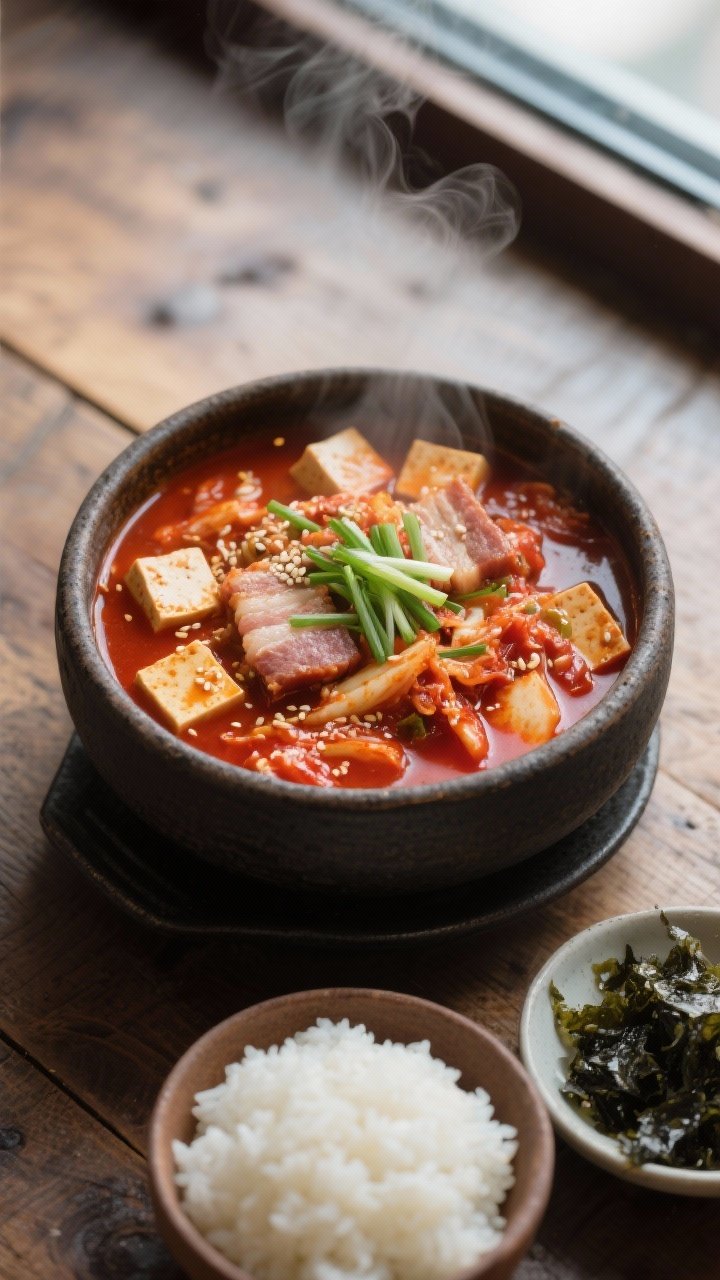
Kimchi jjigae is the kind of dish that warms you from the inside out. It’s bold, tangy, a little spicy, and packed with deep, fermented flavor you can’t fake. Pork belly brings rich, savory depth that balances the kimchi’s acidity beautifully.
This is weeknight-friendly cooking with a big payoff—minimal prep, one pot, and a bubbling pot of comfort in under an hour. If you’ve got well-fermented kimchi in the fridge, you’re already halfway there.
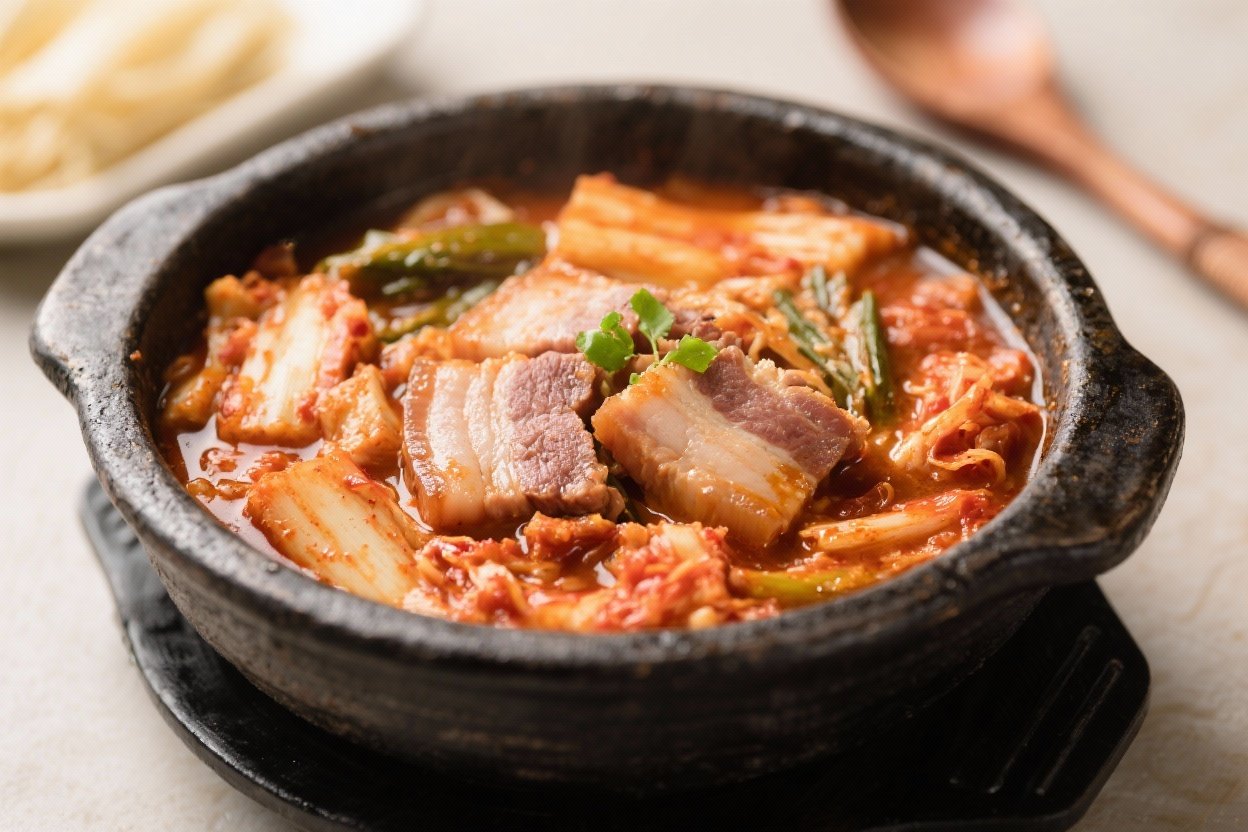
Authentic Kimchi Jjigae With Pork Belly - A Bold, Comforting Korean Stew
Ingredients
Method
- Make the stock (if using): Simmer 6–8 dried anchovies (heads and guts removed) with a 4-inch piece of dried kelp (kombu) in 4 cups of water for 10–15 minutes. Remove solids. Keep warm.
- Prep the ingredients: Slice the pork belly into bite-size pieces.Chop the kimchi into shorter lengths if the leaves are long. Slice the onion, mince the garlic, and cut tofu into thick cubes.
- Render the pork: Heat a heavy pot over medium. Add pork belly and cook until lightly browned and some fat renders, 4–6 minutes.If the meat is very lean, add a teaspoon of oil to prevent sticking.
- Build the base: Add onion and cook 2 minutes until slightly softened. Stir in garlic and gochugaru, tossing for 30 seconds until fragrant. Don’t let the spices burn.
- Add kimchi and sauté: Stir in the chopped kimchi and cook 3–4 minutes.This quick sauté caramelizes the kimchi and deepens flavor.
- Season and simmer: Add 3 cups of stock (or water) along with kimchi juice and gochujang, if using. Bring to a boil, then reduce to a lively simmer for 15–20 minutes. The broth should turn slightly opaque and deeply red.
- Taste and adjust: Add 1 teaspoon soy sauce or fish sauce if the stew needs more savoriness.If it’s too sharp, simmer a bit longer or add a splash more stock.
- Add tofu and scallions: Gently add tofu cubes and half the scallions. Simmer 5 more minutes to warm the tofu and meld flavors.
- Finish: Drizzle in the sesame oil and top with remaining scallions. Serve bubbling hot with steamed rice.
What Makes This Recipe So Good
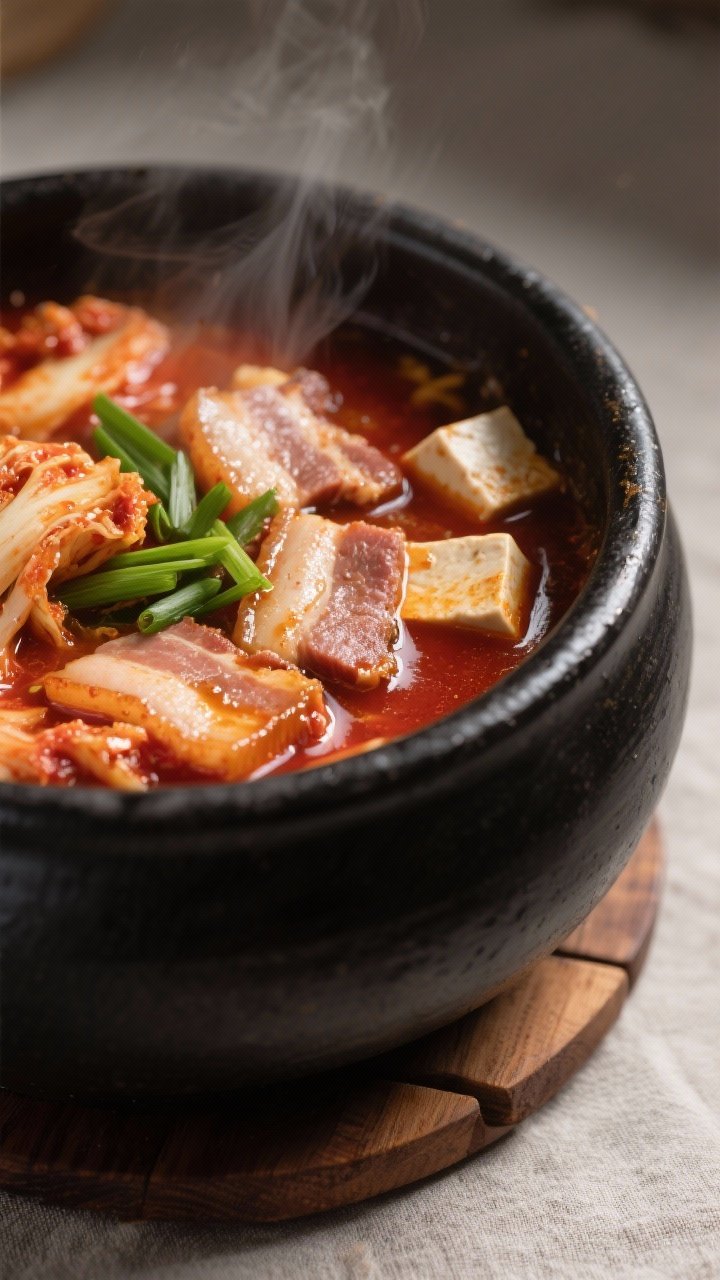
- Properly fermented kimchi: Older kimchi (2–4 weeks or longer) gives the stew its signature tang and umami. Fresh kimchi tastes flat in comparison.
- Pork belly for richness: The fat renders and seasons the broth, giving the stew body without needing extra stock.
- Layered aromatics: Onion, garlic, and gochugaru build a rounded heat instead of a one-note burn.
- Anchovy or kelp stock: Traditional stock adds depth.If you don’t have it, water works, but stock makes the stew taste restaurant-worthy.
- Quick, honest cooking: No fussy techniques—just good ingredients cooked in the right order for maximum flavor.
Shopping List
- Well-fermented napa cabbage kimchi (2 to 2 1/2 cups), plus 2–3 tablespoons kimchi juice
- Pork belly (8–10 ounces), sliced into bite-size pieces
- Onion (1 small), sliced
- Garlic (4–6 cloves), minced
- Gochugaru (Korean red pepper flakes), 1–2 tablespoons
- Gochujang (optional), 1 tablespoon for extra body
- Tofu (firm or medium-firm), 1/2 to 1 block, sliced into thick cubes
- Scallions (2–3), sliced
- Sesame oil, 1 teaspoon
- Soy sauce or fish sauce, 1–2 teaspoons, to taste
- Anchovy-kelp stock (3–4 cups), or water/low-sodium chicken stock
- Neutral oil (optional), 1 teaspoon, if pork belly is very lean
- Rice, cooked, for serving
How to Make It
- Make the stock (if using): Simmer 6–8 dried anchovies (heads and guts removed) with a 4-inch piece of dried kelp (kombu) in 4 cups of water for 10–15 minutes. Remove solids. Keep warm.
- Prep the ingredients: Slice the pork belly into bite-size pieces.Chop the kimchi into shorter lengths if the leaves are long. Slice the onion, mince the garlic, and cut tofu into thick cubes.
- Render the pork: Heat a heavy pot over medium. Add pork belly and cook until lightly browned and some fat renders, 4–6 minutes.If the meat is very lean, add a teaspoon of oil to prevent sticking.
- Build the base: Add onion and cook 2 minutes until slightly softened. Stir in garlic and gochugaru, tossing for 30 seconds until fragrant. Don’t let the spices burn.
- Add kimchi and sauté: Stir in the chopped kimchi and cook 3–4 minutes.This quick sauté caramelizes the kimchi and deepens flavor.
- Season and simmer: Add 3 cups of stock (or water) along with kimchi juice and gochujang, if using. Bring to a boil, then reduce to a lively simmer for 15–20 minutes. The broth should turn slightly opaque and deeply red.
- Taste and adjust: Add 1 teaspoon soy sauce or fish sauce if the stew needs more savoriness.If it’s too sharp, simmer a bit longer or add a splash more stock.
- Add tofu and scallions: Gently add tofu cubes and half the scallions. Simmer 5 more minutes to warm the tofu and meld flavors.
- Finish: Drizzle in the sesame oil and top with remaining scallions. Serve bubbling hot with steamed rice.
How to Store
- Refrigerate: Cool completely, then store in an airtight container for up to 4 days.The flavors often taste even better the next day.
- Freeze: Freeze in portions for up to 2 months. Tofu can change texture slightly, but it’s still tasty. For best results, add fresh tofu after reheating.
- Reheat: Warm gently on the stovetop over medium heat, adding a splash of water or stock if it’s too thick.
Health Benefits
- Probiotics from fermented kimchi: Fermented foods can support gut health.Heating reduces live cultures, but the fermentation byproducts still add beneficial compounds and flavor.
- Protein and iron from pork: Pork belly brings protein and minerals, making the stew satisfying and energizing.
- Antioxidants and vitamins: Garlic, onion, and chili flakes provide antioxidants. Kimchi offers vitamins A, C, and K.
- Balanced macronutrients: Paired with rice and tofu, the stew becomes a well-rounded meal with carbs, protein, and fat.
Pitfalls to Watch Out For
- Using fresh kimchi: Young, barely fermented kimchi lacks tang. If that’s all you have, add a splash of rice vinegar or let it ferment longer in the fridge.
- Skipping the sauté: Tossing kimchi and aromatics in the rendered pork fat before adding liquid builds deeper, richer flavor.
- Over-salting: Kimchi, gochujang, and soy/fish sauce are salty.Taste before adding extra salt.
- Boiling tofu too long: Prolonged boiling can break it apart. Add near the end and simmer gently.
- Not enough heat: The stew should simmer actively to extract flavor from the kimchi and pork. A weak simmer can taste thin.
Alternatives
- Protein swaps: Use pork shoulder, bacon (for smoky notes), canned tuna, or sliced firm tofu for a meatless version.
- Stock options: Chicken stock or water works.For vegetarian stock, simmer dried kelp and dried shiitakes for a savory, umami-rich base.
- Add-ins: Mushrooms, zucchini, or Korean radish (mu) add texture. A few slices of fresh chili or a pinch of black pepper boosts heat.
- Spice control: Reduce gochugaru for milder heat, or add more for a punchier stew. A small spoon of sugar can round out sharp acidity if needed.
- Texture tweaks: For a thicker broth, simmer uncovered longer.For a lighter stew, add more stock near the end.
FAQ
Can I make kimchi jjigae without pork belly?
Yes. Try firm tofu, canned tuna, or a mix of mushrooms for body. If skipping pork entirely, add a bit of sesame oil and use a flavorful stock to keep the broth satisfying.
What kind of kimchi is best?
Use napa cabbage kimchi that’s well fermented—sour and pungent, with plenty of juice.
The older tang gives the stew its signature character.
Is gochujang necessary?
No, but it adds body and a gentle sweetness. If you don’t have it, use a little extra gochugaru and a pinch of sugar to balance the acidity.
Can I make it less spicy?
Absolutely. Reduce the gochugaru to 1 teaspoon and skip gochujang.
You can also add more stock to dilute heat and tang.
What should I serve with kimchi jjigae?
Steamed short-grain rice is classic. Add simple sides like roasted seaweed, a fried egg, or lightly seasoned cucumbers for a complete meal.
How do I know when it’s ready?
The broth should be richly red, slightly opaque, and aromatic. After 20–30 minutes of simmering, the flavors meld and the kimchi softens—that’s your cue.
Why is my stew too sour?
It likely has very old kimchi or not enough richness.
Add a touch of gochujang, simmer a bit longer, or stir in a small knob of butter or extra pork fat to balance.
Wrapping Up
Authentic kimchi jjigae with pork belly is simple, satisfying, and fiercely flavorful. With well-fermented kimchi, a solid stock, and a brief simmer, you’ll have a richly layered stew that feels like a hug in a bowl. Keep rice on standby, taste as you go, and let the kimchi do the heavy lifting.
Once you make it this way, you’ll come back to it again and again.