Classic Italian Pasta With Marinara – A Comforting Weeknight Favorite
Nothing beats a bowl of pasta coated in a bright, garlicky marinara. It’s simple, satisfying, and quick enough for a weeknight. This version keeps it classic: good tomatoes, olive oil, garlic, fresh basil, and perfectly cooked pasta.
With a few smart techniques, you’ll get full flavor without fuss. It’s budget-friendly, kid-approved, and a great base for adding proteins or veggies if you like.
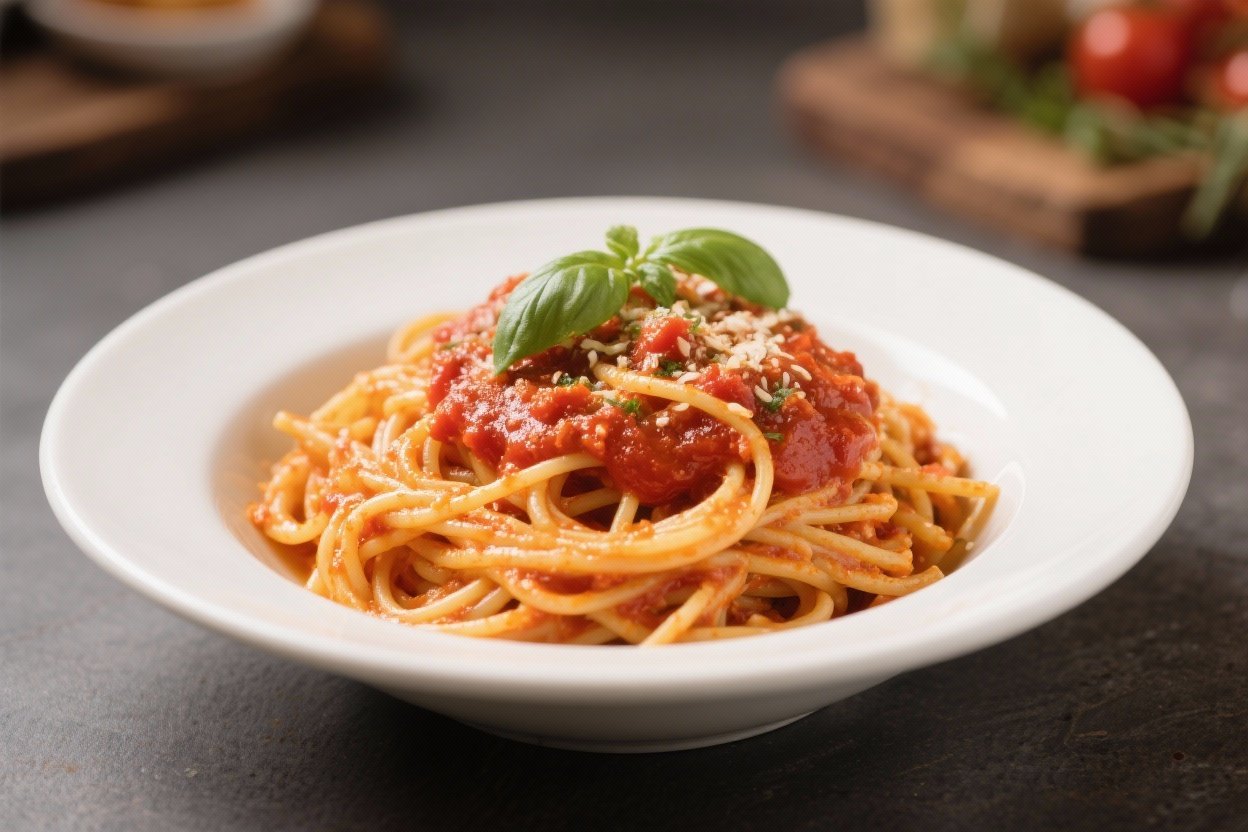
Classic Italian Pasta With Marinara - A Comforting Weeknight Favorite
Ingredients
Method
- Salt the pasta water generously. Bring a large pot of water to a rolling boil.Add enough salt so the water tastes like the sea. This is your main chance to season the pasta itself.
- Warm the olive oil and garlic. In a large skillet or saucepan, heat the olive oil over medium. Add the sliced garlic and cook until fragrant and just turning pale gold, about 60–90 seconds.Don’t let it brown deeply or it will taste bitter.
- Add red pepper flakes (optional). Stir in the red pepper flakes for 10–15 seconds to bloom them in the oil. This gives a gentle warmth without overtaking the sauce.
- Add the tomatoes. Pour in the crushed tomatoes. If using whole peeled tomatoes, crush them by hand in a bowl first to keep a rustic texture.Stir in salt, a few grinds of black pepper, and sugar if needed.
- Simmer briefly. Bring the sauce to a gentle simmer and cook for 12–15 minutes, stirring now and then. You want the sauce to thicken slightly and the flavors to meld while still tasting fresh and bright.
- Cook the pasta. Add the pasta to the boiling water and cook until just shy of al dente, 1 minute less than the package suggests. Reserve about 1 cup of the starchy pasta water.
- Adjust the sauce. Taste the marinara.Add more salt, pepper, or a pinch of sugar if the tomatoes are tangy. If you like a rounder, silkier finish, swirl in the butter now.
- Combine pasta and sauce. Transfer the pasta to the sauce using tongs or a spider. Add a splash of pasta water—start with 1/4 cup—and toss over medium heat for 1–2 minutes until the sauce clings.Add more water as needed for a glossy coating.
- Finish with basil and olive oil. Stir in the torn basil off the heat. Drizzle a little extra-virgin olive oil for aroma and shine.
- Serve with cheese. Plate the pasta and top with freshly grated Parmesan or Pecorino. Serve immediately while it’s hot and fragrant.
What Makes This Special
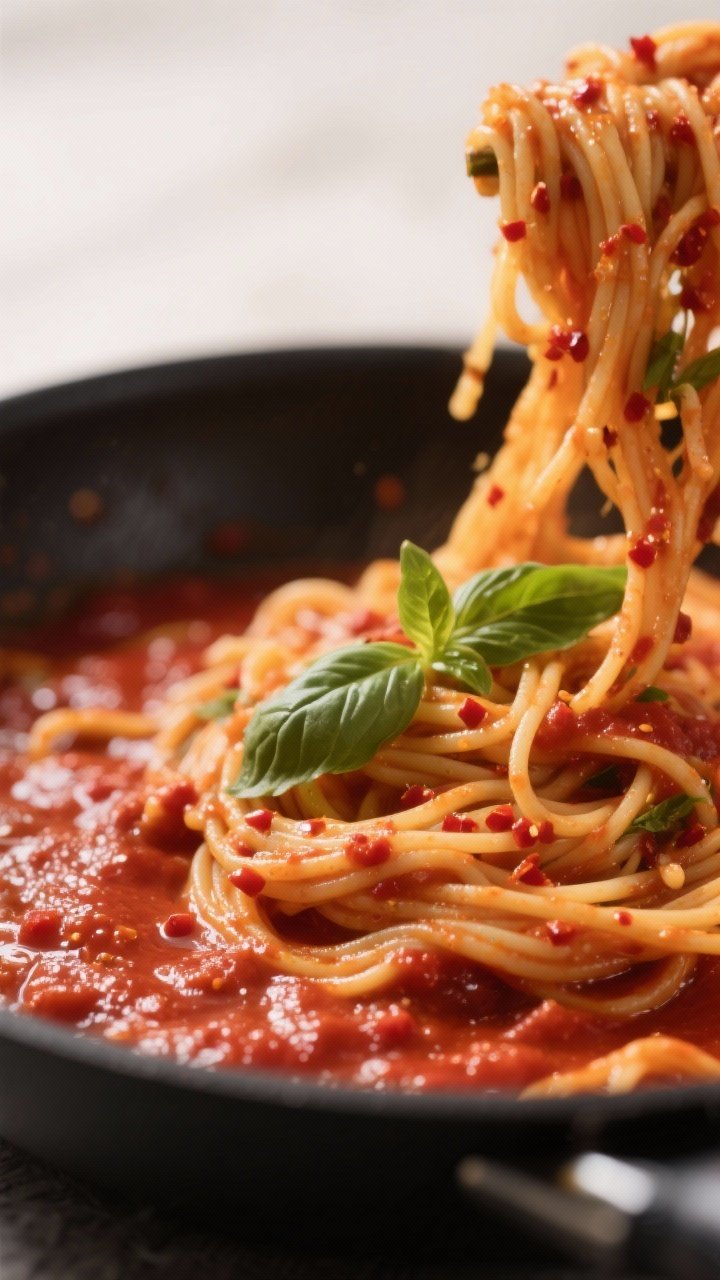
This isn’t a heavy, overloaded sauce. It’s light, clean, and built on quality ingredients that speak for themselves.
The trick is a brief simmer to soften the tomatoes and let the garlic mellow, plus a splash of starchy pasta water to help the sauce cling to the noodles. A pinch of sugar is optional, but it helps balance acidity if your tomatoes are sharp. Fresh basil added at the end keeps the flavor bright and fresh.
Ingredients
- 12 ounces dried pasta (spaghetti, linguine, or penne)
- 2 tablespoons extra-virgin olive oil, plus more for finishing
- 4 cloves garlic, thinly sliced
- 1/4 teaspoon red pepper flakes (optional, for gentle heat)
- 1 can (28 ounces) crushed tomatoes or whole peeled tomatoes, hand-crushed
- 1 teaspoon sugar (optional, adjust to taste)
- 1 teaspoon kosher salt, plus more for pasta water
- Freshly ground black pepper, to taste
- 1/2 cup fresh basil leaves, torn
- 2 tablespoons unsalted butter (optional, for a silkier finish)
- Freshly grated Parmesan or Pecorino Romano, for serving
Step-by-Step Instructions
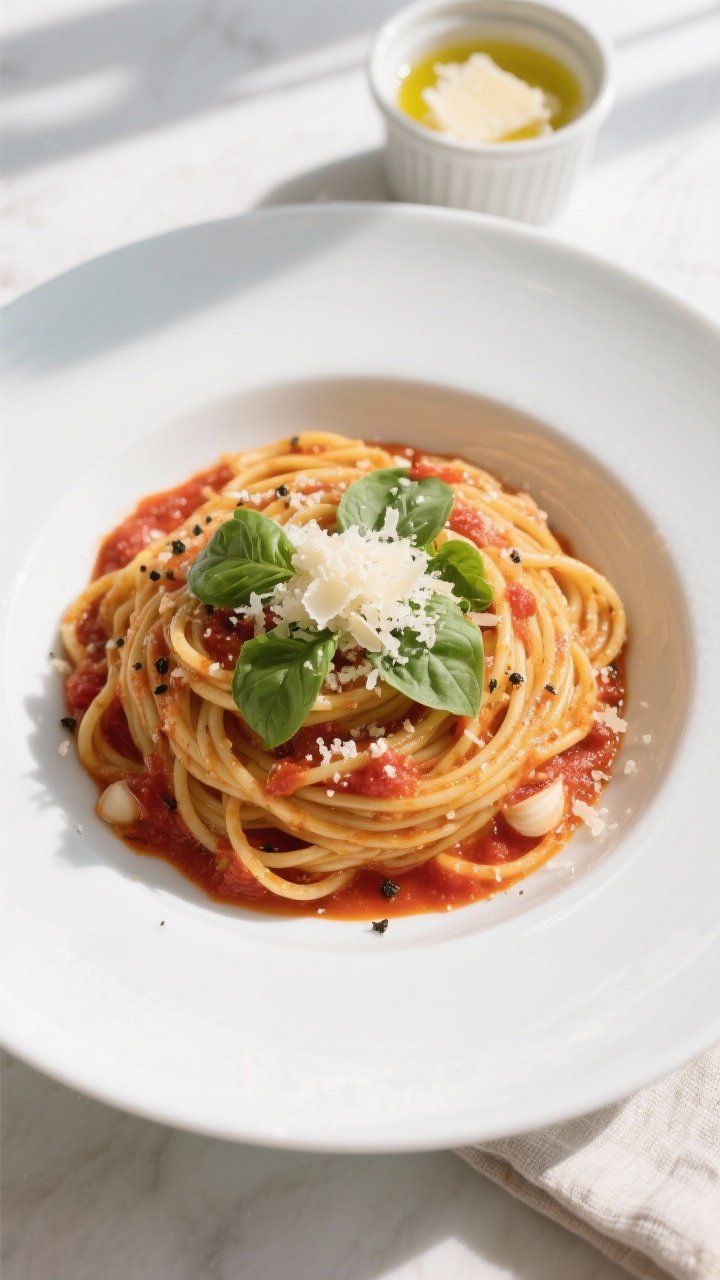
- Salt the pasta water generously. Bring a large pot of water to a rolling boil.Add enough salt so the water tastes like the sea. This is your main chance to season the pasta itself.
- Warm the olive oil and garlic. In a large skillet or saucepan, heat the olive oil over medium. Add the sliced garlic and cook until fragrant and just turning pale gold, about 60–90 seconds.Don’t let it brown deeply or it will taste bitter.
- Add red pepper flakes (optional). Stir in the red pepper flakes for 10–15 seconds to bloom them in the oil. This gives a gentle warmth without overtaking the sauce.
- Add the tomatoes. Pour in the crushed tomatoes. If using whole peeled tomatoes, crush them by hand in a bowl first to keep a rustic texture.Stir in salt, a few grinds of black pepper, and sugar if needed.
- Simmer briefly. Bring the sauce to a gentle simmer and cook for 12–15 minutes, stirring now and then. You want the sauce to thicken slightly and the flavors to meld while still tasting fresh and bright.
- Cook the pasta. Add the pasta to the boiling water and cook until just shy of al dente, 1 minute less than the package suggests. Reserve about 1 cup of the starchy pasta water.
- Adjust the sauce. Taste the marinara.Add more salt, pepper, or a pinch of sugar if the tomatoes are tangy. If you like a rounder, silkier finish, swirl in the butter now.
- Combine pasta and sauce. Transfer the pasta to the sauce using tongs or a spider. Add a splash of pasta water—start with 1/4 cup—and toss over medium heat for 1–2 minutes until the sauce clings.Add more water as needed for a glossy coating.
- Finish with basil and olive oil. Stir in the torn basil off the heat. Drizzle a little extra-virgin olive oil for aroma and shine.
- Serve with cheese. Plate the pasta and top with freshly grated Parmesan or Pecorino. Serve immediately while it’s hot and fragrant.
Storage Instructions
- Refrigerate: Store leftover pasta and sauce together in an airtight container for up to 3 days.The flavor deepens overnight.
- Reheat: Warm gently on the stovetop with a splash of water to loosen the sauce. Stir until glossy and hot.
- Freeze sauce (not pasta): Marinara sauce freezes well for up to 3 months. Thaw in the fridge and reheat on low.Cook fresh pasta when ready to serve.
Why This is Good for You
- Tomatoes offer lycopene and vitamin C. Cooking tomatoes in olive oil helps your body absorb lycopene, an antioxidant linked to heart health.
- Olive oil provides healthy fats. Extra-virgin olive oil supports satiety and helps carry flavor without heavy cream.
- Garlic brings more than taste. It adds a savory backbone and may support immune health.
- Balance is built-in. Carbs from pasta, a bit of fat from oil or butter, and fresh herbs make a satisfying, well-rounded meal when paired with a salad or lean protein.
Pitfalls to Watch Out For
- Overcooking garlic. Dark brown garlic turns bitter fast. Keep heat moderate and watch closely.
- Skipping pasta water. The starchy water helps emulsify the sauce, making it cling to the pasta. Plain water won’t work the same way.
- Overcooking the pasta. Aim for al dente.The pasta should have a gentle bite and finish cooking when tossed in the sauce.
- Underseasoning. Salt the water well and taste the sauce before finishing. Bland pasta is hard to fix at the table.
- Adding basil too early. Cooked basil loses aroma. Add it at the end for maximum freshness.
Recipe Variations
- Rustic cherry tomato marinara: Swap the canned tomatoes for 2 pints of halved cherry tomatoes.Sauté until they burst, then proceed with the recipe.
- Arrabbiata-style heat: Double the red pepper flakes, add them with the garlic, and simmer a minute longer for a spicier kick.
- Olive and caper twist: Stir in 1/3 cup chopped kalamata olives and 2 tablespoons capers for a briny, puttanesca-style lift.
- Veggie boost: Add sautéed mushrooms, zucchini, or spinach during the final toss for extra texture and nutrients.
- Protein add-ins: Top with grilled chicken, shrimp, or pan-seared Italian sausage. Keep the sauce light so the proteins shine.
- Herb swap: Use parsley or a mix of basil and oregano if basil isn’t available. Add delicate herbs at the end.
- Gluten-free option: Use your favorite gluten-free pasta.Watch the cooking time—these often go from al dente to soft quickly.
FAQ
Can I use fresh tomatoes instead of canned?
Yes. Use 2 pounds of ripe tomatoes, peeled and chopped if you prefer a smoother sauce. Cook a bit longer to reduce excess water and concentrate the flavor.
What pasta shape works best?
Spaghetti and linguine are classic, but penne and rigatoni hold the sauce nicely.
Choose a shape with some texture or ridges for better cling.
How do I fix a too-acidic sauce?
Add a pinch of sugar, a knob of butter, or a splash of pasta water. Simmer a few extra minutes to mellow the acidity. Salt can also help balance flavors.
Is Parmesan necessary?
Not strictly, but it adds savory depth.
If avoiding dairy, try nutritional yeast for a nutty hint or skip the topping and focus on a flavorful olive oil finish.
Can I make the marinara ahead?
Absolutely. The sauce tastes even better the next day. Store it in the fridge up to 4 days or freeze for longer.
Cook fresh pasta when you’re ready to eat.
Why save pasta water?
The starch in pasta water helps emulsify the sauce, creating a silky texture that clings to the noodles. It’s a simple restaurant trick that makes a big difference.
What if my sauce is too thick?
Add more pasta water in small splashes and toss over low heat until the consistency is glossy and loose enough to coat the pasta evenly.
Can I skip the butter?
Yes. The sauce is delicious with just olive oil.
Butter adds richness, but it’s optional and can be omitted for a lighter result.
How much salt should I put in the pasta water?
A good rule is about 1–1.5 tablespoons of kosher salt per 4 quarts of water. It should taste pleasantly salty, not briny.
How do I keep leftovers from drying out?
When reheating, add a splash of water or broth and a drizzle of olive oil. Warm gently and toss until the sauce loosens and turns glossy again.
In Conclusion
Classic Italian pasta with marinara is proof that simple ingredients, treated with care, can be incredibly satisfying.
With good tomatoes, fragrant garlic, fresh basil, and a little technique, you’ll have a comforting meal in under 30 minutes. Keep this as your base recipe and adjust to your taste—spice it up, make it herbier, or add a protein. It’s the kind of dish that fits any night, any mood, and always feels like home.