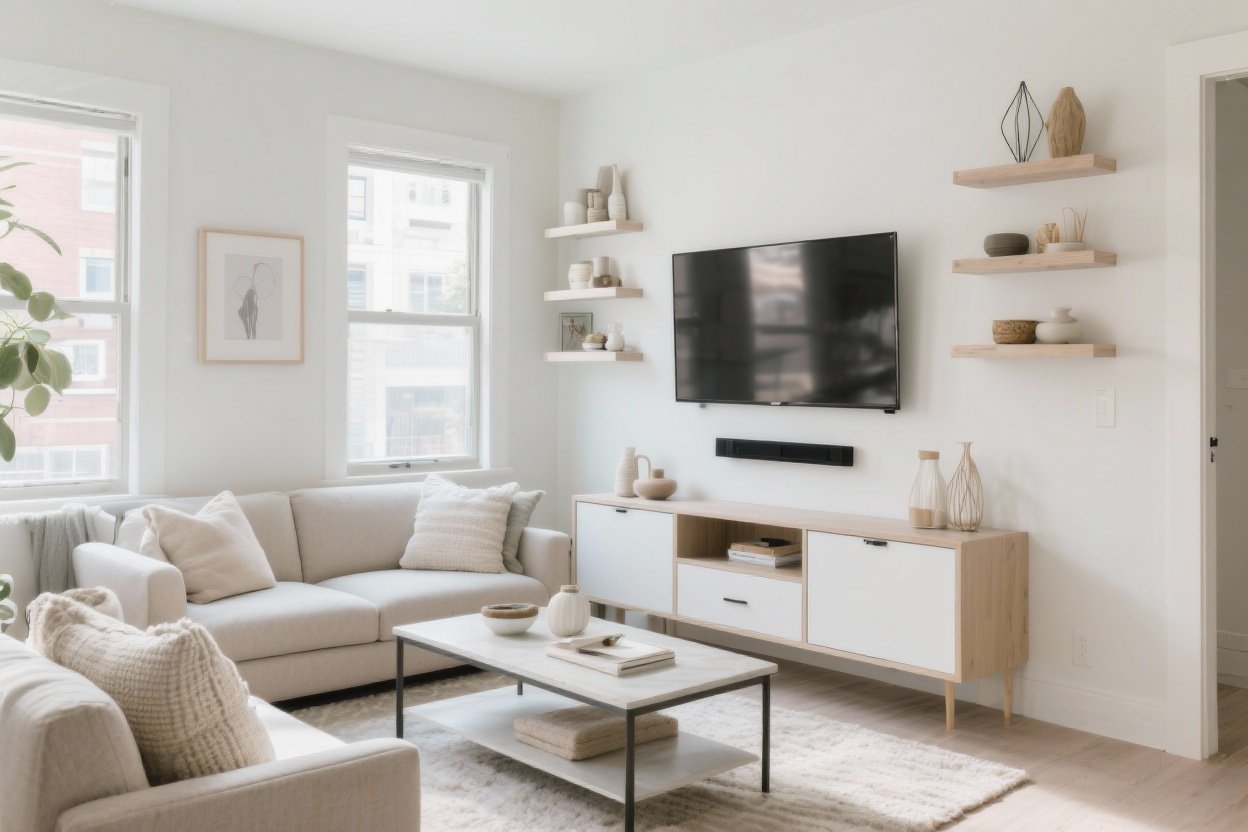
15 Small Living Room Ideas With Tv That Feel Surprisingly Luxe
You’ve got a tiny living room and a TV that still deserves main-character energy. Good news: you don’t need a mansion to make your setup look polished, cozy, and functional. With a few smart tweaks, your small space can feel intentional (and yes, binge-worthy).
Below are 15 stylish, space-savvy ideas with practical tips you can actually use. We’re talking hidden storage, clever layouts, and high-impact styling that won’t swallow your square footage. Ready to make your living room pull double duty without feeling cramped? Let’s go.
1. Mount It and Float the Furniture
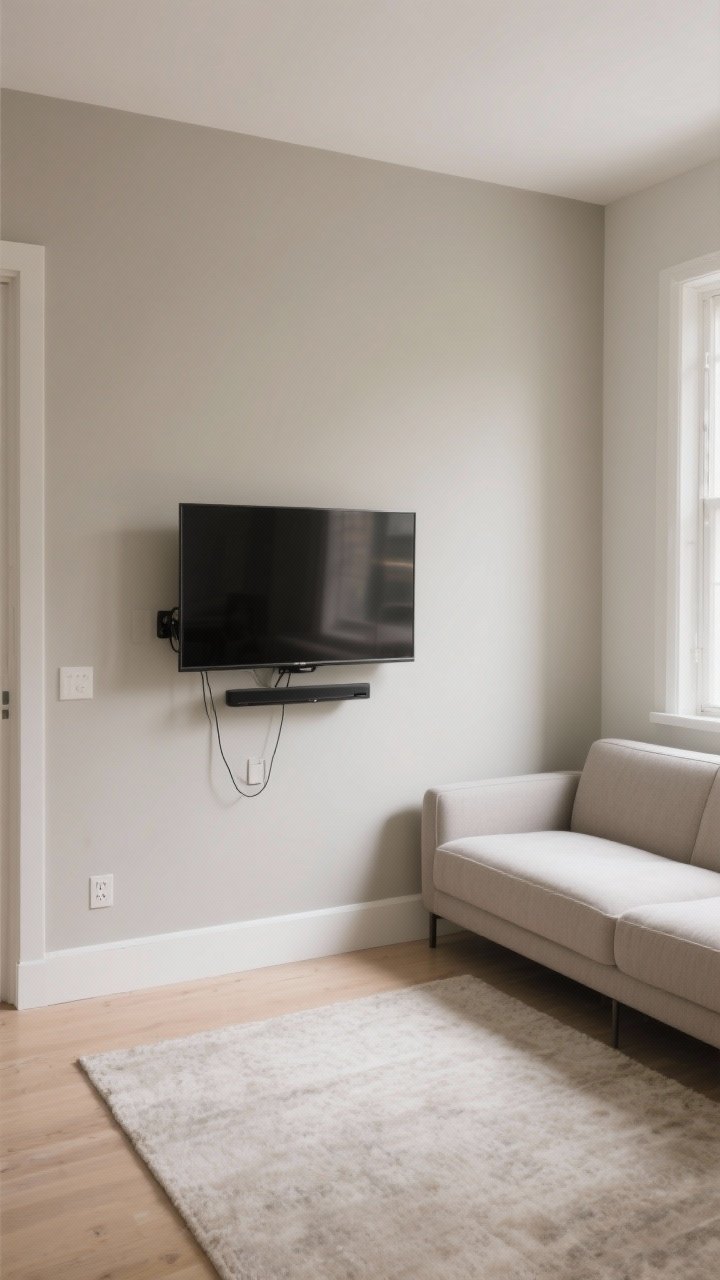
Free your floor. Wall-mounting your TV instantly makes a small room feel bigger and gives you flexibility with furniture placement. You’re not locked into a bulky media console or clunky stand.
Why It Works
- Clean sightlines: No cords snaking across the floor.
- Flexible layout: You can center furniture around the room, not just the TV.
- Safety bonus: No tip-over hazard if you’ve got kids or pets.
Pro Tips
- Use a low-profile mount for minimal projection, or a full-motion arm if you need to angle the screen from different seating spots.
- Hide cables with a paintable cord cover or run them through the wall (FYI: in-wall rated cables only).
- Mount at eye level when seated—typically 42–48 inches from the floor to the screen center.
2. Choose a Slimline Media Console (Or None)

If you need storage, pick a narrow console with legs. Visible floor space makes the room read larger. No need to go zero-storage minimalist if that’s not your vibe.
What to Look For
- Shallow depth: 12–15 inches is plenty for most components.
- Closed doors: Hide the tech clutter, remotes, and random cables.
- Ventilation: Components need airflow—look for perforated panels or rear cutouts.
Or skip the console entirely and use a floating shelf just big enough for a soundbar and streaming device. Clean and chic.
3. Build a Media Niche With Shelves

Turn your TV wall into a built-in moment without a contractor bill. Flank the TV with slim shelving and frame it with a simple box trim or painted “niche.” Instant custom look.
How to Fake Built-Ins
- Use matching wall color on shelves and back panel for a seamless feel.
- Add LED strip lighting under shelves for a low-glow gallery vibe.
- Keep decor tight: stack books horizontally, add a few ceramics, and stop before it gets busy.
4. Hide the TV in Plain Sight

If your TV dominates the room, soften it visually. Think gallery wall around the screen, a Frame-style TV with art mode, or sliding panels that close when you’re not watching.
Design Tricks
- Match frames to your TV bezel for a cohesive look.
- Keep artwork sizes varied but balanced around the TV so it doesn’t feel like a black hole.
- Choose a matte wall paint to reduce glare and visual contrast.
5. Scale the Sofa (And Float It)

A small room doesn’t mean a tiny perch. Pick a compact sofa with slim arms and raised legs. Then “float” it a few inches from the wall to give breathing room.
Smart Sizing
- Depth: 32–36 inches keeps things cozy but not bulky.
- Length: 70–78 inches works for most apartments.
- Legs over skirt: Exposed legs = airier feel.
Skip chubby recliners; try a lounge chair + ottoman for flexible seating without visual weight.
6. Embrace a Corner Layout
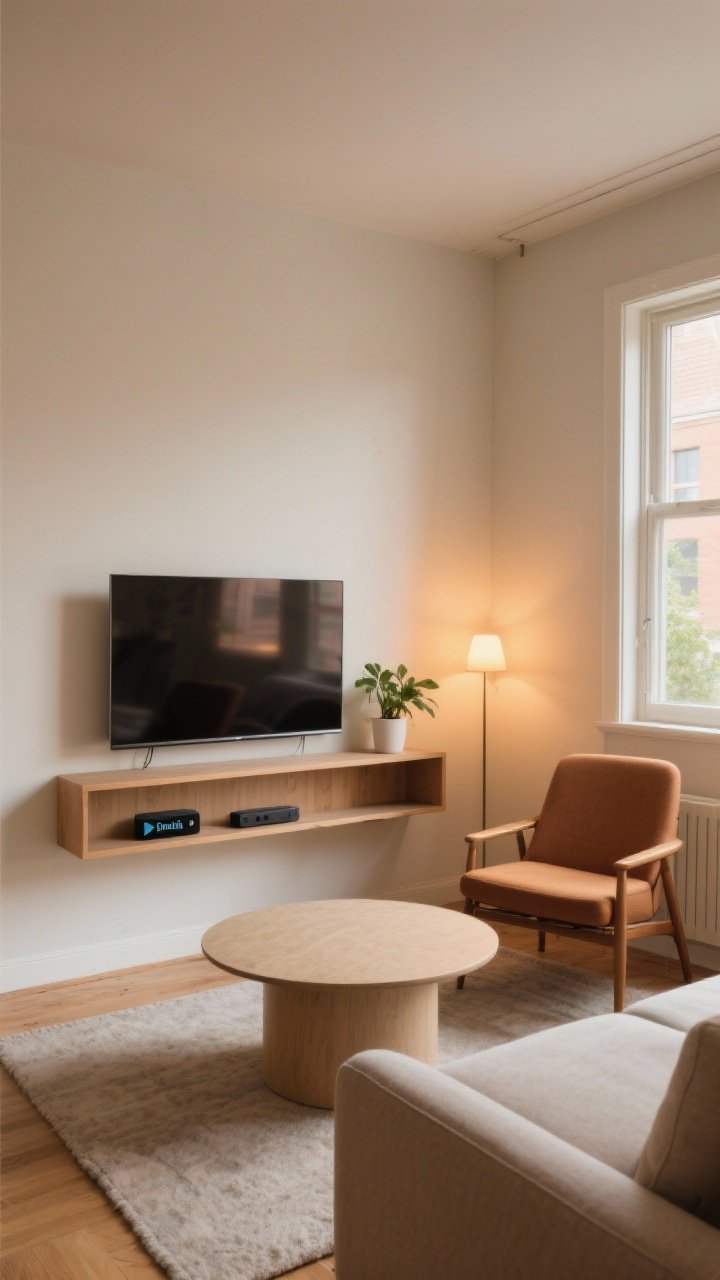
Small rooms rarely play by centered rules. Tuck the TV into a corner and angle your seating to fit. It opens up pathways and makes awkward spaces feel intentional.
Layout Ideas
- Sofa facing the corner, accent chair angled toward TV and conversation.
- Use a round coffee table to soften angles and improve flow.
- Add a corner shelf below the TV for devices and plants.
7. Go All-In on a Dark Accent Wall
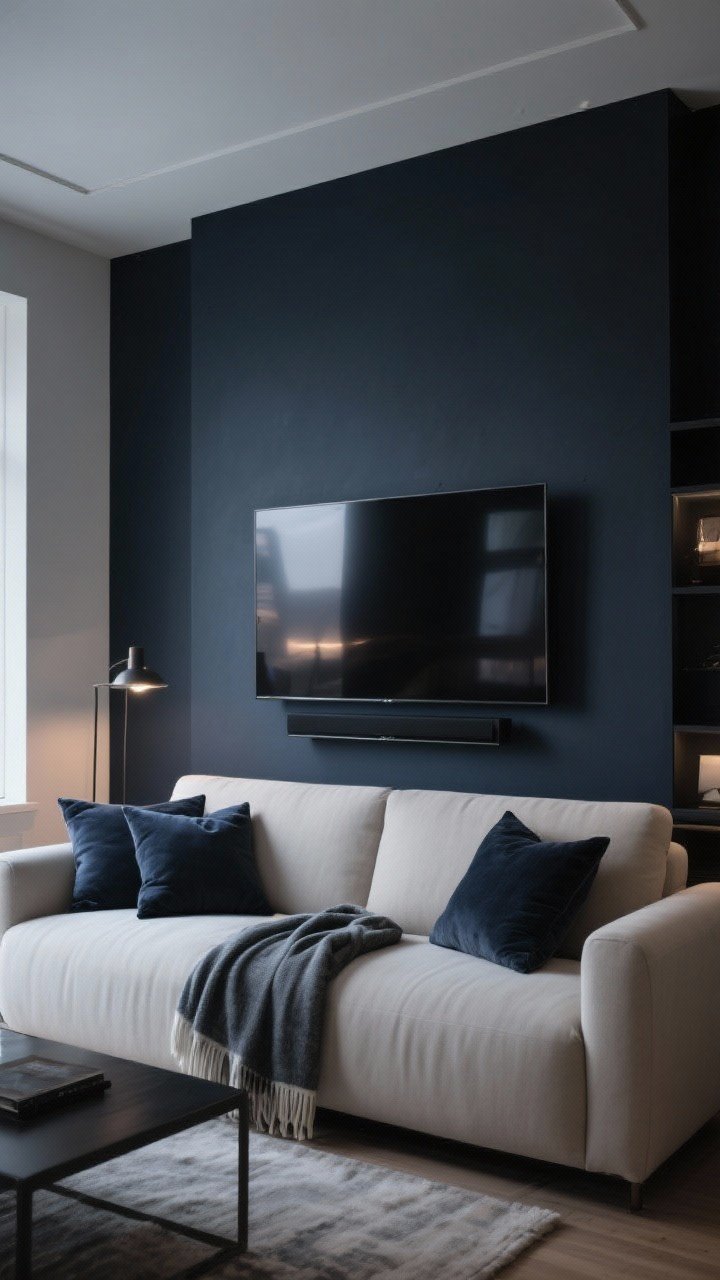
Counterintuitive, but true: A dark, matte wall behind the TV makes the space feel deeper and reduces screen glare. Plus, it turns your TV zone into a sleek feature.
Color Ideas
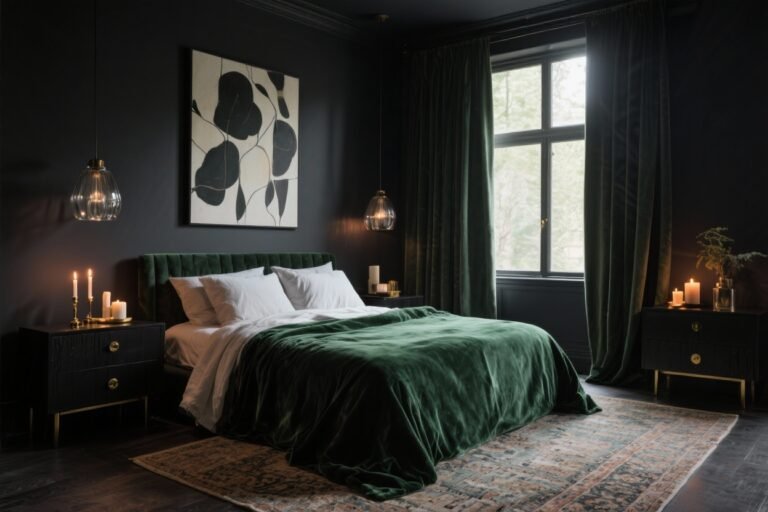
- Charcoal, inky navy, deep olive, or warm espresso.
- Use matte or eggshell to avoid reflections.
- Repeat the dark tone in pillows or a throw to tie it together.
8. Opt for a Multi-Tasking Coffee Table

Pick a piece that earns its keep. A lift-top coffee table becomes a laptop station or dinner spot on Netflix nights. Hidden storage is a bonus.
Best Choices
- Nesting tables: Pull out when guests show up, tuck away after.
- Ottoman with tray: Soft edges for small spaces; stow blankets inside.
- Acrylic or glass: Visually light, but keep fingerprints in mind (IMO, worth it).
9. Hide Tech With Smart Storage
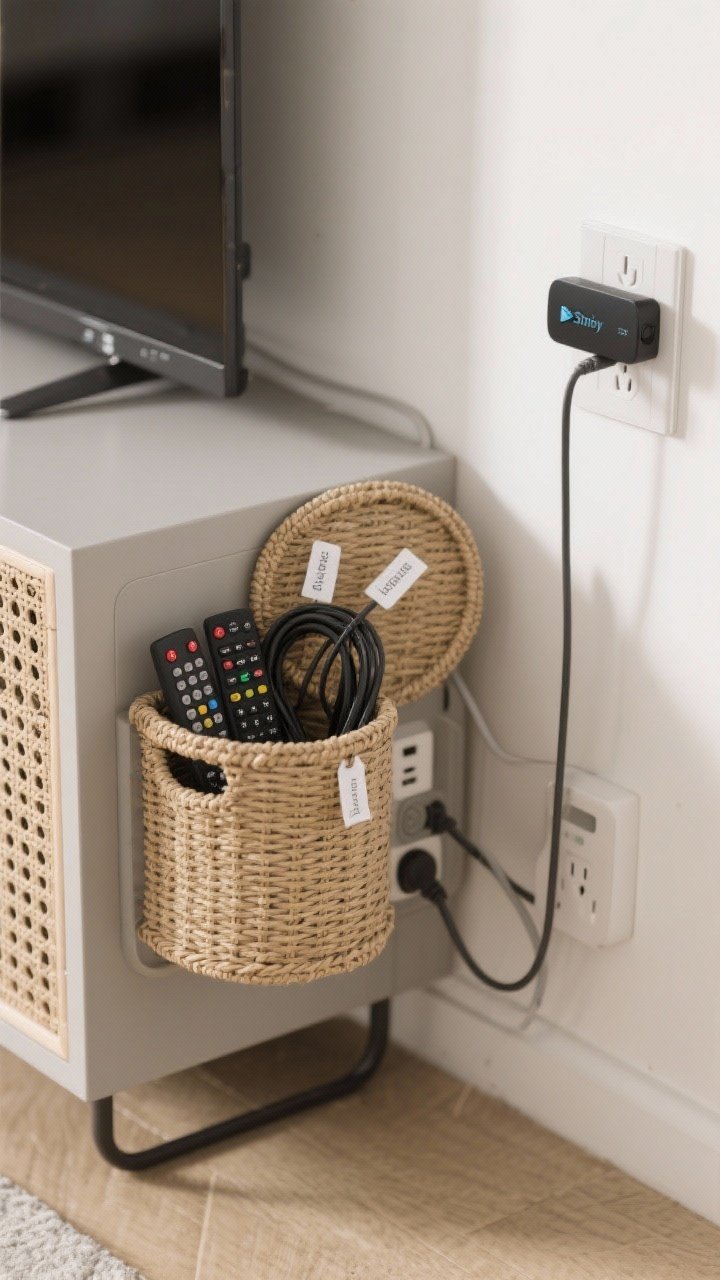
Clutter shrinks a room fast. Keep devices and accessories out of sight, yet accessible. Think basket with lid for remotes, magnetic cord wraps, and a charging drawer if you have a console.
Cable and Device Control
- Use a surge protector with a flat plug and mount it to the console back.
- Stick streaming devices on the wall with Velcro or 3M strips.
- Label cords. Future you will cry tears of joy.
10. Keep Speakers Slim and Strategic

Big subwoofers and tower speakers eat space. Choose a soundbar and a low-profile sub that tucks under furniture. You’ll still get cinematic audio without the clutter.
Placement Tips
- Mount the soundbar directly under the TV for clear dialogue.
- Hide the sub behind a chair or near a corner—just avoid blocking vents.
- Consider wireless rear speakers if you want immersive sound without cable chaos.
11. Use Rugs to Zone the Space
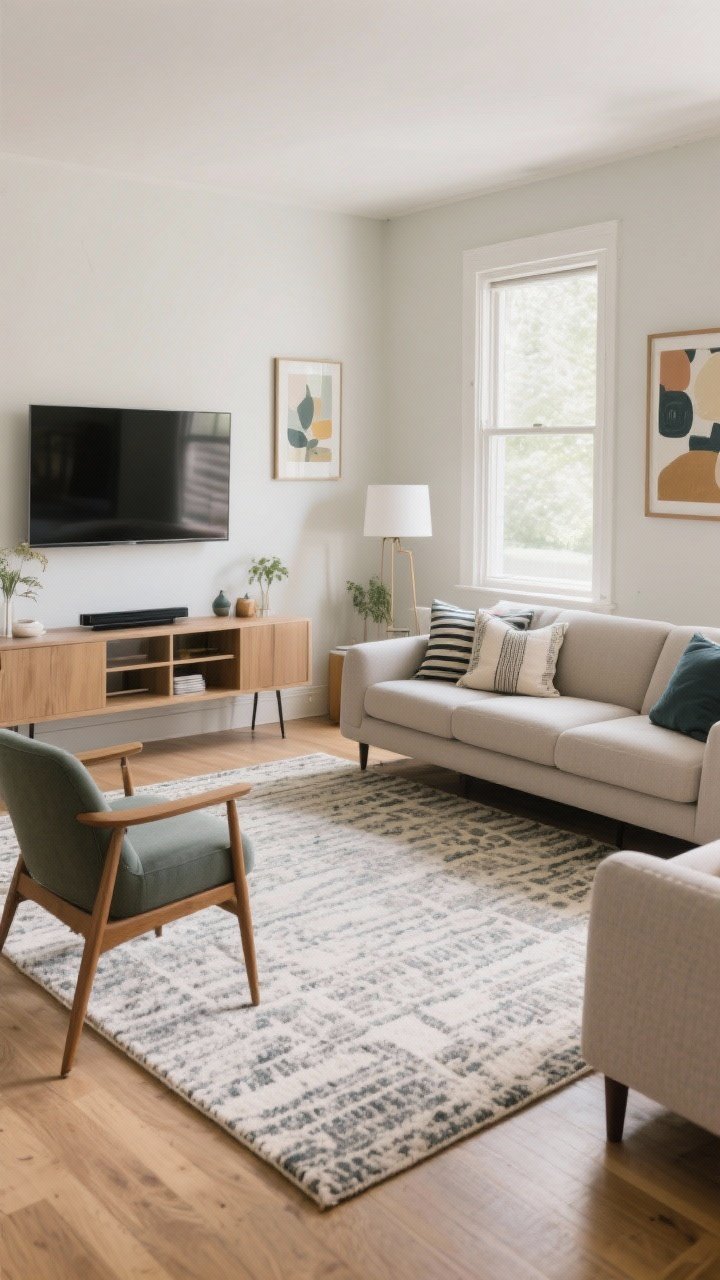
In a small room, a properly sized rug anchors your layout and makes it feel bigger. Too small and it looks like a bath mat. Aim for front legs of all seating on the rug.
Rug Rules
- Size sweet spot: 5×8 or 6×9 for most small living rooms.
- Pattern: Subtle pattern hides “life” (snacks, paw prints, oops moments).
- Color: Pull tones from art/pillows for cohesion around the TV wall.
12. Light the Room in Layers

Overhead light alone is harsh and unflattering. Layered lighting makes the room feel polished and TV-friendly. You want options for movie nights, reading, and hanging out.
Lighting Mix
- Ambient: Dimmable ceiling or flush mount.
- Task: Slim floor lamp beside the sofa or a swing-arm sconce.
- Accent: LED strips on shelves or behind the TV for bias lighting.
Pro tip: Add a smart plug or bulbs so you can set “Movie Mode” with one tap. FYI, bias lighting reduces eye strain.
13. Style Smart Around the Screen
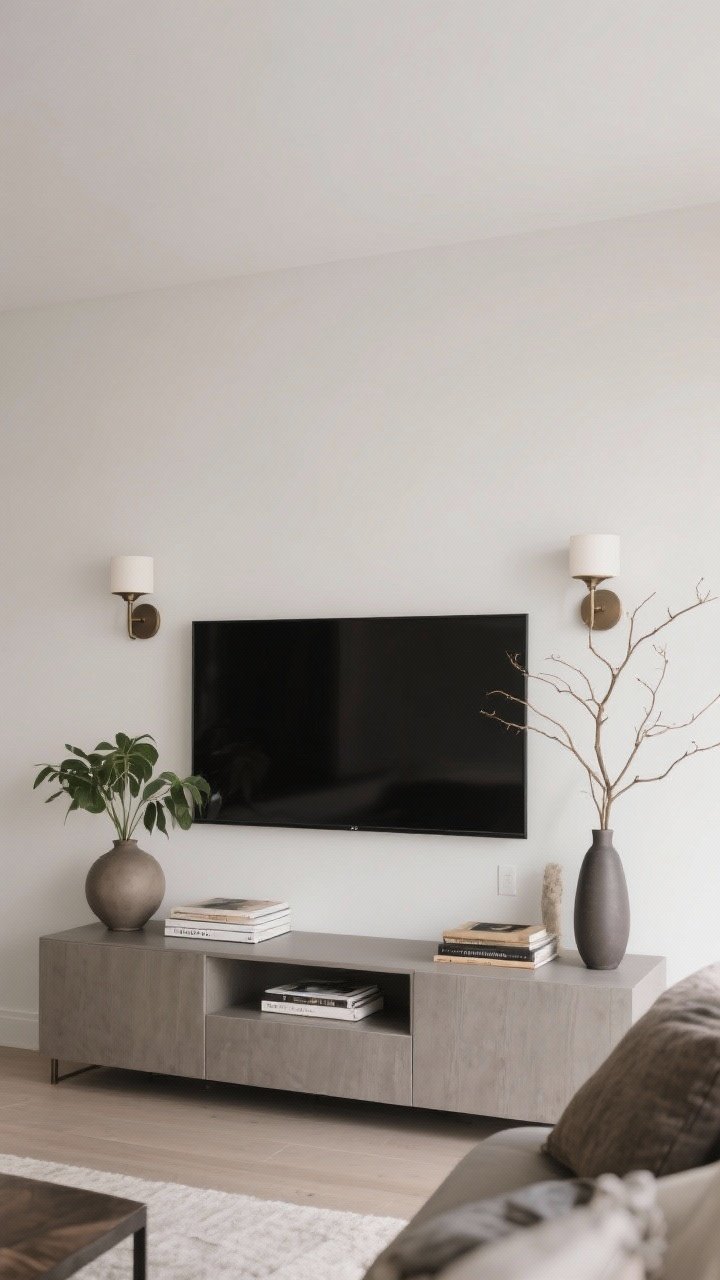
Decorate thoughtfully so the TV doesn’t feel like a sore thumb. Keep the area around it simple, then add personality in surrounding zones.
Styling Do’s
- Flank with symmetry: Matching sconces, art, or plants balance the screen.
- Vary heights: Mix short stacks of books, medium vases, and a tall branch.
- Limit shine: Too much gloss = glare city. Matte finishes win near the TV.
14. Choose Curtains That Lift the Eye
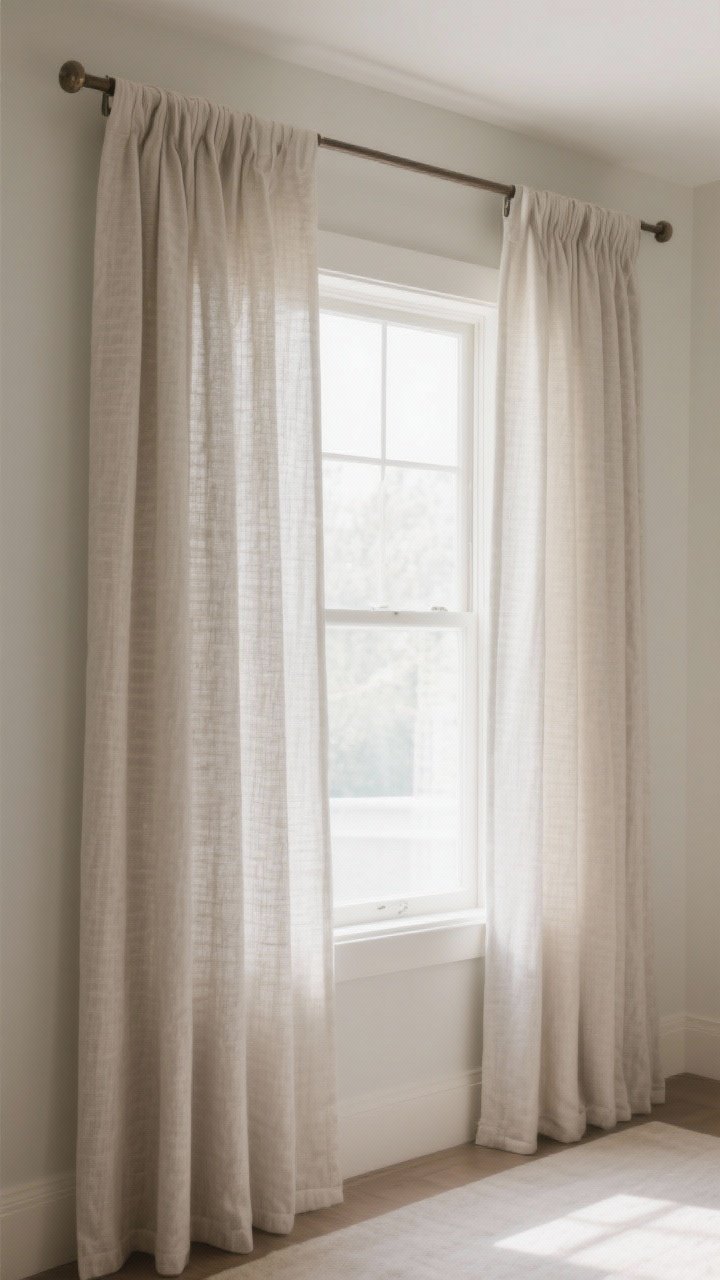
Window treatments can trick the room taller and wider, making the TV area feel more proportionate. Hang curtain rods 6–12 inches above the window and extend them beyond the frame.
Fabric and Color Tips
- Light, textured fabrics like linen blends to keep things airy.
- Blackout lining if glare is a problem.
- Match curtain tone to the walls for a calming, continuous look.
15. Create a Flexible Seating Plan
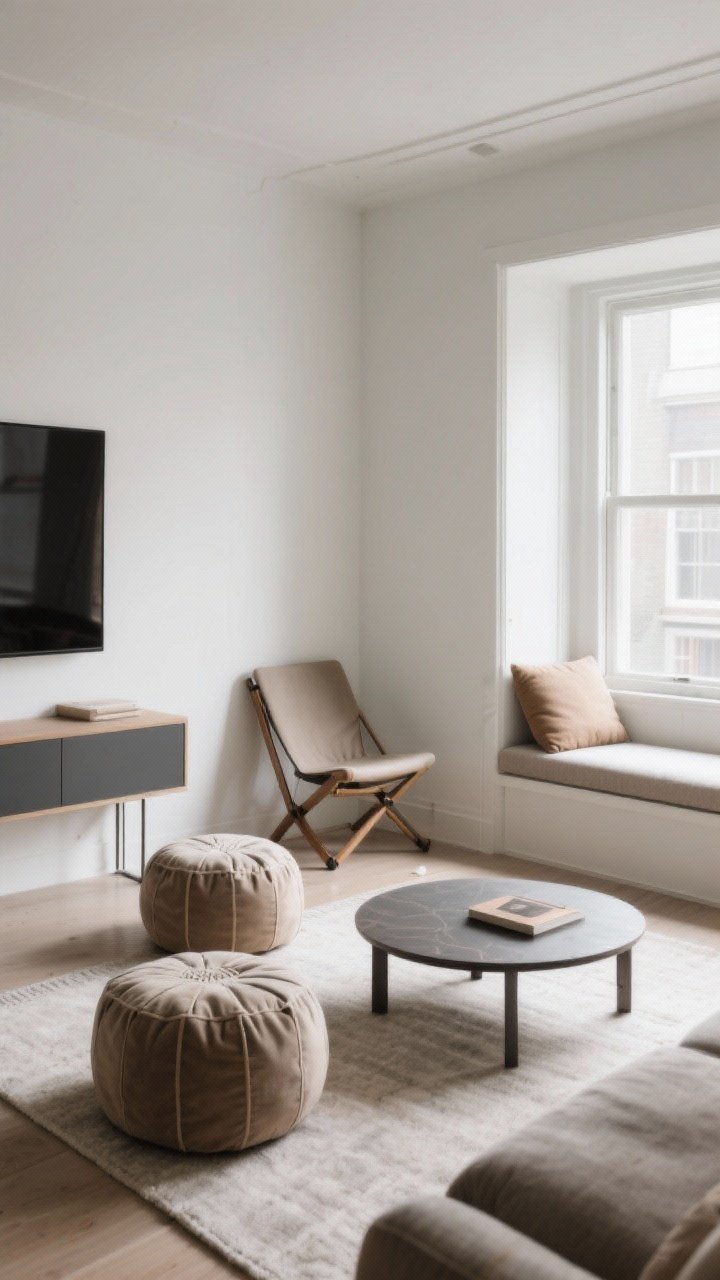
A small living room with a TV often doubles as a hangout zone. Add portable seating that appears when you need it and vanishes when you don’t.
Space-Savvy Seat Options
- Stools or poufs: Tuck under the console or next to the sofa.
- Folding accent chairs: Lightweight styles that actually look good exist now.
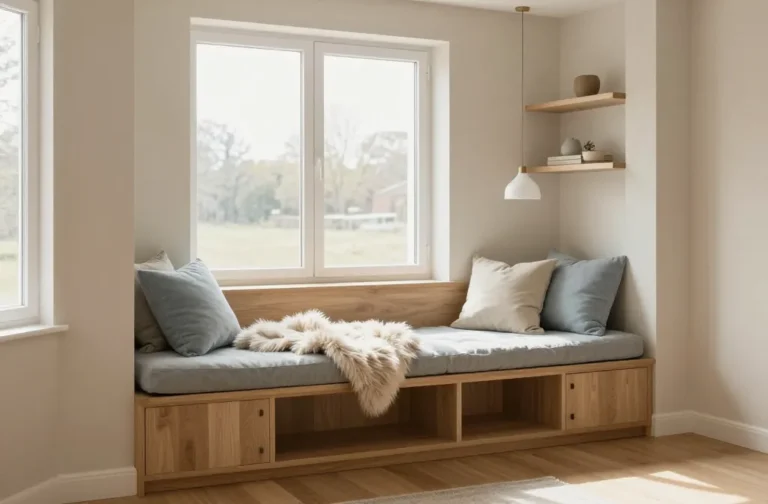
- Window bench or ledge: Add a cushion and call it bonus seating.
Keep walkways clear—ideally 30–36 inches for main paths and 18 inches around the coffee table. Your shins will thank you.
Bonus Layout Tips (Because You Asked… Probably)
- Viewing distance: About 1.5x the diagonal of your TV is comfy for 4K screens.
- Don’t block vents or radiators: Electronics and heat are frenemies.
- Mirrors: Place opposite a window to bounce light, but not where they’ll reflect the TV.
Color + Texture Palette That Plays Nice With Screens
- Walls: Soft neutrals (greige, warm white, pale taupe) for brightness without glare.
- Accents: One saturated hue (sage, rust, indigo) repeated 2–3 times.
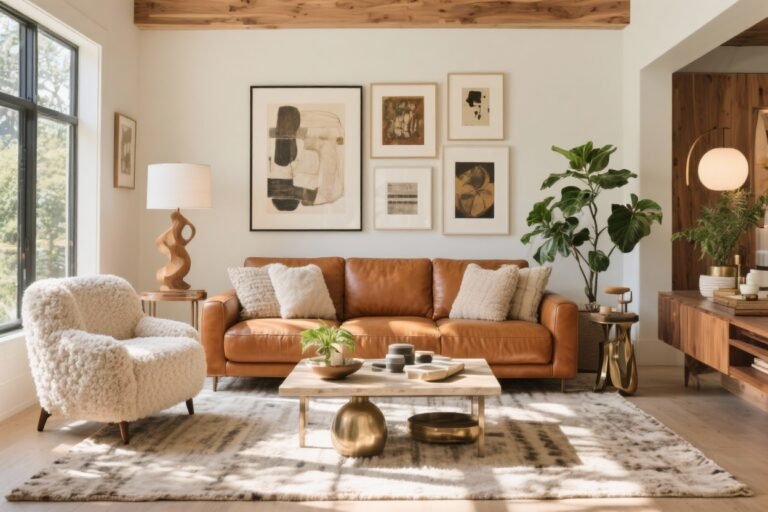
- Textures: Bouclé, linen, wood grain, matte ceramics—chef’s kiss for cozy minimalism.
Quick Shopping Checklist
- Low-profile TV mount + cable management kit
- Slim media console or floating shelf
- Soundbar and compact subwoofer
- Lift-top coffee table or nesting tables
- Neutral 6×9 rug and two lighting sources minimum
- Two storage baskets for remotes, chargers, and throws
Small living rooms can absolutely deliver big style—and solid movie marathons. Focus on smart scaling, clean storage, and layered lighting, and your TV setup will feel intentional instead of awkward. You don’t need more space; you just need better moves. Now grab the remote and enjoy your new tiny-but-mighty living room.