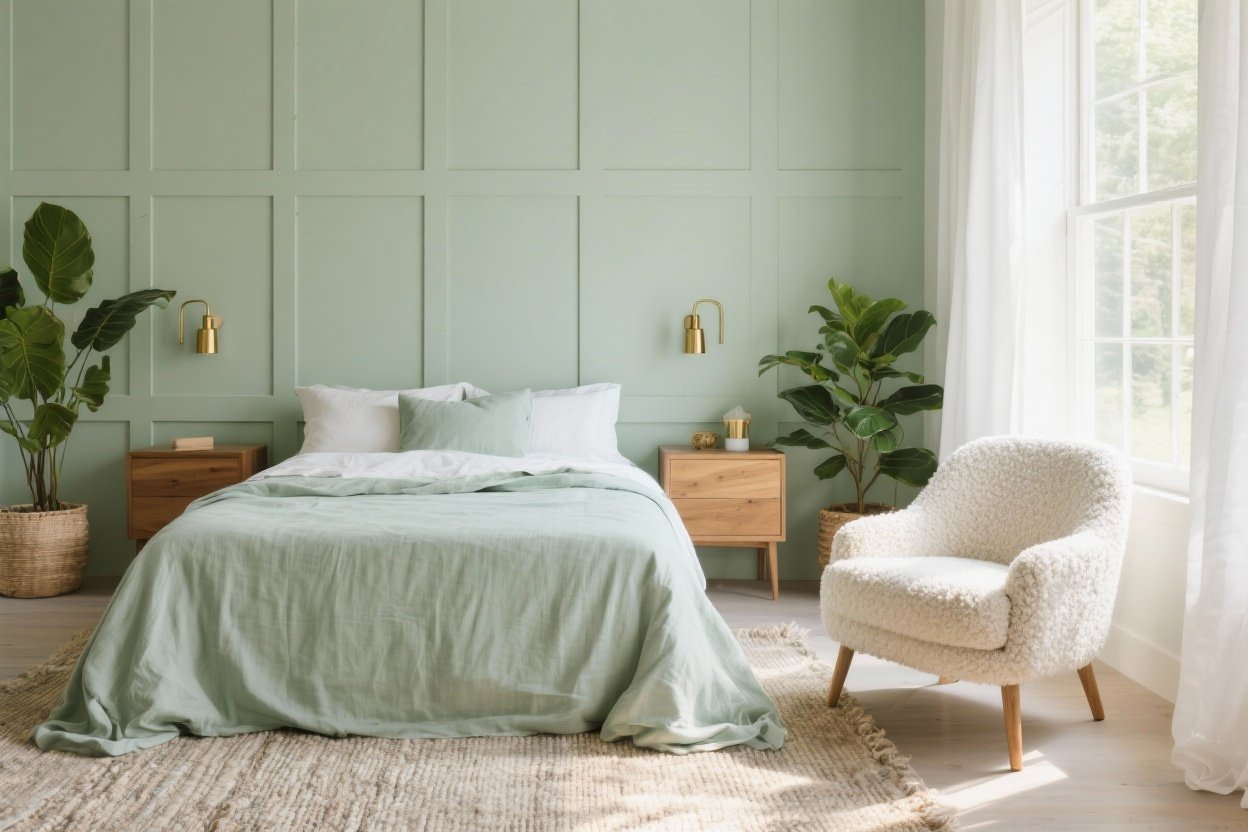
12 Sage Green Bedroom Ideas That Feel Like a Weekend Retreat
You know that calm, grounded vibe you get after a long walk in nature? That’s sage green in color form. It’s soothing, versatile, and a total chameleon—playing nice with wood, metals, and every texture you throw at it.
If your bedroom is begging for a glow-up, these ideas will help you nail the look without turning your space into a plant nursery (unless that’s your thing).
1. Paint It Soft, Then Layer It Strong
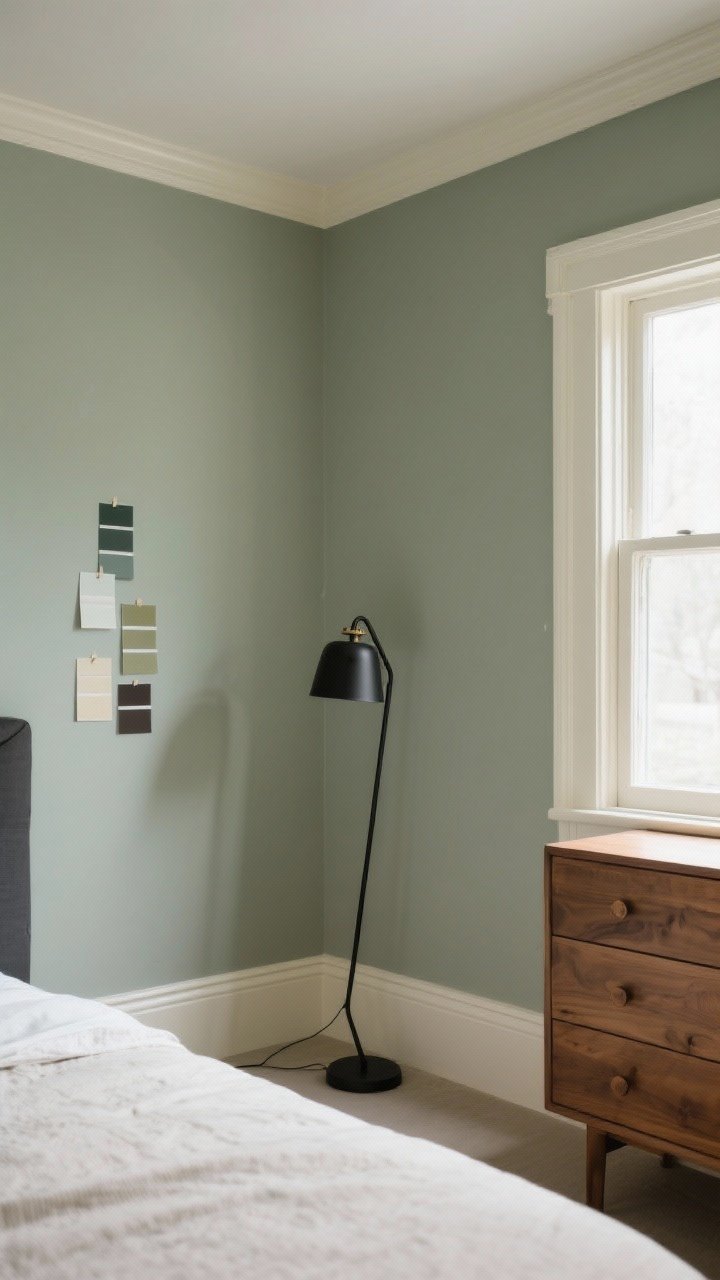
Start with a muted, gray-leaning sage on the walls. It instantly brings serenity without screaming “green!” Keep it soft and neutral so you can add personality on top.
Pro Tips
- Choose a paint with a warm undertone if you have lots of wood; go cooler if your finishes are chrome or black.
- Test swatches at different times of day—sage shifts with light. FYI: north-facing rooms need warmer sage to avoid looking flat.
- Pair walls with creamy trim (not stark white) to keep the look cozy: think off-white, ecru, or soft taupe.
2. Make Your Bed The Sage Statement
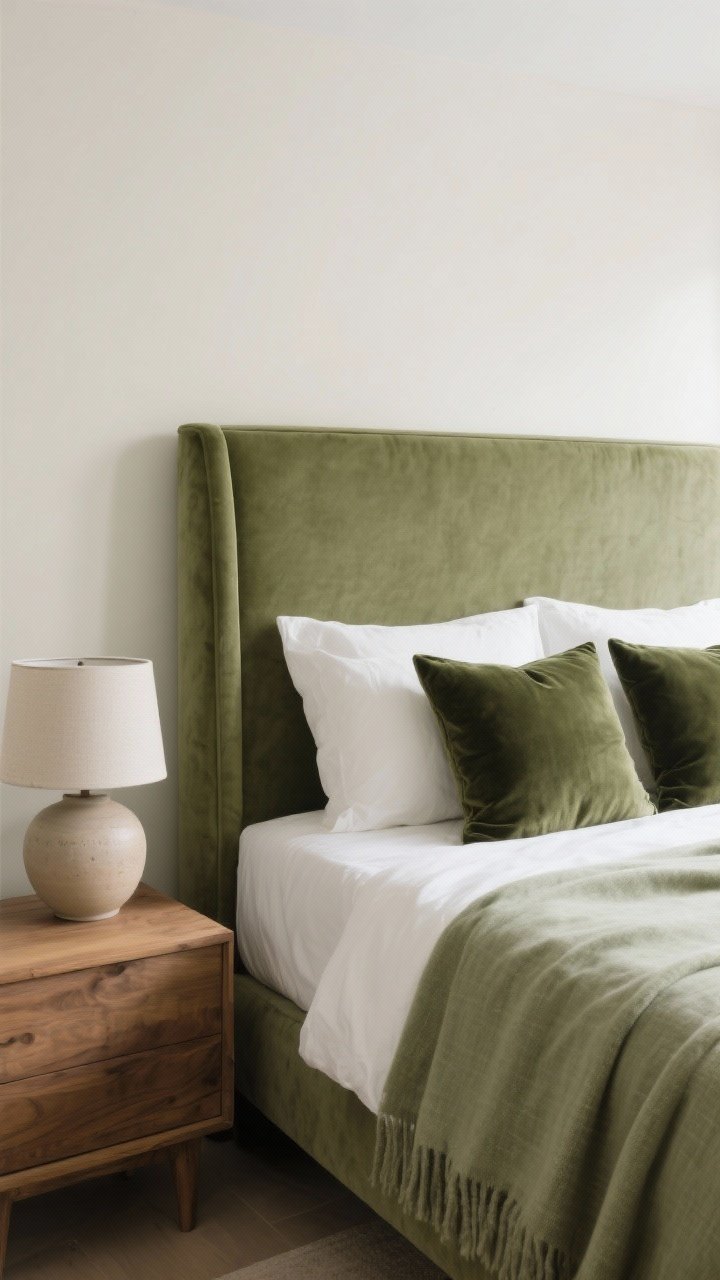
If painting feels like a commitment, let your bed steal the show. A sage upholstered headboard or linen duvet instantly sets the palette and feels luxe without being loud.
How To Style It
- Go tonal: sage duvet + lighter sage throw + darker moss pillows for depth.
- Mix textures: linen, velvet, and waffle knit keep the monochrome look from going sleepy.
- Add contrast: white sheets and a natural wood nightstand keep it fresh.
3. Layer Textures Like A Designer
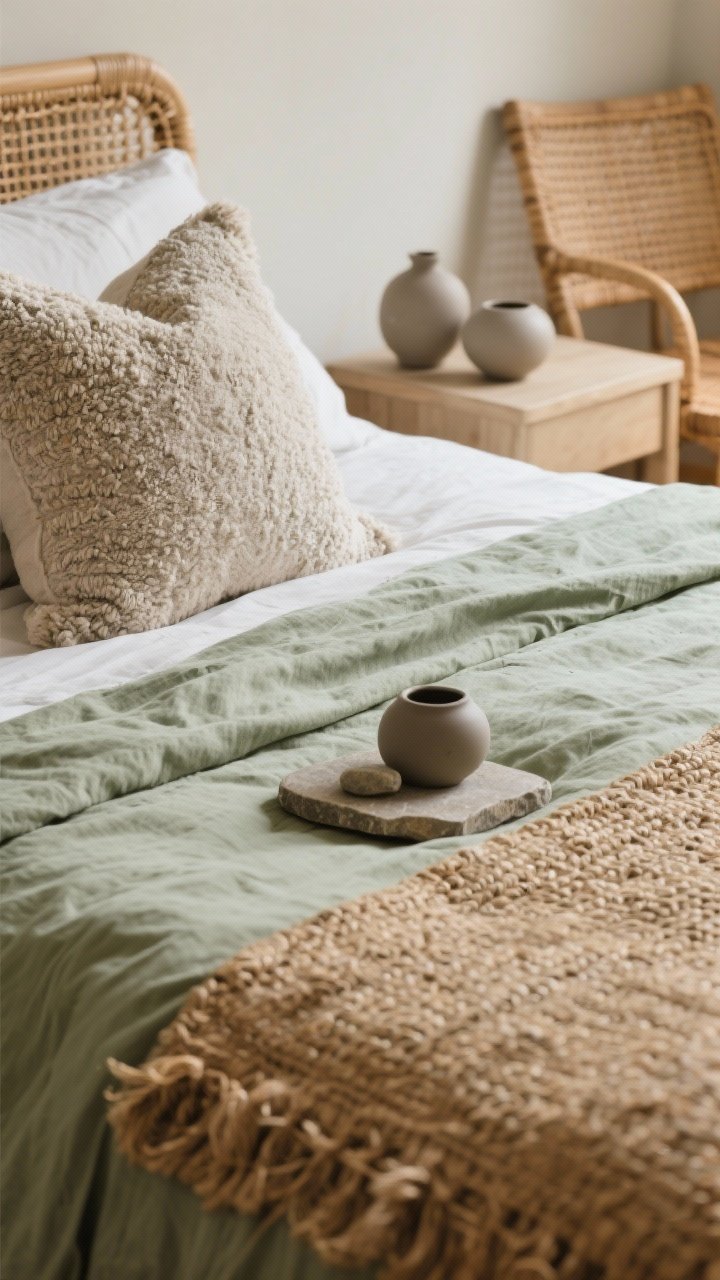
Sage really shines when it’s surrounded by rich textures. Think cozy, not cluttered. A few high-impact layers go a long way.
Texture Ideas
- Bouclé throw pillow + linen duvet = chef’s kiss.
- Woven jute rug to ground the room and add warm contrast.
- Matte ceramics and stone trays for the nightstand to balance softness.
- Rattan or cane accents to bring in a touch of organic shape and airiness.
4. Build A Calm Color Palette Around It
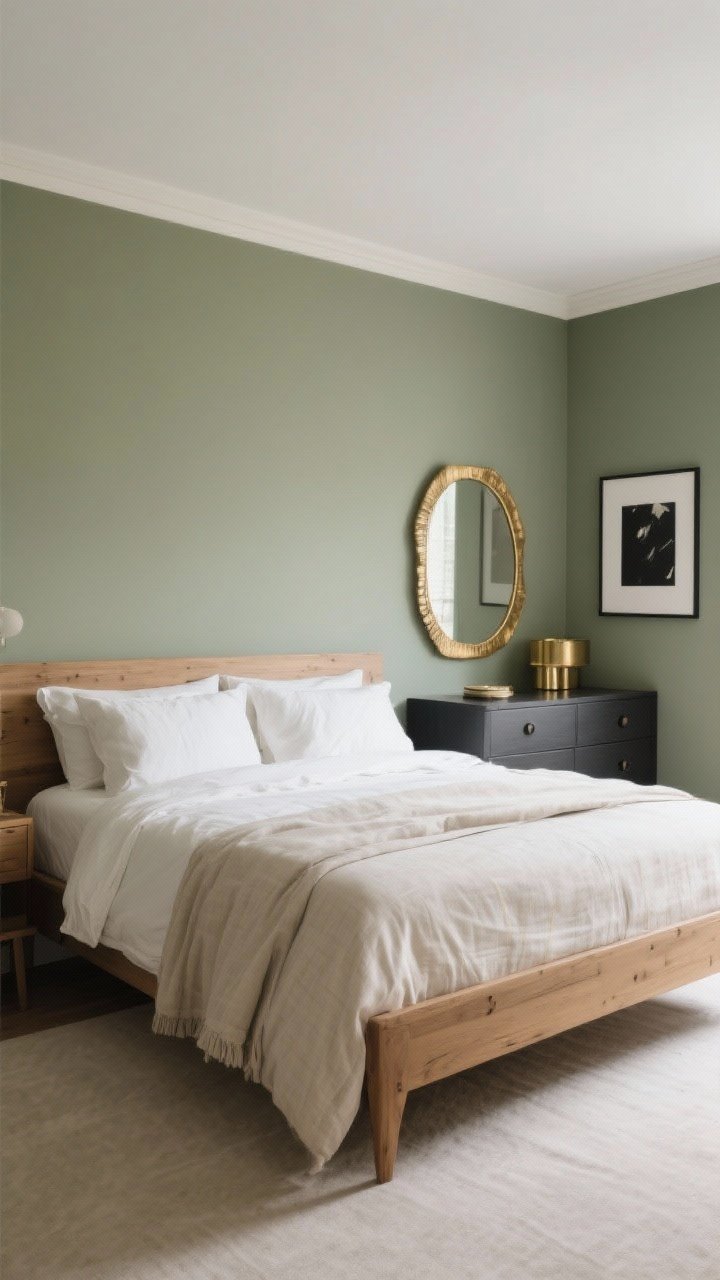
Sage is the neutral you didn’t know you needed. The trick is building a palette that feels intentional, not random. Think 3–4 core colors and stick to them.
Foolproof Combos
- Sage + Cream + Natural Wood: soft and timeless.
- Sage + Charcoal + Brass: a little moody, a little glam.
- Sage + Clay Terracotta + Linen: earthy and cozy, perfect for fall vibes year-round.
- Sage + Blush + Warm Gray: subtle, romantic, not sugary.
5. Go Botanical—But Make It Grown-Up

Yes, sage green loves a nature moment, but let’s keep it chic. Skip the overly literal leaf patterns and go for stylized botanical prints or subtle florals with negative space.
Where To Add Botanicals
- One wallpapered wall behind the bed for a soft focal point.
- Art prints in thin black or oak frames—try herb sketches or abstract foliage.
- Throw pillows with botanical embroidery in cream or gold for texture, not chaos.
6. Master The Lighting (Sage Loves Warmth)
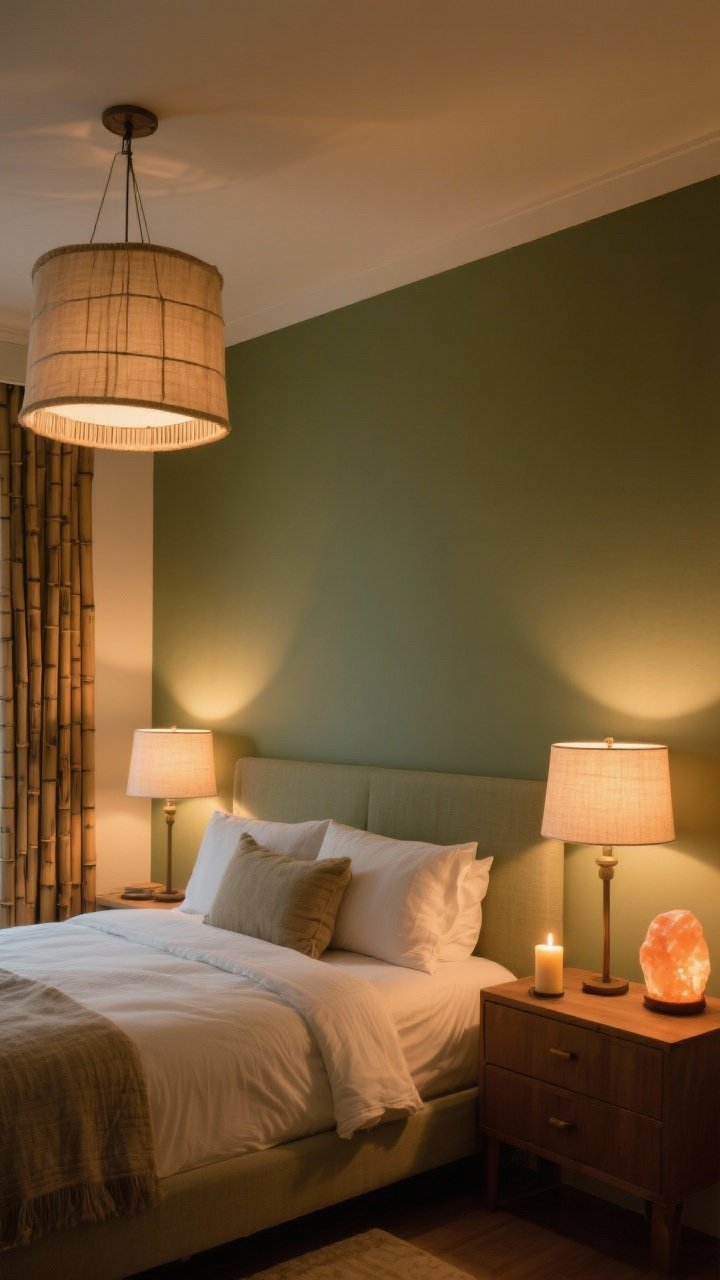
Sage can look flat under blue-toned light. Your fix? Layered, warm lighting that adds dimension and glow. Instant boutique-hotel energy.
Light It Right
- Use 2700–3000K bulbs for warmth. Avoid cool daylight bulbs unless you’re going industrial.
- Add two bedside lamps with fabric shades for diffused softness.
- Consider a linen drum pendant or bamboo fixture to echo the earthy theme.
- Finish with candlelight or low-glow salt lamps for nighttime winding down.
7. Mix Metals For A High-End Look
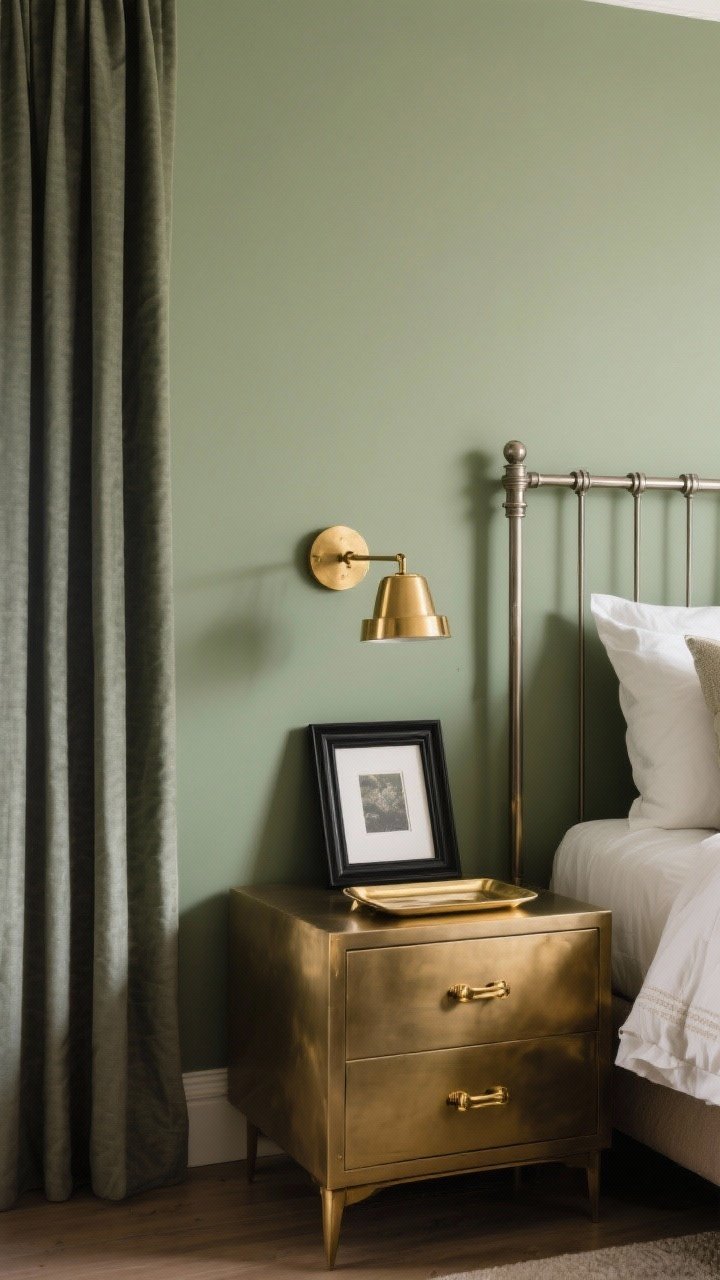
Metals are your jewelry. With sage, a mix of brass, black, and brushed nickel can look intentional and layered. Just keep a consistent finish per zone.
Smart Metal Rules
- Pick a dominant metal (brass is stunning with sage) and one accent.
- Use black for frames or curtain rods to anchor the softness.
- Match metals within “zones”: bedside area, dresser area, vanity—so it feels cohesive.
8. Add Soft Pattern Without The Noise
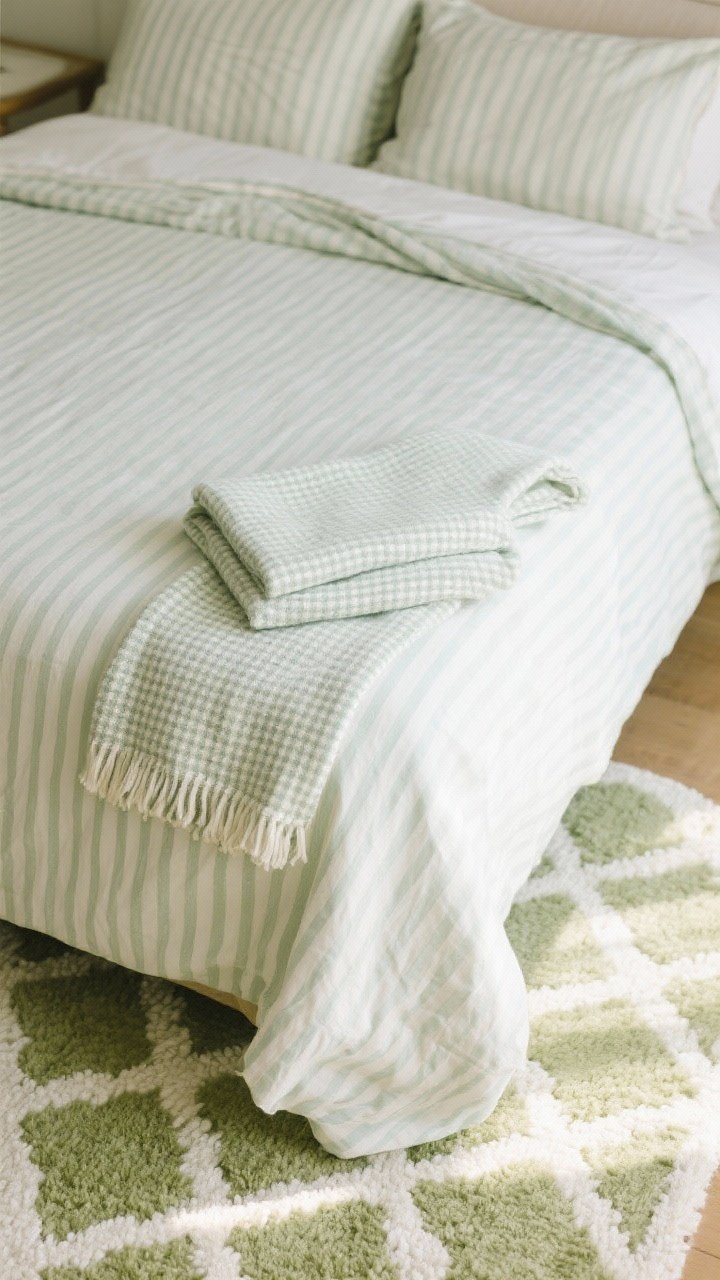
Patterns keep the space from feeling too safe. Choose a low-contrast pattern that whispers rather than shouts.
Pattern Ideas That Work
- Pinstripe or ticking stripe sheets in sage/cream for that lived-in luxury vibe.
- Micro-check throw at the foot of the bed for visual rhythm.
- Geometric rug in ivory and soft green for subtle movement underfoot.
9. Bring In Natural Wood (And Know Which Type)
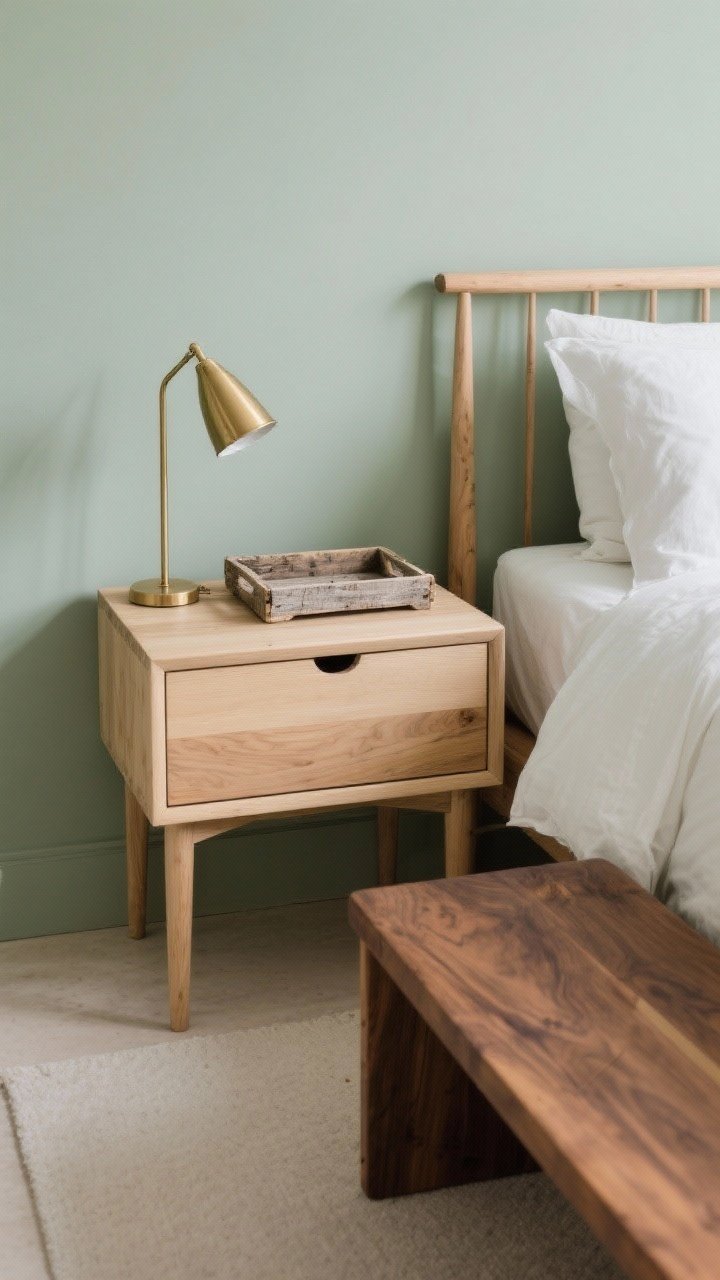
Wood warms sage beautifully, but not all tones are equal. Choose light oak, ash, or walnut depending on your mood: airy or sophisticated.
How To Pair Wood + Sage
- Light oak: Scandinavian calm, bright and fresh.
- Walnut: rich and elegant; pairs well with brass and velvet.
- Weathered pine: rustic charm without feeling cabin-y.
- Keep finishes matte or satin—high gloss can fight the softness of sage.
10. Curate Art That Complements, Not Competes
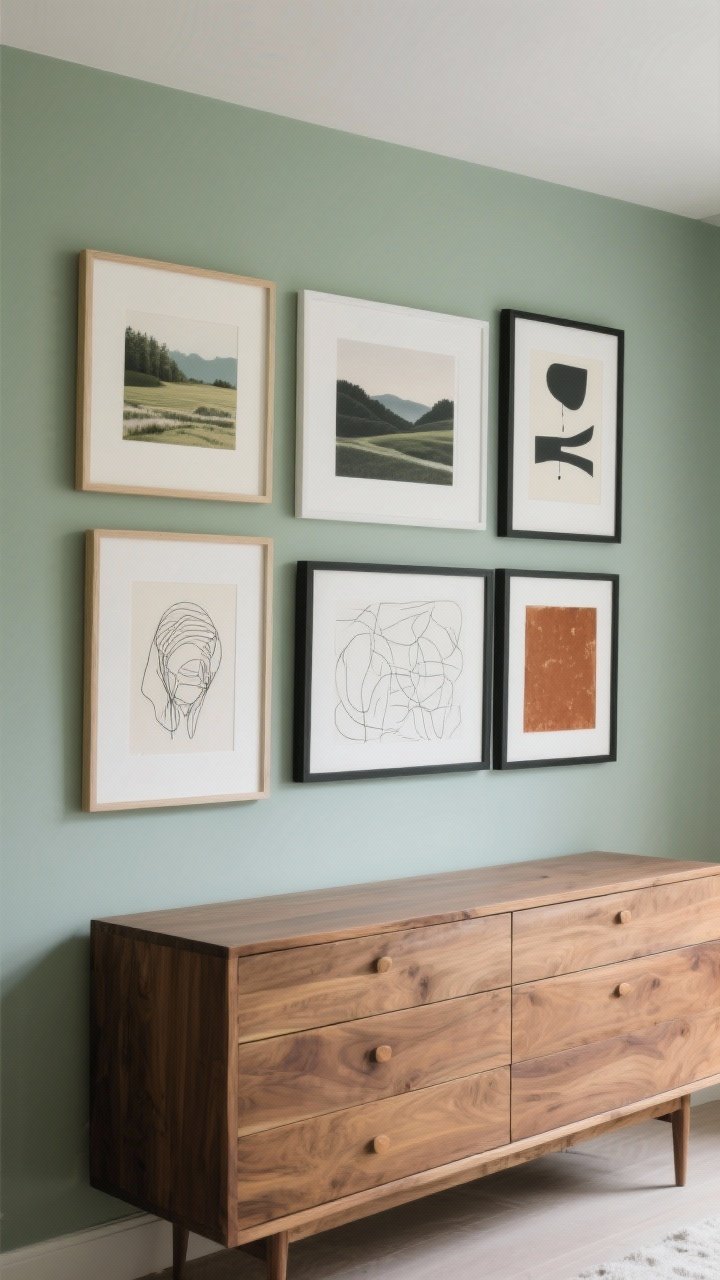
Art should pull the room together, not hijack the vibe. Use pieces that echo your palette and add personality—think landscapes, abstracts, line drawings.
Gallery Wall Game Plan
- Limit colors: stick to sage, cream, charcoal, and one accent (rust, blush, or gold).
- Mix frame finishes thoughtfully: black + oak = modern organic.
- Give the eye a break with negative space and varied sizes.
11. Style Your Windows Like You Mean It
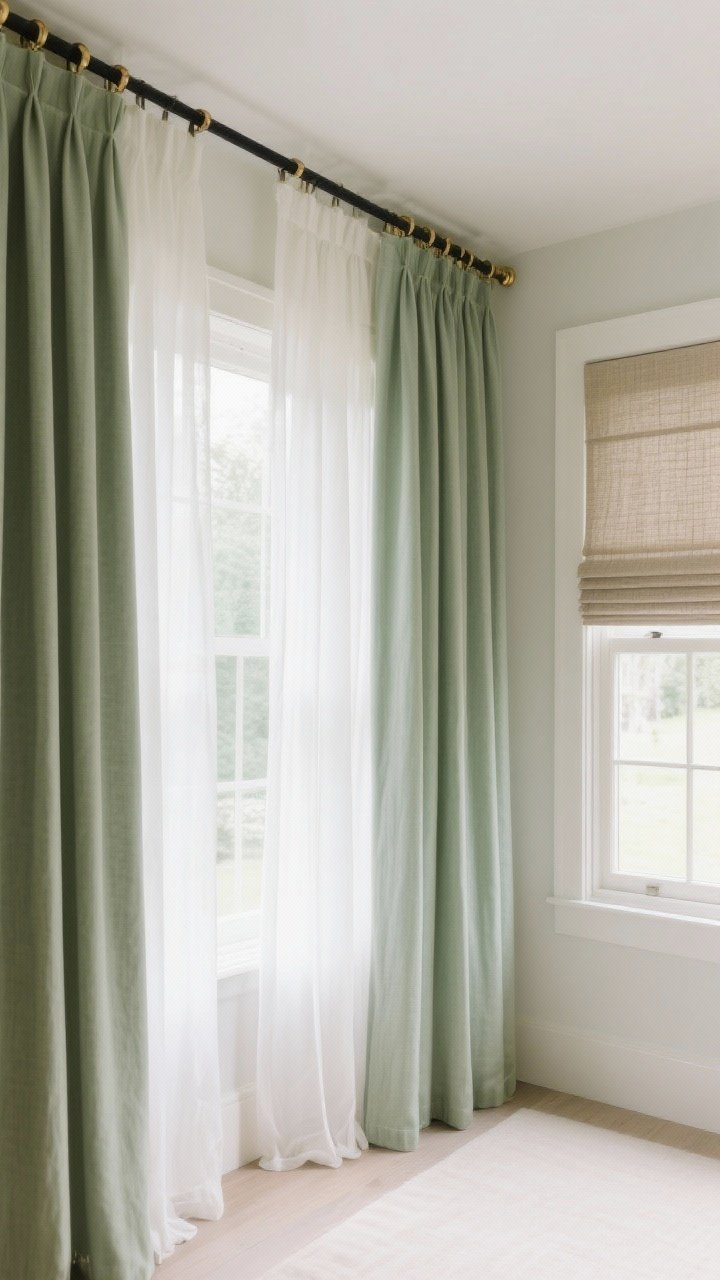
Window treatments are basically outfit choices for your room. With sage, aim for soft, layered, and light-filtering.
Winning Window Combos
- Sheer white curtains + sage blackout panels = practical and polished.
- Roman shades in flax linen for tailored warmth.
- Choose black or brass rods and hang high and wide to make the room feel taller and bigger.
12. Finish With Greenery And Subtle Scents
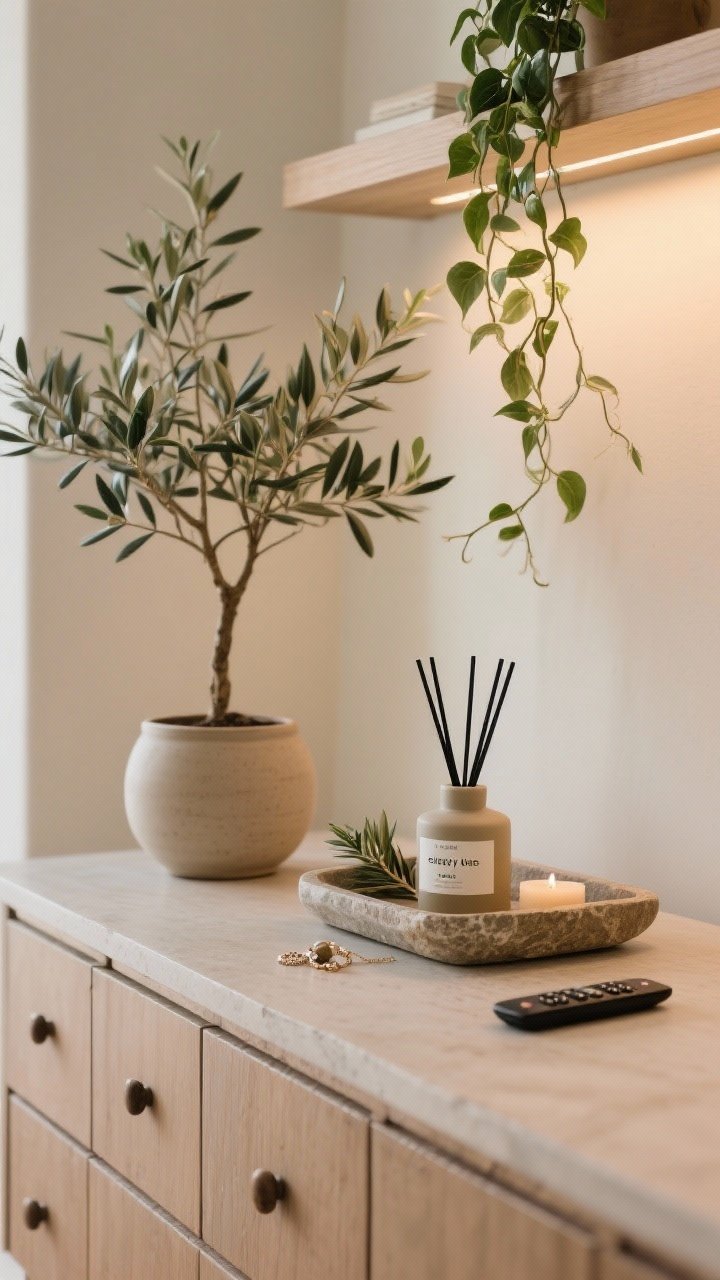
The final touch: a little life. Real or faux plants bring dimension and make the sage feel intentional. And yes, scent matters—your nose decorates too.
Finishing Touches
- Olive tree in a ceramic pot for height and softness.
- Trailing pothos on a shelf for casual drape (low effort, high payoff).
- Diffuser or candle in eucalyptus, cedar, or lavender to lean into the calm—IMO, eucalyptus + cedar is elite.
- Use stone or wood trays to corral candles, remotes, and jewelry so the vibe stays serene, not messy.
Quick Styling Checklist
- Choose your sage: warm or cool?
- Define a palette: 3–4 colors max.
- Layer textures: linen, bouclé, wood, ceramic.
- Dial in lighting: warm bulbs, multiple sources.
- Commit to metal finishes by zone.
- Finish with greenery and scent.
Here’s the bottom line: sage green is the kind of color that makes everything feel a little calmer and a lot more intentional. Pick your shade, layer textures, and let a few thoughtful details do the heavy lifting. Your bedroom’s about to become your favorite place to be—no spa day required.