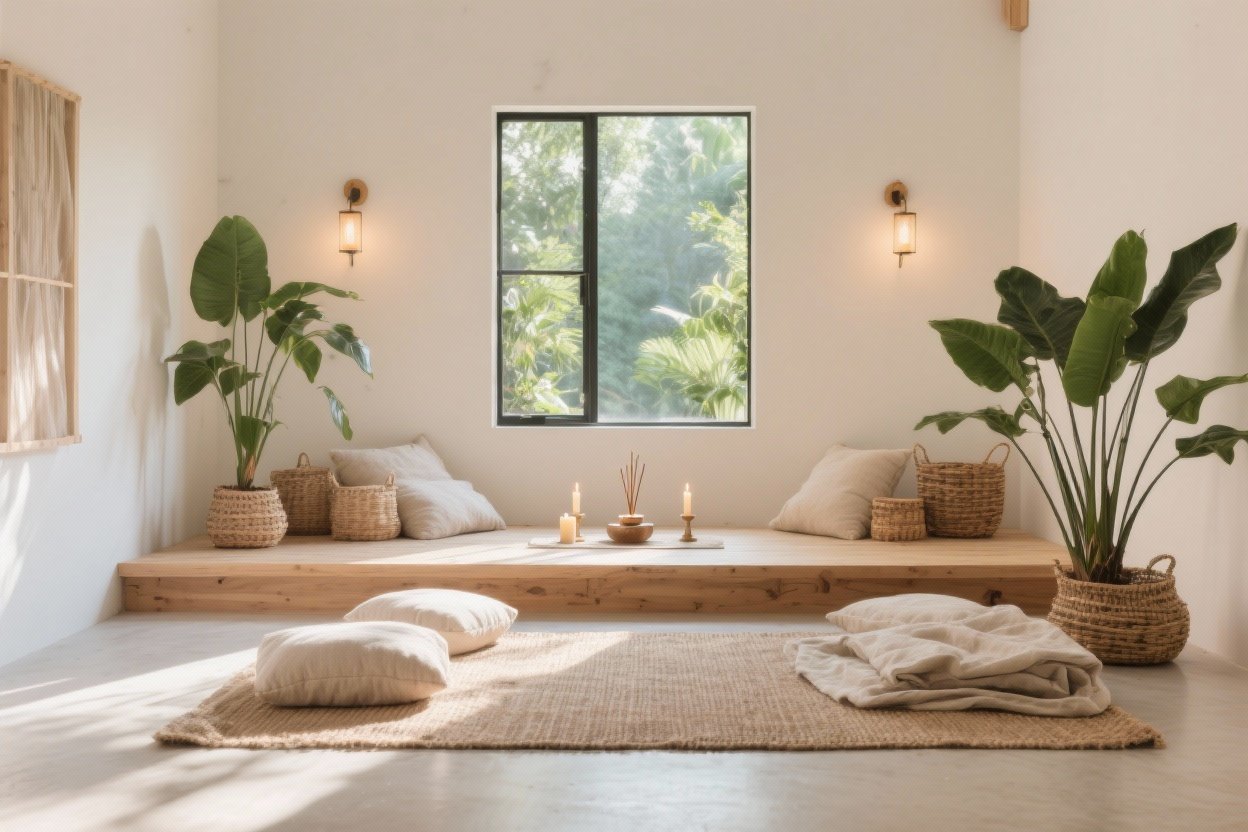
12 Peaceful Meditation Room Decor Ideas You’ll Wish You Tried Sooner
You don’t need a spare wing or a yoga retreat budget to build a calm, grounding meditation space. All you need is a corner, a game plan, and a few smart decor moves.
Let’s design a peaceful nook that helps you breathe deeper, think clearer, and finally stop doom-scrolling at 1 a.m. Sound good?
1. Claim Your Calm: Pick the Right Spot
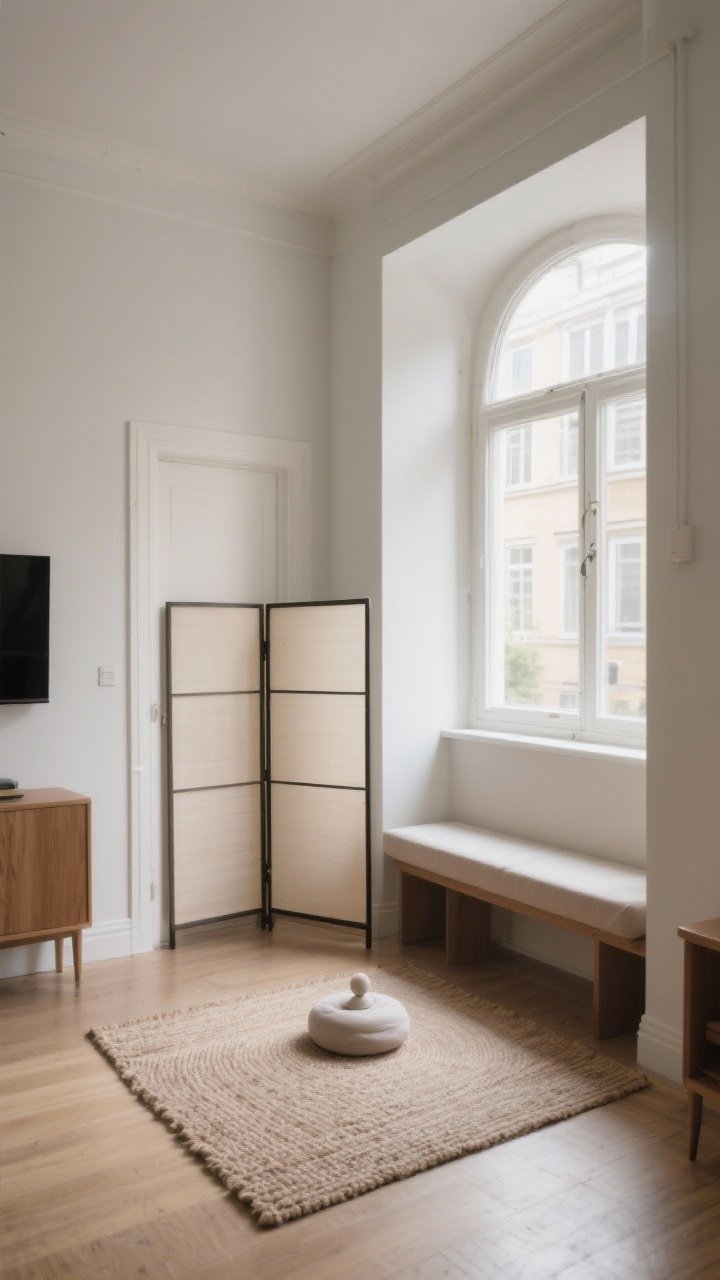
Start with location. Your meditation area doesn’t need to be big, but it should feel a little tucked away—somewhere your brain knows, “Oh, we chill here.” Corners, bay windows, and unused alcoves are perfect.
Quick Tips
- Low traffic zones win. Avoid spots near doors, TVs, or that one squeaky floorboard.
- Natural light helps. Morning light = gentle energy; afternoon light = warm, cozy vibes.
- Make it official. Define the area with a rug, a screen, or a low bench to set the boundary.
2. Choose a Color Palette That Actually Calms You

Yes, neutrals are peaceful—but your body may respond to specific shades. Cool tones feel airy and meditative; warm neutrals feel cocoon-like and safe. Go with colors that make your shoulders drop when you see them.
Color Combos That Work
- Serene Cool: Misty gray, soft sage, bleached wood.
- Warm Neutral: Sand, oatmeal, camel, and cream.
- Earthy Calm: Clay, olive, terracotta, and linen white.
Paint not your thing? Bring in color with cushions, throws, and floor pillows. Low commitment, high impact.
3. Sit Like a Sage: Cushions, Mats, and Low Seating
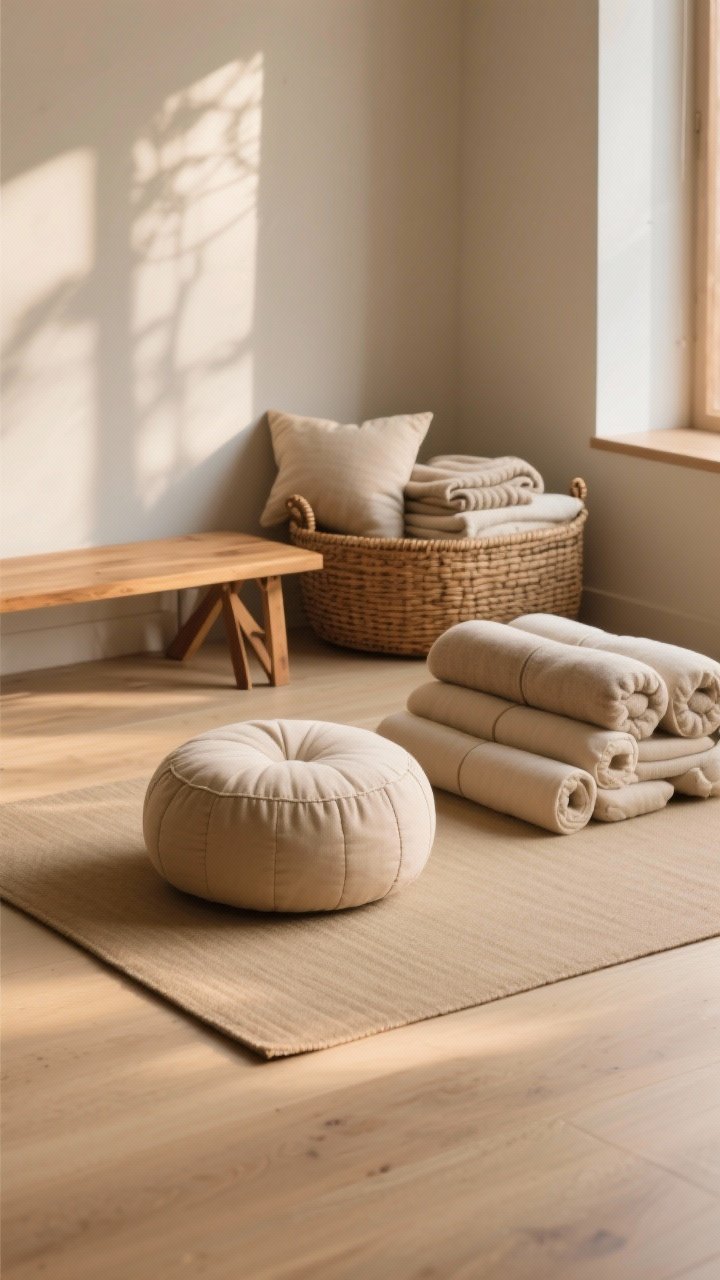
Your posture makes or breaks your practice. If your hips scream after five minutes, you’ll bail. Elevate your hips above your knees to save your lower back and keep your spine tall.
Seating Essentials
- Zafu + zabuton: A firm round cushion paired with a large floor mat = classic comfort.
- Foldable meditation bench: Great if cross-legged is a no-go.
- Bolsters and floor pillows: Stack to adjust height. You’re not earning pain points here.
FYI: Keep a basket nearby for extra pillows and blankets. Clutter-free but flexible.
4. Layer Textures for Instant Cozy
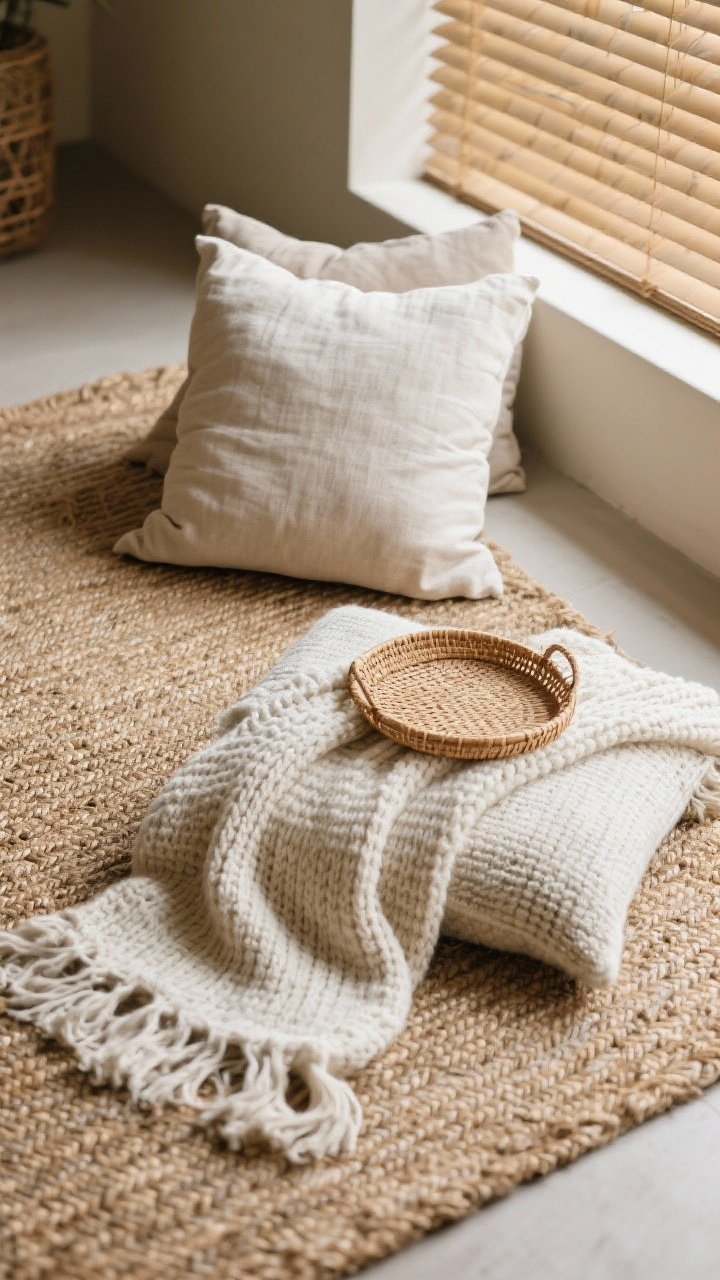
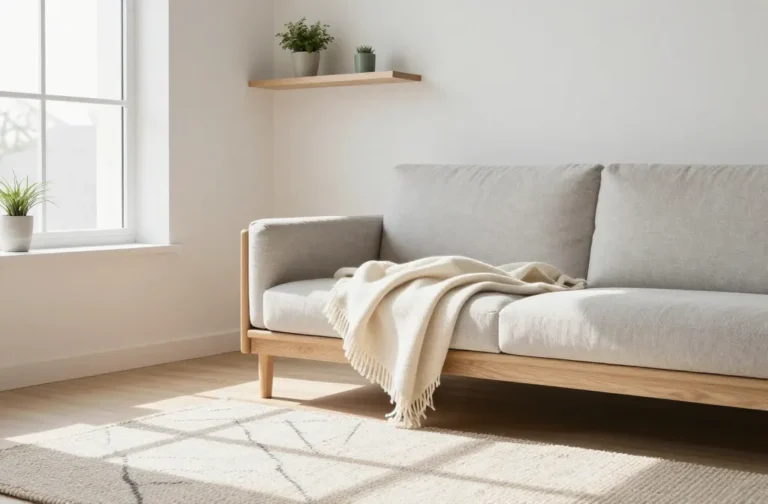
Minimal doesn’t mean sterile. Soften hard edges with natural textures your hands actually want to touch. Think “calm cabin,” not “bare office.”
Texture Ideas
- Underfoot: Woven jute or wool rug for grounding.
- Soft support: Linen cushions, cotton throws, plush knit blankets.
- Natural accents: Rattan trays, cork stools, bamboo blinds.
Keep a tight palette so it looks curated, not chaotic. Two to three main textures is the sweet spot.
5. Light Like a Glow-Up: Layered Lighting
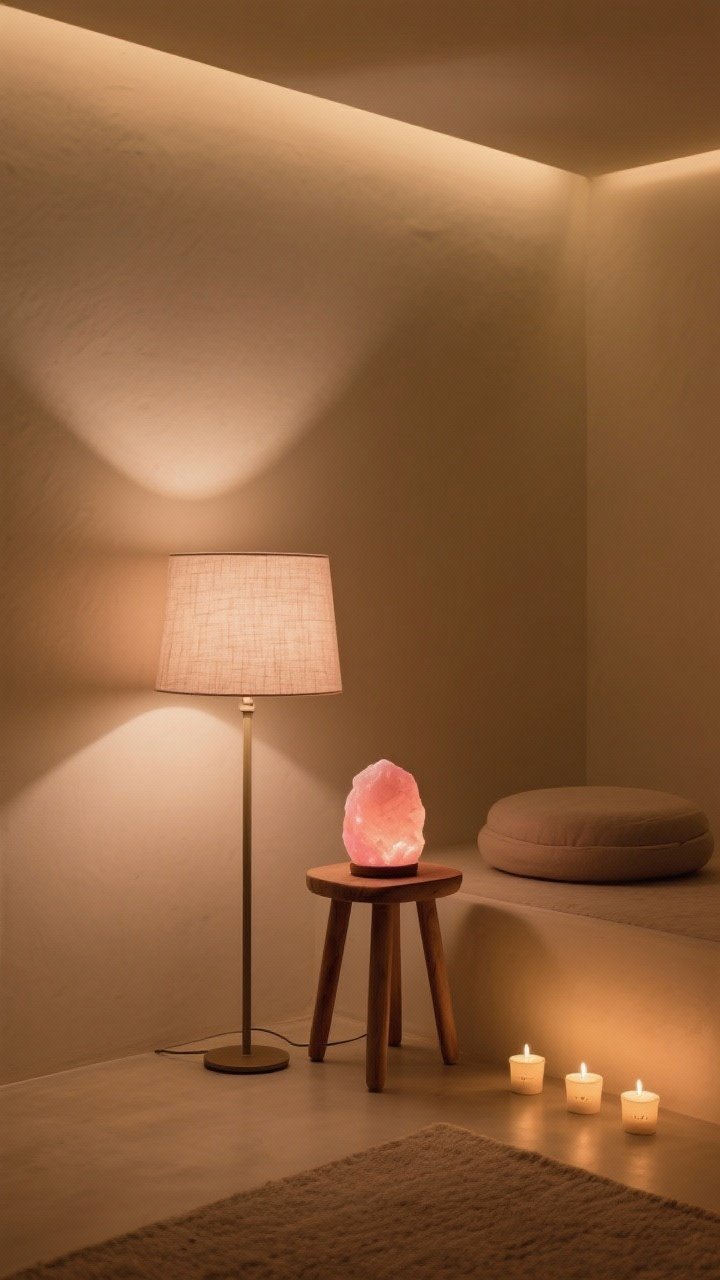
Harsh overheads kill the mood. You want soft, dimmable layers that shift from energized to dreamy as needed. Picture warm candlelight without the drama of an actual fire hazard.
Lighting Layers
- Ambient: Floor lamp with a fabric shade or salt lamp for a gentle glow.
- Accent: Tea lights or LED candles—safe, flickery, perfect.
- Control: Smart bulbs or a dimmer switch to set your scene in seconds.
Bonus: Place lights at lower heights for a grounded feel. Your nervous system will say “thank you.”
6. Bring Nature In: Plants, Stones, and Water
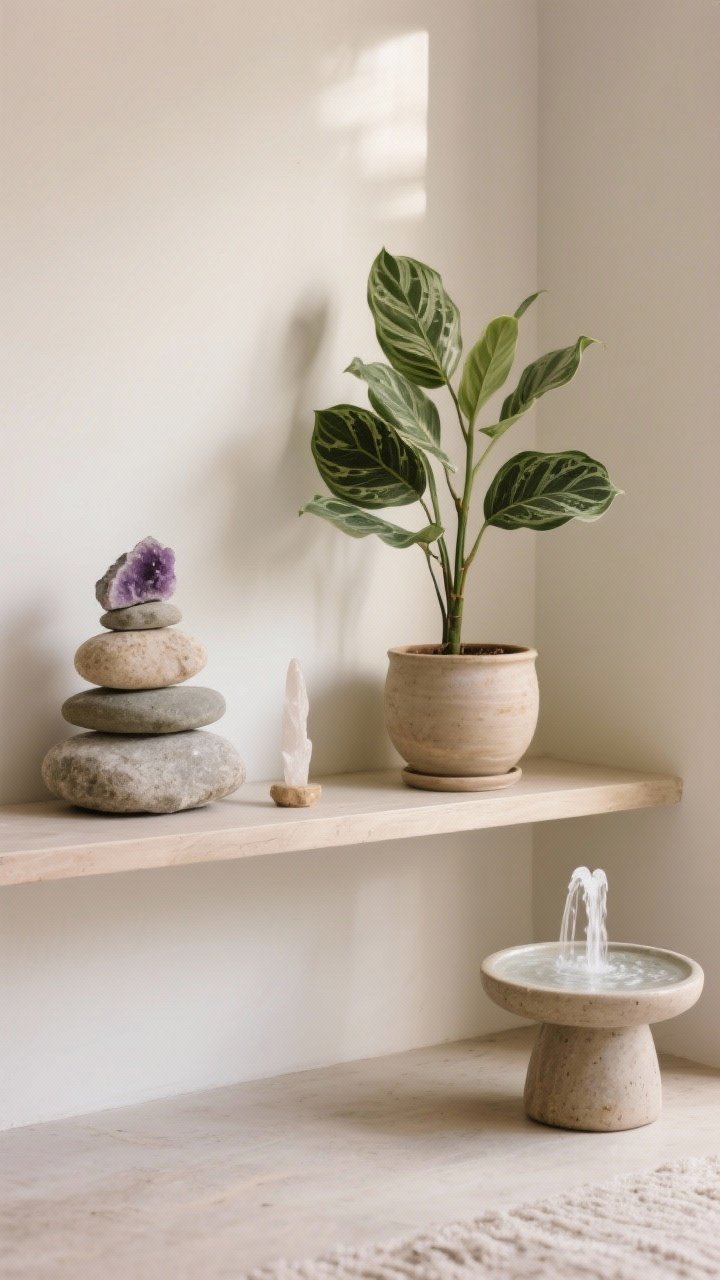
Biophilic design isn’t just trendy—it actually reduces stress. Add a few organic elements and let your meditation space breathe a little.
Nature Hits Different
- Plants: Snake plant, ZZ plant, pothos—hard to kill and happy in low light.
- Stones and crystals: Smooth river rocks, amethyst, selenite—if it feels good in your hand, it belongs.
- Water: A tiny tabletop fountain gives you soothing white noise.
Keep it balanced. One or two larger pieces look calmer than a crowd of tiny things.
7. Soundscapes That Soothe (Not Distract)
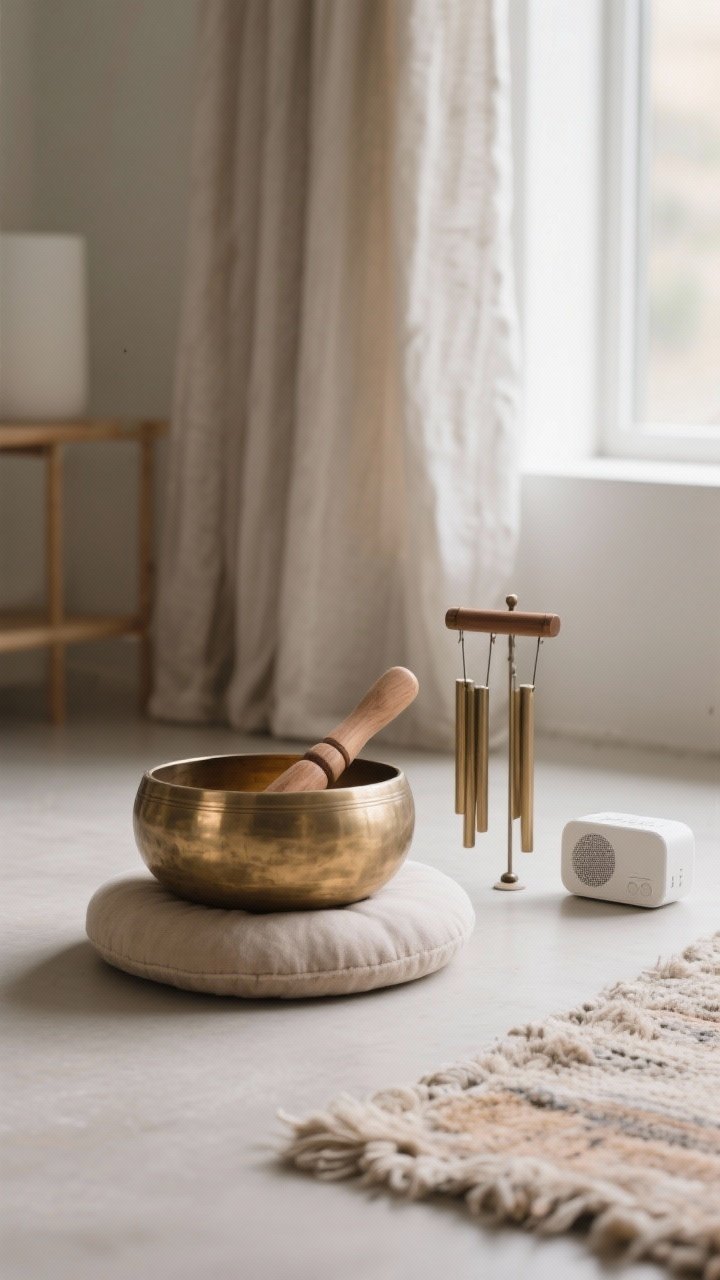
Sound is decor for your ears. The right background audio can mask street noise and pull you into the present. The wrong one? You’ll hyper-focus on that one annoying drip.
Sound Ideas
- White noise or nature tracks: Ocean, rain, or forest—classic for a reason.
- Chimes or a singing bowl: Use to open/close your session. Ritual = results.
- Soft textiles: Curtains, rugs, and cushions muffle echo without you trying.
If you share walls, a compact sound machine is your new bestie.
8. Scent Rituals: Engage Your Breath
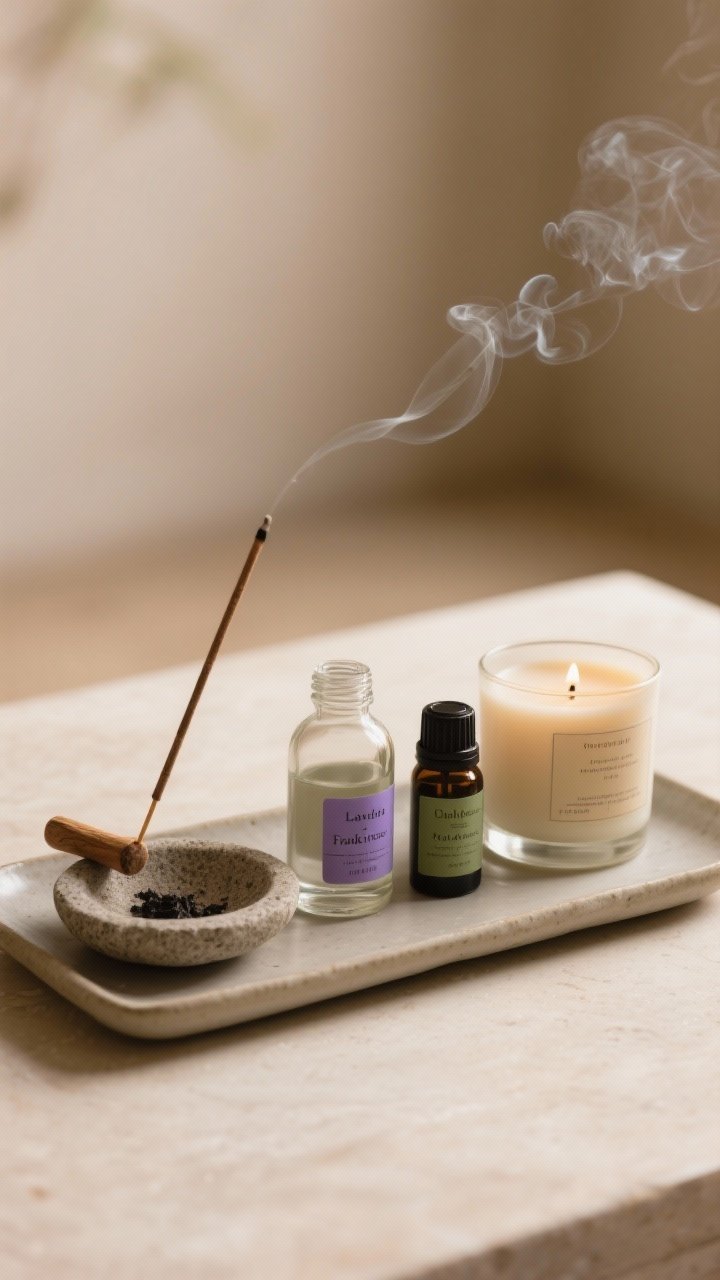
Scent anchors your practice—one whiff and your brain knows it’s go time. But go easy. You want a hint of calm, not a perfume counter.
Scent Options
- Essential oils: Lavender for sleep, frankincense for focus, eucalyptus for clarity.
- Incense sticks or cones: Sandalwood and cedar are grounding. Keep a dish for ash.
- Candles: Choose natural wax and subtle blends. One candle, not five.
Pro move: Use the same scent every session to create a Pavlov-level habit loop.
9. Altars and Intention Corners

No, not religious unless you want it to be. An altar is simply a small, meaningful vignette that helps you set intention—like a mini shrine to your calmest self.
Build a Simple Altar
- Base: A tray or low shelf to gather items.
- Objects: A candle, a crystal, a photo, a handwritten mantra, a sprig of eucalyptus.
- Balance: Mix heights (tall candle, low stone), keep colors cohesive.
Keep it uncluttered. Every piece should earn its spot. If it doesn’t spark peace, it’s out.
10. Storage That Doesn’t Kill the Vibe
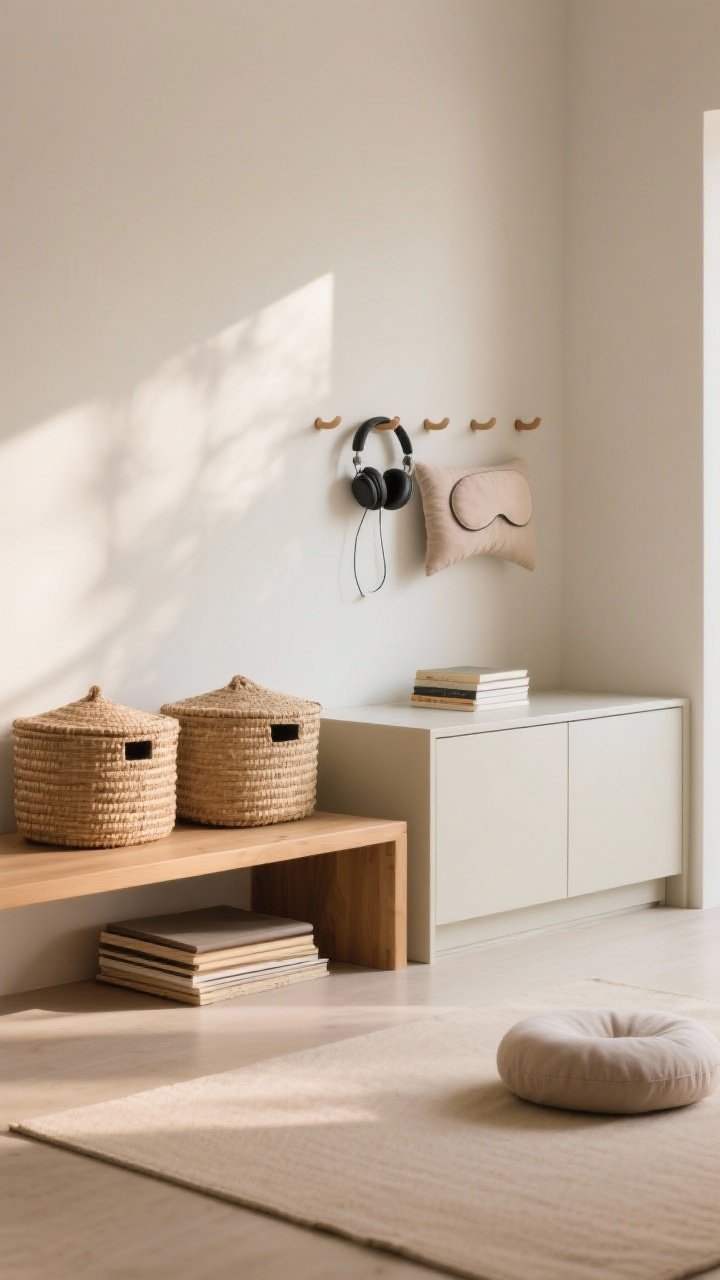
Your meditation room isn’t a storage unit, but you do need spots to tuck things away. Hidden storage = visual calm. Out of sight, out of mind, out of stress.
Clutter-Proof Ideas
- Lidded baskets: Store mats, blankets, journals—instant tidy.
- Low cabinets or benches: Doubles as seating; stashes the not-cute stuff.
- Wall pegs: Hang headphones, eye pillows, or a robe for post-practice lounging.
Do a quick reset after each session—30 seconds now saves you from chaos later.
11. Art, Symbols, and Visual Silence
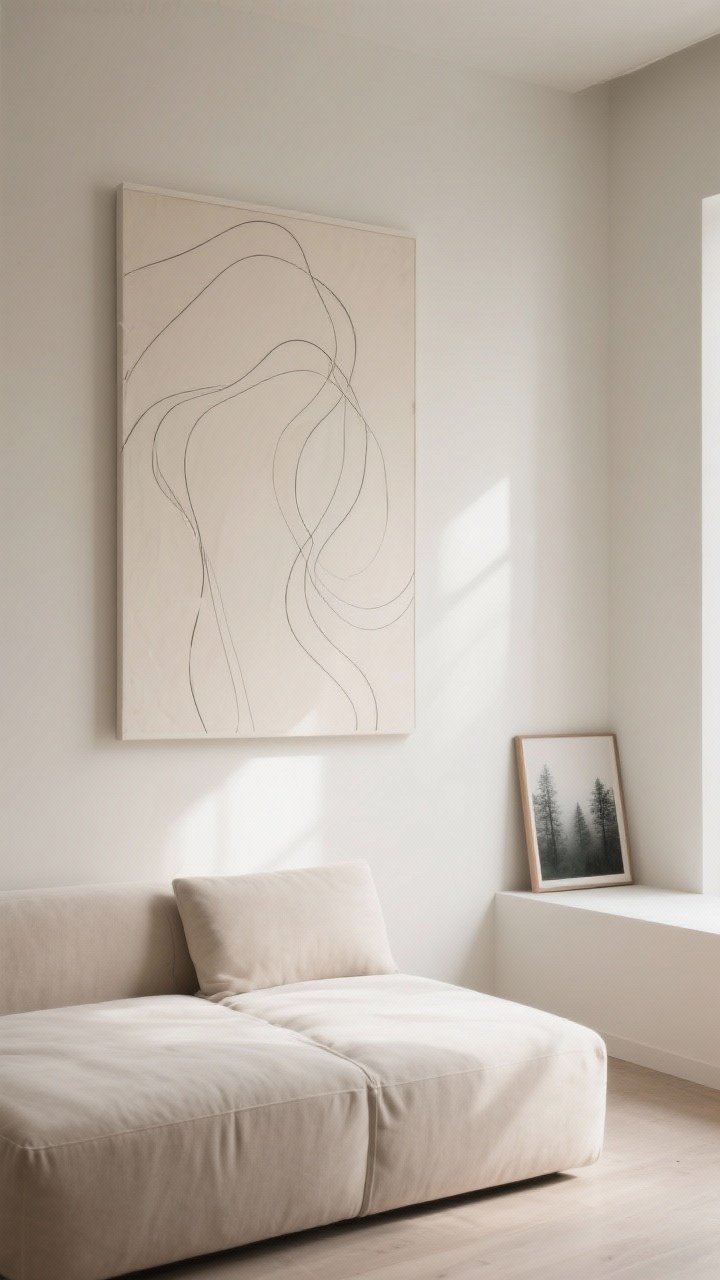
Art belongs in your meditation space, but choose pieces that whisper, not shout. Look for imagery that supports stillness and curiosity, not mental noise.
Visual Calm Tips
- Abstracts and line art: Soft curves and neutral palettes feel serene.
- Nature photography: Misty forests, ripples on water, sunrise horizons.
- Mantras or calligraphy: Keep typography soft and minimal. One focal piece max.
Leave some empty wall space—visual silence is a design choice. IMO, negative space is underrated.
12. Create a Tiny Ritual: The Habit That Makes It Work
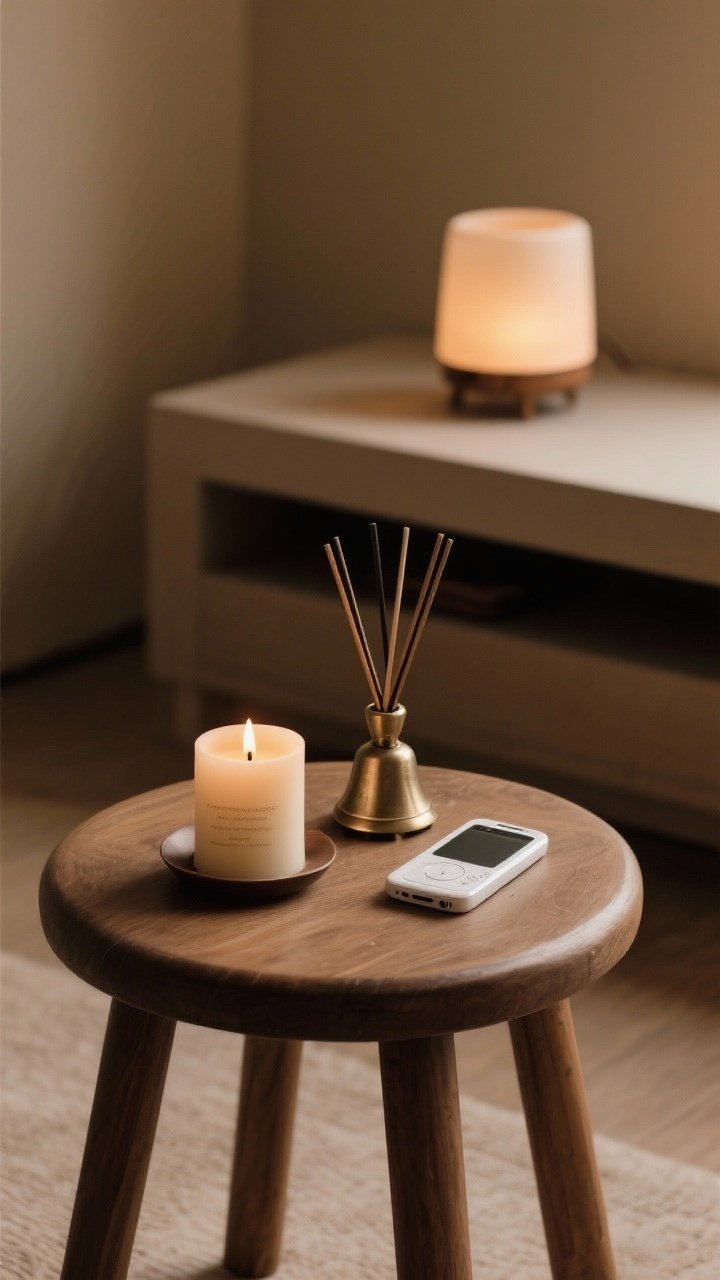
Decor matters, but your ritual seals the deal. Build a 2-minute sequence that cues your brain: “We’re entering calm mode.” Then show up, even when you’re busy.
Your Ritual, Simplified
- Step 1: Light one candle or start your diffuser.
- Step 2: Strike a chime or take three slow breaths.
- Step 3: Sit, set a timer, and stay—five minutes counts.
Consistency beats perfection. A peaceful nook + a tiny ritual = a calmer you. FYI, that combo is basically magic.
Bonus Styling Tips (Because You’ll Ask)
- Keep cords invisible. Use cable clips and tuck power strips into baskets.
- Go low. Low furniture keeps your line of sight open and soothing.
- Seasonal swap: Lighter fabrics and greenery in summer; wool throws and warmer scents in winter.
- Personal touch: One sentimental object adds soul without visual noise.
Sample Layouts to Steal
- Window Nook: Rug + cushion stack by the window, plant to the left, tray altar on a stool, floor lamp behind.
- Corner Sanctuary: Round jute rug, zafu/zabuton, salt lamp, folding screen to carve out space, basket storage.
- Shelf Moment: Low wall shelf with candle, journal, and stone; cushion below; art above for a subtle focal point.
Here’s the real secret: your meditation room doesn’t have to be perfect—it just has to feel like you. Start simple, adjust as you go, and let the space evolve with your practice. Breathe in, breathe out, and enjoy your new favorite room in the house.