Classic Rosemary Focaccia – Simple, Fragrant, and Perfectly Chewy
Focaccia is the kind of bread that makes a meal feel special without asking for much in return. It’s crisp on the outside, soft and chewy inside, and rich with olive oil and rosemary. This version is straightforward enough for beginners but satisfying for seasoned bakers too.
With a few pantry ingredients and a bit of rest time, you’ll get a golden, dimpled loaf that fills your kitchen with the best kind of bakery smell.
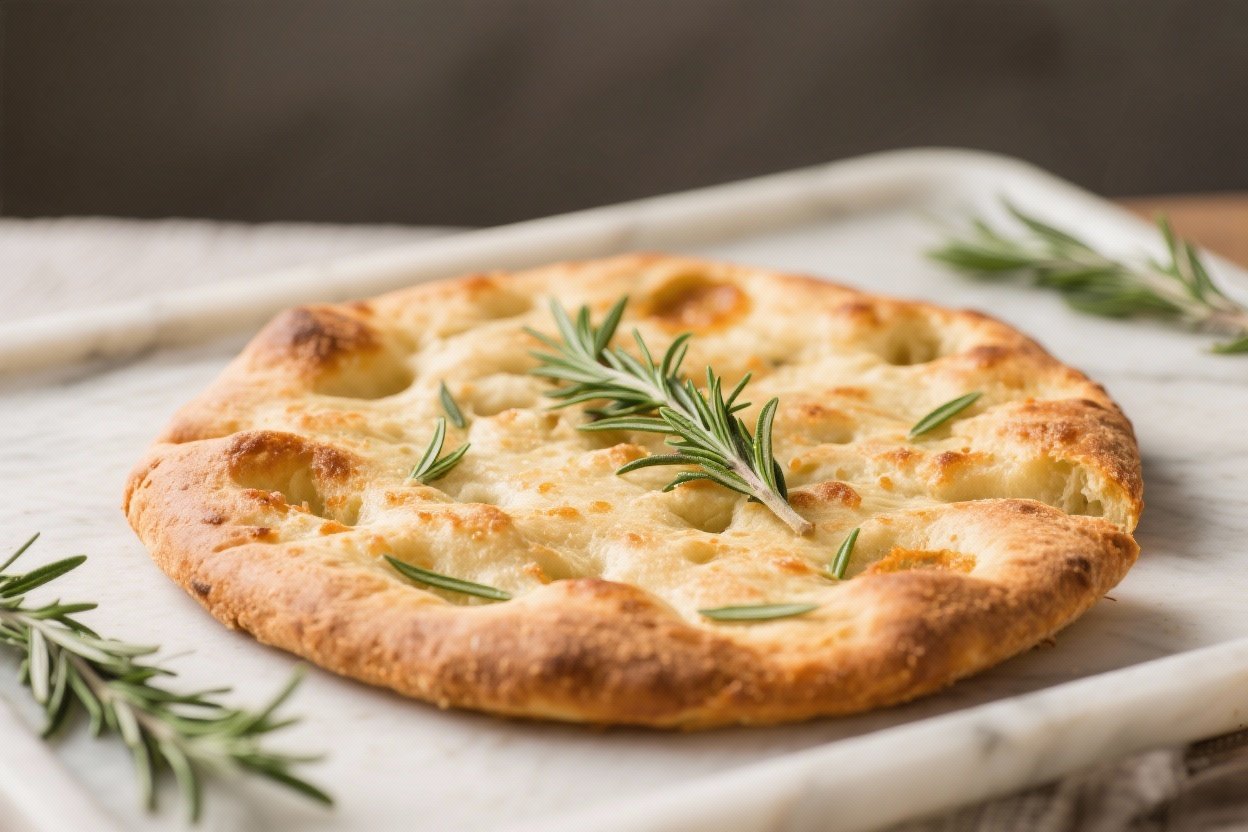
Classic Rosemary Focaccia - Simple, Fragrant, and Perfectly Chewy
Ingredients
Method
- Mix the dough: In a large bowl, combine warm water, yeast, and honey (if using). Stir to dissolve.Add flour, fine sea salt, and 1/4 cup olive oil. Mix with a spatula until no dry streaks remain. The dough will be sticky—this is good.
- First rest (autolyse): Cover the bowl and let the dough rest for 15 minutes.This relaxes the flour and makes the dough easier to handle.
- Strengthen the dough: With damp hands, perform 2–3 sets of stretch-and-folds: grab an edge of the dough, pull it up, and fold it over itself. Rotate the bowl and repeat 6–8 times. Rest for 10 minutes between sets.This builds structure without kneading.
- First rise: Cover tightly and let it rise at room temperature until doubled, about 60–90 minutes, depending on room temp. It should look puffy and jiggly.
- Prepare the pan: Generously oil a rimmed sheet pan (about 9x13 inches or similar) with 2 tablespoons olive oil. You can also use a round 12-inch pan for a thicker loaf.
- Pan the dough: Scrape the dough into the pan.Drizzle 1 tablespoon oil on top. With oiled fingertips, gently press and stretch the dough toward the edges. Don’t force it; if it resists, give it 10 minutes to relax and stretch again until it fills most of the pan.
- Second rise: Cover lightly and let the dough rise again for 30–45 minutes, until visibly puffy.Meanwhile, preheat your oven to 450°F (232°C).
- Dimple and top: Drizzle the remaining oil over the surface. Press your fingertips straight down into the dough to make deep dimples across the entire surface. Sprinkle the chopped rosemary and flaky salt evenly.
- Bake: Place the pan on the middle rack and bake for 20–25 minutes, until the top is golden brown and the edges are crisp.If you like extra color, give it 2–3 more minutes.
- Finish and cool: Let it rest in the pan for 5 minutes, then slide it onto a wire rack. For a glossy finish, brush with a little more olive oil while warm. Cool for at least 10–15 minutes before slicing.
Why This Recipe Works

This focaccia leans on a high-hydration dough and plenty of olive oil to create a tender crumb and a crisp crust. The dough gets a slow rise, which develops flavor and makes the texture more elastic and airy. Rosemary adds a piney aroma that pairs beautifully with the fruity notes of olive oil.
A final drizzle of oil and a shower of flaky salt just before baking ensures a savory, well-seasoned top.
We also use the dimple method to distribute oil and keep the crust from puffing unevenly. Those little pools of oil bake into the bread, giving it that signature sheen and irresistible edge crisp.
Ingredients
- 4 cups (500 g) bread flour (you can use all-purpose, but bread flour gives better chew)
- 1 3/4 cups (415 ml) warm water (about 100–105°F / 38–41°C)
- 2 1/4 tsp (7 g) instant or rapid-rise yeast (one packet)
- 2 tsp (10 g) fine sea salt
- 1/4 cup (60 ml) extra-virgin olive oil for the dough
- 1/4 cup (60 ml) extra-virgin olive oil for the pan and topping
- 1–2 tbsp fresh rosemary leaves, roughly chopped
- 1–2 tsp flaky sea salt (for topping)
- Optional: 1 tsp honey or sugar (helps yeast activity)
Instructions

- Mix the dough: In a large bowl, combine warm water, yeast, and honey (if using). Stir to dissolve.Add flour, fine sea salt, and 1/4 cup olive oil. Mix with a spatula until no dry streaks remain. The dough will be sticky—this is good.
- First rest (autolyse): Cover the bowl and let the dough rest for 15 minutes.This relaxes the flour and makes the dough easier to handle.
- Strengthen the dough: With damp hands, perform 2–3 sets of stretch-and-folds: grab an edge of the dough, pull it up, and fold it over itself. Rotate the bowl and repeat 6–8 times. Rest for 10 minutes between sets.This builds structure without kneading.
- First rise: Cover tightly and let it rise at room temperature until doubled, about 60–90 minutes, depending on room temp. It should look puffy and jiggly.
- Prepare the pan: Generously oil a rimmed sheet pan (about 9×13 inches or similar) with 2 tablespoons olive oil. You can also use a round 12-inch pan for a thicker loaf.
- Pan the dough: Scrape the dough into the pan.Drizzle 1 tablespoon oil on top. With oiled fingertips, gently press and stretch the dough toward the edges. Don’t force it; if it resists, give it 10 minutes to relax and stretch again until it fills most of the pan.
- Second rise: Cover lightly and let the dough rise again for 30–45 minutes, until visibly puffy.Meanwhile, preheat your oven to 450°F (232°C).
- Dimple and top: Drizzle the remaining oil over the surface. Press your fingertips straight down into the dough to make deep dimples across the entire surface. Sprinkle the chopped rosemary and flaky salt evenly.
- Bake: Place the pan on the middle rack and bake for 20–25 minutes, until the top is golden brown and the edges are crisp.If you like extra color, give it 2–3 more minutes.
- Finish and cool: Let it rest in the pan for 5 minutes, then slide it onto a wire rack. For a glossy finish, brush with a little more olive oil while warm. Cool for at least 10–15 minutes before slicing.
How to Store
- Room temperature: Wrap tightly in foil or keep in an airtight container for up to 2 days.Recrisp in a 375°F (190°C) oven for 5–8 minutes.
- Freezer: Cut into slabs, wrap well, and freeze for up to 2 months. Reheat from frozen at 375°F (190°C) for 10–12 minutes.
- Avoid the fridge: Refrigeration can dry out bread and dull the flavor. Freeze instead if storing longer than 2 days.
Health Benefits
- Olive oil provides heart-healthy monounsaturated fats and antioxidants.It’s a flavorful alternative to butter for enriched breads.
- Rosemary brings aromatic compounds like rosmarinic acid, known for antioxidant and anti-inflammatory properties.
- Slow fermentation (even a modest rise) can improve digestibility and flavor by allowing enzymes to break down some starches.
- Control over salt means you season to taste without the excess sodium found in many packaged breads.
What Not to Do
- Don’t skimp on oil. Focaccia needs oil in the dough and the pan for both flavor and texture. Too little and you’ll lose that signature crust.
- Don’t rush the rise. If the dough isn’t puffy, the crumb won’t be airy. Give it time; temperature and yeast activity vary.
- Don’t over-flour the dough. It should be sticky.Extra flour makes it dense. Use oiled hands instead of adding flour.
- Don’t forget deep dimples. Shallow pokes don’t hold oil and can lead to uneven bubbles and a dry top.
- Don’t bake too cool. A hot oven gives you color and a crisp edge. Preheat fully before baking.
Variations You Can Try
- Garlic and Rosemary: Add thinly sliced garlic over the top before baking for a mellow, sweet garlicky bite.
- Tomato and Olive: Scatter halved cherry tomatoes and pitted olives onto the dough with rosemary.Reduce flaky salt slightly to account for olives.
- Caramelized Onion: Spread cooled caramelized onions over the surface, then dimple gently to nestle them in.
- Cheesy Focaccia: Sprinkle grated Parmesan or Pecorino in the last 5 minutes of baking for a savory finish.
- Herb Blend: Combine rosemary with thyme and oregano for a fuller herb profile.
- Whole-Wheat Boost: Swap 1 cup of the bread flour for whole-wheat flour. Add 1–2 tablespoons extra water if the dough feels tight.
FAQ
Can I use active dry yeast instead of instant yeast?
Yes. Bloom active dry yeast in the warm water with the honey for 5–10 minutes until foamy before adding the flour and salt.
The rest of the method stays the same.
My dough is too sticky to handle. Did I do something wrong?
Sticky dough is normal for focaccia. Instead of adding flour, oil your hands and the pan.
If it’s extremely loose, give it a few extra stretch-and-folds and an extra 10 minutes of rest to build strength.
How do I get bigger air pockets?
Use gentle handling, let the dough fully rise, and avoid deflating it when transferring to the pan. A well-hydrated dough and proper dimpling help create those open crumb pockets.
Can I make the dough ahead?
Absolutely. After the first rise, cover and refrigerate the dough for up to 24 hours.
Bring it to room temperature for 30–45 minutes, then proceed with stretching in the pan, second rise, and baking.
Why is the bottom not crisp?
Make sure the pan is well oiled and the oven is fully preheated to 450°F (232°C). A dark metal pan or a pizza stone under the sheet pan can help brown the bottom.
Is fresh rosemary necessary?
Fresh rosemary gives the best flavor and aroma, but dried rosemary works in a pinch. Use about half the amount and crush it slightly to release oils.
What should I serve with focaccia?
It’s great with soups, salads, antipasto platters, or simply dipped in olive oil and balsamic.
It also makes an excellent sandwich bread when sliced horizontally.
Wrapping Up
Classic rosemary focaccia is all about simple ingredients treated with care. With good olive oil, a patient rise, and confident dimpling, you’ll pull a bakery-quality loaf from your home oven. Keep the method handy, and tweak the toppings to match your meal or mood.
Once you’ve made it a couple of times, it becomes a weekly staple you’ll look forward to baking—and sharing.