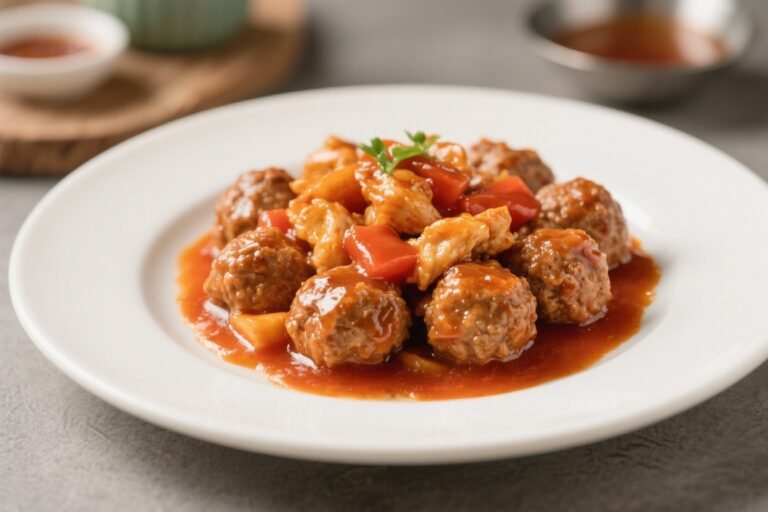
Roasted Garlic Marinara Sauce – Rich, Cozy, and Packed With Flavor
Roasted garlic has a way of transforming a simple marinara into something special. It mellows into a buttery, sweet flavor that blends beautifully with ripe tomatoes and herbs. This sauce is comforting, versatile, and easy to pull together with pantry staples.
Whether you’re tossing it with pasta, spooning it over meatballs, or layering it in lasagna, it tastes like a slow-simmered classic without a fussy process. Make a big batch and enjoy the leftovers all week.
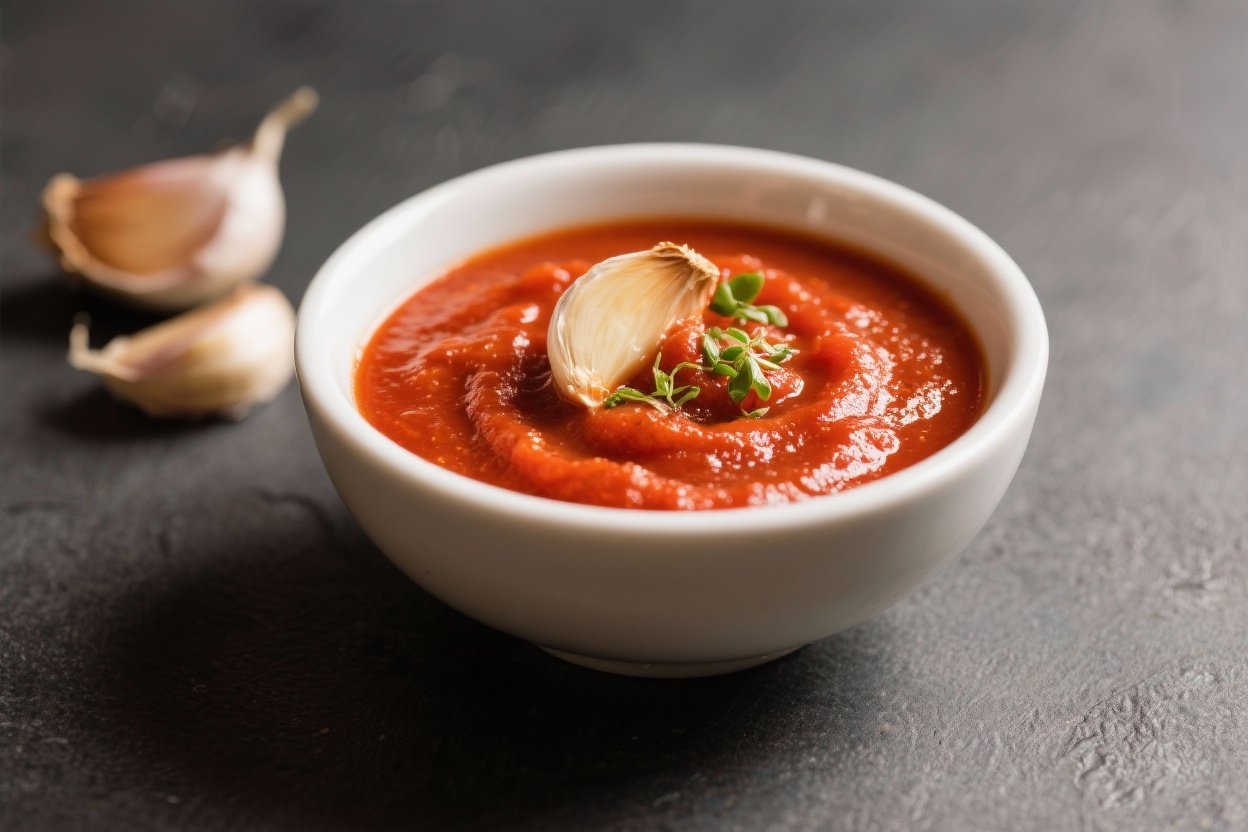
Roasted Garlic Marinara Sauce - Rich, Cozy, and Packed With Flavor
Ingredients
Method
- Roast the garlic: Preheat the oven to 400°F (200°C).Slice the tops off the garlic heads to expose the cloves. Place each head on foil, drizzle with olive oil, and wrap tightly. Roast for 35–45 minutes until the cloves are soft and golden.Let cool, then squeeze the roasted garlic out of the skins.
- Sauté the aromatics: In a large pot, warm 2 tablespoons of olive oil over medium heat. Add the diced onion and a pinch of salt. Cook 6–8 minutes until soft and translucent.Stir in red pepper flakes and cook 30 seconds.
- Add tomato paste and wine: Stir in the tomato paste and cook for 1 minute to caramelize slightly. Pour in the red wine, scraping the bottom of the pot. Simmer 2–3 minutes until reduced by about half.
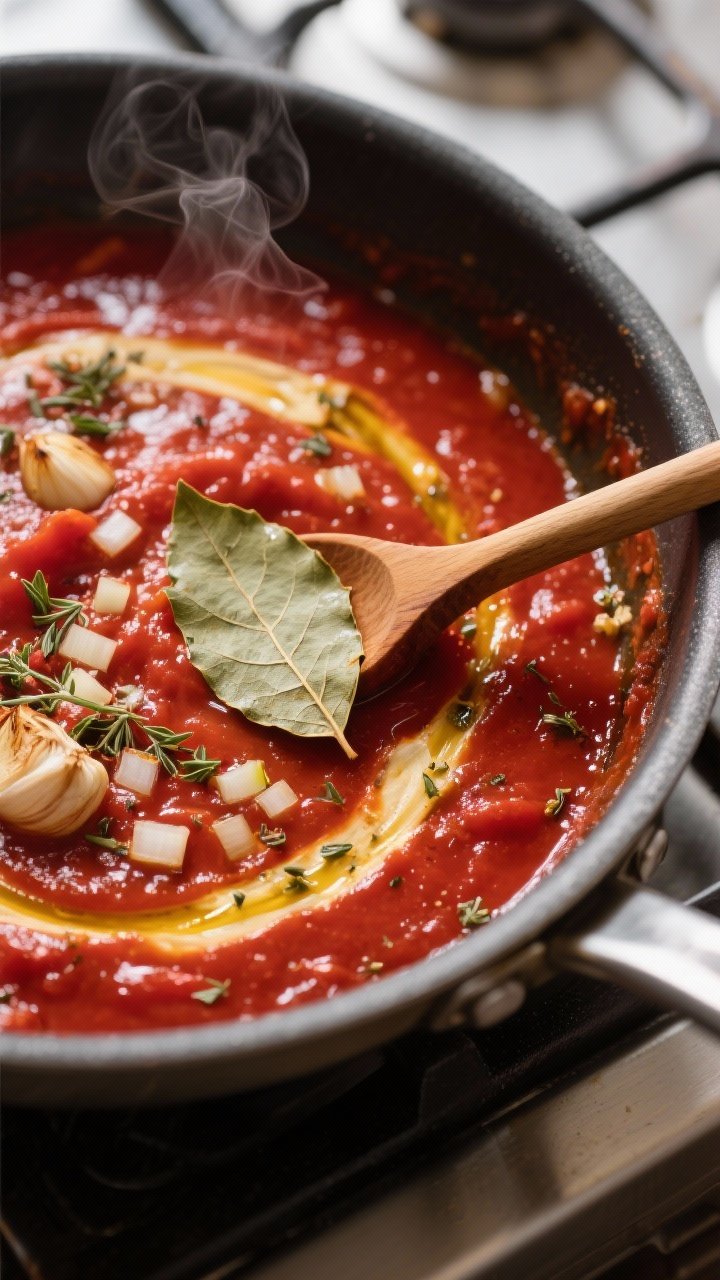
- Build the sauce: Add crushed tomatoes, roasted garlic (mash it with a fork first), oregano, dried basil, bay leaf, 1 teaspoon salt, and a few grinds of pepper.Stir well.
- Simmer low and slow: Bring to a gentle simmer. Reduce heat to low and cook uncovered for 25–35 minutes, stirring occasionally, until thickened and glossy. Taste and adjust salt and pepper as needed.
- Balance the acidity: Stir in balsamic vinegar (or sugar) to round out the flavors.Start small, taste, and add more if needed.
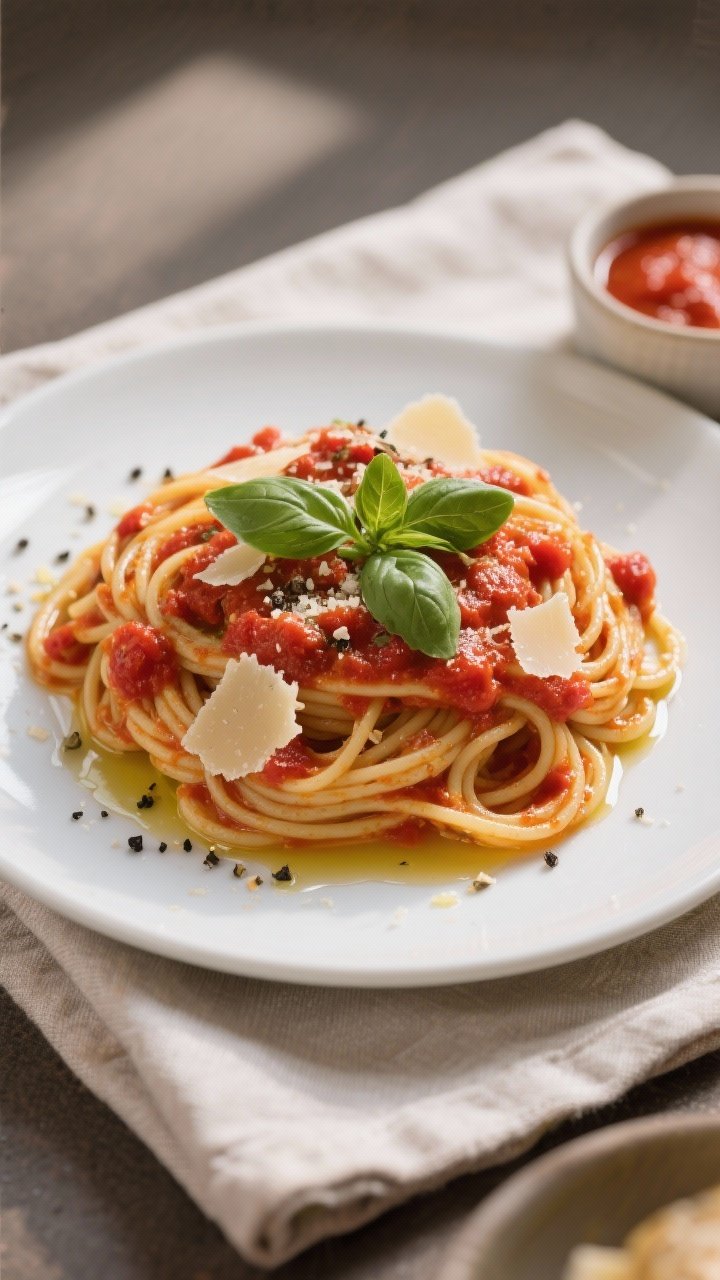
- Finish and serve: Remove the bay leaf. If using fresh basil or parsley, stir it in now. For a smoother texture, blend part or all of the sauce with an immersion blender.Serve over hot pasta or use as desired.
What Makes This Recipe So Good
- Roasted garlic brings depth: Roasting turns sharp, raw garlic into a soft, caramelized spread that gives the sauce a smooth, rounded flavor.
- Balanced and bright: A touch of red wine and a splash of balsamic (or sugar) balance acidity and add complexity without overshadowing the tomatoes.
- Weeknight simple: The hands-on work is minimal. Roast the garlic, simmer the sauce, and you’re done.
- Versatile base: Use it for pasta, pizza, eggplant Parmesan, stuffed shells, baked ziti, or as a dipping sauce for breadsticks.
- Freezer-friendly: This sauce stores well, so you can keep a stash ready for quick meals.
What You’ll Need
- 2 heads of garlic
- 2 tablespoons olive oil (plus more for roasting)
- 1 small yellow onion, finely diced
- 1 teaspoon crushed red pepper flakes (optional, adjust to taste)
- 2 cans (28 ounces each) crushed tomatoes or whole peeled San Marzano tomatoes, hand-crushed
- 1/3 cup dry red wine (optional, but recommended)
- 1 tablespoon tomato paste
- 1 teaspoon dried oregano
- 1 teaspoon dried basil (or 1/4 cup fresh basil, chopped, added at the end)
- 1 bay leaf
- 1 teaspoon balsamic vinegar (or 1–2 teaspoons sugar, to taste)
- Salt and black pepper, to taste
- Fresh parsley or basil, chopped, for finishing (optional)
How to Make It
- Roast the garlic: Preheat the oven to 400°F (200°C).Slice the tops off the garlic heads to expose the cloves. Place each head on foil, drizzle with olive oil, and wrap tightly. Roast for 35–45 minutes until the cloves are soft and golden.
Let cool, then squeeze the roasted garlic out of the skins.
- Sauté the aromatics: In a large pot, warm 2 tablespoons of olive oil over medium heat. Add the diced onion and a pinch of salt. Cook 6–8 minutes until soft and translucent.Stir in red pepper flakes and cook 30 seconds.
- Add tomato paste and wine: Stir in the tomato paste and cook for 1 minute to caramelize slightly. Pour in the red wine, scraping the bottom of the pot. Simmer 2–3 minutes until reduced by about half.
- Build the sauce: Add crushed tomatoes, roasted garlic (mash it with a fork first), oregano, dried basil, bay leaf, 1 teaspoon salt, and a few grinds of pepper.Stir well.
- Simmer low and slow: Bring to a gentle simmer. Reduce heat to low and cook uncovered for 25–35 minutes, stirring occasionally, until thickened and glossy. Taste and adjust salt and pepper as needed.
- Balance the acidity: Stir in balsamic vinegar (or sugar) to round out the flavors.Start small, taste, and add more if needed.
- Finish and serve: Remove the bay leaf. If using fresh basil or parsley, stir it in now. For a smoother texture, blend part or all of the sauce with an immersion blender.Serve over hot pasta or use as desired.
How to Store
- Refrigerator: Cool completely and store in airtight containers for up to 5 days.
- Freezer: Portion into freezer-safe containers or zip-top bags. Freeze up to 3 months. Lay bags flat for easy stacking.
- Reheating: Warm gently on the stove over low heat, adding a splash of water if it’s too thick.Stir occasionally to prevent scorching.
- Make-ahead tip: Roast extra garlic and freeze in small portions. You’ll be halfway to great sauce any time.
Health Benefits
- Garlic’s antioxidants: Roasted garlic still provides compounds linked to heart health and immune support, with a milder taste that’s easier on the stomach.
- Lycopene-rich tomatoes: Cooking tomatoes boosts lycopene availability, which is associated with antioxidant benefits.
- Olive oil fats: Extra-virgin olive oil adds heart-friendly monounsaturated fats and helps you absorb fat-soluble nutrients.
- Lower-sugar option: You control the sweetness. Use balsamic sparingly or skip added sugar if you prefer.
- Plant-forward and dairy-free: This sauce fits many dietary patterns, including vegan and vegetarian diets.
Pitfalls to Watch Out For
- Burning the garlic: Over-roasted or scorched garlic tastes bitter.Keep it wrapped and check at 35 minutes.
- Over-salting early: The sauce reduces as it simmers, which concentrates salt. Season lightly at first and adjust at the end.
- High heat simmer: A fast boil can make the sauce watery and harsh. Keep it at a gentle simmer for a velvety texture.
- Skipping the tomato paste step: Briefly toasting the paste deepens flavor.Don’t just drop it in raw.
- Acidity imbalance: If the tomatoes are very tart, a touch of balsamic or sugar smooths the edges. Don’t overdo it; you want brightness, not sweetness.
Variations You Can Try
- Spicy arrabbiata style: Double the red pepper flakes and add a pinch of smoked paprika.
- Herb-forward: Stir in fresh basil, oregano, and parsley at the end for a garden-fresh finish.
- Mushroom boost: Sauté sliced cremini or portobello with the onions for savory depth.
- Vodka twist: Add 1/4 cup vodka after the tomato paste step and finish with a splash of cream for a luxurious pink sauce.
- Olive and caper puttanesca: Fold in chopped olives, capers, and a few anchovy fillets for a briny kick.
- Roasted vegetable blend: Roast zucchini, bell peppers, or eggplant alongside the garlic and blend some into the sauce.
- No-wine version: Skip the wine and add 1/4 cup low-sodium vegetable broth plus a squeeze of lemon at the end.
FAQ
Can I use fresh tomatoes instead of canned?
Yes. Use about 4 pounds of ripe tomatoes.
Score, blanch, peel, and core them, then chop and cook a bit longer to reduce excess liquid. San Marzano–style or meaty plum tomatoes work best.
How do I make the sauce thicker?
Simmer uncovered a little longer, stirring now and then. You can also add an extra tablespoon of tomato paste or blend a portion of the sauce to help it thicken naturally.
Is the wine necessary?
No, but it adds depth.
If you skip it, replace with vegetable broth and a teaspoon of balsamic or lemon juice at the end to brighten the flavors.
Can I roast the garlic ahead of time?
Absolutely. Roast several heads, squeeze out the cloves, and refrigerate in a sealed container for up to 4 days, or freeze in small portions for up to 3 months.
What pasta pairs best with this sauce?
Spaghetti, rigatoni, penne, and bucatini are all great. The sauce clings well to ridged shapes, and it’s also perfect for baked pasta dishes.
How can I make it smoother?
Use an immersion blender directly in the pot, or transfer part of the sauce to a blender.
Blend carefully and briefly, then return it to the pot to keep some body.
Can I add protein?
Yes. Brown Italian sausage, ground beef, or plant-based crumbles with the onions. You can also poach meatballs in the sauce during the last 20 minutes of simmering.
Final Thoughts
Roasted garlic marinara sauce is simple, cozy, and endlessly useful.
With just a few steps, you get a sauce that tastes like it simmered all afternoon. Keep the base recipe handy, then tweak it with herbs, heat, or add-ins to match your mood. Make extra, stash some in the freezer, and you’ve always got a flavorful head start on dinner.