Vegan Fresh Spinach Pasta – Bright, Simple, and Comforting
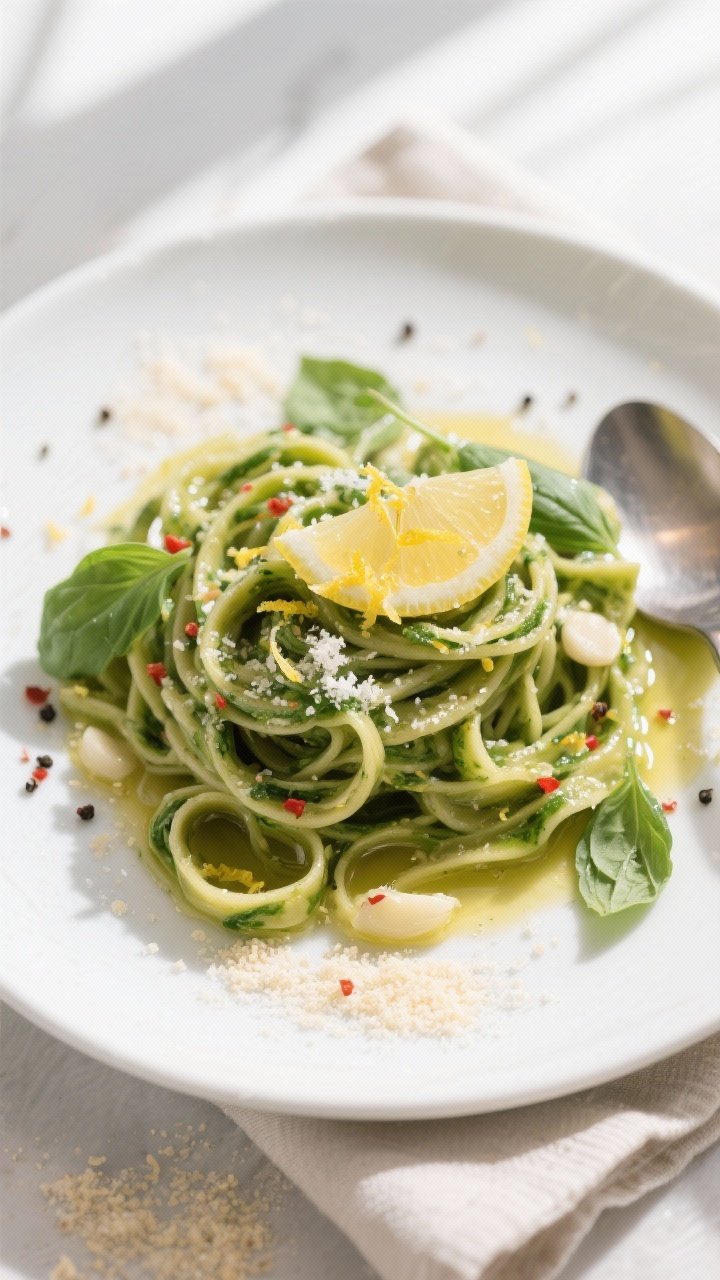
Fresh spinach pasta sounds fancy, but it’s surprisingly easy to make at home. You get silky ribbons of pasta with a delicate green color and a clean, earthy flavor. This version stays fully plant-based without losing any chew or richness.
If you’ve never made pasta from scratch, this is a great place to start. The dough comes together fast, and the result tastes far better than anything from a box.
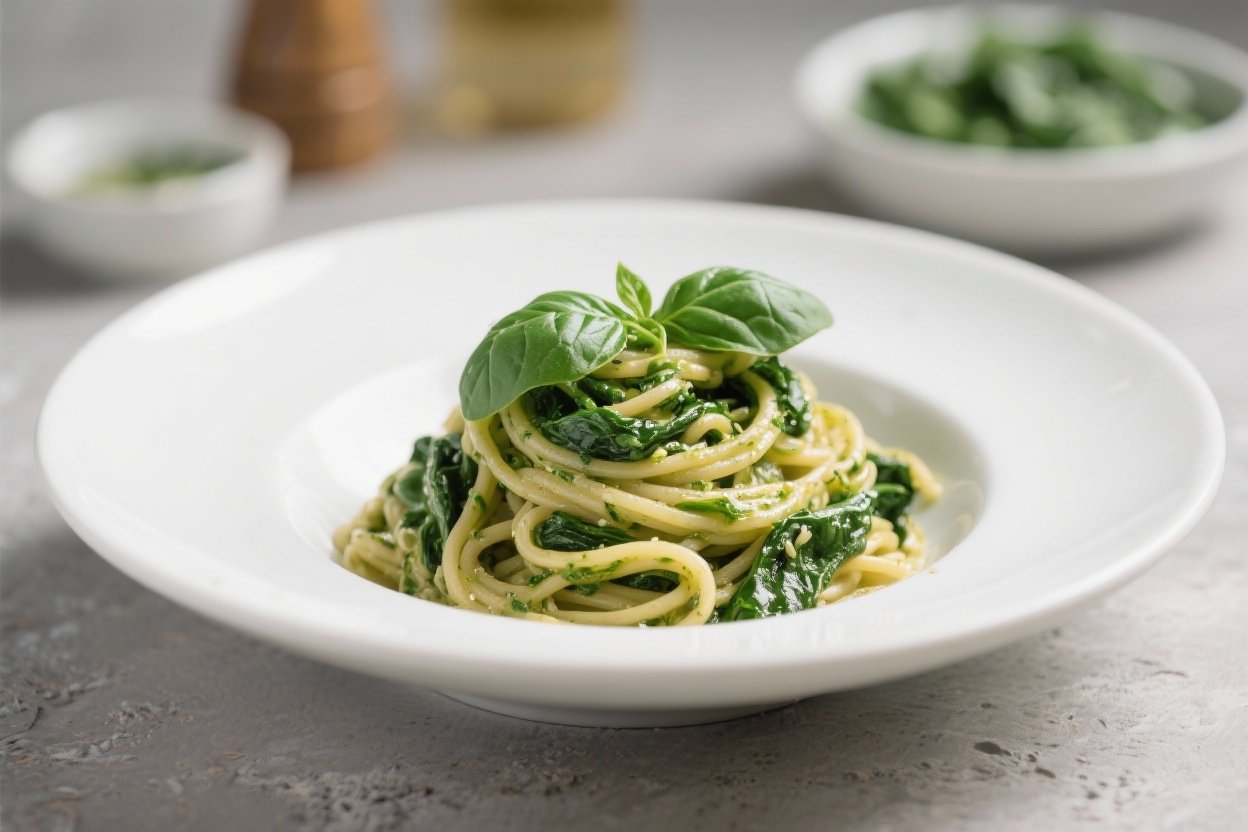
Vegan Fresh Spinach Pasta - Bright, Simple, and Comforting
Ingredients
Method
- Blanch the spinach. Bring a pot of water to a boil.Add the spinach and cook for 30–45 seconds until wilted and bright green. Transfer to an ice bath to stop the cooking.
- Drain and squeeze. Squeeze the spinach dry—really dry. You want to remove as much water as possible.Excess moisture makes sticky dough.
- Blend the spinach. Add the squeezed spinach to a blender with 2 tablespoons olive oil, 1 tablespoon lemon juice, and a pinch of salt. Blend until very smooth. You should have about 1/2 cup thick puree.If it’s too thick to blend, add 1–2 teaspoons water.
- Mix the flours. In a large bowl, combine 2 cups all-purpose flour, 1 cup semolina, and 1 teaspoon fine sea salt. Make a well in the center.
- Make the dough. Pour the spinach puree into the well. Stir with a fork, gradually pulling in the flour until a shaggy dough forms.If it’s too dry to come together, add 1 teaspoon water at a time. If too sticky, sprinkle more flour.
- Knead until smooth. Turn the dough onto a clean surface. Knead for 8–10 minutes until smooth, elastic, and slightly tacky but not sticky.The dough should slowly spring back when pressed.
- Rest the dough. Wrap in plastic or cover with an inverted bowl. Rest at room temperature for 30–45 minutes. This relaxes gluten and makes rolling easier.
- Divide and roll. Cut the dough into 4 pieces.Keep pieces covered so they don’t dry out. Using a pasta machine or rolling pin, flatten one piece at a time. If using a machine, start on the widest setting, then progressively roll thinner.Aim for a thin sheet where you can faintly see your hand through it.
- Cut the pasta. Dust sheets with semolina to prevent sticking. Cut into fettuccine, tagliatelle, or pappardelle. Lightly toss strands with semolina and form into loose nests.
- Boil the pasta. Bring a large pot of salted water to a rolling boil.Add pasta and cook 1–3 minutes until al dente. Fresh pasta cooks fast, so taste early.
- Make a simple sauce. While the pasta cooks, warm 2 tablespoons olive oil in a skillet over low heat. Add 2 minced garlic cloves and a pinch of red pepper flakes.Cook gently until fragrant, not browned. Stir in a ladle of starchy pasta water and a sprinkle of lemon zest.
- Toss and serve. Transfer pasta directly to the skillet, adding a splash of cooking water as needed to create a glossy coating. Finish with a squeeze of lemon, black pepper, and nutritional yeast or vegan Parmesan, if using.Top with torn basil.
Why This Recipe Works
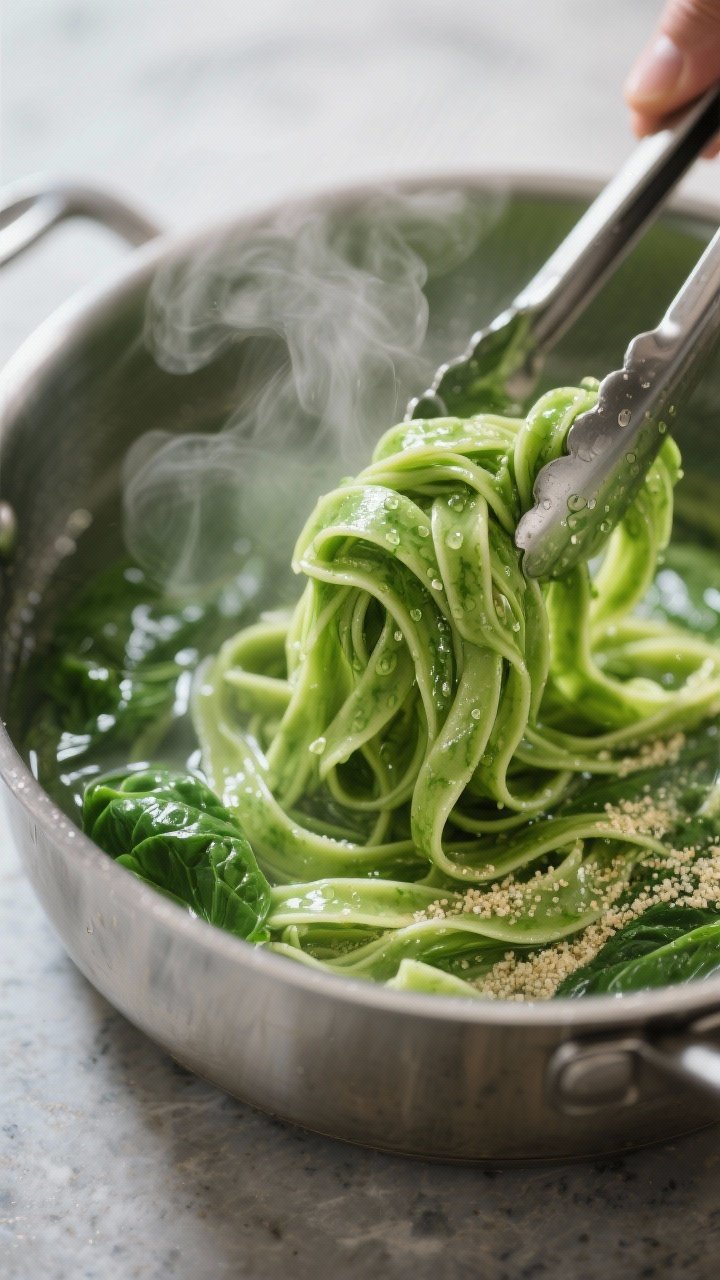
Spinach adds moisture and natural color, so the dough stays supple without eggs. A blend of all-purpose flour and semolina delivers the right balance: soft enough to roll, firm enough to hold a pleasant bite.
Kneading develops gluten, which gives the pasta its signature chew. Resting the dough lets it relax, so it rolls out thin without snapping back. A quick sauce keeps the focus on the fresh pasta, not heavy add-ins.
Shopping List
- Fresh baby spinach (5–6 packed cups, about 6 ounces)
- All-purpose flour (2 cups)
- Semolina flour (1 cup), plus extra for dusting
- Fine sea salt
- Extra-virgin olive oil
- Lemon (for zest and juice)
- Garlic (2–3 cloves)
- Nutritional yeast or vegan Parmesan (optional, for serving)
- Fresh basil or parsley (optional, for garnish)
- Black pepper and red pepper flakes (optional)
Instructions
- Blanch the spinach. Bring a pot of water to a boil.Add the spinach and cook for 30–45 seconds until wilted and bright green. Transfer to an ice bath to stop the cooking.
- Drain and squeeze. Squeeze the spinach dry—really dry. You want to remove as much water as possible.Excess moisture makes sticky dough.
- Blend the spinach. Add the squeezed spinach to a blender with 2 tablespoons olive oil, 1 tablespoon lemon juice, and a pinch of salt. Blend until very smooth. You should have about 1/2 cup thick puree.If it’s too thick to blend, add 1–2 teaspoons water.
- Mix the flours. In a large bowl, combine 2 cups all-purpose flour, 1 cup semolina, and 1 teaspoon fine sea salt. Make a well in the center.
- Make the dough. Pour the spinach puree into the well. Stir with a fork, gradually pulling in the flour until a shaggy dough forms.If it’s too dry to come together, add 1 teaspoon water at a time. If too sticky, sprinkle more flour.
- Knead until smooth. Turn the dough onto a clean surface. Knead for 8–10 minutes until smooth, elastic, and slightly tacky but not sticky.The dough should slowly spring back when pressed.
- Rest the dough. Wrap in plastic or cover with an inverted bowl. Rest at room temperature for 30–45 minutes. This relaxes gluten and makes rolling easier.
- Divide and roll. Cut the dough into 4 pieces.Keep pieces covered so they don’t dry out. Using a pasta machine or rolling pin, flatten one piece at a time. If using a machine, start on the widest setting, then progressively roll thinner.
Aim for a thin sheet where you can faintly see your hand through it.
- Cut the pasta. Dust sheets with semolina to prevent sticking. Cut into fettuccine, tagliatelle, or pappardelle. Lightly toss strands with semolina and form into loose nests.
- Boil the pasta. Bring a large pot of salted water to a rolling boil.Add pasta and cook 1–3 minutes until al dente. Fresh pasta cooks fast, so taste early.
- Make a simple sauce. While the pasta cooks, warm 2 tablespoons olive oil in a skillet over low heat. Add 2 minced garlic cloves and a pinch of red pepper flakes.Cook gently until fragrant, not browned. Stir in a ladle of starchy pasta water and a sprinkle of lemon zest.
- Toss and serve. Transfer pasta directly to the skillet, adding a splash of cooking water as needed to create a glossy coating. Finish with a squeeze of lemon, black pepper, and nutritional yeast or vegan Parmesan, if using.Top with torn basil.
Keeping It Fresh
Fresh pasta dries out quickly, so cover the dough and cut noodles with a clean kitchen towel as you work. If you’re not cooking right away, dust generously with semolina and refrigerate in a single layer in a covered container for up to 24 hours. For longer storage, freeze the nests on a baking sheet until solid, then transfer to a bag.
Cook from frozen, adding an extra minute. Leftover cooked pasta keeps for 2 days in the fridge; toss with a little olive oil before storing to prevent clumping.
Why This is Good for You
Spinach brings iron, folate, and vitamin K, along with antioxidants like lutein. The olive oil offers heart-friendly fats that help absorb fat-soluble vitamins.
Using a light sauce keeps the meal balanced and satisfying without overwhelming the pasta. Compared to heavy cream sauces, this version is lighter yet still comforting. For extra protein, add toasted pine nuts or a spoonful of hemp seeds on top.
Pitfalls to Watch Out For
- Wet spinach, sticky dough. If you don’t squeeze the spinach well, the dough gets gummy.Keep paper towels handy and press firmly.
- Under-kneading. Skimping on kneading yields fragile pasta. Knead until smooth and resilient.
- Skipping the rest. Rest time makes rolling manageable. If the dough fights you, let it rest 10 more minutes.
- Rolling too thick. Thick pasta won’t cook evenly.Aim for thin sheets that still hold together when lifted.
- Boiling too long. Fresh pasta cooks in minutes. Overcooking turns it mushy fast.
Variations You Can Try
- Whole-wheat boost: Swap 1/2 cup of all-purpose for whole-wheat flour. You’ll get a nuttier taste and more fiber.
- Herbed dough: Blend fresh basil or parsley with the spinach for a more aromatic dough.
- Lemon-pepper finish: Add extra lemon zest and cracked pepper to the sauce for a brighter taste.
- Garlicky mushrooms: Sauté mushrooms in olive oil and garlic, then toss with the pasta for a heartier meal.
- Creamy cashew sauce: Blend soaked cashews, garlic, lemon, and pasta water for a velvety, dairy-free finish.
- Gluten-free path: Use a quality gluten-free flour blend designed for pasta; add 1/2 teaspoon xanthan gum if not already included.Texture will differ but can still be delicious.
FAQ
Can I use frozen spinach?
Yes. Thaw completely, then squeeze out as much water as possible. Measure about 1/2 cup packed after squeezing and blend with olive oil and lemon juice as directed.
You may need a touch more flour to balance extra moisture.
Do I need a pasta machine?
No. A rolling pin works fine. Divide the dough smaller and roll in batches.
Use extra semolina to keep sheets from sticking, and be patient. Thin sheets are the goal.
How salty should the cooking water be?
Salty like the sea. About 1–1.5 tablespoons of salt per 4 quarts of water is a good guide.
It seasons the pasta from the inside out.
What if my dough keeps tearing?
It may be too dry or under-rested. Mist the surface lightly with water and knead for a minute, then rest 10 more minutes and try again. Small tears are okay; just avoid big holes.
Can I dry this pasta?
Yes, but it’s best fresh or frozen.
If drying, hang strands on a rack until fully dry, then store airtight. Dried fresh pasta cooks a bit longer than the fresh version.
What sauce pairs best?
Keep it simple. Olive oil, garlic, lemon, and herbs highlight the spinach.
A light tomato sauce or a cashew cream also works, but avoid heavy ingredients that mask the pasta’s flavor.
How do I make it higher in protein?
Serve with toasted chickpeas, crumbled tofu sausage, or a sprinkle of hemp seeds. You can also add edamame or a quick walnut “parm” for a protein and nutrient lift.
Wrapping Up
Vegan fresh spinach pasta delivers bright color, clean flavor, and that satisfying homemade chew. With a handful of pantry staples and a few smart steps, you can turn simple greens into a standout meal.
Keep the sauce light, trust the rest time, and cook it just to al dente. Once you try it, this recipe will become a weeknight favorite—and a weekend showpiece, too.